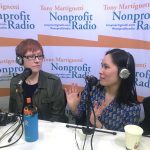
Our coverage of the 2026 Nonprofit Technology Conference continues as Jackelyne Briseño helps you leverage giving day opportunities through segmentation; gamefying strategies; multi-channel methods; collaborating internally; using social influencers; preparing your CRM database; and, more. Jackelyne is with American Near East Refugee Aid.
Sarah Marcotte & Katherine Scott: Biases In Prospect Identification
Let’s name how and where selection bias, confirmation bias and availability bias creep into your prospect identification processes, and identify methods for stepping away from bias so it’s mitigated. Sarah Marcotte is at Sick Kids Foundation and Katherine Scott is with Princess Margaret Cancer Foundation.
We’re the #1 Podcast for Nonprofits, With 13,000+ Weekly Listeners
Board relations. Fundraising. Volunteer management. Prospect research. Legal compliance. Accounting. Finance. Investments. Donor relations. Public relations. Marketing. Technology. Social media.
Every nonprofit struggles with these issues. Big nonprofits hire experts. The other 95% listen to Tony Martignetti Nonprofit Radio. Trusted experts and leading thinkers join me each week to tackle the tough issues. If you have big dreams but a small budget, you have a home at Tony Martignetti Nonprofit Radio. View Full Transcript
Welcome to Tony Martignetti Nonprofit Radio. Big nonprofit ideas for the other 95%. I’m your aptly named host and the pod father of your favorite hebdominal podcast. Oh, I’m glad you’re with us. I’d suffer with dextrogastria if I had to stomach the idea that you missed this week’s show. Here’s our associate producer Kate, to give you the highlights. Hey, Tony, I’ll be happy to. Your successful Giving Day. Our coverage of the 2026 nonprofit Technology conference continues as Jacqueline Briseno helps you leverage giving day opportunities through segmentation, gamifying strategies, multi-channel methods, collaborating internally, using social influencers, preparing your CRM database, and more. Jacqueline is with American Near East Refugee Aid. Then Biases in prospect identification. Let’s name how and where selection bias, confirmation bias, and availability bias creep into your prospect identification processes, and identify methods for stepping away from bias, so it’s mitigated. Sarah Marcotte is at Sick Kids Foundation, and Katherine Scott is with Princess Margaret Cancer Foundation. On Tony’s take 2. Tales from the gym. Oysters orgasm. Here is your successful Giving Day. Welcome to Tony Martignetti Nonprofit Radio continuing coverage of 26 NTC, the 2026 nonprofit Technology Conference. My guest now is Jacqueline Briseno, director of digital fundraising at American Near East Refugee Aid, ANEA. Jacqueline, welcome to Nonprofit Radio. Hi Tony, thanks so much. I’m so glad to be here. Oh, it’s a pleasure. Oh, you’re smiling and you’re all bubbly. Thank you. Thank you so much, Jackie. Um, your session topic is a complete guide to planning and executing a successful Giving Day. If you would just give me the 30,000 ft view to, to get us started. Sure, yeah, I think Giving Days are becoming increasingly important for nonprofits. They have been for a very long time. I’m sure your listeners are very aware of Giving Tuesday, which is the one that a lot of people know. Um, recent stats came out for our most recent Giving Tuesday in December, and over, I wanna say 38 million Americans gave on that day, and over $4 billion was donated on that day. So I think Giving Day as a concept is really relevant for nonprofits and the session really talked about, OK, so whether you’re doing Giving Tuesday or your own Giving Day another day of the year. Is totally possible. Here’s kind of what they are, what they look like, why they matter, and here are some six main strategies on, you know, creating a successful one and making sure that you’re checking all the boxes and seeing some really good results on that day. OK, cool. That’s a great overview. Thank you. Um, so you, uh, let’s talk about knowing whether you want to create your own Giving Day. Maybe in addition to Giving Tuesday, Giving Tuesday is the Tuesday after Thanksgiving, but if you want to do something in June or May or April or something, you know, how do you know if, if you might be ripe for your own creating your own before we get into how to? Sure, yeah, I think some things to think about are maybe the day you were founded as a nonprofit or uh you can look at observance days are another really good one if you want to kind of anchor the day on a specific time of the year outside of Giving Tuesday. But quite frankly you could pick a random day and then just build branding and stories and build a campaign around it so I don’t think it matters so much but if anybody’s thinking well we wanna do one we’re really thinking about timing, what makes sense for us, but you have no idea where to start, I would look at observance days, look at your organization’s history and founding days, days that might make sense for you but the other question I think more importantly to ask is when does it make sense on the calendar for a nonprofit, right? If you’re looking at, well, you know, we don’t really have much going on in. Q2 Giving Day would be great in Q2 because no one’s gonna be extra stressed out. OK, OK, um, so you have 6 strategies. Can we, can we, can we, can you tick off the 6 and then, and then we’ll go into some detail for sure. Alright, so give us the overview of the 6. Alright, so I think first you want to segment your audience. That is a really big one. I also talked a lot about gamifying strategies which are really fun to do, especially in a digital space. We talked about prepping your CRM. And making sure that you’ve kind of got all the back end ready to go clean and organized. We talked about working with major gift officers and your communications team and specifically also working with influencers. And that was, was that 6? I wasn’t counting. That’s 5. Let’s see here what else did we, we’ll we’ll get to we’ll do that, yeah I know it’ll come to me. Alright, alright, so, so, um, segmenting your audience, your audience and uh donor segmentation. Oh, I think, um, leveraging it for the collaborating with, 00. I think the influencers coms and marketing, yeah, I’m going by your session description. OK, collaborating with coms and marketing was one and then collaborating with major gift officers another. OK, so you did do sex. Yeah, I was like I thought I counted, but I wasn’t sure. OK, great. OK, so, uh, segmenting your audience, but yeah, so I think it’s, it’s definitely something you want to do. Um, one of the things that I talked about yesterday was it’s not. Creating 6 different versions of an email, like 6 different unique emails, it’s really looking at, in this case I’m, I’m gonna use email as an example because I think that’s where most people do it, but it’s really looking at a whole email and figuring out where those small little tweaks that you can make to segment your audience and why we do segmenting is because we know that there’s an increased ROI and conversion rates when people feel like the message is really targeted to them. And so again you wanna do it but do it in a way that makes sense. Some of the things that I talked about um yesterday too was looking specifically at like a CTA and so um you can segment donors by donor behavior, communication preferences, even geographical locations or causes that they’ve maybe given. Let’s say you work for an organization that um works across multiple countries you could segment by countries and interest, right? Uh, for er specifically, we segment by, uh, donor behavior and so our segments are usually monthly donors. We’re looking at active donors. We’re looking at lapsed. We’re looking at previous Giving Day campaign donors. They’ll get their own version that’s like, hey, you gave last year, you know, that Giving Day is rolling around again. Can we count on your support? Um, and again, just kind of going back to those CTAs, it could look very different for two people, but it doesn’t mean that you’re adding on more than maybe 5 minutes to your time. So a good example of that would be um maybe your monthly CTA is you know thank you so much for your monthly support your additional one time gift today for Giving Day is going to be matched here’s the kind of impact that you can have can we count on you? And so you’re acknowledging that they’re a monthly supporter they feel seen they feel appreciated, and they’re given an opportunity to do more because you have that. Match, um, let’s say if you’re talking to maybe a lapsed donor they usually need a little bit more convincing in my experience and so, um, we’ll usually lean a little bit more towards, you know, every single dollar makes a difference. You’ve been part of our community we’re so grateful you’re here. Please can we count on you today? And there’s a little bit more urgency, a little bit more fluff for lack of a better word. Um, but yeah, again, small little tweaks that you can do here and there to really make sure that message hits the way you want it to. When do you like to start the promotion for your Giving Day? Yeah, we usually start with a save the date about 2 weeks before and then, yeah, it’s pretty close, quick turnaround. Yeah, and so I think Giving Days really kind of live in a digital space for the most part, yeah, and so. We don’t wanna kind of go too far before the Giving Day because people will forget. I mean, our attention span is not great, right? So you kind of wanna start building momentum. Usually for us it’s about 2 weeks before, um, we also do a direct mail piece that kind of coincides with our Giving Day and so people will get the save the date and then a couple later, a couple days later in the mailbox they’ll receive a letter for our Giving Giving Tuesday campaign and then the week after we’re probably sending two more segmented emails to a smaller group to kind of get that momentum going. And then we’ll do a pretty heavy messaging the day before Giving Tuesday, day of. We’re sending at least 3 different emails, 2 text messages, web pops, web pop-ups, social media asks, and then of course we’ll follow that with a thank you, uh, the next day with an ask for anyone who didn’t give. So it’ll include like a soft ask for non-donors. OK, um, do you encourage gifts before the actual G Day? Or you do? Yep, yep, absolutely. We’ll have matches. Shout out to our major gift team to secure those matches. So those will come in first. Um, we’re probably raising a good amount of money that day and so you wanna have some of those funds come in, especially if you’re gonna do a progress bar. No one wants a progress bar starting at zero, right? You want at least maybe 12 to 15% in of that goal. So yeah, definitely encouraging gifts before and usually that’s done through the segmentation, so. Um, I would recommend thinking about messaging if you’re going to wanna get that progress bar started. I would send out an email to your monthly donors to maybe donors that gave the the campaign before or the year prior and say, hey, you get first access to our match. Like, here’s an opportunity to make sure your gift is doubled now and start getting those numbers in. And then how do you message it around a giving day? I mean, so you’re. So if you’re starting 2 weeks early, you’re accepting gifts for 2 weeks, but you’re calling it a giving day. Sure. So I mean, my work is planned giving fundraising, so this is foreign to me. Alright, so how do you message for 2 weeks around a single day, but you’re accepting gifts during the 2 weeks? Yep, so for example, I’ll use the save the date as an example, right? So we’ll have the save the day, which is, it’s really that. So there’s a soft ass. In there like allowing people to give, but that’s not the main reason for the email. The main reason for the emails keep a lookout the date’s coming up. Here’s some things you can do to prepare, so we’re giving them an option to add it to their calendar and that goes straight to any kind of calendar that they use. We’ll format that calendar invite to include a link to our giving form so when they see a day of they know where to click, they know where to go. We’ll also give them a chance to look at our tool kit if they want to start sharing for their followers on social or to their friends and family. And then we’ll also give them the chance to start their own fundraiser and kind of have those tools for peer to peer if they want to start, you know, spreading the word sooner than later, and then give them other best practices like, hey, Annera’s gonna be sharing. Make sure you tag us at era.org and it’s really more like let’s prep for it. Here’s some resources, but also if you wanna give, here’s that link, and that’s kind of a, it’s a softer ask, yeah, yeah, so maybe it’s like an 80. 20. Sure, yeah, it’s a little bit of a softer, but, but 20% ass if you want to do now, OK. And then you have matches as well. You can take advantage of the match and then I’m assuming there’s a match for the giving day itself. Yes, so we’ll do a general match and then we’ll have a power matches day of that we’ll usually go live around noon and say, OK, now it’s a 3 to 1. So every dollar you give becomes $3. Here’s what that impact looks like. We’ll do price points and multiply. Those price points as well. So if you’re saying $5 does this, now you’re saying $5 turns into $15 which does this, right? And so people have a really clear idea of what that impact looks like for those matches and how they’re able to, you know, make a difference, even if it’s just $5. Everything adds up. Yeah, OK, OK, good. Thank you. All right, so I made you digress a little bit from, uh, segmentation. We’re talking about segment. Anything more you want to add about the, the, the importance of segmenting. I think um again just it’s very important to do um maybe also with your thank you email so obviously every campaign you wanna send out a thank you after if anybody was a first time donor you want a segment for that give them a special message if they became a monthly donor through your giving day you wanna look at those numbers too and make sure they’re feeling seen and appreciated and heard, uh, but rule of the game is you want a segment even if it’s basic, even if it’s just by donor behavior. Um, you definitely will look at it and make it in a way that makes sense, right? If you’re a one-stop shop, maybe you don’t want to do three different versions. Maybe it’s a small tweak here and there, but for sure do it because I think the the ROI is there and it definitely shows that that effort is worth it. Yeah, OK, I think it’s worth repeating, but I think, yeah, we’ve talked, we’ve been talking about personalization and segmentation for lots of years. Uh, I think gamifying. What kind of games do we have here? So, uh, your face lit up. I, I love gamifying strategies. I, I find them so fun. So I’ve been talking about a progress bar that is a really good example of a gamifying strategy, and what they are is just kind of again going back to that attention span. I mean we have an attention span. That is less than a goldfish. Like we wanna get that attention and make people give in that moment versus, oh, I’ll come back later. So what they do is they create a sense of urgency, they create a sense of community, and there are multiple different gamifying strategies that you can incorporate. Some of my favorites are a progress bar. Um, I was talking about a progress bar for matches that’s really good too, but another really great way to think about it is by impact. And so let’s say you are delivering meals you could do a progress bar for the number of meals you wanna deliver on that day based off of funding. And so it’s a really great way to motivate people like, OK, we wanna serve a million meals before the campaign ends. We’re at 500,000. Let’s keep this momentum going and it keeps people involved and feel like their sense of something they’re part of something. Um, another gamifying strategy I really like and love to see when orgs do it are challenges, and this is really helpful when you have those major donors come in and say, OK, I’ll, I’ll give 10,000, I’ll give 20,000, and you can find really fun ways to incorporate that, and, um, usually it’s like if this happens then we’ll get X, right? So if Y happens we’ll get X, and what that could be is, um, maybe you send out an email and you’re saying. OK, if we get another 100 donors in the next 100 minutes or something, then we’re gonna unlock another $100,000 in funding. And so they’re little challenges that you can do there. Um, I think they’re really fun to do, but you definitely do need kind of that that external funding there to kind of say like here’s the motivating pieces we’re gonna be able to do so much more if we get X amount of donors, X amount of revenue. You need that donor support that’s all lined up in advance, obviously. OK. All right, all right, games you’re keeping again like time critical urgency of urgency, let’s get going next, next 24 hours we’ve got this. OK, yep, anything else games, uh, yeah, so I also talked about price points briefly. I think those are a really great way to show impact, um, and those are, I mean, you talk to whoever you need to talk to your organization to figure out the cost of doing whatever it is that you do, right? In our case for an era we deliver meals, we provide youth with access to education and. Resources and so we also do a lot of health related programming so we’ll do price points that kind of are revolving around everything because for us giving Tuesday is an unrestricted campaign and so it kind of has to cover all the work that we do um and then the other thing I would say on gamifying strategies is you definitely want to layer them and so if you’re going to do. I, I would think about it like try to do more than one. So for example you’re doing a web pop up. OK, let’s get a timer in there that’s another really good one that I love is a timer for either a match at the end of a campaign. Let’s do a power match if you can and let’s get price points in there and so you’re doing more than one thing and they’re all going to help you amplify that message. A little caveat on gamifying strategies as much as I love them and as fun as they are to do, that’s not what’s gonna motivate someone to give, right? They’re meant to amplify your work and your message. They’re not meant to. To motivate donors, you know, it’s not gonna be the thing that somebody sees like a beautiful progress bar and they’re gonna think, oh yeah, that’s like I love the colors. Let me give like it’s not that, right? But it’s a really great way to kind of amplify that message of your work, sure, yeah, but you’re again, you’re creating the urgency, you’re having fun with it. Yeah, yeah, you have fun with it, create a sense of community. Yeah. Why wouldn’t I give $25 or $50 and if especially if my $50 becomes $150. Yeah, exactly. That’s the kind of psychology behind them. Yeah, yeah, alright, um. Organization or organizing your data? Yeah, so I think it’s, it’s really important to think about your CRM and how your CRM can work for you and doing a lot of prep work before. So I think about this in three different phases. The first is you want to make sure you have clean, reliable data. And this is specifically important if you are working out of a CRM and you have multiple outside sources of getting donor info. So like let’s say maybe you’re using like GoFundMe Pro for your donation forms and you’re using something else for events and you have a lot of things kind of funneling into your CRM, it’s a really good idea to clean that data before you run a campaign like this, specifically when we’re thinking about segmenting, right? Like you don’t want to send a first time donor email to a donor who’s been giving for 10 years. It’s like it’s really important that you’re cleaning up that data, making sure that you feel confident about it. And the second is prepping. This will look very different depending on the CRM that you use, but you obviously want to create the campaign in the CRM and then get those unique identifiers. So are they source codes, general ledger funds, revenue streams, you know, what else do you need to do internally to kind of make sure all of that is set up? And then the final piece of that is your reporting and analytics. I would recommend you look at reporting dashboards within your CRM and kind of find ways to visualize the day to day of set all those up before you even go live and then day of all you’re doing is hitting refresh and you can communicate that to your boss, to leadership, stakeholders, to your team, whoever else is involved that kind of wants those quick. Day to day, minute to minute updates and it just makes life a little bit easier and less stressful to your donors too and to your donors, yeah, if you’re doing bars and for SMS with them, yeah, here we are, our number 17 or you know, yeah, yeah, absolutely. OK, yeah, I see the value of the, the how important it is to have accurate data, cleaned up data, um, otherwise you’re gonna, you’re gonna make mistakes, you’re gonna you’re gonna missend to people. Yeah, OK. It’s not a good, not a good look. Yeah, yeah, and then you’re doing a lot of apologizing that kind of puts a damper on your giving day. Alright, alright, maybe we could lump together, well, no, uh, you’re you’re the one who developed the strategies. Who am I to say 4 and 5 go together. So collaborating with your communications and marketing team. Yeah, I mean we can lump them because it’s influencers and comms and yeah. I think we definitely lump so um with major gift offers I’ve talked about a little bit but I think they’re very helpful um if you’re thinking about matches which I would absolutely at least do one match for your giving Day because again it’s a really good motivator to get that momentum going to get people excited if you’ve never worked with your major gift officers before maybe they’re kind of a separate team entirely. I’m looking at an era that we’re all one team and they know I need matches for every campaign so we’re good there but if you’ve never done this before, I would recommend you talk to your major gift officers at least 6 months in advance because these types of gifts, they take time and they have their own, uh, you know, processes, their own pool, their own streams of different donors that they ask and for what and when and so you definitely need to give them some time to plan that out and look at their own portfolios. Um, and then of course you know, collaborate with them and talking about funding. How much are you asking for? You’re asking for 1020, 100k? You know what, what is that match amount? Um, and just kind of collaborate with them there. I will say though, one very important piece that kind of comes after the campaign is if you’re able to communicate back to that major gift officer how that match had an impact during your Giving Day, I think that that goes a long way. For their major donor, if you can turn around and say, hey, this power match that we published at 120 actually generated 400 donations and from, you know, X amount of different countries, all these people gave and they gave so much and kind of make them feel good about it, like send a little blurb to that gift officer so they can report back and make that donor feel really good about being part of Giving Day and motivating other people to, to join the cause. I think is a really nice stewardship opportunity. And um working with your communications team I think it’s gonna look different for every nonprofit just on capacity and structure but off the top of my head you wanna make sure that you’re working with them for your website and making sure that Giving Tuesday is all over your website you wanna think about website pop-ups, home page hero takeovers, publishing blog posts and stories. I also think it’s really important to, as we think about capacity is repurposing some of your content. And so if you’re already gonna do a save the date, you know, you could totally turn that into a blog post and they’re publishing on the website and nobody had to do anything but maybe a couple small tweaks, but now you’re increasing the visibility right versus just your email subscribers. Now everyone on the website knows, oh, this thing’s coming up and it’s, it’s on there, um, and of course I’ll talk about it in a sec, but obviously working with influencers I think is kind of the day and age that we live in right now and. Um, would be really something to, to think about if you can for, for the campaign. Yeah, we can talk about that. OK, great, yeah, so, um, huge shout out to Michelle Rodriguez. She is our social media manager and I’m like so in love with the work that she does. She’s, she’s phenomenal. We’ve done a lot of good work with influencers. Um, some things to think about when working with influencers is that you obviously want to find someone that aligns with your values. That doesn’t mean though that they need to align with every single project that you work on, every single component of your nonprofit, knowing that some nonprofits are really big and do a lot of big things across the world. A quick example for us is obviously we, we do a lot of meal distributions and so we’ll work with influencers who, um, will post recipes and are specifically focused on food related content and so it doesn’t mean that that’s all they do or that’s all we do but that’s where that um that that’s where that connection is and so when you can find that alignment I think is really important. The other thing to note too is you wanna make sure that they have the resources they need to post that collaboration or that content appropriately. So if you’ve got talking points, if you’ve got stats, if you’ve got other things that you feel like they need to share, or if you even wanna send them branding materials like maybe you wanna send them your logo if they wanna post their logo somewhere, um, and kind of make sure they have those talking points and and be a resource for them. Do you offer, do you offer all that up or do you wait for them because you don’t want, you don’t want them to think that you’re trying to. Influence what they’re gonna post that you offer it or wait for them to ask. We always offer, you know, at the end of the day they’re content creators so they know what they’re doing, but we’ll always offer like we can totally write a script for you if you would want that and we’ll work that out as a team. Um, usually they’ll say that they want talking points, and I think at the very minimum you want to provide talking points and just kind of offer up here are the three main things. Here’s what we’re doing for the project. Here’s what we’re raising funds for I think is the most like basic level stuff, um, and then, you know, some influencers are like, yeah, give me a script, and then they’ll use that as a guide and then others kind of say no I just need talking points and I’m good and you know kind of just depends on that relationship, but, um, you at the end of the day you wanna make sure you’re asking and being a resource because you know they’re posting content on your behalf you’re collaborating with them. And you want to make sure that there’s alignment with your brand and your mission but also giving them the flexibility to, you know, make it relevant for their audience too. Is there a way to, to influence what the influencers say? Like, if you want them to highlight specific. You know, uh, programs or something. I mean, you can include those in your talking points, but that’s really about as far as you can go, right? Or can you say it would, it would be great if you could talk about our program in Gaza? Yeah, absolutely, 100%. Yeah, 100%. I would approach influencers the way you would approach major donors. Like think about it in that, in that way of, of relationship building. You’re stewarding, you’re cultivating. It’s a partnership, you know, you’re kind of working on this together you’re hearing and you’re receiving feedback you’re also kind of guiding the conversation and guiding here’s what we really need to raise funds for here’s really the messaging of the project it’s all a conversation and it’s not kind of a a one way street. I think it’s you’re working on it together and thinking about them, you know, almost as an extension of your team during this campaign is as somebody that you can rely on to share the word and and be a resource and a guide. OK, so, uh, segmenting, gamifying, organizing your data, working with your major gift officers, your communications team, working with influencers. That’s the 6. OK, makes it sound easier than, uh, well, it makes it sounds easy. Sounds easy, um. All right. So, The, the, the, the value of these, you know, you’re, you’re trying to bring folks together, create that urgency. How? Going beyond Giving Tuesday, I guess, maybe, maybe we already talked about this, but I, I, it feels like it’s important because there are, there are agencies that don’t, don’t like Giving Tuesday. Uh, I’m, I’m not sure, I’m not sure why, but. You’re, you’re empowered to create your own Giving Day. You don’t have to participate in Giving Tuesday. Yeah, yeah, absolutely. All right, all right. I just want to make that explicit. You don’t have to participate if you’re, if you don’t, if you or your CEO don’t like Giving Tuesday, that doesn’t mean you’re locked out of Giving Day. Create your own Founder’s Day ideal like you suggested. 100%, yeah, I, um, and a quick note on that too is I think, you know, the benefit of Giving Tuesdays, there’s already a lot of branding in. Awareness, it’s a season of giving, right? Um, for us we use it as kind of a kick off to our calendar year campaign and so for, for an era it just it, it works but there’s also a lot of competition on that day, you know, a lot of nonprofits are sending out appeals, sending out emails, and so if you’re maybe a smaller organization or you’ve never done a giving day before, it, it, it would make sense, I think, to have that conversation of, OK, do we want to do something in the spring instead, you know, and we’re not competing against, you know, thousands and. Thousands if not hundreds of thousands of different nonprofits asking donors to give on this day and you kind of want a little bit more of a spotlight for sure, yeah, you don’t have, you’re not tied to Giving Tuesday, but I think if you’re, if you have the capacity for it and you can jump on that bandwagon, there’s a lot of benefits because people are in that mood. It’s right after Thanksgiving, you know, and everyone’s kind of like, OK, it’s time to give back. You can kind of, you know, lean into that emotion a little bit. They also provide a lot of resources, yeah, OK. Um, so what do you just have one other Giving Day besides Giving Tuesday at an era, you, it’s only one day. Oh, OK. How come, how come you haven’t branched out to another day? It just seemed to have worked. I inherited the campaign as it was, and every year I know strategies. Why don’t you do something in Q2? We could, I think, uh, we usually have one major campaign every quarter. So again, going back to the annual calendar, like it just seems to work for us, but, um, I mean they’re, they’re easy to do. They’re not as complicated, I think, as, as some people make it out to be, and hopefully I didn’t make it sound complicated right now, but um, you know, they’re totally easy. Easy to do and I think um definitely makes sense, but it’s it’s a case by case you kind of need to see like does it make sense for us? What day do we want to look at but for an era they they kind of work as that kickoff and um we’ll actually get a lot of new monthly donors from Giving Tuesday too so it’s a really great way to kind of kick us off for calendar year end and meet those really big targets that everyone’s kind of racing to on the 31st. OK, all right, so you’re not a hypocrite. here you are advocating Giving Day. And then you only participate in Giving Tuesday. No, you’re not, you’re not, you’re not. You’ve thought through it. OK. That’s Jackie, Jacqueline, Jacqueline Briseno, director of digital fundraising at American Near East Refugee Aid, Aera. Thanks very much, Jackie. Thanks for sharing, Tony. This was great. I’m glad, I’m glad you had fun. Thank you. And thank you for being with Tony Martignetti nonprofit radio coverage of the 2026 nonprofit Technology conference. It’s time for Tony’s take 2. Thank you, Kate. It’s another tale from the gym. There was someone in this week, uh, visiting. He’s only here for 2 weeks. And this guy was orgasmic about oysters. He just could not say enough about how much he loves oysters. Uh, again, uh, as usual, not saying it to me, but I’m overhearing it. Uh, this was, this was a conversation that, uh, started while I was on the elliptical, and then it continued to, uh, when I went over to do my, uh, free weights over on the bench. This guy, uh, so he’s from Gloucester, Massachusetts. Born and raised in Gloucester, Massachusetts, uh, but visiting down here in, uh, Emerald Isle, North Carolina. Uh, so he grew up on New England oysters, of course, right? Uh, and Gloucester is a big, uh, fishing community also. Uh, and also I learned, uh, Gloucester is suffering, uh, it, it has been for, for many years because of, um, Uh, just reductions in, in costs of, of fish that, that people can sell it for and, and overhead rising, and then also, uh, now gas prices for boats, for commercial fishermen. So, Gloucester is, uh, Gloucester has been, uh, challenged for years and even more so, uh, right now, very very recently. So, but that’s an aside. The, the oysters, it’s all about the oysters. So there are a lot, many ways to cook oysters, uh, we learned. Raw, of course, which is, uh, his favorite. I did not catch his name. He did not, uh, I, I think at the very end, he said his name to the, to the guy who he’d been talking to for like 20 minutes, but I didn’t catch their names, so. Uh, but raw, raw is his favorite oyster, of course. Uh, you gotta shuck it and, uh, you know, you gotta be careful shucking it, etc. The shucking, it’s a very big deal about the, the shucking. You gotta have a sharp, uh, a sharp, I don’t know if they call them knives. I don’t remember what you call it, sharp, let’s just say a sharp shuck. You gotta have a sharp shucker, shuck, shuck, shucker or whatever. Uh, but then also steamed. He likes them steamed, does it on the grill. You can steam them directly on the grill, um, fried oysters, breaded and fried, of course, uh, and also grilled directly on, so you take the, uh, meat out of the oyster, you somehow you make sure it doesn’t fall down the slats of your grill, but he grills them too. Uh, so he steams them on the grill, that’s what you do that, of course, in the shell, naturally, it goes without saying. That’s steaming them in the shell and. There’s, uh, somehow you steam them. I, I, there’s gotta be water involved somewhere. Uh, he didn’t go into that. And then then also grilling is just, you’re laying the oyster out of the shell right on the grill, and how it doesn’t fall through, I don’t know. So your Massachusetts oysters now, of course, your New England oysters, colder waters up there, of course. So, uh, your Massachusetts oysters, you’re gonna get a, you’re gonna get a more briny taste. Of those, uh, New England oysters, versus your North Carolina oysters, uh, grown, raised, of course, in, uh, warmer waters, uh, naturally. It goes without saying, you’re gonna get a more sweet oyster. It’s common knowledge, common knowledge. Uh, at least I, I learned it, uh, just this past week. So, Uh, that’s, uh, that’s, uh, oysters orgasm. Uh, the guy was all about oysters. Oh, and the best place to buy the oysters down here, fresh oysters down here is, uh, he’ll, he goes about an hour away to a town called Beaufort, North Carolina. Uh, and I’ll shout out to Miss Gina’s. That’s where you get to where you gotta go. You gotta drive an hour to get good fresh oysters. There’s nothing within an hour of, of here. For high-quality fresh oysters. You, you, you just, you gotta go to Beaufort. That’s, that’s all there is to it. So. Oyster’s orgasm That’s Tony’s take too. Kate, Did you love your orgasm, uh, did you love your oyster’s orgasm lesson? That, that was a lot to take in. He seems very like knowledgeable. The man grew up, he’s born and raised on oysters. I, I don’t know. I don’t know if he eats any fruits or vegetables or anything else. I don’t know. He didn’t say anything, you know, we, this was not a full dietary conversation. It was related strictly to oysters. How they got on the oysters, I don’t know. But That that’s all, that’s all I overheard. Have you ever eaten oysters? Oh, sure. Oh yeah, raw. Well, and then there’s another way, he did not mention the, uh, oysters Rockefeller way, which is they’re, they’re baked with, uh, some cheese and herbs in the shell, they’re served on a half a shell, oysters Rockefeller. But he did not talk about that, so that’s why I did not mention that. But, that’s, that’s the way I’ve had them. Raw and Rockefeller, I’m, I’m not sure if I’ve had them other ways. I can’t say I’ve ever tried oysters, but you’re gonna have to put that on the menu for the summer. That sounds very good. OK, well, you’ll have to see now if you, you know, uh, raw oysters are very, uh, slurpee, and, uh, Uh, there’s another word for them. I, I can’t think of the word I’m trying to think of right now, but, uh, they’re, they’re, you know, they’re watery and, uh, you, you, uh, I could see, I could see someone being grossed out the first time. He’s slurping it out of the shell. Have you ever had clams on the half-shell? Cold, uh, fresh clams? Yeah, yeah. Slimy. Slimy is the word I was looking for. They’re a little slimy in the shell. You might not like that. Uh, and also I am not going all the way to Miss Gina’s in Beaufort. We’re gonna get, we’re, we’re getting the oysters right here. We’re, we’re not leaving the island, going an hour to get oysters for, for, uh, for, especially if you think they’re just slimy. Yeah. But We’ve got Fu but loads more time. Here is biases in prospect identification. Welcome back to Tony Martignetti nonprofit radio coverage of the 2026 nonprofit Technology Conference where we are all assembled in Detroit. My guests now are Sarah Marcotte and Katherine Scott. Sarah is senior specialist data steward at Sick Kids Foundation in Toronto. Not far from where we are in Detroit, well, like 4 hour drive or so, but not far, uh, relatively, and Katherine Scott, director of prospect management and research at Princess Margaret Cancer Foundation, also Toronto, did you say? All right, both Toronto. Welcome, Sarah. Welcome Katherine. Thank you for having us. Pleasure. It’s a pleasure. Your topic is biases in prospect in identification. Broaden your pipeline and approach. Katherine, would you, uh, just give us an overview of the topic before we get into some detail? Of course, so, uh, biases are something that Sarah and I have always been interested in how they impact our work. We’re both in prospect research, uh, fields where we’re interested in how data is collected and disseminated and how we use it and when we’re building our pipelines and identifying new prospects for our organizations, all our, our tools are. Uh, vulnerable to different types of biases that can impact the outcomes of our findings and our ultimately our fundraising activities, so we really wanted to look at different types of biases and how they impact and express themselves in different types of work that prospect researchers do and then develop some mitigation strategies to help us um find pathways forward to ultimately raise more money and welcome more donors to our organizations. Awesome, that’s a great overview. Thank you. Um, let’s turn to you. I love Sarah Catherine. I don’t know, you sound like, like Irish Catholic, uh, Catholic little girls in an Irish Catholic school or something, Sarah Catherine, Marcotte Scott, we got rhyming, we got Sarah Catherine’s good, OK, um. Sarah, let, let’s, uh, let’s talk about some of these biases. Let’s call them out. Let’s identify them. Let’s, let’s be frank. What, what kinds of biases are you too concerned about? Well, I mean, like the thing with biases is that, um, there are so many, it’s such a huge topic we really needed to narrow in our focus. So what we focused on in the presentation was just looking at what we had found sort of is more common in when we’re doing prospect identification. Um, and that are the ones that we identified as seeing most strongly to affect the prospect identification and pipeline process is, um, we looked at unconscious bias, ones that we can’t really get away from, um, just things that, uh. You know that your brain naturally turns to like we we look for people who look like us we look for people who look like us like other prospects look like other prospects exactly that’s sort of all the way down and um things like confirmation bias so again that we’re looking for people that we already know that we know that they look like they know how they act um we are looking for evidence that supports that. Um, our selection bias, so again, you know, if we’re looking at identify selection bias for us, yep, so, uh, that we want a sort of a preset group that we’re gonna look at that group and we’re just gonna keep on focusing on that group because they again they appear the way that we want them to appear that we expect them to appear, um. Availability this comes up for researchers in particular because you know we have a certain set of things that are available to us for our resources um and especially if you’re crunched for time you’re not going to be looking beyond those resources you’re gonna look at what’s available you’re not going to be digging deeper it’s easier it’s easier. So and there’s nothing wrong with that. This is how our brains deal with information. We have so much information to deal with and to process every day. Our brain takes shortcuts and those are biases, but sometimes that can be harmful when it’s creeping in into how our, you know, we’re processing our work and how we’re finding our donors and our prospects that we could be overlooking people or we could be approaching our, uh, donors or our beneficiaries in a way that is harmful. So it’s just a way of stopping, thinking about it and seeing where we can sort of pull back and think a little bit differently because we’re never going to entirely get rid of any of our biases. We just have to be able to acknowledge where they are, um, and where we can sort of. Get around them or mitigate them slightly or just call them out where they are. OK, are these the, these are the sole biases that you focused on your selection and confirmation and availability? That was pretty much what we, yeah, we focused on those, but again there’s, you could have an entire, uh, an entire presentation just looking at the types of biases that people have to face. OK, well, we’ll, we’ll, we’ll focus on what you, you, you, you talked about, um, and how, how are these detrimental? Well, let’s, let’s stick with you for a moment, Sarah. How bad prospect identification, just to make it clear how this is detrimental to, to nonprofit work. I wouldn’t say that it’s entirely detrimental. It just really narrows the focus on what you’re looking at. Well, we’re not, we’re not gonna be maximizing, we’re not maximizing our, you know, what’s available to us fundraising, volunteering, exactly calls to action, yeah, so you know, if you are looking at something like, um, the one thing that we brought up and we discussed was RFM scores, so recency frequency, um. Monetary, yeah, thank you. Catherine comes in monetary thank you, I appreciate that, um, because I always, I get so used to saying the acronym. I forget what the acronym means. Thank you. Well, we have jargon jail on nonprofit radio, so I would have called you out if you hadn’t you appreciate that hadn’t defined it all, but that’s recency frequency and monetary, yeah, so that is looking at, um, it’s, it’s looking at people who already. Are donating to your organization, it’s a great marker of interest and it’s a great marker of being a prospect. Yes, we should be involving those people, but then if you keep that too narrow, if you’re only ever looking at the reasons like the RFM scores, um, you’re only gonna be looking at those people who already know and love you, and they’re not new prospects. They’re not sort of branching out into other. You know, other communities, other ways that people could be involved, it’s just, it’s limiting your viewpoint in a way that, you know, it doesn’t necessarily, uh, help you overall. Catherine, you wanna add to, to, uh, the, the, the, the potential impact? Yeah, I think like when we talk about prospect identification we use a variety of tools as much as we can and sometimes it’s, uh, you know, do it yourself, uh, program of data analytics and sometimes it’s very sophisticated but regardless you’re pulling information, you’re pulling data from your, uh, maybe your database or from an external database and we know that. There are biases built into those and then we’re using them to uh tell us things that we already know and so we want to make sure that we’re pausing and saying, OK, we already know this we’re finding this other new thing what are we missing? What can we look at to bring in other volunteers, uh, other donors, other types of engagement? The, the other risk that we run into is that we, because we’re using. See, um, models or analytical tools to tell us things that sometimes we already know is that we tend to ignore things that we don’t know or that we disagree with and then we don’t act on those we’re not maximizing gifts. Um, one example, uh, again using recency frequency monitoring monetary value is I worked at an organization and we discovered that in fact the date from 1 to 2nd gift was quite short from. Many of our donors, so it’s really important for us to take action and ask for a second gift quite close to the first gift, which went against what, uh, many of us working major gifts felt was the truth. We thought, well, it takes 18 to 24 months to close a major gift and in fact what we were learning was that no, we need to ask for that second gift right away. So once we do that, we’re informing our own systems which are going to again inform other um. Analysis and so we, we would have been missing out on a lot of money frankly if we hadn’t just, you know, challenge ourselves to look at our data in another way and challenge ourselves to um question some of the assumptions that we were working on. OK, uh, Catherine, let’s stay with you. Uh, what, what are, let, let’s transition to some of our methods for stepping away from these biases so start, you know, mitigate them as, as, uh, Sarah had said, right, so it can be. Quite daunting because if we start to think about all the areas where we might be missing information or we might need to address it, it can, we can end up being sort of paralyzed by fear for example, if you’re in a multilingual place, um, you might be missing out on opportunities to engage with, uh, donors and prospects and potential volunteers, uh, due to a language barrier but maybe it’s not feasible for your nonprofit to be able to operate in multiple languages so. That that’s not a reason to give up. We just need to accept that there are some limitations and if we mark those out in our documents and in our processes and if we acknowledge them, then that gives us a chance to come back and revisit when there is an opportunity. For example, um, there are tools that are coming out, uh, using AI which allows us to have, uh, engagement in multiple language much more seamlessly. That might be something you’ll be able to use one day. For now, you just know that you’re, you’re missing out on this part, and you can address something as a prospect researcher. Um, my default language is often English. My, uh, default, uh, regulatory environment for myself is usually Canada. Uh, so these are all impacting my ability to do research, what resources I’m avail are available to me, and what. Kind of output I’m gonna give additionally, if I’m really crunched for time, I’m not gonna be as thorough, uh, and maybe I won’t have a chance to use multiple methods to verify information um that’s confirmation that speaks to confirmation bias as well. So I think that the important part is that we acknowledge where some of our gaps are and try at least one mitigation strategy because we know we’re already moving the needle. And we’re further ahead than we were before we started all this. OK, yeah, the, the first step to redemption is acknowledging, right, calling out your document and ideally take a small step, but at least now you’re conscious, conscious of your bias, yeah, yeah, yeah, Sarah, you want to add more to we, we, we have plenty of time to talk about mitigation, mitigate how to reduce these biases. Yeah, well, I think like I said, um, I think one of the most important things that. You can do is to start just by acknowledging is a sort of looking at your organization and what you’re doing and then also determining is like are we in a place that we can actually tackle this and look at it and you know devote the time to it because it is time consuming it is very daunting, um, and there’s not always the appetite or the capacity to take it on. But it’s an important conversation to have. It’s important to start. So I think that starting and being thoughtful and being intentional, um, is a great way to start and just to start, you know, thinking about your data collection and what you have and what you don’t have and who you’re approaching and who you want to approach and just be aware of, you know, the, the people that you want to be engaging with. Are you talking to them? And if you’re talking to them, are you listening? Because sometimes our donors are telling us things, but you know, it doesn’t fit with the narrative that we want, and so we don’t want to engage with it. That’s our bias again, again, that’s our, you know, that’s the bias that we’re coming from. Your session, you had some polls and quizzes. We did. What did, what did we learn from the polls? Let’s start with the polls. What, what, what were you polling about? Anybody? Um, we really wanted it to be sort of a way to get the, uh, get to get the attendees engaged just because, you know, so you go to a conference and sometimes you just end up sitting and you don’t have an opportunity to sort of lend your voice to something and so we just wanted to sort of understand where people were. Um, one of the things that we asked was, you know, are you talking about biases at your organization? Is this something that your organization has appetite for? And it was, it was split. It was about 1/3 and 1/3 and 1/3. Of being absolutely not, um, kind of, and yes, but we don’t quite know what to do about it. Oh well, there were that makes sense. The last third is definitely in the right set. Well, all 3, all 3 are in the right session, but yeah, OK, well that’s more encouraging than I than I would have guessed, OK. And then, um, there was one where we’re asking sort of, you know, what does your organization need to tackle the problem, and you know, the biggest one is always time. No one has enough time. We don’t have enough time for everything, for anything really. Um, you know, if we could make more time. But I, there’s like, you know, but that was the main one. It wasn’t that, you know, the organization isn’t interested or, you know, we don’t have that problem. It was just like, no, we acknowledge that we wanna look at this. We just don’t have the time for it, so it’s good. Um, we also found that, uh, when some of the questions and discussions came up after the polls that people were clarifying where they stood, and it seemed that sometimes the way we approach a data problem, uh, just by switching our language around can make it seem a lot more manageable, so we were. Talking about how important it is to reach out to new prospective donors, um, especially for the major gift officers and people sort of saying yes, but how do we, how do we do that because everyone’s so busy and they want to do what’s comfortable to them and I suggested let’s stop calling them cold prospects. If someone has given to your organization or been involved in your organization, they’re not cold to you they’re very warm to you you may not have personally interacted with them, but for me that’s something I’m trying to do is step away from language like that person’s cold, that’s a cold prospect, that’s a suspect to their prospective partners for us or they might be eligible to upgrade their giving even even prospect. I’m not too keen on them. I I do use the word. Prospect, but I like potential donor better than prospect. I still use prospect. I’m not, I haven’t banished it from my vocabulary, but I don’t know. Potential donor just sounds nicer and, and donor sounds better than constituent and that’s like a dehumanization or depersonalization, and that was actually one of the questions that came up was, um, someone was calling us out on the use of prospect because she said if someone is given to your organization, they’re not a prospect, they’re a donor. And a prospect for another level of giving or a planned gift, but then, you know, that sort of like takes you back, like, you know, it took me a little bit aback because I’m so used to thinking about prospects in a certain way because our organization treats sort of everybody as a potential prospect and it doesn’t matter. If you’ve already given at a quite high level, you can still be a prospect for more giving and so then it’s just sort of a question of, well, OK, then you have to take a step back and then talk about what the organization’s expectations are like what counts as a prospect? like how are you defining that and how are we talking about it? Anything more from the polls that you you learned before we turn to the quizzes? Polling. No, the polling and the quizzes were they’re kind of mushed together. We didn’t do that many. It would have been nice to do more, but, uh, we were hm. I wouldn’t say uh limited in our abilities. You’re limited in time, limited in time, yes, perennial subject. So alright, well, what about some of the questions that came from, from the audience? What did you learn or what, what stuck whether you learned or not? What, what stood out and folks were asking about? We had some really good questions. We have some good questions. Share some so we one thing we weren’t sure who, uh, who would be attending the session if it was going. Going to be, you know, um, fundraising consultants, uh, major gift officers, people who work in fundraising, database administrators, and I think we got a bit of a mix, so that was nice. That’s partly why we wanted to have, uh, some of the polls so people would start engaging with us and we could find out a little more about them. Uh, generally speaking, the audience was like quite, um, data minded I would say, uh, they like to use their data sets, but, uh, all of us. I think our biases were revealed at some point in the discussion, and I’ll say one of mine was very clearly as a Canadian and uh it was actually um it’s quite an emotional comment um we were talking about being in healthcare organizations and one of the discussion points we had was that when we’re in healthcare organizations we have to be really mindful about what type of information we’re capturing and keeping in our databases and what’s necessary. Versus um uh what is it nice to have and and how we can uh have a plan for our data. So for example I work in a cancer foundation. Sarah works in a children’s hospital you know people have different experiences with their care, uh, and people have different comfort levels in, um, discussing publicly what their uh care experience or disease experience was, um, and someone pointed out, well, what about when. Um, you’re, you’re, uh, potentially asking someone, uh, for a donation, and they were personally bankrupted by the care, uh, that they received, and that caught us quite by surprise and we realized we really had our own biases as, uh, residents of a, a place with. Socialized medicine, um, it had never occurred to us that someone could be bankrupted, uh, by their health care, so, um, that really caught me off guard and, um, it made me realize that I was quite, uh, unaware of a quite significant bias in my own presentation. Oh, and I think too because we were talking we were saying how careful we have to be because we have different privacy laws and so when we are, we’re, we’re in the hospital sort of setting, we don’t get grateful patient data we do not get that right from the hospital so we, so we learn of the connection and then we have to code it in a very, you know, we try to be very respectful in terms of how we code it like we do not get the full picture. Um, whereas the question was just, OK, but you have to do a wealth screening when you get the grateful patient information because otherwise you could be asking folks who really cannot be asked, and I thought, woo, that really made me step back. It really did. Um, so yeah, we, but we did acknowledge that in all of us, uh, all of our organizations will have different, uh, regulatory data, and then also our organizations this came up in the question organizations serve different populations, so if you’re in a health care organization, maybe your, um, best perspective donors are patients and their families, um, and you know, maybe when I’m looking at say, uh, racial gender or age biases in my own data. I want to maybe make see that our volunteers, our, uh, donors are reflective of the communities that are served by our cancer center neighbors next door. That being said, if I’m, uh, working for an international humanitarian agency, the beneficiaries of the care are not going to be our prospective donors. They do not live in our country where we’re doing our fundraising and are unlikely to have that kind of wealth, um. So you know maybe we we don’t need to reflect our beneficiaries, but maybe we do and how we collect those data points is gonna be really sensitive and so we just have to be very mindful as we approach it and have a plan for our data and be quite honest about what we’re what we’re doing and how we’re doing it and what we’re using it. For was there much conversation about the wealth screenings? There was, um, and, uh, one of the questions was, well, do you say that we can’t do wealth screenings? He said, well, yeah, no, we, you can’t get away from wealth screenings. You have to do something and you have to do RFM. Like we’re not saying you can’t do. You know, the things that these are the tools that we have available to us. They are the best things that we can work with right now, um, just again, but just be aware of what you’re using and how you’re using it and be aware of what kind of biases are built into it. So like a wealth screening, a lot of it is going to be dependent on, um, you know, lots of assumptions, a lot of assumptions, a lot of assumptions about what counts as wealth, um, you know, uh, a lot of it is based on sort of your, your home value. Um, and, and the location, and then we were saying, you know, in Toronto the real estate market is out of whack. It doesn’t make any sense. Um, my home valuation is, uh, quite inflated, um, in terms of what the home actually is, and so if you’re only going through that you would get a very different picture of, um, you know, of me as a donor, um, Catherine has a pretty good example, um, from. Yeah, from Saskatchewan, so I have a house in Toronto and I had a prospective donor in Saskatchewan, uh, and our house values were tremendously far apart because my house in Toronto, which was my only house, this, this, um, individual’s primary residence was in Saskatchewan, which is a rural, more rural province. Uh, it was in a rural area outside of, uh, sort of a mid-size city in Saskatchewan. And so if we went by home value and again in in Canada because of our regulatory environments we can’t quite get to the household level wealth data that we can here in the US but um it goes by by postal code or which is the equivalent of the zip code here and uh because of that he he and I appeared very differently in a wealth screen based on postal code uh as. Potential prospects, but, uh, I was not the, the correct person to be asking for a $100 million dollar gift. So with that in mind, you know, and then we also acknowledge that when we’re working on wealth screenings we’re making assumptions about, you know, we’re looking at household level data we’re looking at, um, you know, uh, uh, an assumption of what a household is and then also there we know there. Systemic and long standing historical um impacts on who lives where in which neighborhoods have the highest value that are you know that we can’t unpack and we can’t untangle them all in a prospect identification exercise but we just need to be aware and then we have to challenge ourselves so that when we’re presenting lists of um prospective donors for say our major gift partners to reach out to. Um, that, that we have, uh, a variety of tools to say, no, uh, I know that this didn’t come up in the wealth score this way, but actually this is a, a, a really good potential partner for us, and we think you should reach out, and here’s why, and it might not be easy to reach out to someone or there might be a language barrier or there might be a cultural barrier or just an availability barrier. And it makes it harder to reach out to that person so of course the major gift fundraiser is gonna be biased towards which someone else is gonna answer their call, but we have to tell them that no, in fact this is, this is, uh, someone who could be a uh an important philanthropist and they might not look like what you imagined your best prospects would look like, but, but that’s why we’re here we’re here to suggest new people to you. I’d like to end right there. That’s ideal. All right. That was Catherine, that was Katherine Scott, director of prospect management and research at Princess Margaret Cancer Foundation, and with Catherine is Sarah Marcott, senior specialist, data steward at the Sick Kids Foundation. Sarah, Catherine, Sarah Catherine, thank you very much. Thank you so much. Thank you very much. Thanks for sharing. It was a pleasure and thank you for being with Tony Martignetti nonprofit radio coverage of the 2026 nonprofit Technology conference. Next week, confessions of nonprofit social media managers. And convert your member website into a thriving community. If you missed any part of this week’s show, I beseech you, find it at Tony Martignetti.com. Our creative producer is Claire Meyerhoff. I’m your associate producer Kate Martinetti. The show social media is by Susan Chavez. Mark Silverman is our web guy, and this music is by Scott Stein. Thank you for that affirmation, Scotty. Be with us next week for nonprofit radio. Big nonprofit ideas for the other 95%. Go out and be great.
Hannah Thomas & Morgan Fletcher: Movement Messaging
Expanding on the partnership theme two weeks ago, consider building a movement with orgs outside your direct mission. You’ll want cohesive, effective messaging and that’s where Hannah Thomas and Morgan Fletcher can help. Hannah is with Big Duck and Morgan is at Girls for Gender Equity. This is part of our 21NTC coverage.

Maria Semple:Farewell, Maria Semple
Her first Nonprofit Radio was February 11, 2011. Soon after she became our prospect research contributor. Maria’s practice has evolved and this is her last show. Quoting somebody, nobody can identify: “Don’t cry because it’s over; smile because it happened.”
Sendinblue: The only all-in-one digital marketing platform empowering nonprofits to grow.
We’re the #1 Podcast for Nonprofits, With 13,000+ Weekly Listeners
Board relations. Fundraising. Volunteer management. Prospect research. Legal compliance. Accounting. Finance. Investments. Donor relations. Public relations. Marketing. Technology. Social media.
Every nonprofit struggles with these issues. Big nonprofits hire experts. The other 95% listen to Tony Martignetti Nonprofit Radio. Trusted experts and leading thinkers join me each week to tackle the tough issues. If you have big dreams but a small budget, you have a home at Tony Martignetti Nonprofit Radio. View Full Transcript
Transcript for 546_tony_martignetti_nonprofit_radio_20210621.mp3
Processed on: 2021-06-19T14:50:15.009Z
S3 bucket containing transcription results: transcript.results
Link to bucket: s3.console.aws.amazon.com/s3/buckets/transcript.results
Path to JSON: 2021…06…546_tony_martignetti_nonprofit_radio_20210621.mp3.395782980.json
Path to text: transcripts/2021/06/546_tony_martignetti_nonprofit_radio_20210621.txt
[00:00:11.24] spk_4:
Hello and welcome to tony-martignetti non profit radio big
[00:00:15.74] spk_2:
non profit ideas for
[00:01:51.04] spk_6:
The other 95%. I’m your aptly named host of your favorite abdominal podcast. Oh, I’m glad you’re with me. I’d be hit with hyper nutri mia if you shared the salty idea that you missed this week’s show movement messaging, expanding on the partnership theme two weeks ago, consider building a movement with org’s outside your direct mission. You’ll want cohesive effective messaging and that’s where Hannah thomas and morgan fletcher can help Hannah is with big duck and morgan is at girls for gender equity. This is part of our 21 NTC coverage and farewell Maria Semple Her first nonprofit radio was February 11, Soon after she became our prospect research contributor, Maria’s practice has evolved and this is her last show quoting somebody nobody can identify, don’t cry because it’s over smile because it happened. tony state too podcast pleasantries were sponsored by turn to communications. Pr and content for nonprofits. Your story is their mission turn hyphen two dot c o and by sending blue the only all in one digital marketing platform empowering non profits to grow. tony-dot-M.A.-slash-Pursuant in blue. Let’s get started. Shall we hear is movement
[00:01:54.62] spk_2:
messaging.
[00:02:11.74] spk_5:
Welcome to tony-martignetti non profit radio coverage of 21 MTC. The 2021 nonprofit technology conference. We’re sponsored at 21. NTC by turn to communications turn hyphen two dot c O. My guests
[00:02:12.42] spk_2:
now are Hannah, thomas
[00:02:23.64] spk_5:
senior strategist at big duck and morgan fletcher, Director of marketing and storytelling at girls for gender equity. Hello morgan welcome.
[00:02:26.44] spk_3:
Hey, tony excited to be here,
[00:02:28.51] spk_1:
I. tony Thank
[00:02:33.64] spk_5:
you. Pleasure to have you on nonprofit radio and our coverage of the 21 MTC uh your
[00:02:36.68] spk_2:
session topic
[00:02:41.24] spk_5:
is me versus we. Well, we versus me. We versus me.
[00:02:42.60] spk_2:
Maybe it makes a difference.
[00:02:55.04] spk_5:
We’ll find out if it makes a difference, but we’ll get it correct. We versus me Building messaging for a movement. Hannah, would you get us started with with some basics? What is this movement messaging that we are talking about?
[00:02:58.54] spk_3:
Yeah, I’d love to start us off with that. Um, so to set some context in the nonprofit landscape over the
[00:03:05.49] spk_1:
last few years, there’s
[00:03:38.34] spk_3:
been a lot of efforts made by nonprofits to band together in coalition to work in partnership um in in service of movements that exist beyond even just the organization’s mission. Um, so those are causes that are benefiting the collective sector, benefiting the larger world. Um and they really require a different take on messaging. A lot of times, nonprofits are very focused on clearly articulating themselves in their mission and making sure their audiences are really motivated to support them. But movement messaging in order to be effective, has to be used by multiple voices, multiple entities, um and move a bunch of different audiences to take action in support of a larger cause. Um So where when we’re talking about movement messaging, we’re talking about sort of a reframing um from me to we so that that sort of explains the title there.
[00:04:16.24] spk_5:
Okay, So we we versus me is Okay or Me versus we is okay, but we’re going to go from me to we Exactly not. We to me, that’s the opposite of what we’re trying to do. All right. That would be taking a great cause and distilling it down to uh were the center of the universe, and we’re the only ones who can do this work. So the rest of you are out exactly
[00:04:19.01] spk_3:
opposite.
[00:04:48.54] spk_5:
That’s exactly what we’re not doing, right? That’s antithetical to what we’re talking about. Okay. All right, um, morgan. Let’s bring you in. Let’s help us understand what the value is of working outside our mission. Because I I want to I’m thinking of our listeners. You know, they they’re they’re tied up in their work and I want them to help or I want to help you to help them see the benefit of seeing outside your own individual mission to a broader cause. So what what what was the experience that girls for gender equity?
[00:06:34.84] spk_1:
Yeah, for sure. So it goes for gender equity and we call ourselves G for short, just as context for who we are. An intergenerational organization based in Brooklyn. Um, that’s centering black cis gender and transgender girls and gender non conforming non binary youth of color in the fight for gender and racial justice. So with the mission statement like that obviously actually is quite broad, which allows us a lot of opportunity to partner and collaborate with organizations who are able to meet us at the intersections of the lived experiences of the young people that were working with. So, for example, Environmental justice, economic justice, all these other issues are also racial justice issues. And so we have a lot of entry points to our work, particularly for this session with Hannah. We I was speaking about a national agenda for black girls, which is G. S. First national campaign that we launched in alignment with the presidential election. Keeping in mind that we were always trying to center young people of diverse backgrounds but of color To help us shift policy priorities and have them actually be informed by people who need the change in their lives. So there are plenty of organizations that we partnered with in this work. We had about 60 endorsing organizations. And the campaign itself is spearheaded by a steering committee of 80 young people from across the country and they each represent their own organizations that are local. So we’re able to work collaboratively with these organizations that may be may fall under the umbrella of what we’re talking about, right, these intersectional areas of young people’s experiences, but they may not be, you know, exactly cookie cutter like girls for gender equity, but the issues that we’re talking about are in alignment with theirs. And so we’re able to develop strong messaging that all of the organizations collaborating with us can uplift and use and take action on
[00:07:01.14] spk_5:
any. Was there any consternation at G about working in broader coalitions and and excuse me, maybe, you know, diluting some of our own work, you know, were there any? Was there any pushback like in the organization? May be among the board? Just you know, I’m trying to help people see what what obstacles might be might be out there for them to do this
[00:08:36.54] spk_1:
work? Absolutely, yeah. Did you have any of that? We were very fortunate. I will say that um we had a really good base of organizations that we were used to collaborating with in this way who were aligned with our values? Already newer organizations of course came in and um, you know, did a gut check with us and had we had internal conversations and we hold we hold regular meetings for those folks as well as we kind of catch them up on where our messaging is coming from to continue to check that we are still in alignment and with our priorities and framing. But I would say that actually the place where we experience the most challenge and growth as an organization and as a campaign running team was in the messaging around identity. You know, you heard me list a couple of different gender presentations and identity that one might claim moving through this world and for us, especially as we’re co collaborate and co designing this campaign with the young people in the steering committee. We had a lot of conversations around like, well honestly, who’s a black girl? Why are we framing it this way? Do we, you know, how expensive is this terminology? And does it accurately represent? Do people who are on this campaign feel accurately represented by this language? So I would say that a lot not a lot of but most of the pushback that we were receiving was extremely useful because it was coming from young people themselves who were saying, you know, I’m not binary, I don’t love that, this is framed this way. And I’m like, as you know, as a person who’s in charge of the frame and like great, keep giving me that feedback, right? Let’s create a campaign that actually represents you and how you’re moving through this world. That’s the point. So I would say a lot of constantly having that dialogue so we can continue to make sure that the campaign is serving the people, it’s intending to serve.
[00:08:50.34] spk_5:
I have to broaden my mind because when I got if I if I were getting that kind of feedback that you gotta be like, this is so annoying, why can’t you just agree with what we all we all the rest of us agreed on. Why can’t you just jump on board what you have to cause
[00:08:58.25] spk_2:
trouble? So
[00:08:59.49] spk_1:
it makes it a really time consuming
[00:09:22.44] spk_5:
process. It’s frustrating, but you always frustration usually leads to a better place. I mean if it’s channeled right, you know it’s unproductive than then it’s destructive but you know in creativity I found that frustration usually leads to a better a better outcome. Alright let’s go back to you now. So take a little broader Hannah help us identify like what, how does Big Duck think of a movement? What’s a what’s a movement?
[00:09:56.44] spk_3:
Yeah. I think um actually really related to what you’re just talking about, the language, the definitions, all of this stuff is you know always evolving and all we were always adapting what we think about as a movement and the role that messaging can play in that. Um But generally a big duck. We’re thinking about a movement as the commitment of many to work together and create transformative change based on a shared purpose or goal. And we see movement
[00:09:57.55] spk_5:
any. I’m distilling that down to uh many, working on a shared purpose or goal.
[00:10:04.27] spk_3:
That’s right towards transformative change.
[00:10:26.54] spk_5:
Okay, Okay. And how about um the messaging? How do you conceive of the messaging? And then we’re gonna we’re gonna have to dive in and explain how we how we all work together to ally around a common message, but help us understand. I mean, are we just talking about the simple it’s just a simple communications. The what each of us produce.
[00:10:41.34] spk_3:
Yeah, we are talking about, you know, all of the different ways that you can communicate something to an audience and try and prompt them or motivate them to take action with you. And so that can be, you know, in a tweet, that can be all different sorts of ways that you can communicate out. That can be in the stories that you tell, the narratives that you’re trying to disrupt or push forward. Um there’s a lot of different ways that you can that can be at a rally when somebody is giving a speech, what’s being said there in that context. Um so we’re really thinking big big about what what messaging can look like and trying not to have a narrower prescriptive view.
[00:11:34.74] spk_5:
Okay, so yeah, whatever channels, whatever channels you have, and then does does each well, before we get to approval, like getting messaging approved? So, I don’t know, we’ll talk about that process if it’s even necessary. But how do you how do you start to bring folks together, around around a common message with, you know, inclusivity? And uh you just just convene a meeting and then you start somebody produce a document that everybody comments on it.
[00:11:38.16] spk_2:
How does this process work?
[00:11:41.54] spk_1:
Yeah, I would
[00:12:56.94] spk_3:
say that there’s probably a lot of different processes that work. Um but we found that helpful like in um to to align yourself with other organizations, other people, individuals who are would be aligned around a common cause is too start the conversation around shared values. Um and the opportunity agenda is obviously a great resource, doing a lot of work around storytelling using values and all that, but shared values are really an effective in for folks who wouldn’t otherwise get the nitty gritty of of what you’re trying to achieve, to understand their role in your cause and understand how it relates to their own. Um So we we talked about in our session all of the different ways that you can like sort of frame frame this cause in ways that use those deep shared values and also you know, fill in the context around that. Um So you know, we all believe in love. Um, so or we all believe in opportunity. Um, so maybe that’s an effective in for somebody, an organization who back in the day was advocating for a gay marriage, right? There was a lot of that was a great example at the time, actually, of the way that shared values were a really efficient, effective way for people to move hearts and minds, um, and to gather, you know, some momentum around this cause that on the surface, on the policy level folks weren’t really jelling with.
[00:13:11.64] spk_5:
That’s a great example. Yeah. Love who’s gonna disagree with that?
[00:13:15.74] spk_1:
Exactly,
[00:13:16.39] spk_3:
literally no one
[00:13:17.43] spk_5:
I’m the I’m the anti Love, I’m the anti Love
[00:13:21.16] spk_1:
candidate, tough to make
[00:13:24.26] spk_5:
not in favor of that.
[00:13:25.21] spk_2:
Yeah, that’s my platform
[00:13:26.50] spk_6:
is uh is hate, right?
[00:13:57.74] spk_5:
Well, there are people who have that, but they don’t call it that. Um even they would say that we I agree with Love. We agree with Love. Alright. So cool. All right. All right. Um And then it’s starting to frame these messages like you said, I’m kind of in the details, like So then All right. So, we have these shared values morgan. How do we start to build messaging? We just want to share documents that uh people start contributing to.
[00:14:00.23] spk_2:
How did that work?
[00:14:54.74] spk_1:
Yes, the process. Well, for us, honestly, it’s it really is that fundamental basic, just kind of like, look, let’s just start putting some things down. Of course, there’s all sorts of like jazzy processes you could design and do all sorts of like discovery conversations and, you know, you can call it by those names and that is what it is. But I think ultimately we really did just sit down as a team internal and lay out our vision as it aligned with, of course, the larger goals of the organization, because this was specific to a campaign, but this applies to all of our work. We sit down as a team, we pull out a document, um, and this was developed in the time where we could be in person at our office, so we were able to sit down together in a white board, technically, and put everything down, and then we started to introduce that to people that we thought would be great allies in the work. And so we had our entry points at each organization, based on people we knew through our connections personally. Um, and also just kind of put out a general call to action into these organizing spaces that we knew had similar values alignment or values alignment, and similar ideas about a progressive future for black girls. So we could run with that. So it really wasn’t. It really was a lot of google documents. Honestly.
[00:15:22.54] spk_5:
All right. So, so morgan did you have a formal organization that that you all created or this just like this? You didn’t make a legal organization out of all these entities? Right. You just you just all contributed to a campaign,
[00:15:50.34] spk_1:
correct? So we remained Girls for gender equity. And we launched a national agenda as an initiative of Girls for gender equity. Within that. We do have a steering committee, as I mentioned, that young people and then we also have the partner organizations who are represented by those young people and some who are not who are partners in the work at large. And so those things, those groups all have names, but we did not go about formalizing legally a new entity.
[00:16:05.74] spk_5:
Okay, Okay. Not necessary. Um, and so while this is going on, uh well, this larger campaign is going on, you’re still doing your own, your own messaging, Right, Aggie. You know, that’s not like that suspended or anything.
[00:16:12.21] spk_1:
No, definitely still definitely juggling both. Right. All right.
[00:16:17.84] spk_5:
And and how does how is fundraising impacted? Was was part of the campaign for fundraising for the for the entities or it was it was a different a different call to action?
[00:17:33.74] spk_1:
Yeah, fundraising is certainly call to action for national agenda specifically because it has its own funding. And so, you know, we’re fundraising for G were fundraising for a national agenda. And of course we are talking about G. I mean, we do narrative shift work, we do direct service work. We also do organizing policy campaigns work. So there are several different buckets of work that were fundraising for at any time. Um, I think what our process has been to keeping that streamlined for and under comprehensive and clear for our audiences is just naming, but in very clear, consistent terms, all of what we’re holding as best we can and acknowledging that it’s a lot and that allows us to lean into this the, you know, what, what Hannah and I were talking about before around intersectionality and the holistic nous of the work and the holistic nous of the movement work. Right? So we can say we’ve been very explicit about a national agenda is focusing on these national priorities. However, at a city and state level in new york where we’re based, this is what else we’re holding and how it is interlaced with these other priorities. And so we’re able to flesh out where all these things are meeting and also naming, you know, there you can choose to support any of these, but ultimately supporting us will support all of them.
[00:18:01.14] spk_5:
Hannah, help us understand some more around the the complexities of messaging and consistent messaging or maybe maybe have some big some best practices that Big Duck or something. Help us flush out the details of getting consistent messaging across all your, all the entities contributing to well, in morgan’s cases with the national agenda, but you know, whatever, whatever cause we might be working toward.
[00:18:46.14] spk_3:
Yeah, I think it’s really interesting because at Big Duck primarily were preaching, you need to have one voice, a very consistent voice, a very aligned voice. Everybody should be a brand ambassador who understands deeply what you’re positioning is, what your personality is, should be able to speak. You know, all you know, sounding the same with movements. I think it’s actually very different. I think you have to necessarily make space for people to communicate. The message is in their own way using their own personalities. Um the movement can’t it’s really in my view like an exercise in relinquishing control in a lot of ways and making sure that it’s it’s something that others can own as well and feel like it’s theirs to speak about in their own voice.
[00:19:01.14] spk_5:
It’s interesting like nobody owns it, but everybody, everybody owns it, but nobody owns it.
[00:19:53.94] spk_3:
Exactly. And that’s why you can see a lot of um successful movements. One that I think is really cool is the land back movement and campaign. So there are website is very simple and it has a manifesto with about 10 lines of text on it about all the different meanings that land back has in terms of a literal, you know, meaning of we want to get this land back. But also the narrative, this means about our relation to our relationship to the environment, our relationship to racial justice, all of these different things. So it sort of sets up a basic something to work with. But if you look at the hashtag land back on instagram or something like that, there are so many folks, so many individuals who are able to um build meaning from that from that manifesto and take it in new directions and give it new life all sort of aligned generally around that manifesto, but really expanding um expanding the meaning.
[00:20:12.04] spk_5:
Anything either of you want to want to say about this sort of this consistent shared messaging
[00:20:15.14] spk_2:
Before we uh
[00:20:16.47] spk_5:
before we move on, morgan you’re shaking your head. You want to add some more.
[00:20:39.84] spk_1:
Yeah, I just wanted to underscore I think how important it is for there to be a muscle for constant vulnerability, openness to feedback and collaboration. Um you know, campaigns as Hannah was saying, you know, folks are able to step into the campaign work individuals and organizations and make it their own in a way and that is so special and unique and you also want to be sure that that does not spiral into another direction of course. And so you want to also provide structure and infrastructure for folks to feel supported as they’re moving with this campaign. Right?
[00:20:54.54] spk_5:
Like what? Like what kind of structure and infrastructure?
[00:20:56.94] spk_1:
Yeah, So I would say, you know, developing really basic tools that people can use, like messaging, kids digital tool kits to provide folks with key talking points graphics, if you want there to be visual cohesion to your campaign and folks don’t always use that stuff, you know, of course they’re like, that doesn’t match individuals might be like, doesn’t match my aesthetic organizations might be like, you know, we want to frame it a little differently. So the intersection with our work is more cohesive and clear to our audiences, but you want to give folks a starting point so they can say, you know, I like looking at land, land backs manifesto, they can refer to some tools and documents and say, okay, I know where this is rooted. And I’m going to pull these pieces from it for my, my specific messaging or my organization specific messaging and then having consistent checking with folks, you know, updating that regularly, letting folks know it’s being updated, these real basic communications that get lost because you’re holding so much.
[00:22:09.24] spk_5:
Do you feel like giving Tuesday is an example of what we’re talking about, or like spun large, you know, billions of dollars now? Or is that really something, something different because it’s so decentralized? I mean we’re talking about something decentralized here, like I said everybody owns it but nobody owns it, but I don’t know do you feel like giving Tuesday is an example of could be an example large of what we’re talking about or or no, that’s really something different.
[00:22:46.74] spk_1:
I think so, especially to disagree with me and say something. No, I was thinking about it, you know, I think um I mean we’re talking specifically about very progressive movements. I certainly am, but I’m thinking about how they, you know, they really provide, we are obviously participating giving Tuesday um and they always provide such incredible materials. So you you feel so clear through the process. Okay, I’ve got 44 months, six months out. How do I build this campaign around this moment? Right. And I always feel so prepared for giving Tuesday because they’re able to roll out such robust materials to build that infrastructure for us as organizations.
[00:23:08.04] spk_5:
Alright, well, there’s at least lessons to take from giving Tuesday in terms of the support you mentioned, support infrastructure. Um one of the things that you mentioned in your session description Hannah is that you want folks to reconsider some best practices that may be hindering their cause. What does that mean?
[00:23:09.14] spk_1:
Yeah,
[00:24:37.94] spk_3:
we, we hit on some of it earlier when we’re talking about intersectionality and making space for, you know, other causes or things that are not directly in your lane, but maybe in the next lane over. Um I wanted to include say this Audrey Lorde quote. There’s no such thing as a single issue struggle because we do not live single issue lives. So if you are an environmental organization, but you don’t see how that could connect to racial justice or to voting rights or to whatever else may be out there. You’re missing some great opportunities to expose, you know, that there’s critical connections between all that we’re doing and it can be really hard. That’s the me versus we inaction is like I need these dollars, I need these donors, I need the spotlight all of that versus a different mindset, which which we think of as a scarcity versus abundance mindset. Um, so what I was just explaining is an example of some scarcity thinking versus we want to spotlight this whole ecosystem of change we’ve got going on of which we are a piece. Um, there’s room to show how we’re connected to what our peers are doing. There’s enough dollars and donors to go around. It doesn’t have to be us who gets all 50 of those donors dollars. Maybe they give us five, and they give everybody else five to um and again, a de emphasis maybe on dollars, right? Folks have currency that goes outside of, you know, money. And how are you showing value for that? So, a lot of ways of like kind of de centering your organization in a healthy and healthy and productive way. So that’s one example of disrupting sort of best practices that we think about
[00:24:56.44] spk_5:
it. And that’s related to what you had said earlier about surrendering control. The point that nobody owns
[00:24:58.78] spk_2:
this.
[00:25:07.54] spk_5:
You have another one. That’s that’s very good de centering. Right? What else? Another another sort of mind shift that you want to encourage?
[00:25:38.44] spk_3:
Yeah, we had a whole section where we were talking about disrupting um dominant narratives, which I think morgan can speak to a little bit more. But dominant narratives are these sort of pervasive, like, the way we say things are the way we tell things, and the things that we assume that we are are all really sharing um movements are a great opportunity to really disrupt that and and form new narratives um that are healthier and that are um more progressive and are gonna frankly help us transform the world in the way we want to, I don’t know, morgan if you wanted to chime in.
[00:27:14.74] spk_1:
Yeah, I would just add as, like, a specific example, um you know, for us, when we’re talking about when G is talking about are the constituents in our programs and young people who are in our campaigns, You know, a lot of the work that we do is around shifting the narrative around the your audience cannot see this or cannot hear this or see it, but I’m using air quotes when I talk about the monolithic black girl, right? Like this and no community is monolithic, this is it. This means nothing, right? So what are you know, for us to break down that absurd premise? Um it requires us to really give opportunity to young people in our programs um to tell their unique story as they want to tell it. And so for us, our narrative shifting work looks like passing the mic. It’s not about me, the director of marketing storytelling, going to a rally and giving a really great speech. You know, it’s about young people going to that rally and them giving great speeches or speak in front of city council in new york, which we do quite frequently or talking to legislators across the country. You know, other types of campaigns that we’re building out right now. Video and social media storytelling campaigns that really allow us to present a breath of experiences and all those people are saying I fall somewhere on this black girlhood spectrum, This identity spectrum and my story may not look like this young person or that person or that person, but it is still important, it is still affected by the legislation that’s happening in this country and therefore it’s still relevant. Okay, I have
[00:27:16.64] spk_5:
a little uh, we’re going on in the background. I don’t know if you can hear that buzz, so yes, you can.
[00:27:24.44] spk_2:
Okay, sorry. Um All right, um
[00:27:30.64] spk_5:
let’s let’s leave it there. But Hannah, why don’t you just take us out with some last minute motivation? I I can see ego has to be, you know, checked at the door. You know, we’ve been talking about decentralization, de centering yourself and and your organization. Um so yeah, Hannah leave us with some last last, second last minute motivation.
[00:28:31.14] spk_3:
I have the perfect way to close this out and this is what we close our our presentation with was how important the role of a radical imagination is in helping develop movement messaging and helping you create that story that you want to tell and move folks towards action. I think it has taken a paraphrasing Adrian Marie Brown, who um wrote an emergent strategy, how it took somebody else’s imagination for this world that we have right now to come to fruition right for all of these structures and all of everything going on to happen. And we need to use our imagination if we want to create something different. And I think that if nowhere else that really radical imagination that proud, you know, proclamation of a future that we’re going to get to really belongs in movement messaging. Um so it’s more of an abstract ending note, but really important to use your imagination and be sharing, sharing your vision for the future. Unapologetically,
[00:28:51.74] spk_5:
that’s Hannah thomas, senior strategist at Big Duck also was morgan fletcher director of marketing and storytelling. A. G girls for gender equity, Hannah morgan, thank you both very much. Thanks so much.
[00:29:01.66] spk_3:
Thank you. Thanks tony
[00:29:13.64] spk_5:
Glad to have you and thank you for being with tony-martignetti non profit radio coverage of 21. Ntc we’re sponsored by turn to communications turn hyphen two
[00:29:15.01] spk_2:
dot C o.
[00:30:36.54] spk_6:
It’s time for a break. Turn to communications, you remember them, The Chronicle of philanthropy, the new york times, The Wall Street Journal, Usa today stanford Social Innovation review Oh, the Washington Post the Hill Cranes, nonprofit quarterly Forbes Market Watch. That’s where turn to clients have gotten exposure. You want that kind of press turn hyphen two dot c o. Your story is their mission. It’s time for Tony to take to the pleasantries, the podcast pleasantries have to come out. They haven’t been for some time. They’ve been dormant. They’ve been on hiatus for several weeks, but they’re back pleasantries to our podcast audience. U 13,000 plus listeners throughout the world. We’ve got listeners, yeah, we’ve got listeners in Germany um, where else besides north America? Certainly north America, we’ve got Canada and Mexico covered. Uh, so those go without saying not, not that we take the, not that we take the northern and southern neighbor listeners for granted. No, no, no, but they’re, they’re, it’s, it’s just kind of understood, you know, it’s, it’s tony-martignetti non profit radio
[00:30:40.45] spk_2:
You just know that
[00:30:56.64] spk_6:
all the north american countries are going to be represented. It’s, it’s just, it’s subsumed in the name. That’s that’s, that’s what it is. That that that’s what I mean to say. It’s subsumed. So we’ve got North America covered that. Subsumed going
[00:30:56.94] spk_2:
abroad. Oh,
[00:30:58.03] spk_5:
Germany.
[00:30:59.56] spk_2:
Um often checking
[00:32:42.74] spk_6:
in uh, italy France UK, certainly o u k. Those are the ones that come to mind and if you’re out there in other countries beyond those just named, let me know. I’d love to shut you out. Love to the pleasantries. The pleasantries. I’m grateful. I am grateful that you listen two nonprofit radio week after week. I’m glad the show brings you value. I hope it gives you actionable steps or things you can start thinking about to lead to action. That that’s what this is about. Right? So the pleasantries to you, our many, many podcast listeners, I’m grateful. That is Tony’s take two send in blue. It’s an all in one digital marketing platform with tools to build end to end digital campaigns that look professional are affordable and keep you organized. They do digital campaign marketing, that’s what we’re talking about. Most marketing software is designed for big companies and has enterprise level price tags. No, no, not here, sending blue’s price for nonprofits, it’s an easy to use marketing platform. They walk you through the steps of building a campaign. You want to try them out and get a free month, send him blue. Hit the listener landing page at tony dot M A slash send in blue. We’ve got boo koo but loads more time for nonprofit radio Here is a farewell Maria Semple.
[00:32:46.74] spk_5:
It always has been my pleasure to welcome Maria simple to the show. Of course,
[00:32:52.15] spk_2:
month after month, year after
[00:32:53.54] spk_5:
year, many years.
[00:32:55.24] spk_6:
Uh, today it’s
[00:32:58.54] spk_5:
uh bittersweet to welcome Maria sample back to nonprofit
[00:33:04.74] spk_2:
radio for a farewell. You know her, she is the prospect
[00:33:06.98] spk_5:
finder, a trainer and speaker on prospect research.
[00:33:10.36] spk_2:
Her latest book is
[00:33:11.28] spk_5:
magnify your business tips tools and strategies
[00:33:17.84] spk_2:
for growing your business or your non profit she’s are dyin of dirt cheap and free.
[00:33:28.24] spk_5:
She has been for many years, she’s at the prospect finder dot com and at Maria Semple, I always used to
[00:33:29.06] spk_2:
say Maria, it’s a pleasure to welcome you back. It’s a little like I said bittersweet this time though,
[00:33:33.71] spk_5:
hello, hello and well you’re still welcome. You’re still very welcome. It’s just not so much of a pleasure that’s
[00:33:57.34] spk_0:
all. Uh, well thank you for having me back for a little bit of a farewell and you’re right, Tony. It is bitter sweet. Um, you know you and I have been talking in one way or another and having it recorded before the time of internet radio, we were doing some tele recordings, right? We would do recorded calls and that’s right. We had those phone
[00:34:01.68] spk_2:
calls. Tell us we did a few tele calls together about planned giving and prospect research. Yes,
[00:34:07.31] spk_0:
yeah. Yeah. Back back in the day when it was tele classes. Right.
[00:34:11.52] spk_6:
Right.
[00:34:12.44] spk_2:
Yeah.
[00:34:13.29] spk_5:
Yes. And then we
[00:34:14.47] spk_2:
did some, some conferences together.
[00:34:16.88] spk_5:
That’s right.
[00:34:17.70] spk_2:
Prospect
[00:34:29.34] spk_5:
research and planned giving. Um, and then it’s been many years on, on nonprofit radio you, it’s been like eight years or so. You’ve been with the show.
[00:34:30.32] spk_0:
Absolutely prospect
[00:34:31.99] spk_2:
research contributor.
[00:34:33.05] spk_5:
What’s
[00:34:33.91] spk_2:
going on? What’s going on in your professional life?
[00:36:18.53] spk_0:
Well, you know, my business, you know, in the last couple of years has expanded and, and uh, focused a little bit more, you know, like the title of my book Magnify Your Business. It’s really kind of focused a little more on online marketing, strategy, social media, email marketing linkedin and really um you know, expanding to beyond nonprofits as well. So I work with a lot of small businesses and financial advisors. Um and and I’ve been, you know, I pulled back a little bit, I’ve been, you know, having moved to uh beautiful crystal coast of north Carolina. I’ve been working more part time than full time as I was back in New Jersey. Um and I’m doing a ton of volunteering for a number of different organizations and capacities. And one of the most recent projects that I’m really excited about is expanding broadband. And you know, that’s a big topic right now, coincidentally, so last year I was invited to serve on a committee here in carter County to expand broadband opportunity um in underserved and not served at all regions believe it or not, there are pockets down east and so forth. They just don’t have any internet. Um, and so we saw in the last year how important it was to be able to stay connected. Um, and so through the carter at County Economic Development Foundation, um, I’m continue to serve on a committee that’s going to now be implementing some of the deficiencies in areas that were identified in the digital digital inclusion report, um, that that came out. So that’s one of the big projects.
[00:36:40.43] spk_5:
So you’re working more part time and that means you’re not going to be contributing prospect research wisdom as our deutschland of dirt, cheap and free on nonprofit radio So your, your focus is shifted
[00:36:46.61] spk_2:
a little more,
[00:37:02.03] spk_5:
little more business oriented, only part time, a lot of volunteer work, which I love because we only live 12 miles apart about so uh, helping you’re helping my community to, uh, we’re in the same county. Um All right. I
[00:37:02.74] spk_2:
understand that,
[00:37:04.34] spk_5:
so happy to hear it, but I understand
[00:37:07.83] spk_0:
and I’m serving as my H. O. A. Board president. Uh
[00:37:12.82] spk_5:
I hate H. O. S. Oh my God when I moved here uh Homeowners
[00:37:18.39] spk_2:
associations.
[00:37:22.83] spk_5:
Yeah. So your uh your those people who say you can’t you can’t put this color on your door and you can’t hang this on your windows at christmas time. Is that you?
[00:37:30.13] spk_0:
Unfortunately. Unfortunately I I didn’t I unfortunately. Yes, there are there are rules when you live in an H. O. A. Community, so either you live in one or you don’t.
[00:37:43.53] spk_2:
Alright, alright. I don’t mean you’re the president,
[00:37:47.73] spk_5:
you’re going to be the scrooge time, your lights are too bright or whatever. You
[00:37:52.75] spk_0:
know, we don’t get into lighting because it’s all common area lighting. It’s a condo complex. It’s not single family homes.
[00:38:00.42] spk_5:
Right. Right. Well, people can outline their windows with christmas lights or something. We
[00:38:04.94] spk_0:
allow that. That’s fine.
[00:38:06.72] spk_5:
Okay.
[00:38:08.26] spk_0:
We’ll have christmas lights. Oh,
[00:38:10.63] spk_2:
all right. I’m getting a sense of why I know I
[00:38:14.97] spk_0:
paint your door any color you want to paint your door? There’s a specific color. You have to paint your door
[00:38:19.73] spk_6:
specific color for
[00:38:20.89] spk_0:
everybody. All right.
[00:38:22.82] spk_5:
All right, madam, President? Yeah, I’m not uh
[00:38:25.92] spk_2:
personally I’m not too keen on the
[00:38:37.62] spk_5:
U. S. But I I understand you you bought knowing that you were part of an H. O. A. So I guess you might as well be active in it so you can insert some degree of reasonableness. I hope. Yes,
[00:38:41.87] spk_0:
I hope. Well, I’m also the chair of the social committee. So I’m all about the fun.
[00:38:46.82] spk_5:
Okay, well, but if you harass people too badly on their door color, you may not, you may have zero people at your social events. So activity may offset the other. We’ll see. We’ll see how those two things are playing in
[00:39:26.02] spk_0:
the nonprofit space. Also tony You know, I think I’ve mentioned to you before, there’s something called the Crystal Coast nonprofit network that exists. And uh, we’ve, I’ve been facilitating the meetings through zoom um, for the, over the last year. Uh, and so it’s starting in september, we’re going to start meeting again in person. So you should really come out and get to know some of those nonprofits here in carter county. Be fun to have you attend?
[00:39:31.02] spk_2:
I’d love to, I, yeah, you
[00:39:31.44] spk_5:
mentioned that before. I think
[00:39:32.37] spk_2:
I followed up and then
[00:39:34.22] spk_5:
I didn’t, I’m
[00:39:35.61] spk_2:
not sure what happened after
[00:39:57.22] spk_0:
that. Well anyway, september. We’re taking a break, not meeting in uh, july and august, we just met this week not meeting july and august meeting again. September. And uh, so that’s a nice, nice network of non profits and I launched a website for them, created a site and launched it for them so that they had a space online. Um, so yeah, I’ll send you the link.
[00:39:59.17] spk_2:
Okay. Crystal
[00:39:59.81] spk_5:
Coast. Alright. Crystal Coast
[00:40:01.31] spk_2:
nonprofits. All right.
[00:40:02.71] spk_5:
Yeah.
[00:40:03.20] spk_2:
Alright, Maria, Well, you know, I’m grateful for all the hours we spent together over eight
[00:40:09.17] spk_5:
years.
[00:40:15.71] spk_2:
You helping nonprofits understand prospect research, how important it is. It’s, it’s, it’s so much richer than a lot of people realize it goes way beyond google search way way and
[00:40:21.39] spk_5:
people have been following,
[00:40:23.61] spk_2:
you know that? Yeah. So I guess I can just say thank you for everything you contributed for, for
[00:40:28.37] spk_5:
all our listeners
[00:40:29.26] spk_2:
over so many years. Thank you very much. You’re
[00:40:31.49] spk_0:
very welcome and thanks so much for having me. It’s been great, great fun.
[00:40:35.53] spk_5:
It’s always been a pleasure. Today is
[00:40:37.18] spk_2:
a little tough, but
[00:40:42.51] spk_5:
up until today it’s always been a pleasure. Alright, alright. She’s Maria Semple, she’s still the prospect find her, but just part time and more business oriented.
[00:40:48.11] spk_2:
Her sight, the
[00:40:49.60] spk_5:
prospect finder dot com and at Maria
[00:40:53.61] spk_2:
Semple. Thank you Maria and so long,
[00:40:55.51] spk_0:
so long now take care
[00:41:40.31] spk_6:
next week let’s try to get amY sample ward or Gene Takagi back. I’m working on that. If not, they’ll be up soon and next week will be more from 21. Ntc if you missed any part of this week’s show, I beseech you find it at tony-martignetti dot com. We’re sponsored by turn to communications. You remember them? You’ve heard of them a couple times. Pr and content for nonprofits. Your story is their mission turn hyphen two dot c o. And by sending Blue the only, all in one digital marketing platform empowering non profits to grow. tony-dot-M.A.-slash-Pursuant in Blue. Creative Producer is Claire
[00:41:52.71] spk_4:
Meyerhoff shows social media is by Susan Chavez. Mark Silverman is our Web guy and this music is by scott Stein. Thank you for that. Affirmation scotty. You’re with me next week for nonprofit radio big non profit ideas for the other 90
[00:41:58.99] spk_6:
5%
[00:42:05.41] spk_4:
Go out and be great.

Tony Martignetti:5-Minute Planned Giving Marketing
The best person to reveal my wildly simple Planned Giving promotion tips is me. (Originally aired 8/18/17)
Maria Semple:What’s Fair Game?
Info you find on LinkedIn about a potential donor belongs in your report on the person. What about Facebook and Instagram? What if the tidbit is embarrassing or compromising, but valuable to your org? Should you friend prospects to learn more? Maria Semple walks us through the ethical conundrums. She’s our prospect research contributor and The Prospect Finder. (Also from the 8/18/17 show)
Top Trends. Sound Advice. Lively Conversation.
Board relations. Fundraising. Volunteer management. Prospect research. Legal compliance. Accounting. Finance. Investments. Donor relations. Public relations. Marketing. Technology. Social media.
Every nonprofit struggles with these issues. Big nonprofits hire experts. The other 95% listen to Tony Martignetti Nonprofit Radio. Trusted experts and leading thinkers join me each week to tackle the tough issues. If you have big dreams but a small budget, you have a home at Tony Martignetti Nonprofit Radio.
Transcript for 459_tony_martignetti_nonprofit_radio_20190927.mp3
Processed on: 2019-09-28T01:40:46.868Z
S3 bucket containing transcription results: transcript.results
Link to bucket: s3.console.aws.amazon.com/s3/buckets/transcript.results
Path to JSON: 2019…09…459_tony_martignetti_nonprofit_radio_20190927.mp3.313881039.json
Path to text: transcripts/2019/09/459_tony_martignetti_nonprofit_radio_20190927.txt
Oh, hi. Hello and welcome to Tony martignetti non-profit Radio. Big non-profit ideas for the other 95% of your aptly named host. Oh, I’m glad you’re with me. I’d go into super virgins if I saw that you missed today’s show. Five minute planned e-giving marketing The best person to reveal my wildly simple, planned giving promotion tips is me that originally aired on August 18th 2017. And what’s fair game info you find on linked in about a potential donor belongs in your report on the person. What about Facebook and Instagram? What if the tidbit is embarrassing or compromising but valuable to your orange? Should you friend prospects to learn more about them? Maria Semple walks us through the ethical conundrums. She’s our Prospect research contributor and the Prospect Finder. That’s also from the 88 17 show. I’m Tony. Take two. Watch your plan. Giving Relationships responsive by Wagner C. P A. Is guiding you beyond the numbers. Regular cps dot com By koegler mathos Software Denali fundez They’re complete accounting solution made for non-profits tony dot m a slash Cougar Mountain for a free 60 day trial and by turn to communications PR and content for non-profits, your story is their mission. Turn hyphen to dot CEO. Here’s five minute planned giving marketing. All right, well, there is not a guest to welcome because, uh, I’m it on, and it’s a little awkward because although I do a ton of speaking training, this, you know that I It’s very different. That’s on a stage. People expect to hear me because I’m in the program. Not like I just walked in. What? I’ve crashed a few conferences, but they never gave up on stage. It hasn’t been successful yet, but those aside, you know, I’m in the program. I mean, I’m all right. I’m in today’s program. It’s bits booked. I’m I’m booked for the spot, but, uh, the show is never been, uh, me sharing for a full segment. What? What I purport to know about planned e-giving or charity registration. Uh, you know, I filled in from time to time. Ah, guest is lead or a segment ran short. Maybe a pre recorded thing ran short, and so I would fill in for, like, five minutes or seven minutes or so I think is probably the most. But this is, uh, this is a different one. This is different experience. Geez, just get on with it already. This guy’s rambling. Andi, I’m, uh I’m a little nervous about it, but my voice just cracked, like I’m a 14 year old. Um All right, well, I certainly capable, but it feels weird. That’s what I’m saying. It just feels different. This is not my typical venue for me to be speaking without having somebody to talk to. Let me just do a little technical detail first. Sam, is the Facebook shared on Facebook live shared on the non-profit radio page? Can we, uh, because I don’t want it just on my personal pager doing Facebook live today. I don’t know if Maria Semple is gonna do Facebook live on her end, but you’ll you’ll certainly be hearing her. When? When it’s her turn. Look at me. I’m already rushing to the second segment already. Know this is this is okay. Not yet, Not yet. Maria, hang on. Okay, so you want to share the Facebook live to the non-profit radio page so that it’s called Tony martignetti non-profit radio. Okay. There is no Facebook live today. Let me just don’t go to Facebook don’t look for us. They’re not there today. That was 2017 for God’s sake. To do it on mine. Okay, so, uh, I apologize Thio podcast listeners for Ah, for this, You know, just give me a little technological moment, okay? I’m in my Facebook. I see. Live what? Ah, school Sam’s gonna say, I’m gonna take my phone and take care of that. And of course, you know, we’re gonna get to the five minute marketing tips. Just hold the horses. You’ve got a nerve. You got nervous, guest. Okay, Sam’s gonna take care of that. So, five minute marketing, I haven’t expanded version of this that I have done at conferences runs on for 90 minutes or so. You’re not getting that version. Don’t. We’re gonna keep to the keep to the hour, Okay? But you know, I mean, if you want me t o training conference. I love Thio. I love to speak. Just this is today’s a little weird. So So here’s what I, uh, anticipate. We’re gonna cover very briefly. What planned e-giving is We’ll make sure everybody’s on the same page with that. What kinds of non-profits benefit? Like what? What do you need to have in place before you can start your plan Giving five minute marketing. Okay. And what the radical, revocable planned gift are that we’re gonna be talking about marketing for and there’s a lot more planned giving beyond revocable. But that’s what’s gonna talk. You know, we’re just scratching the surface, you know, bite off too much. I want you to get going with planned e-giving. And it doesn’t have to be in depth. So we’re starting with irrevocable, and then we’ll get into the marketing tips, which is the bulk of book of our time. Um, okay, I’m feeling a lot more comfortable, but it’s still also a little weird. Now it’s like 50 50 instead of 90 10 on the Weighted to the weird sight. Now it’s like 50. 50 um, planned giving. This is a method of giving. That is, long term involves the donors consideration of their long term plans. Their state plans a retirement plans very different than asking a donor to right $50 check or even 1/2 a $1,000,000 check or a $5 million check. These thieves gif ts involved more personal considerations of family on DDE have your charity fits into their much longer term plan. Um, and then typically these are cash to your organization when the donor dies. So again, long term, if you get a 60 or 65 year old to include you in there, will they have got a 25 30 35 year longevity. So long term, you need to have this long term view of fund-raising. Your board needs to have that. We’re gonna get to that board support. But this is not the type of giving that is going to pay the five year capital plan or or, you know, any kind of immediate, immediate budget needs that you have. This is long term, fund-raising. I want to stress that the outset that this is not only for your wealthy donors the five minute mark in tips I’m gonna be giving you these quick ideas, These air. We’re gonna be doing these for all your donors. We’re not getting into discriminating by age. Um, because these are easy tips. So I want you to know that these are ideas that are appropriate for any donor-centric to get to. This is not on Lee for your wealthy donors and all of plane that applies to all of planned. Giving people a very modest means can be terrific. Planned gift prospects. I literally mean, if they have been giving you $15 a year and they have been doing it for many years, like 12 of the past 15 years or 18 or 19 or 20 years of the past 20 they are great plan giving prospects. This is not planned. Giving is not only for your wealthy donors, please take that away. And that does not applied only to what we’re talking to about today. All of planned giving people have very modest means. Very modest can include you in their state plan. The smallest planned gift I’ve ever seen. $1000 in someone’s will. And that’s very rare that I’ve seen that only a handful of times in 20 years. Thank you. 17 20 years I’ve been doing plan giving, only seen a couple seen that a couple of times. The average charitable bequests, which you’re gonna be talking about a lot about Will’s requesting a will. The average is around 36 to $37,000 is the average request, so please take away planned giving is not only for your wealthy donors. Um, we’re going to Ah, I just got you know, we’re gonna take our break now, and when we come back, then we’re gonna get into what you need to have in place. What kind of non-profits benefit? What these revocable gifts are that we were talking about. And the marketing tips Stay with me. Finally, the guy got into it, For God’s sake, it’s time for a break indeed. Wagner, CPS. They had a wagon. Or on September 25th Exempt or non exempt. You missed it. But you still need to classify your employees correctly. Ninja worry As a CZ, my grandpa martignetti used to say, Don’t you worry. You goto wagner cps dot com Click resource is and recorded events And there it is. All right, now, back to five minute plan giving marketing with your lackluster middling mediocre host guest for this segment. Go ahead. Let’s go. All right, let’s get into, um, which organizations benefit right now, By the way, I feel much more comfortable now. Now it’s like 95 5 in my comfort in this format. Speaking alone. All right. So what do you need to have in place. You need to have individual donors. If you are strictly grant funded, government funded fee for service funded, then you don’t have any potential for planned giving. You need to have individual people giving from their pockets, and that’s distinguished from people who get you corporate gifts from their employers. That’s different. You need to have people giving from their pockets. Maybe it’s just your board. I hope all your board is giving from their individual pockets. They certainly should be. Lots of guests have made that case over the years, but you know, it’s limited to the extent that you have individual donors. If you have lots of people who give individual gifts, then great that that that is a prerequisite. Also, some longevity. I’d like to see at least five years in an organization, because what are we asking the donors to do, put you in their will or their other long term planned retirement? Said retirement or state plans? Inherent in that is the belief that your organization is gonna outlive them. And even though there’s great passion and even fury, sometimes around new organizations, they’re gonna live forever. Your donors don’t may not have the same confidence. Probably don’t that you do when you’re a brand new organization. So I’d like to see at least five years. That gives some confidence that your organization will survive the the people who make these plan gifts for you some depth to I like to see more than just, ah, founder and one or two people. Same reason. Longevity. You know, you might have small potential again, maybe just your board. If you’re just a founder and one or two people but outsiders, it’s gonna be much harder to persuade outsiders that you will survived them. If it’s a tiny organization, just a few people, that long term view of fund-raising. I explained why before this could be 30 years waiting for cash to come to your organization. So you need to have a long term view of fund-raising. Um, and your board needs needs to understand that building endowment. I hope every knows what endowment isn’t. Just in case. Endowment is that fund that you never spend the principle of you only spend a You may not You only spend income and you may not even spend all the income. You have a very good year in your returns, you know, in eight or 10 or 12% year. Because non-profits air typically conservatively invested, you’re probably not spending that eight or 10%. You’re spending a lot less like half of that because they’re gonna be years when we turned your lower. But that’s the purpose of an endowment is to live perpetually live forever. Hopefully, you’re never spending more than income, and planned giving is perfect for building endowment because so many plan gifts are unrestricted and they could get put into that endowment fund. And even a lot of the restricted ones can go to endowment the creating endowed funds for AA program of yours. Scholarships are popular Ifit’s If it’s some kind of school, college, anything, you know, really a donor cutting dow just about anything programmatically as long as you are willing, your organization is willing to continue that program. So plan giving very good for building endowment. That board support. I mentioned any new initiative. If you’re gonna start planned giving, you need to have the board on board and aware of the long term nature of these kinds of gifts. Six months into this, you don’t want a boardmember complaining we haven’t recognized any cash. You’re spending time, even if you say it’s only five minute marketing. And but where’s the cash? You don’t want that. So set the expectations correctly at the outset. Make sure your board members know again, long term could be 2030 years for some donors until the cash is received by your organization and any type of mission. I really don’t care what you do if you are saving animals, the sky trees, educating, feeding, sheltering. What else can we be doing? You know any of the channel missions? Anything religious, anything. Social service, cultural museums. I work to the norvig freedom. You name it. Anything charitable, It doesn’t matter. Everything I’m gonna cexp explain applies for you. Fund-raising across all charitable missions guaranteed. Um, CJ Frost didn’t answer. Didn’t answer whether he’s running for Congress. All right, maybe he’s not. Oh, not yet. He says not yet. Okay, well, get in there. It’s easy for me to say. Why did you do it, Tony? Martignetti, um, planned giving. So when we are Ah, yes. This is This has come up for me a lot. Um, sexism. I want you to avoid not giving women the attention that they deserve in planned giving. This goes back to January 2011. You go to tony martignetti dot com could see the block post. Just just, um, search sexism. A tony martignetti dot com You’ll see the Post I did and one of the comments. So what? I’m what I’m quoting now from is from a comment, not me. Uh, surprise. According myself, There were women who said that they had dropped hints, left messages, sent emails or boldly said something about a state planning and planned e-giving to non-profits that they had been supporting. This was more than one woman. It was a one comment or talking about friends of hers, and they have been ignored. I don’t know how that could possibly happen. That is gross negligence and oversight. Just don’t don’t ignore women. I mean, they have money and they live longer than men. So a lot of men are giving the money to the women. But even if they didn’t even if they had a shorter lifespan there still, half the population women have wealth and they want to support non-profits. So I don’t know how these hints messages and bold statements could possibly be ignored. Don’t let that happen in your office. It’s gross. All right. We’re moving now to the what types of gifts I’m talking about. The revocable plan. Gift. The three. I want to focus on our charitable bequests. That’s a gift in your will. I got more detail on that living trusts to type of trust that people set up is not charitable purpose. It’s not set up for charitable purposes, but you could be a part of it and being named a beneficiary. Okay, those are the three revocable gifts that we’re focusing on today. There’s a ton more. You could do a cracking again. Take a little sip. Pardon me? A ton more You can do with planned e-giving. But, um, I’m only focusing on three things today, though. These three revocable gifts terror, hickey, Facebook live says Yes, we do, Tony. Yes. Women have money, and they want to give it. Don’t ignore them. All right. So these are the three revocable gifts that I’m focusing on because, you know, it’s only 1/2 an hour now. Now I feel like I don’t give myself enough time, should run the whole show. Maria Semple, you’re out. Cut her out. I’m going out for 60. Um, all right. No, no, Uh, let’s see. And I want you to know that you can have a very, very respectable planned giving program. Just by focusing on these three revocable gifts, your organization may not be big enough to go any further, and that is fine. And you can have a really respectable, successful plan giving program If you just focus on these three types of gifts. Well, you’re already feeling like I’m gonna run out of time. All right? All right. So please take that away. Along with its not only for your wealthy donors. Please take away that you can be a very successful, planned giving shop. Just focusing on these three revocable gif ts. Absolutely. You’re bigger. You want to go further? Absolutely. I worked a lot of organizations. I do but also work with a lot that don’t. All right, this charitable bequests again. It’s a gift in somebody’s will. It’s the most popular kind of planned gift by far. You can expect, like, 75 to 80% of the gifts that you get to be gifts by Will Why is that? Lots of reasons people don’t have to tell you that they’ve done it. It’s private, We always asking. We always want people to tell you because you wanna be able to say thank you, but they don’t have to. They can change their minds. This national statistic is like 4% of people changed their minds after they put a charity in a will, so it’s highly, highly unlikely. But you don’t want to be in that 4%. You gotta treat your donors well, and it’s comforting to donors to know that they can change their minds, because that’s why a lot of donors don’t tell you because they feel, if they do tell you but then have an obligation not to change their minds. We all know that that’s not true. You can change your will any time you want. I cut my wife out routinely every couple days. There’s nothing left for her but U. S. So it’s comforting to your donors to know that they can cut you out, even though it’s highly unlikely. But it’s a reason that’s another reason that gift by will are so popular because it’s comforting to donors to know that no lifetime cost. This is money that comes out of your state. Lots of people have charity. They’re supporting. They wish they could doom or than they can while they’re living. I’m in that situation, but they can do for you. Crack a voice they can do for you, Mme. Or they could do more for you in their state. So that maybe their ultimate gift. It has to be for a lot of people again, remember, Modest, modest means donors of modest means that which they could do more, but they can’t. But that’s an advantage in that there’s no lifetime cost of these. Um okay, that’s really pretty much all I wanna say about requests. Uh oh. Except for do they get a charitable deduction? Doesn’t matter, because these are people who love your love, your non-profit they’re already donating to you. These are the kinds of people were gonna include you in their will. So the charitable deduction, the estate tax deduction, Who knows what the state of it is gonna be in the future? We have no idea. Even within the next couple weeks and months, let alone 2030 years from now But that’s not the primary motivation for most planned gif ts. It’s not that it’s not the state tax deduction, so don’t worry about it. OK, the other one. We won’t talk about his living trusts. As I said, it’s set up. Um, Thio. Not for charitable purposes. They set it up. People set it up for, ah, expedience to get get things out of their estate faster. It works because there’s not a court supervised process like if if, like it is it with a will call that you might have heard this probate process jog in jail. But the probate process is the court supervising the distribution of your assets after your death and by the way, I was death. Let some people like to kind of you from eyes passing demise. The fact is, you know we’re gonna die, and that’s Ah, that’s just a part of plan e-giving. And I’m not saying when you talk to a donor, you’re saying When you die, we want you in our will. We want to be in your will. I’m not saying that, but between professionals, you know we can We can say death. So that’s what probate is that court supervised process, and the assets will get to, ah to, ah, ball beneficiaries quicker through a living trust. And that’s typically white set up. What’s your part in it? The trust has to say what happens at the donors at the death of the person who creates the trust. That’s your donor has to say what happens. Ah, lot goes to my husband, children, husband, wife, children, grandchildren. Your charity can be also one of those beneficiaries at the person’s death. You could be named. That’s what that’s what the value of the living trust is. And the Third World recovering is the name the beneficiary. That’s just, um, I’m gonna stop calling out my voice cracks. That’s the last one. I’m calling out the name beneficiary. Anything that has a death benefit. Think of life insurance. That’s the most common example. You gotta decide where this death buy-in fundez years ago, when when your donors there’s a policy on their life, where’s the money going to go? Most of it goes to husbands, wives, children, grandchildren. But maybe there’s a percentage for your charity. 5%. 10% somebody can carve out. We always say Family comes first. But after that, how about a small percentage for for our charity, but going beyond life insurance? Some retirement plans. IRAs 401 K’s for three B’s cept the small, small employer pensions. Um, some commercial annuities have death benefits. Some checking and savings accounts have on brokerage accounts have have death benefits to them. So anything that has a death benefit, your charity can be named. All right now we’re getting into the actual five minute marketing tips that I have. Let’s start with events drop. A few speaking points into remarks were already hosting. The event is not a plan giving event, but any kind of gala. Any event where you’re speaking, that’s probably everyone. Get them to say something about planned giving. You just need a couple of sentences. This is not even a well, I was gonna say not even a full paragraph. Two sentences could be a paragraph. This is not even a full minute. Literally. I’m excited. We’ve kicked off a campaign to encourage you to remember us. You know the organization in your will. It’s very simple to do and secures our work long into the future. For instance, you know then you can name a program or something that could be that could be endowed. I was talking about earlier, perpetually or you could just, you know, rattle off program that you have. You know, you can support any of our great programs. You want more information? Um, talk to There’s a director development in the corner, you know? You know her, talk to me, talk to whoever it is. That’s it. It’s like 34 sentences. Quick. It’s not the main part of the event by any means. Just we’ve kicked off a campaign. That’s a little news. Hook. Something interesting kicked off this campaign. I would love for you to be a part of it. It’s so simple. You could endow any of our great programs, support any of our great programs in the long term. Please talkto whoever it is. A t end of the program. That’s it. I didn’t even spend a minute. It’s a good thing that I’m gonna run out of time. I should have were simple. You’re out. Um, okay. Five minute marketing was duo more on events. Put your program. You already printing a program. For Pete’s sake, put something about plan giving in the program. Put a little mentioned. You know, I’m the evangelist for playing giving without the religious overtones of evangelism. But, you know, you’re doing the program. Same thing we’ve kicked off a campaign. I’m like, dictating it to you. Just start writing. We kicked off a campaign to encourage you to remember us in your will. It’s so simple to do secures our work long into the future. Your attorney is gonna need our legal name address and Tex, i d. Here they are. Boom. That’s it. Could you put that in your program? I’ll bet you can. Or, you know, if you don’t even wanna go that much, just say we kicked off a program. Talk to whoever it is, whoever the contact person is. Please, I would love to talk to you today. Get something in the program again, Not spending any more money. You’re already producing programs anyway. Kayman sample Ward is on social media contributor and the CEO of INTEND. The non-profit Technology Network Out, huh? In the Prophet Oregon? Yes. Wonderful welcome. Amy Wells. So many. I can’t name them. Uh, not that many more. A couple more. We gotta live. Listen love to. That’s coming later with second segment. Okay. Um okay, that’s it for events again. You’re not spending any more money already producing the program. Say something. You put something in your already speaking, put in a couple of dropping a couple sentences. Oh, my gosh. Um, print channels you doing newsletter or whether it’s print or email putting a sidebar with the same thing we kicked off a campaign. I love to have you participate. It’s so easy. All you need is our to include to include us in your will or you need your legal name. Tex I d and address. Here they are. Boom. Drop that into a sidebar on any whether it’s print or digital your annual report. Whether you do a printer digital, say something about planned giving in it also. Now I know some organizations I know we’re getting away from naming donors. I’ve learned that that’s in their annual report. It was always so cumbersome. You get the misspellings and I got so embarrassing the wrong levels. But if you’re naming them, if you’re naming donors in the annual report, include your plan giving donors any direct mail you might be doing drama buckslip in. You know, that’s a book of your buckslip 2/3 of a page you print three and page drop it in the same thing that I’ve been talking about kicked off a campaign. Love to have you participate. All your attorney needs is our legal name, Tex I d an address. Here they are. Boom. Drop that in. It’s 1/3 of a page. Doesn’t cost any more. Doesn’t increase your postage. Um, while you’re doing that while you’re printing on direct mail printing envelopes on the envelope flap the flap that you got a print the envelopes anyway. Ah, check off box. Send me information on including your organ. The name, of course. In my will, little checkoff. Everybody reads that. Everybody sees the envelope flap so easy. Um, I think I’m gonna wrap it up. Dahna Sam nods. All right, so, uh well, time flies. Holy cow. It’s amazing. Things show is out of control. What a show. Um, okay, that’s five minute marketing for planned giving. And what’s fair game with Maria? Simple is coming up. I’m raving like a lunatic. I gotta take a nap after listening to all this, but in my defense. I plan too much. The host is much better. I am much the host with the president, are much better at, um, planning segments with guests, then planning my own 25 or so 26 minute segment. So that’s the reason for the raving lunacy. So everybody probably just wanted to take a nap or a tranquilizer or something, all right, and we’ll I’ll talk slower from now on. Holy go. But there’s a lot of good info. I mean, what you gonna do? There’s there’s tons of information had to squeeze it in. All right, it happens to be time for another break. What do you know? Cougar Mountain Software koegler Mountain software is simple to use, and the support is phenomenal. With a program like QuickBooks, you don’t have support. If you don’t have support, it’s worth nothing. So says Christine Christiansen. She’s the owner of interesting small business out in Colorado. Production of sheet metal, stainless steel, aluminum. Very interesting. But they don’t worry about keeping the books straight. They can focus on the sheet metal and stainless steel, and they are worried about their books. Just like you want to focus on your mission and not worry about keeping your book straight. Cougar Mountain. They have a free 60 day trial at tony dot m a slash Cougar Mountain. Now it’s time for Tony’s Take two and ah, finger wag about planned e-giving relationships. I just want you to be cautious with ease because as you embark on Oren, build your planned e-giving program, we’re gonna be talking a lot of people in their sixties, seventies, eighties, nineties, maybe even hundreds. And, um, they can, uh, can be a little some. Some can be a little needy, even vulnerable, perhaps. So you just wanna keep your relationships with these folks professional, All right? And I say more about that in my video, I might do a follow up on tips for actually howto latto navigate this. Not just that you should. Not just what, but, uh, maybe this time you know the how of avoiding ah avoiding problems for your non-profit on the video is what to avoid in your plan giving relationships. It’s at tony martignetti dot com, and that is to take two. Let’s do the live love. It’s gotta go out. It’s going out. Thio Braila, California Huntington Park, California Troy New York, Newark, New Jersey Doral, Florida A man were all over Cool. TAMPA, Florida We’ve got multiple Florida, California, New York, New Jersey. Uh, multiple New York, New York. Love to see that. Thank you. Live love out to each of those locations. Um, And going abroad, we got Moscow, Russia. Banjarmasin, Indonesia. Indonesia. Checks in once in a while. Thank you very much. Indonesia. Live labbate to you. Seoul, Korea. Annual haserot comes a ham. Nida soul often listening also Tehran, Iran. You’ve been frequent. Thank you. Tehran for being with us. Jakarta, Indonesia. Also been showing up occasionally. Thank you. Indonesia. Um Madrid. Buenos Tardes, Madrid, Spain Buenos Star Days. Where’s Japan? I don’t see Japan today. I’ll send out konnichi wa. Maybe you’re maybe your master disguised. Maybe. Maybe, uh, maybe Japan is hiding in a zoo appearing a soul. Not that they’re that close, but, uh, probably not. Anyway, konnichiwa and live love out to each of our live listeners. So glad you’re with us. And the podcast pleasantries got to go out to our podcast listeners whenever they squeeze the show in. Maybe it’s into there. They’re, um, their podcast listening day. They’re binge day wherever you squeeze us in car washing, car driving, dishwashing painting. I’ve erred. Thank you. Pleasantries out to our podcast audience the vast majority of our audience there. Pleasantries to you. Now let’s Ah, let’s join up with Maria Simple and, uh, find out what’s fair game. Maria Semple has been patiently waiting. You know her. Aside from a patient waiter, she’s the prospect. Find her. She’s a trainer and speaker on Prospect Research. Her latest book is Magnify Your Business Tips, Tools and Strategies for Growing Your Business or Your non-profit. She’s Our Doi End of dirt. Cheap and free ideas. She’s at the prospect finder dot com and at Maria Simple. And she’s on the phone. Hello, Maria. Hello, Tony. How are you today? I’m doing great. My voice. I said I was gonna do that. Linda. Lifestyle Kowski joined us. Hello, Linda. Um Jackie Like and says hello from Nova. Hel Hello, Jackie. I wish you were coming to the beach. She bagged out on me. Um Okay. Maria. Yeah. It’s good to talk to you. Last time was very brief on the 3 50 That’s right. That’s right. And now we’re plugging ahead to your 4 400 shell, right? That’s correct. It’ll be July 2018. Absolutely. In the meantime, we, uh we want to talk about ethics. And what’s What’s fair game? What? You deal with this every single time. You’re doing an assignment for a client, right? Yeah. Yeah, that’s right, Tony. I mean, you know, when we’re talking about prospect research and we’re thinking about all the various tools that we have available to us as prospect researchers, you know, we have to think about, um, what’s available in the public domain, because that’s the thing that’s going to be really important to keep in mind that a donor has the right to come in at any time and asked to see what information you may have compiled on them. So you want to make sure that that you’re always using sources that are available in the public domain. So where we kind of get into some gray areas are in the area of social media sites? Yes, OK, and I think that’s a very, very good test. Never put anything in your C. R M database that you wouldn’t want a donor to read. I think that’s a good test What do you think? Yeah. Yeah, And I think even even in the way that you’re writing up your reports, try and think about it as an investigative reporter trying not to put subjective statements in there even if they may have been, uh, sort of subjective statements that you might have heard, Uh, you know, through the grapevine from volunteers or board members or whatever about somebody’s the lifestyle or their marital status or whatever it may be, you know, try and just put a statement in there. You know, like whatever the couple divorced and x y Z Day 10. You know, leave it at that. I don’t think anybody would take offense to that very objective. A bunch of people just joined us on Facebook. So I got to tell you that we’re talking about the ethics of plan of of prospect research and what’s appropriate to be documenting and finding about potential donors. And I want to welcome Michael Zeller, attorney, North Carolina. Charlotte just hosted an outstanding 50th birthday party. Oh, my God, Michael, That was outstanding, you know, I know that. You know, I feel that rob maker good to see a rab welcome and dahna Gillespie, dahna Gillespie Rivera. But I know I know yours. Dahna Gillespie. Welcome. Um, Okay, so but there can be great value in the end. What you find in social media, of course. I mean, people put a lot of stuff on social, and their privacy settings are typically, I think, generally not set the way they want them. And but so there can be a lot of prospect research gold in in the networks, right? Yeah, that’s right. So, you know, what I thought we might do is just sort of talk about sort of the top three networks for a couple of minutes, like the linked in Facebook and Twitter, and maybe try and figure out what type of information can we glean? Um, and should we be gleaning it, Should we be using it? You know, even if we were to stumble upon it, that doesn’t necessarily mean that you put it into the c. R. M or we’re into a written report. Yeah, okay. It’s anarchist, but that’s way could do it that way. I, you know, I was thinking of some of the things that that you could find out. I mean, you can find out about divorce, right? You know, I’ve had friends. I’ve had two friends who were posting about suicidal, suicidal thoughts, you know, I don’t know. Probably a lot of people see that. But, I mean, that’s very disturbing, but doesn’t belong in a prospect. Research report, maybe. I don’t know. Um, maybe if you’re looking for that plan Gift. Uh, let’s not go there. Okay? I’m gonna let you off the hook, but let’s go. Let’s go over that skip over that. Um okay. You know, in the words very sensitive stuff. Okay, So you want. All right? You want to start with? It works. All right, let’s start with now to me. Linked in to me. Anything on LinkedIn is fair game in a prospect research report, that is, that is that am I overstating? Am I oversimplifying? Yeah. I think that anything you find on Lincoln, especially since Lincoln has what they call a public profile that is out there. It is searchable on Google. It will come up on page one of Google’s search results. If you if you Google your prospects name, they’re linked in profile is going to be there, So yes, indeed. anything that you find there is going to be a public domain. And this is sometimes very valuable information you’ll be able to find out, You know, their longevity at various companies, maybe some of the companies that they’ve been associated with, um may have been for a long period of time. Maybe they’ve got some stock that they’ve accumulated from within that company. So you might want to think about steering the conversation in the direction of appreciated securities. Okay, Okay, but wait, We want to focus, too, on the ethics. So So basically, LinkedIn is do you consider linked in to be wide open? Yes. Okay. Absolutely. Okay. You’ll see any ethical questions around anything that people might find in linked in. No, not not what they might find. But the ethical question might come in as to how you as the prospect researcher or the executive director or the development staff using linked in how you might have your own privacy setting set up in such a way that, um, you know what other people can see once you’ve looked at their profile? Right. So you have three choices on linked in you either have people know that you’re looking at their profile, your face, your title and where you work right are going to follow you everywhere on linked in that headline and a picture. So that’s full transparency. When you have your privacy settings set up that way, that means they get to see you’ve been looking at them, and you get to see who’s been looking at your profile. But Lincoln has two other privacy settings. One is sort of a semi private where you could be a management consultant in X y Z industry in New York City area. Or you could be anonymous. When you’re in one of those two modes, then people will not know that you’ve been looking at their profile. Okay? And we have covered this before. You know, this is what I consider fully dressed topless and naked. Uh, look, I got a chuckle out of Maria. Simple. She’s probably the only one That’s okay. I amused myself. People should know, you know, if you don’t think I’m funny, I’m amusing myself. That’s the most important. Um, and I forgot to shut out Joan Pell xero. I’m sorry, Joan. I skipped over you. I scrolled up and then I lost you. John Pelzer on Facebook. Thanks for so much for being with us. And also Ralf, Asante and, uh and, uh, Aunt Mary Mary Michalowski joined. Hello, mary-jo. Thanks for joining us on Facebook. I might do this more often. This is cool. Um all right. So ethically linked in safe. Now, let’s go to ethical conundrum where you want to go? Next on Lee Anarchist, I’ll give it to you where it’s like you want to go to the O. What network? Facebook. Okay, Wide open. Okay. Yeah. That’s the network where people are really sharing about their family, their pictures way. No, this So what? What do we do with what do we do if we find something that we believe is compromising like, let’s say, a divorce that that maybe they don’t want the organization to know. But maybe that’s just what that’s just one example, but compromising but valuable to the organization. How do we deal with that again? I think go back to original statement. If it’s going to, um, if it’s going to jeopardize your relationship with that donor or that donor prospect, I think you leave it out of the conversations you leave it out of the C r M u leave it off of written reports. So if you could just sort of have that is your bellweather. I think it will serve you well, okay. And also, you’re your organization might have social media guidelines in place, So check that out first, as as your you you may have certain guidelines that you with an organization have decided upon. So, um, if that is the case, anybody knew that you’re bringing into the organization should be aware of the social media guidelines, both in terms of how they’re going to use social media for are on behalf of the organization. But there may also be, you know, standards of conduct, but they’re expecting of you is an employee’s. So again default back to that statement and default back to your own bellwether your instincts. If it feels like it’s going to jeopardize that relationship, don’t put the info in there. Also, APRA the the Professional Association for Prospect Researchers has a statement on ethics, and we’re gonna talk about that after the break. So if your organization doesn’t have, you know, you might be a small organization without a social media policy as it relates to prospect research. APRA can help you out. We’ll get to that. Okay, I like you’re like you’re like your guidelines. All right. We have just a couple minutes before a break, like a minute and 1/2 a minute. What’s the next network you want to talk about? Was it twitter waken? Talk about Twitter. That one probably won’t take long. You know, Twitter is one of those social media platforms that people might be using, especially these days with regard thio their politics. So whether you and that might be important for you to know about, depending on what type of organization that you are so again, if it’s knowing someone’s politics is important, you know, maybe checking out to see if they’ve got a Twitter feed might be something you want to check out. It seems like you Twitter, you’re less likely to find something compromising. It’s possible, but less likely to find something compromising on it. Okay, let’s take a break when we come back, I got of course, I got live listen, love podcast pleasantries and affiliate affections naturally, but also will get into the APRA ethics ethics statement little about that and we’ll see what else we had. Stay with us. Okay, let’s take our last break. Turn to communications, PR and content for your non-profit. They help you tell your compelling stories and get media attention on those stories and building support for your work, media relations, content, marketing, communications and marketing strategy and branding strategy. You’ll find them at turn hyphen to DOT CEO. We’ve got butt loads more time for what’s fair game? Welcome back. And I feel like starting with the with the shout outs Thio our listeners. I’m gonna start with Facebook, but I don’t because it’s a fairly new formats. Only second time have done a Facebook live. So thank you, everybody on Facebook. I believe I have shattered out everybody who joined us. Thank you for being there. Can I ask you to do Ah, one or two things like it and share it like it and share it? I think we know how to do that. I’d be grateful on Facebook. Thank you very much. Live listener love got to in Germany. Guten tog Multiple. So multiple Germany and, um Seoul, Seoul, South Korea. Always checking in so soul you’ve been on our minds. Obviously a lot on your haserot cancer ham Nida coming back into the U. S. Tampa, Florida, Woodbridge, New Jersey. Matthews, North Carolina and Staten Island and New York, New York. Multiple New York City. Thank you Multiple Manhattan, New York Appreciate that. Staten Island. Thank you for being with us. Love it only to Burrows. I don’t know. Queens, Brooklyn, Bronx. All right, Next time we have had a show way had a couple shows. Where was all five boroughs? And then, of course, the podcast pleasantries over 12,000 listeners. Listen, that’s why you know, I don’t know if you put two and two together. It takes me over seven years to do that. But that’s why we have such loyal sponsors, because there are over 12,000 people listening to the podcast. So you know how grateful I am because it makes the show so much more fulfilling when there are sponsors, you know, helping me out. Basically, I mean, how else can I say it? So thank you for listening. You are attracting the sponsors to the show, and and I do mean attracting the ones I announced it on the 3/50. Coming up wet nurse e p. A’s Um, that’s the only definite one that I said There may be another one and there may, uh, still talking them, but they’re coming to me, so thank you. That’s over 12,000 podcast listeners each week pleasantries to you and the affiliate affections to our AM and FM station listeners through out the country. I’m not sure where you are, but what am I think I know exactly where you are. And I even know when each station puts me in their schedule us. I prefer the US puts us in their schedule someone our block during the week. And I’m glad that on on your station it could be Saturday morning. Might be Tuesday night. Whatever. Affiliated affections to our AM and FM listeners Thank you for being with us, thanks to your stations for carrying non-profit Radio multi-channel Amy’s have award will love that were multi-channel We’ve been for years and now we got a new channel. I’ve discovered Facebook only took me seven years cutting edge cutting edge. Uh what Pioneer? Yeah, right. Um okay, so, Maria simple. Thank you for being patient again. So patient Prospect Researcher Thank you. Um, a lot of gabbing today. I’m off on tangents. All right. I feel like a Facebook buy-in here. I don’t know. Um, no, you’re not giving yourself enough credit. You’ve been on Facebook for a long time. It’s just that you’ve not been using that brand spanking new life live. Yeah, I’m not sure. It’s quite brand spanking new, but thank you. Thank you for you. That’s the point. Thank you for driving home that point and character. Chicken Master just joined Karen. Welcome on Facebook. Good to see you. Thanks for being here. Okay, so we’re talking about the ethics of prospect research. Oh, my God. There’s tons more. How come they don’t show up on my phone? Because why? They’re in a group. That shit. Oh, my God. There’s hundreds. Well, dozens more scores, more than dozens scores more. Okay, I don’t think I should do all those, but thank you if you’re on Facebook. And I did not shout you out from from Beth Granger toe Harriet Steinberg to Melinda Roth Epstein to Eric Mendelssohn. Thank you for being with us. Thank you so much. Thank you. Okay. So I’m Maria. Um All right, So where do we go from here? Let’s talk about the APRA s o appa Appa a pr A. It started out as the American Prospect Research Association. Then it became the Association of Professional Researchers for advancement. Now it’s just apra So they’ve done to me. That’s an abandonment of roots. They’re just apurate apurate where Apple doesn’t mean anything to me. Ready after all along they’ve been after all along I know it’s nufer different things that I object to this rewrite of history like next it’s gonna be we’re gonna be taking down statues of George Washington and Thomas Jefferson. I was around, I was around when they made that shift and this is the reason for it. They used to be just the American Prospect Research Association, But now association really envelopes people from all parts of the world, so they wanted to be able to, you know, have that reflective of their their membership base. So now it’s the association’s professional researchers. It’s like AARP. They don’t want to be the Association of retired American Association of Retired Persons anymore. They haven’t been for years. It’s a history rewrite. I don’t mind change, but when it benefits me, but it never does. That’s why the world is to change without my consent. I don’t grasp. All right, let’s talk about their code of ethics anyway. So they have this ethical code, and it does relate to social media specifically. So Right. So one thing I see is a balance for trying to balance Thean vivid Jewel’s right to privacy with the needs of the institution. Did I like doing that? Yes, you did. Actually, it is very, very important that that that balance is kept for sure. Okay, Yes. So drilling down on that, What about friends they talk about? Should you be a friend to potential donors, people you’re researching? That’s a no No, right? Uh, yes. In terms of the ethics statement that Apple put forth that that is correct. They would really recommend that you do not friend were really enter into a personal relationship with prospects or donors. Now, Lincoln could be, you know, a completely different platform. Right? Because now we’re talking about a business social platform. Okay. All right. Um um all right, so but, friend, what about this? Seems like middle ground. What about following somebody on Twitter? if you’re a prospect researcher. Yeah. I mean, I think that that would be okay to be a follower on on on Twitter because, you know, they’re again Twitter feeds are very public. And so, you know, I don’t think there’d be any issue there. Okay, But you need to disclose who you are. That’s also in the statement. In these guidelines, you need to disclose that you’re a prospect researcher for the organization. Do you need to say that? Well, you know, sometimes people will individually have ah, personal Twitter account. So that’s the only the only twitter account that you’re following people from them. Then you know that is it? Yeah. So I think you have to start looking at your staff and determining which staff members are on Twitter. Our Is it the organization that’s going to be a follower of that individual on Twitter and again, two very different to two very different things. Okay, Okay. What about corroboration? If you find something on a social network, is there an obligation as a prospect researcher to corroborate it from from another source, or like, almost like a journalist or or no. Yeah, if you can Absolutely again is personal versus business information that’s going to probably make a difference in terms of what you’re going to try and source in terms of corroboration. But if you are thinking about having somebody make a major gift to your organization and you stumble across something on social media, that gives you an indication that this might not be the right time to make that. Because you might have seen something going on on somebody’s personal Facebook feed, you might just double check with you, Noah boardmember that knows them well or something like that. And just ask, you know, if they know anything about the timing is still a good time to talk to that individual. Okay, Marie Simple. We gotta leave it there. You’ll find the apparatus. Social Media Ethics statement at APRA home dot or GE after home dot org’s Maria Semple. Thank you so much for having me My pleasure. Absolutely. You’ll find her at the Prospect Finder, and she’s at Maria Simple. You should be following her on Twitter if you’re not, uh, it’s your life. Next week we have Amy Sample Ward returning to talk about in real life community building. If you missed any part of today’s show, I’d be seat you find it on tony martignetti dot com Responsive by Wagner c. P A is guiding you beyond the numbers. Wagner cps dot com By koegler Mountain Software Denali fundez. They’re complete accounting solution made for non-profits tony dot m a slash Cougar Mountain for a free 60 day trial and by turned to communications, PR and content for non-profits, your story is their mission. Turn hyphen to dot CEO. Our creative producers Claire Meyerhoff Sam Liebowitz is the line producer. Shows Social Media is by Susan Chavez. Mark Silverman is our Web guy, and this music is by Scott Stein be with me next week for non-profit radio. Big non-profit Ideas for the other 95% Go out and be great. You’re listening to the Talking Alternate network. Thank you. You’re listening to the Talking Alternative Network. Are you stuck in a rut? Negative thoughts, feelings and conversations got you down. Hi, I’m nor in Sumpter potentially ater. Tune in every Tuesday at 9 to 10 p.m. Eastern time And listen for new ideas on my show Beyond potential Live life Your way on talk radio dot n Y C. I’m the aptly named host of Tony martignetti non-profit radio. Big non-profit ideas for the other 95% fund-raising board relations, social media. My guests and I cover everything that small and midsize shops struggle with. If you have big dreams and a small budget, you have a home at Tony martignetti non-profit Radio. Friday’s 1 to 2 Eastern at talking alternative dot com. Hey, all you crazy listeners looking to boost your business. Why not advertise on talking alternative with very reasonable rates? Interested? Simply email at info at talking alternative dot com Are you a conscious co creator? Are you on a quest to raise your vibration and your consciousness? Sam Liebowitz, your conscious consultant and on my show, that conscious consultant, our awakening humanity. We will touch upon all these topics and more. Listen, live at our new time on Thursdays at 12 noon Eastern time. That’s the conscious consultant. Our Awakening Humanity. Thursday’s 12 noon on talk radio dot You’re listening to Talking Alternative Network at www dot talking alternative dot com now broadcasting 24 hours a day. Do you love, or are you intrigued about New York City and its neighborhoods? I’m Jeff Goodman, host of Rediscovering New York Weekly showed that showcases New York’s history, and it’s extraordinary neighborhoods. Every Tuesday live at 7 p.m. We focus on a particular neighborhood and explore its history. It’s vibe. It’s field and its energy tune and live every Tuesday at 7 p.m. On talk radio dahna, you’re listening to the Talking Alternative Network.
Dar Veverka & Janice Chan:Strategic Knowledge Management Documents. Data. Projects. Governance. Training. They’re all components of knowledge management and our panel from 19NTC explains how to manage properly. Both returning, they’re Dar Veverka from Urban Teachers and Janice Chan at Shift and Scaffold.
Maria Semple: Ethics In Your Prospect Research There’s a lot of personal and private info available on your donors, volunteers and prospects. Your researcher’s job is to find it. Where are the boundaries? How do you protect it? Maria Semple takes on these and other potential landmines. She’s our prospect research contributor and The Prospect Finder.
Top Trends. Sound Advice. Lively Conversation.
Board relations. Fundraising. Volunteer management. Prospect research. Legal compliance. Accounting. Finance. Investments. Donor relations. Public relations. Marketing. Technology. Social media.
Every nonprofit struggles with these issues. Big nonprofits hire experts. The other 95% listen to Tony Martignetti Nonprofit Radio. Trusted experts and leading thinkers join me each week to tackle the tough issues. If you have big dreams but a small budget, you have a home at Tony Martignetti Nonprofit Radio.
Transcript for 436_tony_martignetti_nonprofit_radio_20190426.mp3
Processed on: 2019-04-26T23:36:28.781Z
S3 bucket containing transcription results: transcript.results
Link to bucket: s3.console.aws.amazon.com/s3/buckets/transcript.results
Path to JSON: 2019…04…436_tony_martignetti_nonprofit_radio_20190426.mp3.660320050.json
Path to text: transcripts/2019/04/436_tony_martignetti_nonprofit_radio_20190426.txt
Hello and welcome to Tony martignetti non-profit Radio Big non-profit ideas for the other ninety five percent on your aptly named host. Oh, I’m glad you’re with me. I’d come down with a case of stati O p Jia if you kicked me in the butt with the idea that you missed today’s show Strategic knowledge management documents, data projects, governance, training They’re all components of knowledge management and our panel from nineteen ntcdinosaur planes. How to manage properly both returning there. Dar Viv arika from Urban teachers and Janice Chan at Shift in Scaffold and Ethics in your Prospect Research There’s a lot of personal and private info available about all of us and your donors. Your researchers job is to find it. Where are the boundaries? How do you protect it? Maria Simple takes on these and other potential landmines. She’s our prospect research contributor and the Prospect Finder. I’m Tony Steak to be the one we’re sponsored by Pursuant Full service fund-raising Data driven and technology enabled Tony dahna slash pursuant by Wagner CPS guiding you beyond the numbers weinger cps dot com and by text to give mobile donations made easy text NPR to four four four nine nine nine Here is strategic knowledge management from the twenty nineteen non-profit Technology Conference. Welcome to Tony martignetti non-profit Radio coverage of nineteen ninety si. You know what that is? It’s the twenty nineteen non-profit Technology Conference. You know that we’re in Oregon, Portland, Oregon at the convention center. You know that all of our nineteen ninety si interviews are brought to you by our partners at Act Blue Free fund-raising Tools to help non-profits make an impact with me now are Darby Burka and Janice Chan. Dar is director of information technology and at urban teachers seated next to me and Janice Chan is consultant at Shift in Scaffold. Welcome back to the show. Both of you think you can be back. Thank you very much. Let’s so we’re talking about strategic knowledge management Your your workshop topic Strategic knowledge Management Don’t stop halfway. Janice. What? What? Halfway. What? What? What’s the problem here? Why do we need this session? Uh, my dar actually chose the name of the sessions and maybe you want to talk about that. Okay, Well, either won or you go for a lot of places. People think of knowledge management as solely just We put some documents and SharePoint. We organize the things on our file server and that’s it. They stop there. But that’s really just a foundational piece for knowledge management, and it’s really just a small part of it. So our session was going over the other things you need to consider instead of just we filed our documents. Okay, Janice, how would you know? Let’s make sure everybody has a common understanding of terms. What we need, what we mean when we say knowledge management. So this is, you know, when you’re in an organization, everybody needs some type of information. People have a lot of experience and expertise, but it’s it’s often trapped in people’s heads or we have the file somewhere, but nobody could find them. So I just end up asking darl the things. And so how do you make it so that the right and the people confined the right information at the right time when they need it on DH in the way that they needed? So they’re not spending an hour digging through unorganized sheer drive when we could have just organized and they’re like, Oh, I know howto Advil unt ears to our serum because it’s in the volunteermatch judgment folder and that, you know, like it’s in a place that makes sense. Teo Awesome to our organization. Okay, okay. I said, uh, the So the halfway point is the documents in a share point. And that’s where a lot of people are stopping but trouble? Yeah, a lot of folks just think that’s all you do, and it’s You need to go beyond that and get buy-in from the rest of your organization and think about the other ways that knowledge flow. A lot of knowledge flows through organizations, and it’s not just sitting in your SharePoint drive and you need to deal with How do you manage all that? A lot of places waste a lot of time. What are what are the other elements of knowledge? Management? Um, knowledge management comes into play with data governance. Were all data driven organizations these days. So you’ve got everything sitting in your databases. Why isn’t why are people dealing with processes around that? For knowledge management, you’ve got project management. You do you know these these built out tech projects that cost you thousands of dollars and nobody does the documentation or things about thinks about building things in. Like, for instance, whether the examples we gave it our session. If you’re redesigning a website you’ve already thought about who’s gonna be maintaining that. Whose job is that? After the fact? What do you need the vendor to do? What type of documentation. But people don’t build that into the project. They think about it, but he never actually get it into the formal project. So that’s all part of knowledge management. Okay, eyes, they’re more generous. And also things like training, right. Like when we have new staff, we think we need to train them. We need to onboard them, we think actively about that stuff. And then we don’t always think of it after That person is no longer the new employees. And so we don’t keep that going. And we lose a lot that way because things change right? We don’t necessary. Maybe updated as a star. Kind of referred, right? Like we know we made the how to guide. Great. We never have to update it. But that process of balls because we realized hey, this doesn’t work out as well as we thought. So now we’ve changed it, right? We’re applying that learning that can get loss of It’s not documented when that person who made that improvement walks out the door. You know they find your job or whatever or, you know, even just things like, you know, when people leave right, we don’t always capture that institutional knowledge. My people, when people leave and we’re just like all right, give us your email account password on like you know it. So making sure that that stays within the organization also that it just feeds back into the world, you know, sort of like when you manage a project and you kind of do be brief sometimes after a project. Hopefully you debrief. Does that go anywhere? Because if you have that meeting, then it’s only in the minds of people who were at that meeting. And that doesn’t That’s a lot of knowledge that maybe it’s useful to other people. Normalization will be used for moving forward, and it can easily get lost. We’Ll capture it. I presume you spent a lot of time in the session or have you had your session? OK, you’re dahna downside. Okay, Talking about resource is tools tools that we can use for for knowledge management going beyond documents. So let’s spend a good amount of time doing that. Janice, you want to start with, um, with a tool? Sure. So I think one of the things that way talked a little bit about there. Two types of knowledge is the explicit were just like here you do Step one. And here you do Step two, and usually the task knowledge is sort of like, you know, when you’re baking and you’re like what this done look like? Great. And it’s hard to figure that out sometimes. Like, you know, data governance. You’re like, How do I define those? Like, What does this mean? Why does this number look like not what I was expecting? And I think a lot of times we don’t always have the language. We don’t always have that shared language. Tio have that discussion. So when you map out a process right, if you do that diagram of like here’s, here’s what happens. Here’s which systems are connected to each other, and somebody’s like I never realized that right, Like that’s not the model that I have in my head of how these things fit together, and I had these other pieces that are not on the diagram that you just wrote. The act of like making those diagrams is is you know, Wei Tau have that conversation, get that knowledge out of people’s heads and get a documented right than other people can see. That s so There are a lot of tools for that. Like really simple. I’m sorry. Taxonomy. Taxonomy is another. Another helpful thing I think about autonomy is Oh, no Texas. Tow the grant like different things. Teo also think about it. Buy-in named Tulip zoho. I really like like paddle. It is really, like, cheap. Easy. It’s not made for that necessarily. But you can use it. Pagnoni. It’s really it’s men for teacher. A lot of teachers use it, I think. But it’s free. It’s You don’t have to, like, learn how to use it. There’s not like a steep learning curve, which is helpful for diagrams. You’re like, you know, you can just do pencil on paper, but you know, good, more advanced toward, You know you’re losing charts and all of that or more advanced. But they take longer to learn how to use, so that vanish now. So I’ve got a I’ve got a question. It may be embarrassingly basic, but we ask anyway. All right, So now if we have created this, uh, sort of this organizational chart or this this flow of this chart that in paddle it how do we How do we now preserve that so that people confined It is, It is. It is a simple is the shared drive on a network. I think it depends on what it is and what it’s for, right? Like if it’s hears we’re documenting our process for maybe managing volunteers. Or maybe this is how you make updates on your way you might share. You might save it wherever you might be in your share. Dr. It’s wherever you have your documentation, which honestly, should be wherever people go, because if people don’t go to it, then you have to do that whole, like trying to get people to go to. No place is just more on top of more like it’s just not gonna happen when they already are exactly exactly wherever they are. Just just make it work for there. Okay, okay. Time for a break. Pursuant. the art of first Impressions. How to combine strategy analytics and creative to capture new capture, captivate its, actually captivate new donors and keep them coming back. It’s their e book. It’s on donor acquisition and how to make a smashing first impression. You will find it on the listener landing page at tony dot m. A slash pursuing capital p for please, of course. Now let’s go back to strategic knowledge management. Another tool door you can share with you a couple things I can think about. We demonstrated some visual tools, just having simple visual guides to guide people on what systems do what we demonstrated several of those yesterday, and we also know what kind of systems are we talking about? A different knowledge systems. Maybe you’ve got databases. Maybe you’ve got documents, shares, maybe a process. Documents for the finance system live somewhere else. How our users supposed to know what system Teo use if they don’t even know what systems that you have so doing visual guides for where do I find this? Or where do I put that simple stuff that people can literally stick on? The fridge is in their offices, so people see that constantly as a reminder. We demonstrated some landing pages in Portales. A lot of people think of of that is just a way to get into the document management system. But you could do so much more with a portal you can have links to. Resource is links two different systems guides on where you should put stuff. Updates from the internal newsletter. To remind people of recent resource is way did a whole system of links. If folks check the collaborative notes for our session, we put about a page and a half of links for folks to different tools. And then he also made a Google drive of downloadable resource is for folks to express. Okay, well, we need to identify the first. Where’s the where’s the sheet of patient half of links that’s going to be in the collaborative notes for our session. With that, it’s it’s on this session. If you go to the session page on the NDC agenda, there will be a link to our social. Okay, so you start in ten dot org’s, then you go into the conference, extend into the agenda. Great. So on on Wednesday morning, we have is the strategic Knowledge management. If you click on that the session description, all of the links Aaron there Wave also tested it on both of our Twitter accounts. And then we can also post at the forums and handup Florence under the Where do we want? Put that one in the main discussion or debate? Remain discussion with the mid discussion for him with us. The links because we did a lot of resource, is this is a lot for folks to absorb. Let’s take time. What is your what? Your Twitter ID? Oh, sure example. At Darva arika d a r E v e r k Darby murcott Janice What’s yours? It’s a curiosity bilich at curiosity. Bone or bones? Singular singular curiosity. Bone going challenge metoo way. Curiosity is much easier to spell them. Geever. That’s curiosity Bone. OK, OK, good. All right, So now where else is it? Besides the Twitter Twitter accounts, you said it’s in a forum. Thie tenn dot org’s community forums will go ahead, and we’ll post that on the discussion. And then I think the decision makers would be a good one for that as well. And folks confined that okay, community forums within within ten dahna. Or there’s an decision makers as well as a discussed one, and we’LL go ahead and put that link up for folks because we did a lot of research, and a lot of resource is because we know it’s it’s hard to keep track. We’re gonna have to talk about some of these because we’re doing this for about ten minutes and I have a half hour segment to fill. So it’s okay. You don’t hook with Don’t look with go to the community forum, weigh a lot more. Okay. Okay, Janice, go ahead. Your turn, please. S o. I think that Okay, way talked about sort of the diagram diagrams. They’re, like, my favorite way. Talked about training, right? So I think also in terms of thinking, we talked a little bit about, like, the explicit versus task knowledge. And so sometimes it’s sort of like you’re like, where do I start? Right, So, like, I think that, like, just starting with getting things out of people’s heads, and you’ii think you come up together with some strategies like the, you know, shadowing people and sort of like doing the retrospective after an offense or things like that about shadowing something in real life. What’s that about shuttering people? So, you know, sometimes I don’t know if you’ve ever had that experience. It’s like, maybe haven’t somebody knew who’s coming on board and they ask all these questions. You’re like, I never would have thought to explain them if you had an *** that question. So sometimes, you know, in terms of getting that knowledge out of someone’s head, we don’t always realize that we have it because we’re like, Oh, yeah, like I just do it. And I’ve been doing this for a long time, and I don’t realize that that, you know, personal system that I’ve come up with for how to get this done really efficiently, that that’s actually knowledge that is useful and that I can share with someone else, like I could teach somebody else I do. This, it is, may be hard to think about how to do that, and sometimes the best, like the easiest way is to have someone who doesn’t have that experience watch you do, you know, like maybe how do I, you know, host a good podcast? How do I do an interview, right? And so you watch somebody else do it, and then you come up with these. You either like notice. Oh, they’re doing it. This and this order, they’re doing it in this way. Or it’s an opportunity to ask that question of, you know, like, why did you choose to do it that way? Right? And I wouldn’t have thought to explain the decision for me, Like, you know, I’ve done this a million times advantage, just, you know, So I think that’s a good, easy way to pull it out. Anybody could do it. Another simple related to that. Is it sort of just telling someone like, Oh, yeah, you just go enter this over there. You could use simple tools that we all have on our laptops I movie or another, you know, quickie tool, off of Windows, laptop and just scream cast really quick what you’re actually doing and capture that in a thirty second video. You know, you could post that internally. A lot of us use chat programs at work, you know, slack or G chat or whatever. You could post that straight in there on a team channel and say by the way. This is how you do the thing. And then if people have questions about, why are you doing it? That way you can have more of a live back and forth and just a static. You know, just go do that thing. But I think even to write, like not just the not just sharing it in that moment when somebody has that question, but making sure that it’s it’s stored somewhere that people confined it later because they’re like you had that question. Probably five other people will have that question. So let me just save save the time now and just put in a place where you could find all of the screen cast on DH. Yeah, they’re a lot of simple, like snag. It is. Another one is just really. It’s really simple to use on. It’s not that expensive, so a screen Flo would be another one that’s a little bit more pricey. It’s maybe ninety nine, but it’s it’s another good moflow captures maggot. What you’re doing live on your computer to demonstrate that for folks, Maybe you’ve got your Tio. You know, a lot of folks are purely remote offices, so you might not have that ability to sit one on one, but you you could capture what you’re doing for a training video like Janice mentioned. If one person has that question, you know, ten other people have got that questions of capturing that knowledge of them, making sure you get that knowledge out as well, Not just capturing at once, but making sure people know where that resource is good. And sometimes that’s faster, right? Like trying to get somebody to like, can you? Right, the out, all the stops and documentation. They just look at you with that leg. Look like I don’t want to need you to spend time like if you were to ask him to show you that I’m like, Oh, yeah, like you did so did it up right? And and so that’s almost a wayto document more quickly. So especially people who don’t like to write things out or like they’re really stress out about it, but are willing to answer that question in that moment. If you can capture that then and make it easy for them, I think sometimes that it’s pompel for that, Uh, I don’t have anything else to say except what other? Whatever tools we got when I was trying, I was trying to think of some different types of data needs, but I can’t I can’t think of any that that I was going to ask you about specifically. So you may as well just keep going. We can talk about women defremery. Sure, a couple of the other items we talked about that are sort of the basis for when we talk about knowledge management. People look at that and they go, How did I do that? What are some practical ways to do that? So we talked about having a knowledge management framework, and frameworks can be really intimidating for folks. They see that they look online and they say all these diagrams and they go. I don’t know what that is, but it’s really just a lens for thinking about the structure. Framework is just a structure. It’s a scaffold. Eso It’s how you build your knowledge management and a focus of what’s important for your organization. Is it that is Janice mentioned? Capturing tacit knowledge is a huge problem. Your organization nobody writes anything down. They leave and then you don’t know what they did so maybe you want to build your knowledge management process, focusing on capturing tacit knowledge. Maybe it is that you guys love doing documentation, but nobody ever updates the documentation. So maybe you need to build your framework on a continuous capturing of that knowledge and continues updating instead. So we talked about different ways to to think about how knowledge works at your organization and how you should build your structures around that. And then another simple tool that we talked about is a taxonomy, which most people already have at their organizations. But they don’t think about it, and it’s not really written down. And that’s the way you refer to commonalities. So maybe your know it. Urban teachers. We’ve got three remote offices, and we use acronyms in particular terms to refer to them. We’ve got terms for referring to our program and for different stages of our participants. That’s a taxonomy. That’s something we can use across all of our systems as a common language, and it usually starts in the in the document management system, and that’s often where people see it. They build that out across multiple systems that can be used in your CR M. It could be used in your HR system. It could be used in your documentation on when you start having a common taxonomy or lexicon like that, it makes it easier to capture knowledge management cause People start using the same things to refer to processes, and it helps bring teams together and really provides a cohesion around your knowledge in your organization. Just a common understanding. Yeah, and people are often they already have one. They just don’t think about it, his attacks on me, but in general, they’ve already got one. The other thing, too, is that you can capture all of this documentation, right? But if nobody knows what it’s called like if you call it volunteermatch judgment and I call it, I don’t know constitutent management or whatever, right, I that’s no good, because then I’m not finding I’m not looking under there because I don’t think that that’s relevant to what I’m looking for. So I think that that common language is also what makes it you know, that your consistent about it you can other people confined it. They know, like OK, when someone says like this is you know, our hears their marketing materials, right? I know that that our logo is considered our marketing materials, right? And some other places it might be under something else entirely. Might be, like under and join our brand your brands, right? So it doesn’t matter what that is, as long as there’s that shared understanding the organization. This is what it means so that I can go into the document German system or, you know, if I ask, ask somebody. Hey, I’m looking for acts, right? Like we have a shared. Understand what that means and what they look for it. How do you create the shared understanding and taxonomy if one doesn’t exist? You were saying, You know, it probably exists and you don’t know it, but suppose it doesn’t suppose you know, just lots of examples of people referring to the same thing by different names. That’s where you need treyz glossary. What do you do it? It’s where you need to do a little bit of legwork. Someone on your team. It’s usually on the team, but not necessarily needs to do some knowledge. Management work needs to work with those teams, and, you know, maybe you’ve got eight sites but they and they’re all talking about his Janice mentioned things under different labels, but they’re all really doing operations, functions or volunteermatch judgment. So you work with those individual departments are sites and you find out what their commonalities are because a lot of knowledge management is about finding commonalities between things a lot of groundwork. Yeah, And you do you have to, As Janice said very aptly yesterday, you’ve gotta invest some time to save some time. You know, you can’t get saved time for free. You need to invest some some leg work up front. So if you work with those different departments to figure out what their commonalities r and you work with them to build a lexicon, you’re going to find that people aren’t is really determined to refer to something as a particular thing as they once thought. When you start showing them the commonalities on DH when I’ve done taxonomy, is that organizations? In all three cases, I’ve had to do it. People end up agreeing on the taxonomy because they you know when when you get him talking, they’re really just talking about the same things. And they’re really not that invested in referring to it as a particular thing. They’re okay with going with operations instead of, you know, office, office management or something like that. You know, they released a little bit, and they realize special and you promoted as like, you know, we’re trying to make it easier to work together. They tend to release a little bit and go. Yeah, okay. We’re cool with operations, OK? I’m surprised to hear that, actually, people would stick to their This is operations. Well, that’s what culture. So that way, that way. So So, Yeah, we talked a bit about organization because I think any time you talk about language, any time you talk about the way that we do things here, right, that is organizational culture. And you know you don’t have unorganised age culture that supports knowledge management that supports learning, right? Sharing of information. You know, sometimes people will get very Don’t touch my stuff. Stay in your lane. You know, this is my job. That’s your job. Whereas I think if you are learning organization, if you want to build that college culture of you know, we share our knowledge here and we all learn from each other. You know that obviously you don’t want those silos. That doesn’t work out very well. That’s kind of the essence of what you’re trying to do. But I think like the one of things that we talked about in terms of road blocks, where you’re trying to roll some stuff out and maybe people are like insecure, they viewed their knowledge is job security. And it’s not that Maybe that doesn’t come from a place where they used to work somewhere where you know that was an issue and that that certainly can be at an issue and in some organizations, But a lot of times it’s just that really, that individual like, you know, I want to make sure that I keep my job or I want to be seen as valuable. And you can use that to write because so it can be not were trying to steal your knowledge and take take your job away from here, take things away from you, but also you know, Hey, your knowledge is valuable and sometimes people don’t see that and helping them see that you’re acknowledges really valuable to the organization and look how much stronger the team could be if we all had could use that knowledge, and we could help you even more. And, you know, whatever you’re you’re role is all right. Gentle persuasion, all but all for the good of the mission. Absolutely. Way all could do a better job if we could come together with this agreement around this common language. Yeah. Yeah. And also acknowledging that you might be in an organization where you know there is a toxic or culture, and they’re no amount of knowledge. Management is going to fix that. So they’re just, you know, knowledge management cannot fix broken business process buzzes and broken culture. So there is an acknowledgement of that. You you’ve got larger problems if that’s going on in your organization, and we can fix that for you. We’ve had discussions about on the show previous ntcdinosaur about blaming technology when leadership or processes or culture are the problem, right? And I’m looking for a technology solution to a bad CEO, right? No amount of pretty software is going to fix something like that. No amount of nice, you know? Well streamlined document man, aren’t you? Knowledge management is going to fix that. Wait a couple more minutes together. Uh, what else did you talk about? That maybe some questions about some of the Okay, Well, a lot of the questions were related about related to culture and trying to get people on board with things when people were resistant. Because it’s hard to make it hard to make culture change. Absolutely, absolutely. And I think it’s sort of like it needs become a part of the way you do that here. And so it needs to also be part of, you know, one way. Besides, getting people’s buy-in is also making a part of job expectations, making it part of your performance performance evaluation on DH. You know, just making it like every time we haven’t have a project meeting, right reflection is part of that. Every time we have a staff meeting, there’s there’s some aspect of knowledge mansion or we talk about. You know, every quarter we talk about what do we need to update? Maybe in document management? Maybe. What do we need? So like, nobody uses this folder. Nobody looks like this like it’s maybe we need to just archive it. We don’t need it anymore or things like that and building that in and acknowledging that you can’t do this solo, you need your stakeholders and identifying who those are early on and that you’re going to need some executive stake holders. Get them in. Earlier on, we talked about different techniques with you know, that straight project management type stuff. But in terms of knowledge management, get him onboard early. You know you’re going to need them to help you push this through on DH. Really? Make sure you take care of your stakeholders and you deal with the people that are not liking your process. Figure out why they don’t like your process and try and work with that. You know it might not make them your favorite stakeholder, but if you understand where they’re coming from, like Janis was just talking about, like understanding why they’re a road block that could be really key to getting past them and really making them invested in your project and turning them around to liking your project. Having good office relationships helps also yeah, long before we’re talking about knowledge management. Just if you’re decent and it isn’t to your peers and colleagues and, uh, you get to know them outside the office, you know? And you’ve got his foundation of a relationship than when you’re calling on them for some. Some compromise. I think you’re more apt to get it. Yeah. They didn’t trust that. This is going to be good for the organization. This is We’re working towards the same goal if you don’t have that trust, and you need to start there like you need to start establishing Janet. You also mentioned the archive folder. I do plan e-giving consulting on. So I’m brought in sometimes to revive a program that’s stalled. And maybe there was a plan e-giving consultant or director. You know, four years ago. And then they eliminated the position, and it just kind of faded away, So I’m so I’m invited. Tio, update the files. Update the files. I can’t tell you that the first full day I makes archive, I’m opening this. I don’t know what everything is from two thousand six. We’LL move archive. You know, it has no relevance reducing that I think producing that clutter are not overwhelming to people. What are things you that actually relevant to to our organisation and our operations now, like maybe we need to keep that. You know, we don’t care. We’re not sure if we need to keep out, and we’re keeping it just in case that sort of get it, clear it out of the way, right? Because, like, it’s not the stuff you’re using all the time. The stuff that you are using frequently That should be, you know, really central and real quick. Good technique. With that, people get really nervous when they say you’re going to delete those archives and they hide a copy of them. So you just do a process where you keep them. But you put them in a place where it’s not clogging up their search terms and assure them they really, really need that. You can still get that back for you, and that really helps them move it out of what? What’s searchable their day today life. But if they know that it’s still there somewhere, they often are much better with being able to archive because they’re not worried about you pushing the w good. Okay, Janice, I’m gonna give you a chance to wrap up. Oh, like she’s pulling together. So I think some of the biggest things we talked about were really like, Get things out of people’s heads, Get the knowledge out of people’s heads, make it organized so that people can find it in a way that it’s It’s not overwhelming to people what makes sense to them, right? And also not, you know, being aware of people’s what people are scared of or what people. But those hang ups or obstacles might be to make sure that we can address them and get them on board. And it sounds like a lot of rigging it is, but the passing that time out front will really help you save time down the road. All right, that was Janice Chan. She’s consultant Shift and scaffold on DH. Also Darby arika, director of information technology at Urban Teachers. You are with non-profit radios coverage of twenty nineteen, the non-profit Technology Conference. All of our nineteen ntcdinosaur views are brought to you by our partners at Act Blue Free fund-raising tools to help non-profits make an impact. Thanks so much for being with us. I need to take a break. Wagner, CPS. They’re free. Webinar came and went earlier this month. Tips and tricks for your nine ninety you missed it. You suck. No, but you can get it back. You watch the archive? Yes. Lamenting wayward listener that’s you gets the archive. You learn how to use your nine ninety as a marketing tool. You goto Wagner cps dot com Click seminars go to the month of April. I know it’s a little convoluted, but they don’t have a landing page there. Wagner cps dot com Click seminars Go to April and you’LL find tips and tricks for your nine ninety. Now time for Tony’s take to be the one that is my video this week. Inspired by in an Air Force reunion that I put together. It’s not really fair for me to say I hosted it because it was on the Air Force base, where we all worked Whiteman Air Force Base in Missouri in the mid to late eighties, and about thirty five of us came together and then you add spouses was like fifty people, a total, but we all had this shared experience of doing an unusual job. We were launch officers for Minuteman nuclear missiles at Whiteman Air Force Base in Missouri in the Reagan years, and so we came together and It was just wonderful seeing everybody reconnecting you. No way have had we’ve had to reunion since then, So some of us have gotten together at other times. But some of us we have some haven’t been seen since, like nineteen eighty eight eighty nine. But there’s a re connection immediate, and that was the inspiration from my video. Be the one and what? What I mean by that? You’re just gonna have to watch. The video is at tony martignetti dot com, and that is Tony. Take do now. It’s Miller time. No, it’s not Miller. It’s Maria time. Real simple. Maybe Maria drinks Miller. I don’t know. Probably not. She has better taste. She has better taste in that. She’s much, much more refined. She’s, Ah, she’s the prospect. Find her. She’s our our trainer all. She’s a Strainer and speaker on Prospect Research. He’s our research contributor. Her latest book is Magnify Your Business Tips, tools and Strategies for Growing Your Business or Your non-profit. She’s our Doi End of Dirt, cheap and free. She’s at the prospect finder dot com and at Maria Simple Maria. Simple. Welcome back after many, many months. Yes, thank you for having me back. It’s great to be here. Absolutely. You’ve been absent since Hurricane Florence, which you and I all know know verywell. Now we track hurricanes because we live in North Carolina very close to each other on that was last September, like September twelfth or so. Yes. You’re supposed to have been on. And you had to. You had to cancel because the hurricane was imminent. Yes, I was evacuating your evacuating, right. We had an evacuation order in my town, too. On. That’s last September. Now, are you Are you done with? You had some damage. You had more damaged than I did. Are you done re rebuilding? No, they haven’t even started. Yeah, that’s the problem that people don’t get. It’s hard is held to get contractors. And this is back from September. We’re talking about September. Well, yeah, well, we’ve got this contractors on site, but there have been a lot of insurance related issues, so that’s a whole other thing. Yeah, well, there’s that too, but but just the idea of getting contractors, people don’t realize that. Of course, I never did When I lived here in the city that it’s it’s It’s not uncommon for it to be years later. I mean, I guess we experienced it somewhat with Katrina. You saw, you know, the one year anniversary, the two year anniversary. But everybody, you know, Katrina struck me as a riel aberration. Although now as the climate changes, it’s it’s less so. But at the time, it seemed like, you know, it couldn’t be that devastating. But But even just Hurricane Florence from last September in the Carolinas, it is devastating. And people are still rebuilding and have not like like you. Yeah. Yeah. Still still waiting on a lot of a lot of work to get done. But you know what? I’m grateful and blessed to still have a roof over my head and we can live in our space so that that’s all good. Yeah, yesterday. I mean, when I say rebuilding, you weren’t destroyed. But you had you had damage damage in your in your apartment. What do you It’s a townhouse. Where do you have their townhouse? Condo. Thank you. Answer. Okay. That word eluded me. That’s a That’s an advance word from a condo. Right on your in your condo. Alright. So welcome back. It’s been many many months. I’m glad you’re back. Thank God you’re back. Um, so we’re talking about ethics? Um, what’s I mean? There is a lot of there’s a ton of private information and personal info, and you know, they have to be boundaries around what we collect and how we save what we do collect. That’s that’s issues here. Yes. So, you know, that’s definitely a lot of the issues here. You know, it’s it’s interesting because sometimes people will call me and they will say, You know, Maria, I need you to work up profiles, whatever these five or ten people we need, Thio know everything they’re interested in. You need to know their network on DH a sentence. They actually, as soon as they say that word network. I know that there’s a certain level of educating that I’m going to have to do even if I begin to start to work with this particular client. And and the reason for that is because what we as prospect researchers have access to, So whether you’re working for a small to midsize non-profit or you’re a college or university or ah ha, that all you have on ly to information that’s in the public domain. We do not have access to private information such as credit reports, right? So it’s important to make that distinction. Because when we’re looking at publicly available sources, we can never come up with a net worth. I don’t tell someone. Yeah, we’re going to get into detail on the Net worth conversation. I know you. Yeah, You specifically have wrote something on it. We’Ll get to that. Um but so let’s let’s let’s pursue what you just said about public versus private sources. I mean, I would think that when your clients hire you to do prospect research or when we task our prospect researchers if their in house, uh, we want all sources, whatever you can get it. Where did you get your hands on? No, right, that’s not so right. That’s that’s an uninformed doesn’t mean she can’t get your hands on. It might not be something that your organization would consider ethical. So an example of this might be, um, divorce records, right? So sometimes those be publicly access. However, think about this. If if you have to stop and think to yourself, how would how would this donor for a perspective donor-centric er ds. And if the answer to that is G, they might sever the relationship with our organization altogether. Then it’s simply not worth looking at those divorce records or even hey, even, maybe not. Maybe not be so extreme, but they would be upset that we were evaluating that. But But But But it has value. Okay, so let’s have a conversation. So I’m gonna push back. It has value to the organization. Um, if I’m trying to find out how much a person’s settlement is in a in a divorce, you know that that goes to what I think their capability is for giving to my organization. How much they gained or lost in a divorce is goingto figure into that calculus, all right, but just let’s say they’ve gained a million dollars from that divorce settlement. Are you entitled necessarily to that million dollars? It’s just like anybody making their money in any other way. Just because they have it doesn’t mean that they would want to gift any part of that settlement here working well, you, But you could say that about you could say that about anything. You could say that about their salary. Just because they make one hundred fifty thousand dollars a year doesn’t mean I’m entitled to any of it or one and a half million dollars a year. You could say that about anything, right? But that’s why I think you really want to rely more heavily on good old development, work and cultivation and developing a relationship and under standing what those people have an interest in funding on DH whether it’ll the lines properly rather than knowing the final settlement amount of what their divorces. Okay, But it’s still I mean, I I agree that it’s unseemly, but I’m I’m challenging it anyway because, uh, you’re stuck with me as the host. I mean, that’s the best. You’re the best reason I’ve come up with. So you’re stuck with it. You can either hang up or continue. It’s your choice on I’LL be fine without you. So don’t worry. You know, if you want to end up going so I mean, I’ll entertain myself. If nobody else, I just amuse myself. Um, no. Okay, so now but it’s still it goes to their potential. I mean, you’re you look at other sources of potential, right? Like like you public public public stock holdings, right? If the person happens to be an insider, you and I have talked about this, so this is not jargon jail material. You know, I’ve talked about this. If they’re an Insider Inc. Then their public, their their their stock holdings are public. That goes to their capacity to give. So why write? You have to find another reason why divorce settlement either gain or loss is not is not valuable info because because so far so far it’s analogous to a matter of public of insider stock. So when those when those insider stockholders file with the federal with the SEC right, the Securities and Exchange Commission, they know that this becomes part of a public filing that is completely searchable online, etcetera, etcetera. Operation will have it on their website. No eso again. It’s just what is the perception that they’re goingto have of you looking at the different types of records. So I think that again, and it’s just if your organization ends up having a policy that it’s perfectly fine to do that, then that’s fine. But I think that you do need to make a decision about you know if if are there certain types of records that you will consider off limits for your organization and just put a policy in place, whatever. Whatever way you decide to go, in the matter of, say, divorce records, for example, what’s another word not going against your policy? Do you think of another category of data? That’s Ah, a gray area. Um, you’re a professional, and you’re professional researcher. Yeah, well, you’ve been asked three years for other stuff that you felt uncomfortable with. Well, they’re what they’re I can remember one time in particular when I was researching an individual. Ah, that I decided not to put something in writing because I knew that the perspective donor-centric lorcan ization And this is this is across the board. You need to be aware of this, uh, altum non-profits do that. They could walk into your organization and say, Show me what you’ve amassed on the show Me any. Tell me my donor records. Show me my files. Right. Uh, so you need to be able to turn that over and know that they’ve been written in a very subjective and objective way. I’m sorry and not put anything subjective into it. No subjective statement. So, for example, there was something that I passed along to a development officer verbally, as opposed to putting it in writing, because I felt that it was going to potentially jeopardize our relationship that they were developing with that individual. However, it was very important that the development office, they’re new, that this person had insider trading and had done some paid a lot of fines for it in their background because they were considering this person as treasurer for the organisation Esso. I felt that it was my duty to toe let this officer know that this was in this person’s background because they just didn’t know that, right? Very Jermaine. Yeah, I think you might have used that as an example some other time for something else we talked about. That sounds familiar. Yeah, okay, but it’s a good one. It’s a poignant story. Okay, okay. All right, so So I. So I guess you’re saying divorce records. That’s the main. That’s the main thing that you find unseemly. And I do kind of like your standard do of what would if someone came in and read everything that we have on them. What would they say? How would they feel on that? That’s going to go to not only what you include, but how you describe it to how you describe your conversations with them. You know, you and I both agree that the best some of the best research, not all some of the best research comes from face to face meetings. How do you describe those meetings in your CR M after you’re back from the lunch or the dinner on DH? So thinking how the person would evaluate that feel about it could shade how you describe it? Okay, I gotto now. I just did a lot of talking. I gotta take a break. Hold on, Maria Simple. Stand by our last Break last break text to give you diversify your revenue by adding mobile e-giving. It is a misconception that this is only for disasters. That’s not true. You can build relationships by text. You do what you do it all the time with your family and friends. You can build relationships with donors as well. It’s very possible to do through texting. You learnt how, with the five part email, many course, um, to get into the many course you text NPR two four, four, four, nine, nine, nine. Now we gotta do the live listener, love. Ah, and it’s Ah, live listeners are in starting abroad. Seoul, Seoul, South Korea Gotta send annual haserot comes a ham Nida, of course, to Seoul Moscow, Russia Welcome Moscow on DH Hanoi Hanoi, Vietnam Sometimes Vietnam is with us, but we can’t see the city. But today we can we know. We know it’s Hanoi. Welcome, live! Listen, love to Vietnam and also Istanbul, Turkey. Very happy to have you with us Live love to you and Burundi. I’m sorry. We cannot see your city Brandy, but we know you are with us. So live love. I think that’s a first for burned e cool. And here in the U. S. Only couple Tampa, Florida Live love to you New York, New York Multiple love to see that. And on the heels of the live listen, love comes the podcast Pleasantry are pleasant trees. It’s multiple. There’s more than one listener podcast. In fact, they’re over thirteen thousand, so I can’t just send one pleasantry. The pleasantries to you so glad that you are with us. However, non-profit radio fits into your schedule. Pleasantries to you. Thank you for being with us on the podcast. Now, we’ve got lots more time for ethics in your prospect research. Um, anything you want to say, Marie Sample. I gave a big diatribe, and then I cut you off with a with a with a break. Anything you want to add or comment on About what I just said. Now, Now, I think I think we covered that in general. But I did want to spend a little bit of time talking about, you know, potential code of ethics that the organization might want to follow on where they could find some guidelines. Yes, you get your dirt free and dirt free. Resource is cheapen defremery everything. Okay, So there’s this awesome organization that you’ve heard me mention it before. That professional researchers prospect researchers either belong to it were at minimum, will adhere to their code of ethics and its apra a p r a. Dahna work. So that stands for the Association of Professional Researchers for Advancement. And the thing about APRA is that they’ve got this page of their website that is actually dedicated to their statement of ethics. So it would be great if your listeners at least went to the after a website. Took a look at the ethics statement Whether or not you remember and really take a look at you know what is involved? What are the areas that you need to be aware of as you’re putting together your your code of ethics for your organization. And they’ve even got a wonderful ethics tool kit. A za pdf document that’s chock full of great resource is so I really would encourage your listeners to go check out our our listeners. Maria. Simple, please. You made that mistake. You made that part in that pronounced twice. I share the listselect hours. No ownership here. Yes. So I I went through. I was disappointed with the statement of ethics. I I found it kind of vague. However, the tool kit had the good examples. Like I was looking for examples. All right, um, of you know, they talk about, for instance, in the statement of ah, statement of ethics, they talk about bilich shall only record data that is appropriate to the fund-raising process. So I was thinking for I was looking for examples of what’s inappropriate, but it gets flushed out when you go to the when you go to the tool kit now, right? So let’s, uh let’s talk a little about Oso in the ethics statement, it suggests a couple things like you should not be. You should not be friending prospects that you’re doing research on with your personal accounts for one is that that’s right. Is that your statement? Yes, yes, that’s correct. And and also, you should be transparent when you are doing any type of research on behalf of your organization, right? So if you’re, uh if you’re if you’re calling somewhere to find out, you know, whatever. Somebody stop holdings are something like that, you know, in public stockholding records and and they ask you, you know who’s calling you. You have to be transparent as to who you are on DH, you know, and what organizations of your work you know as well. So you want to just make sure that your you do have maintained the standard. Okay, so So when you’re calling, you’re not just saying, uh, my name is Maria Simple, but you’re giving the name of the organization that you’re calling on behalf of two. Is that what you mean? Right? And quite frankly, it is rare that you’re going to be asked for, you know? So when they’re publicly source to information, they’re typically not going to be asking, you know who’s calling? I mean, I’ve never called. For example, if I can’t find information on tax assessment records, right or tax property tax records and I call it an assessor’s office, they’ve never really asked Who is this? Why are you asking? Because they know it’s publicly available information. They just give you the information that you’re looking for, you know, on that property record so you can call and ask about any property you know, anywhere in the United States, and you’d be able to get that information without being asked. But if in the in the event that you ever are rushed to be transparent, so the same goes on social media, right, um, you can That’s why you don’t want to make a fake profile. But I know I saw that. Yeah, people do that. You don’t want to make a fake Lincoln profile with the, you know, with the intention of trying to take all these people into becoming your first degree connections just so that you can reap all this wonderful information off their profile, right? Because now they might be okay. Here’s an interesting one. Suppose they’re talking about their divorce on, um, Now, don’t make it Facebook, because the likelihood of friending prospect on Facebook is pretty slim, I think. But let’s see. Well, wait. Now let’s see if they’re If they’re a fan of your organization Page, does their personal feed become visible to you? No. No, it doesn’t. No, no, it doesn’t work that way. Okay, but if they made any comments, you know, on DH, I got in. Any person would make a comment about their divorce, and I’m trying to I’m trying to make it more like trying to make it more likely. Okay. Suppose this supposes Twitter, Um, suppose you’re the organization is following them on Twitter. Um, and, uh, and there another bitter. Or maybe they’re ecstatic. Maybe they did great. You know, maybe the guy reaped a big reward. Um, it feels like he you know, he’s got over. So the guy or the woman is now bragging on Twitter and you’re following them. That’s that’s public now. Right now, it’s now it’s public. Now it’s public. So in my opinion, I think my fellow researchers would probably agree with this. It would be perfectly fine Teo to take a screenshot or quote what was said and then give attribution to the day, uh, that you saw this particular quote on Twitter. Ah, and but again write it in a very objective way. So you know you don’t write. You don’t introduce it by saying, you know, looks like metoo windfall in their divorce, as evidenced by the tweets. And, you know, just you know this so and so commented on their divorce by saying, you know, the couple was divorced, It would appear the divorce is final and the prospect had the following tweet regarding their divorce. Not now. Very objectively written. Okay, I agree. I see. Um, so going into the going into the er going to the tool kit? Um, they said something about list sharing that I was surprised by, um, list sharing. Never share lists with volunteers, key stakeholders, um, etcetera, etcetera. But But they were saying they said volunteers and key stakeholders. But we’ve talked about Andi. I’ve had other guests to talk about sharing lists with board members. But but this opportunity, it says you shouldn’t be sharing this with volunteers and key stakeholders. What do you make of that? Yes, so again have a very clear policy in place. So if your organization’s policy would be that the only stakeholders who would have access to discussion of proactively created list would be boardmember and state that on DH, then maybe put together ah, confidentiality confidentiality policy for your volunteers board members on employees. Also, by the way, on DH, we could talk a little bit later about a particular organization that has an excellent example of those types confidentiality agreements. But if you are going to start doing that type of list creation, discussion of lists or even quite frankly, discussion of any prepared profiles that you have on individuals, it’s going to be a good idea. Tto have thes confidentiality policies in place. Okay, okay, shut out the organization now go ahead. The one that has good, good examples. What right? And so there’s one called the National Council of non-profits. Ah, and the the way I actually got to their their confidentiality agreement was actually through through the two tool kit and through operas website. So that would be a really good place for you to start. And then, you know, get your way over to those agreements that they get very good samples that you could literally just, you know, very easily modify, um, plug in the name of your organization, you know, run it by your attorneys to make sure that being the language would be appropriate for your organization and then actually have these folks sign it. So, Fury, let’s say you’re only going to have the Development committee is going to be the only folks that have access to any, uh, any of these profiles or these lists that you create and make sure that everybody on that development committee, whether they be a boardmember or outside the board, you might have you might have some outside boardmember is also involved in development efforts. Have them sign the agreement as well. And then these documents have to be treated properly after they’re after there. You set the board meeting, right? Absolutely. Absolutely. If you decide to print anything out, be extremely careful about what happens with those documents. Try not to let any of them walk out of the room, make sure you’ve got a shredder in house. The last thing you want is for something to go into the trash and, you know, or recycling or whatever and then get, you know, literally the wind blow it around the neighborhood. So did you want to be careful? And even though it’s all publicly sourced information, still, it is something that, uh, that they were accepted the donor or perspective donor. You know, out there in aggregate, it could be a lot more valuable than individual discrete pieces of data that people have to go and find on, especially when it’s a list of fifty potential major donors, etcetera or even foundations. All right, I want to give you a shout out. You are. You are named in the Capital kit because you wrote an article about being more than networth for from non-profit times and we so So you already already explained why you need need no liabilities, not just assets if you if you’re going to do real net worth. But they shot you out in the tool kit. So I wanted to mention that. Okay, wait. Just have thiss flies, but it always does with you. So we just have, like, thirty seconds left. Um, wrap us up. Okay. So to wrap this up, then you’ve got all this wonderful information. Make sure that it is stored in a secure way. Locked file, password protected files if you you share it through e mail. Make sure through password protected, encrypted ways that you’re communicating this thes profiles and so forth on. So make sure that the data is all security in some way. Ah, if your whatever you’re using Teo as your cr m Teo donorsearch software, make sure it’s password protected. And I know exactly who has access to those passwords, then change them often. Thank you very much. Maria. Simple. She is the Prospect Finder trainer and speaker on Prospect Research are doi and of their cheapened free you’ll find her at the prospect finder dot com And at Marie, a simple thank you again. Maria, Thank you for having me. Good to see you again. Thanks. My pleasure. Next week, more from the non-profit technology conference. If you missed any part of today’s show, I beseech you find it on tony. Martignetti dot com were sponsored by pursuing online tools for small and midsize non-profits, data driven and technology enabled Tony dahna slash pursuing by witness Deepa is guiding you beyond the numbers when you’re cps dot com and by text to give mobile donations. Made Easy text. NPR to four four four nine nine nine A Creative producers. Claire Meyerhoff Sam Liebowitz is the line producer show. Social Media is by Susan Chavez. Mark Silverman is our Web guy, and this music is by Scott Stein be with me next week for non-profit radio. Big non-profit Ideas for the other ninety five percent Go out and be great. You’re listening to the talking alternate network e-giving Good. You’re listening to the Talking Alternative Network. Are you stuck in a rut? Negative thoughts, feelings and conversations got you down. Hi, I’m nor in Sumpter potentially ater. Tune in every Tuesday at nine to ten p. M. Eastern Time and listen for new ideas on my show yawned potential Live life your way on talk radio dot N Y c Hey, all you crazy listeners looking to boost your business. Why not advertise on talking alternative with very reasonable rates? Interested? Simply email at info at talking alternative dot com. Yeah, Theo. Best designs for your life start at home. I’m David here. Gartner interior designer and host of At Home Listen, Live Tuesday nights at eight p. M. Eastern Time As we talk to the very best professionals about interior design and the design, that’s all around us right here on talk radio dot N. Y c. You’re listening to Talking Alternative Network at www dot talking alternative dot com now broadcasting twenty four hours a day. If are you a conscious co creator, Are you on a quest to raise your vibration and your consciousness? Sam Liebowitz, your conscious consultant and on my show, that conscious consultant, our awakening humanity. We will touch upon all these topics and more. Listen live at our new time on Thursdays at twelve noon Eastern time. That’s the conscious consultant. Our Awakening Humanity. Thursday’s twelve noon on talk radio dot You’re listening to the Talking Alternative network oppcoll
Amy Braiterman & Dan Clasgens:Stay Out of Email Jail
And avoid deliverability death traps. Segment. Re-engage. Analyze. What’s a pristine? Our Nonprofit Technology Conference panel breaks it all down. They are Amy Braiterman from CDR Fundraising Group and Dan Clasgens with DAV, Disabled American Veterans.
Maria Semple is our prospect research contributor and The Prospect Finder. She returns with resources, tips and strategies for reactive and proactive real estate research.
KanterRiceWhitloc
AggarwalNarasimhanAcevedo
Top Trends. Sound Advice. Lively Conversation.
Board relations. Fundraising. Volunteer management. Prospect research. Legal compliance. Accounting. Finance. Investments. Donor relations. Public relations. Marketing. Technology. Social media.
Every nonprofit struggles with these issues. Big nonprofits hire experts. The other 95% listen to Tony Martignetti Nonprofit Radio. Trusted experts and leading thinkers join me each week to tackle the tough issues. If you have big dreams but a small budget, you have a home at Tony Martignetti Nonprofit Radio.
Transcript for 405_tony_martignetti_nonprofit_radio_20180831.mp3
Processed on: 2018-11-11T23:53:47.420Z
S3 bucket containing transcription results: transcript.results
Link to bucket: s3.console.aws.amazon.com/s3/buckets/transcript.results
Path to JSON: 2018…08…405_tony_martignetti_nonprofit_radio_20180831.mp3.793873666.json
Path to text: transcripts/2018/08/405_tony_martignetti_nonprofit_radio_20180831.txt
Buy-in hello and welcome to tony martignetti non-profit radio big non-profit ideas for the other ninety five percent. I’m your aptly named host. Oh, i’m glad you’re with me. I’d suffer the effects of cola sister gas draws to me if you gold me with the idea that you missed today’s show, stay out of e mail jail and avoid deliver ability traps, segment reengage analyze what the heck is a pristine our non-profit technology conference panel breaks it all down. They are amy braverman from cdr fund-raising group and dan class skins with dv disabled american veterans real estate in prospect research. Maria simple is our prospect research contributor, and the prospect finder she returns with resource is tips and strategies for reactive and proactive real estate research. I’m tony steak, too, the late summer finger wag responsive by pursuing full service fund-raising data driven and technology enabled tony dahna slash pursuing capital p wagner, cps guiding you beyond the numbers regular cps dot com by tell us turning credit card processing into your passive revenue stream, tony dahna em a slash tony tell us and by text to give mobile donations made easy text npr to four, four, four. Nine nine nine here is stay out of e mail jail from welcome to tony martignetti non-profit radio coverage of eighteen ntc non-profit technology conference coming to you from the convention center in new orleans. Sponsored, of course, by hosted by non-profit technology network and ten this interview, like all our eighteen ntcdinosaur views, is sponsored by network for good, easy to use dahna management and fund-raising software for non-profits my guests are amy braverman she’s, associate director of digital media at cdr fund-raising group, and dan class ken’s, digital marketing strategist for dvd disabled american veterans. Amy dan, welcome hi! Thanks for having us. Thank you for having this time. Have you not brought radio? My pleasure. Your workshop topic is stay out of email, jail and avoid deliver ability. Death traps. Yes, that’s. Very good. And we now i covered this probably two or three years ago. And i learned that there’s such a thing as a une e mail deliver ability specialist that’s a title. People people study this stuff. You have to study this stuff to stay on topic. Okay. It’s a full time job. Really? Amy let’s, stay with you. Why? Why? Hyre what kinds? Of problems that we having generally, we got plenty of time together going to detail. Okay, start us off, general. Generally, i think our biggest problem is that there’s a lack of control there three main factors that kind of go into email deliver ability, and that is the email platform that you’re using you yourself, the non-profit and your best practices hyre how you’re sending e mails and then lastly, the mailbox providers, gmail, hotmail, yahoo outlook they all have different rules for how you get your emails in their inbox is how you reach your supporters and because of those three factors and the complexities that they all have it’s really tough. Teo, just stay on top of everything makes it a full time ok? It sounds a bit of a morass. Damn morass. Yes. Oh, i mean, absolutely. It’s changed your q. I think your radio probono hyre on dan. I missed the count. Well, i think what we’re finding honestly is people you want to engage with people that want to get they want you to engage with them, and i mean, we as marketers way are not really big fans of having to keep up. With these rules, but as a consumer, tony, i mean, you only really want to get the information that you’re interested in, and from that standpoint, i think google and yahoo and i mean they’re their jobs not to serve us it’s, to serve the consumer, and i think they’re doing a good job of it, okay? So they have the interest of their customers, principally, right? And not you other people are serving you, but not the email providers. Yes, i think i think the biggest challenge is it’s just it’s such a huge change of mindset, of going into it because, you know, in the in the world where i live in a stable american veterans, i mean, we’ve been one of the very large direct mail operator for a long time, and i mean, buying less ranting list, i’m as part of the direct mail business, and there you just take every address and amy and get you send a mail, right? It doesn’t work that way in the inbox anymore and it’s causing us to really change the way we think about how we do email folks and i think it’s also because it usedto work. Like that, i mean, email best practices years ago where send your e mails to everybody, everybody and anybody, we don’t care who you are. We don’t actually really care if you’re that interested in us or what you are interested in. And because of the fact that our in boxes are generates so much information. So many e mails? Well, yeah, i mean, it was even three years ago. I remember before i join cdr doing an email audit where that was the organization’s practice, and i was trying to explain to them, hey, we can’t keep doing this because you’re going to get these five percent open rates are going to ruin your center reputation, and they’re like center what? Like, you know, two years ago, i’m sure there was folks in our session today who are, like, we’re still sending to anybody we know about this segment thing, and we know why we should do it, but weren’t we have to it’s a total is dance, i’d like change your mindset of going from we want to reach everybody, and we need max impressions, too. We need to make sure that we are maintaining our reputation and how we’re interacting with our supporters, okay, this center reputation it’s a pretty simple phrase to understand, but it’s it’s it’s what? The platforms, the email platforms are these have judging the fight. They each have their own score that’s what makes it tricky? They don’t all play by the same rules. Yeah. It’s a morass, right? Yeah. I mean, extended reputation. We’re saying in our session today is basically like, your credit score is already done. Yeah, where you going? Outside or on the downside? We’re coming on the booze. You’re the khumbu. What? You even show happy hours here, right after this and the wind, the open bar non-cash bars only about twenty five feet away. Also we figured, hey, why not reach more people and tell them about all of our trials and tribulations and successes and maybe not such here’s the thing email, i mean, whether you’re a large non-profit like myself, a disabled american veterans or you’re the smallest non-profit in this room, this challenges facing all of youse gotta send her reputation. You know what? It or not? You’ve got one. You’ve got one, okay? And it may be good or maybe bad and it’s the same like analogies of your credit score. If you go to buy a car, you can buy a car with a bad credit score. There’s going to be huge interest rate, you can still send emails with the bats under reputation. You just might not be actually getting to the people. What are some of the factors that go into the centre reputation, dan? Well, i mean, i definitely understand it varies across email platforms. Yes, so i mean, how much people engagement your emails? Are they opening your e mails? Are they clicking on things who you’re sending it to? We’ve spent a lot of time our session today talking about spam traps and, you know, the providers out their pristine spam mail traps, for instance, or one where they actually put thes fake e mails out there. And if you’re not practicing best practices, buying list and doing these other types of activities where these e mails are on there and you’re going to them that’s a trigger that you’re not following these best practice. So there’s these traps out there, it’s like a land mine, and we’re just walking through there drops spam traps, there’s all kinds of so they’re seating bogus addresses on tow until lists that it shouldn’t be buying. Yes, okay. And you maybe what? What? What traps way covered four of them today. The four main ones we did the pristine. The next one is the recycled spam trap. And this is something that so pristine. The big difference is a human never had that they’re created tio by the email industry to make sure you as an e mails under r following good practices a pristine a pristine, pristine, pristine like a pristine beautiful beach with your note. But it’s not very beautiful. Now, it’s not okay, what’s a pristine okay, so the first teen is they’re created by non humans to monitor your email practices to make sure that email centres like devi or any non-profit or any for-profit consumer product is sending emails responsibly. How does it do that? How does it work? I have no clue because i am not that technical, but you can google and find out a little bit of i mean, look into pristine there other type of perhaps we talked about were like way too so for typos like you misspell it. Like instead of gmail g mall, yahoo without the one of the o’s or something that gets onto your list fake address. You don’t really want to give someone your address, but you need to complete the form. So if you’re sending to a lot of these like where the email addresses misspelled, they’re the domain is misspelled. That’s ah, that goes into this. Yeah, it’s not as much of a factor of some of their you know their heads. Different variants is teo, but they all play into it. It’s, time for a break pursuant. Their latest paper is pursuing e-giving outlook. You’ve heard me talk about it. They took the latest fund-raising reports. They boiled it all down. It’s ah it’s ah it’s! The thie essentials that you need from all the fund-raising reports that have come out recently all in one concise content paper plus there’s a video archive. Go to tony dahna em. A slash pursuing remember the capital p for please now, back to stay out of email. Jail. Okay. And then what was the fourth one? The fourth one is a role account. It’s a little bit more difficult to explain. But it’s it’s kind of in that same vein of, like, it’s? Not really you it’s something else that was added on there, and then the recycled, which we touched on for a second. But that is an email address that used to exist by a real human being and then is no longer in use. And after a period of time, the email provider the mailbox provider has said, this is not tru e mail address anymore. Okay, so they wait all these things together. They put them through their mash, and they decide on your center reputation. Yes, and it’s like a scale from one to one hundred. Anything above eighty is great. Seventy to eighty is saying you’re doing well, but you have room for improvement below seventy says, wow, you really need to fix your practices and that’s where it could impact you deliver ability. So so you’re saying the email providers will just not deliver your messages? Yeah, they just go off sometimes in the la la land buy-in we’ll sail on the whole the whole campaign with this one whole send all of it tonight could do that or it’s going to vary again. It’s going varies. Based on the timeline out provider that you’re going through to get to your constituents, that is okay, but you shouldn’t be risking obviously don’t want be risking it. I mean, if you’re if you’re below seventy with female, you’re in bad shape. I think the big thing is your score coming from coming from a fund-raising perspective at a non-profit like d a d i mean, we are driven by the ultimate dollar, right? So trying to get folks to realize that, hey, we can’t blast out all five hundred thousand of these people because half of them aren’t even open in the e mails if they’re not opening, they’re not engaging it’s, hurting all all that impacts deliver ability, but amy is found with us, and with other accounts of cdr and an industry has is we’re actually emailing less people more frequently, and we’re generating more revenue from it. Okay, okay, you’re deliver ability. Your reputation is hyre you’re engaging with, you’re sending two people who truly are engaging with you all those reasons, right? Exactly. Okay hey took the cliff notes version of our session today. We’re drill well. Let’s. Wrap it up. I got another. Fifteen minutes or so, roughly, but it’ll go fast. Kruckel okay, so we talk about avoiding the death traps, all right. Are there any more death traps? Anything we need to know about about what the industry is doing to snag us up recovered? Yeah. I mean, spam traps were the big thing. And the thing that we really shared with people today is that hitting a spam trap isn’t the end of the world. When you google for reports or to find out about spam traps, the resource is like what you’ll see back is all these very dramatic things that make you feel like a horrible e mail market or if you hit a spam trap. But it’s, not the end of the world you can really recover. And spam traps are telling you that you actually have a symptom of a larger problem. That there’s something going on with your email practices. That is just not working. And you need to take a look at it and figure out, you know, what will work. You know, i was actually thinking about this, dan, like when we hit a pristine spam trap in january of twenty. Seventeen and had a two percent open rate from an audience that we were getting seventeen percent open rates before so it’s a huge drop and it let us know we clearly have an issue, and i honestly think that hitting that spam trapping experiencing that was really the best thing has happened to us definitely opened our eyes and change the way we act. Yeah, you work together, we work together, we worked with cpr. Yes, dahna could never you could smoke whatever with your eyes not aware we want teo, especially our fund-raising right, it’s growing it’s always fund-raising growing doesn’t talk about sex vacation because that’s that’s a solution to this isthe dan, how is segmentation solution? I think just knowing what people are interested in and feeding them, information that relates to their interest is huge, and once again, i mean, we’re come from a world of direct mail where we’re mailing out this mail piece toe hundreds of thousands of people and that’s what’s cool about digital is you can really get it down to a very small interest group and hit him with that interest. I think what we’ve done with our segmentation has really paid. Big dividends and the fact that, you know, we’re able to see, because each of these people respond differently the types of messages to the different types of subject line, so we were able to test better with segmentation and overall, i just think that it goes back to what i said before, people that want to get our stuff, they’re going to get what they want and that’s, why we’re seeing the metrics and the click throughs and everything else respond accordingly. Is there any segmentation beyond interest? Well, yeah, i mean, we we got the frequency that they donate, obviously. I mean, you know, when’s the last time they made a gift, what type of action did they take with the organization? I mean, where do they attend a Job fair where they’re 5 k participant? Where are they? A veteran? Are they not a veteran? I mean, there’s, a lot of things of in segmentation there’s a lot of layers to it. You need a really good date. I think one of my challenges at our organization and we’re striving to get better every day is taken. All these separate databases out there that you know, these silos that exists and merging them together and having this global view of how this hand impacts this hand and, you know, it’s part of my job every day, and, you know, about amy and her cd, our team really works on developing great strategy, i’m in there educating the stakeholders and trying to manage, you know, all the politics that go on inside a large, large organization and, you know, making strikes, people are listening to what i’m saying, they’re so that from that point, you know, we’re doing good things, okay? Okay, amy, anything you want to add on deputation or you like them, dan covered, and i think the best thing about having dan as like our email partner or digital fund-raising partner and marketing is that he’s done an amazing job educating internally, learning, learning we’re all learning together and then getting those stakeholders bought in and if you’re a non-profit out there and you’re struggling with this, that is probably the hardest part is educating internal resource is and just stake orders about hey, we’ve got to make these changes because, yes, the money is still coming in, but eventually, if our center score continues to drop, we’re going to not see that money. No, you have a case study one hundred twenty six percent increased in open rates. Is that is that a tv or somewhere else knows it was that dvd. So when we hit that spam trap in our way, we’ll learn from what can we learn from it? We can learn that you need teo segment your audience. Find out what content is relevant to them. Get buy-in from internal state quarters and you can recover from any mishap that has happened to you. You can get open rates that go from two percent up to where ours air usually steady now in them twenties at twenty three. Twenty four percent. You know, we used to judge a good open raid at, like fifteen percent was an industry standard. I think for us a deviant cdr. I get bummed out when we’re not at a twenty two or twenty one. I’m like, oh, let’s, figure this out, let’s see what we can do. I think the other metric that is our new favorite is open to cliques. So this says of the people that open my email, this percentage clicked on. It and that tells you if you sent them content quick, something is like something in it, like click to a donation form, click to a survey promotion, more anything and that tells you if your message and the content you’re providing your supporters with means something matters to them, it allows us to also see the content they’re interested in. What are they clicking on? What aren’t they click on? I think the other thing that’s really played into the whole email challenge we face is the the idea of unsubscribes for spam people marking you as a spammer is like death sentence. I mean, essentially they’re saying your spam and not only they saying that they don’t want your stuff, but they say they’re your annoying them and that you’re not they don’t. They didn’t ask you to come there in the first place, and what we’ve learned and we’re learning every day is, you know, we sent out a large audience and you get a handful of spam rates, but the percentage is so low that it’s not as impactful if we just be about one hundred people and two people. Click on spam suddenly that’s two percent and that span percentage rate is another thing that plays into deliver ability. So one of the things that we’re working to do and put more in our strategy is to make it maur educate people how it have two unsubscribes easier making unsubscribes more available because if they don’t want to be bothered, then we want to stop bothering them. And that’s that’s really what these providers air forcing us to do. And at the end of the day, i think from from a consumer standpoint, it’s awesome, but from a marketing standpoint, a those that adjust and and go and change the way that they do things i think there’s still going to find probably way we’re fine is even more success than the way we used to operate have a hacker, the rial spammers getting through that because i’m you know, i’m marking junk all the time. A lot of i p addresses a lot of their spoofing are there? Or are they just there constantly turning over? Yes, every day i mean there’s a lot of everyday, they change, i think, there’s something like two hundred thirty four million spam traps out there. And there’s it could even be billion like it’s huge and there’s a a not a crowd sourcing thing that allows you to track spam and see how many traps are currently live and what’s happening in the internet just to give you like a thermometer checking the pulse rate of what’s happening out there because i know i know some of the bad guys are getting through. Yeah, they get there. You just want to minimize it. I mean, at one point, when we in order to get that very low open right, have issues that we saw. We probably hit a few hundred spam drops. You’re not going to hit one spam trap, there’s. Not like one out there that like. Oh, i hit the one you were going to hit multiples. You could hit three recycled like we celebrated huge success going from a few hundred two. We only hit three like that’s. Amazing. Because there’s. So many out there and it’s. Very easy to get to let’s. Talk about re engaging you. You touched on amy reengaging. People who aren’t engaged aren’t clicking. What are some tips for? For this let’s? Spend a few minutes on this. Yeah. I think one of the things that we all struggle with is it’s hard to say good bye to people like you want you know it as fundraiser isn’t even unsubscribes way don’t like to see that list, especially for what we pay the cost per acquisition in this industry is so high that it’s like it’s hard to give up on that, so what we’ve started doing is every time we’ll do it full, send sometimes to r un engaged file and will recover some people, which will see that as a win will take the hit on the spam complaint rate to bring back some more folks we’ve advertised to them in different channels, whether it’s, facebook or doing in male ads like for yahoo, our gene mail, those air this sponsored ads at the top of your inbox and then what we’re actually really focusing now on is how can we be a lot more thoughtful in trying to re engage so making the qualifications for who’s going to get that reengagement email stricter, you know, like let’s send to lapse donors from the last two years and see how that gets us let’s do laps donors the last year. Let’s do laps donors for a year and open an email a year ago. So we’re like working through to see what kind of rates we can get. Who we can bring back and figure out what that unique. What works for davey and that’s that’s. Kind of our re engagement tactics. What do you feel is a decent reengagement rate? I don’t think we have that yet. I don’t know, i don’t think we have that thing is every time we hit this un engaged audience so there’s good there, i’m out of it, but there’s bad too. So what we’re really trying to drew is sort of strike a balance of what that is, and i think it d a v for us as well, it’s harder not to crack because we’re dealing with a lot of different groups here, like we have our donors, as i mentioned right there, there’s the one point three million members of the organization that an entirely different group of folks we have our advocates, those that are part of our commanders action network, that air really interested our legislative issues and all these different arms out there. What might work in one audience doesn’t necessarily translate to another audience. So i think as you look at your organisation, you have to that’s where it goes back to the segmentation, understanding what drives those people, what motivates those people in the more data you have to support that, i think it will help you figure out what are the better strategies to re engage in these folks and at what point is amy said, are we willing to say goodbye? Is it possible that we’ve talked around it’s a little bit to figure out why your emails aren’t getting what? Why your emails aren’t getting through to you? Can you tell what whether you had a spam trapper was pristine? Or is it possible to evaluate that or you can their companies out there that can give you reports to tell you what types of spam traps you’re hitting to tell you how many different ip addresses air out there for you so there’s lots of different ways to figure out they’ll tell you what’s going on, but they won’t say, oh, this is specifically why you did it that’s kind of up to you to figure out, but chances are that you can get that information at least on how many types of traps you’re making your hitting because what it does it allows you then to do to go clean up your file, i think that’s another important topic that we haven’t talked on is let’s clean up the file. So now that you identified a problem, i hit to spam. Traps or one hundred, spam traps. Whatever your case may be, you can work with different services to have them look at your file. They match it up with the different mailbox providers, and they’ll tell you whether or not they’re valid email addresses invalid. Whether they have, ah, hard number of heart bounces off, bounces that, whether their spam complainer. So they have the propensity to hit spam on your emails. And what that allows you to do is put on lee, sent to the valid e mails. You know, take all of those invalid, take all the ones that are marked as spam, and put them in a group and not talk to those people. So then that also helps to ensure your developed deliver ability is happening, and that you have a good center score oppcoll way still have a few minutes left together. What what haven’t we talked about? That we should be flushing out more. I definitely think the tools we’re using, you know, different non-profits of different sizes have different tools, and she mentions a lot of these providers that score your tools, but just the tools that you have, i mean, obviously, you know, there’s big companies like blackbaud there’s the male chimps in the different things, but knowing how, you know, turning to them as a resource on some of their standards, because as amy mentioned before, there’s three parties in this and they’re one of the parties, so the googles and the yahoos and all those providers they’re i mean, they’re they’re the gatekeeper on that end, and we can practice our best practices there, but take advantage of those resource is out there. I don’t think that enough people actually go on and look at the research and the information that’s out there, and this is very nice that you’re saying that the email provider, the email providers they themselves put out there and, you know, amy and i, we’re we’re more marketers than we are techies. So if your organization has so somebody in charge of email that’s, more of a marketer or somebody in the communications team, for instance. It’s, good to loop in some of these folks i know for me and my organization. I have been lost without some of the stuff that cd ours helped assan cover. Having them to turn to is a resource helped implement some of these things because it changes every day to wave made a lot of progress. But this story’s not ending because then you could be two steps forward. One step back kugel changes something they’re not sending out of press release, right? We’re learning you want after that after after you dahna campaign or ascended it’s fun, you know the job’s never the same any day. That’s one thing that you can say for sure when it comes to evil marketing hundreds and like dan it’s totally right, you know, even us, as you know, as a friendraising agency are focuses on fund-raising and marketing, raising money and using the reaching out to your the platform that you’re using to send your email getting their technical help. It’s huge! I don’t think i would be where i am or as a group with davey without having the support of their i t department, they helped us do cem further very authentication called demark and deacon. Which folks can google learn all about it’s? A little bit confusing, but it’s really important? Because it insures that hackers aren’t spoofing your emails and that aren’t sending things under the dv domain that are actually devi. We have george in jail on twenty one radio you just transgressed seriously, we’re ah, i don’t think we have enough time to explain, but just repeat de marque de marketmesuite oppcoll that and decamp d market with the c a r c and d kim decay. I am i’ve seen these things in print. I don’t know what they mean. All right, we’re gonna let you off the hook. Thank you. Or sorry for the jargon jail. But they are. It is very important. Teo, just go and check it out. Go ask your i t department about it. They can actually educate you on these two terms and check and see if you need to get better email authentication and implement these leads to tactics. Okay, dan, anything you want o close with god. Give you a few seconds to close. No. Honestly, i just think that, like i said, it’s it’s every evolving, so it’s going to change a month from now, six months from now stay on top of your game. If they want you, they want you to contact him. That’s what you want to contact, engage him and make it more about them instead of about you. And i think the more non-profits do that, the more success they’re going to find that’s dan class begins, i say right, you got i did with the hardy digital marketing strategist of devi, the disabled american veterans and also amy braverman, associate director, digital media at cdr fund-raising group. Thank you, amy. Dan. Thank you. Thankyou, tony. This interview sponsored by networked for good, easy to use donorsearch monisha and fund-raising software for non-profits. This is tony martignetti non-profit radio coverage of the twenty eighteen non-profit technology conference. Thanks so much for being with us. We need to take a break. Wagner, cps. They go beyond the numbers they’ve got. The resource is for you. Lots of different subjects at weger, cps dot com and you click resource is after you spent some time on the site. Pick up the phone. Go in. Real life talk to eat hooch doom. You know him? He was on the four hundredth show. He’s been a guest. He’s a partner there. He’s a pro. Good guy, wagner, cps dot com. Then have a chat with you now for tony’s. Take two it’s late summer and i’m wagging my finger at you reminder. I implore you. I can’t beseech, but i do implore make time for yourself over labor day weekend. You don’t just find it. I can’t find time. I don’t have time. I can’t find any time. Make the time make the time for you you have talking to you. You the person you personally make time for yourself over labor day weekend. Hopefully did doing summer sometime. But i regret to inform you that labor day is creeping up and, uh, you need to make time urine e-giving profession. You need to take as well that you can give efficiently and feel good doing it time alone is restorative it if it’s refreshing make the time there’s more on my video at twenty martignetti dot com. I’m very glad to have maria semple back. You know her for pete’s sake. She’s the prospect finder. She’s, a trainer and speaker on prospect research. Her latest book is magnify your business tips, tools and strategies for growing your business or your non-profit she’s, our doi and of dirt cheap and free. And i know she’s not gonna let us down today on that she’s at the prospect finder dot com and at maria simple. Welcome back, maria. Simple. Good to have you. Oh, it’s. So great to be back. Thanks for having me. Pleasure. Absolutely. Um, you want to talk about real estate and i was game real estate for prospect research. What’s the value here. Well, you know, it’s it’s kind of interesting because i always include real estate data in every single research profile that i do. So i almost feel like we’re doing a back to basics show here. Okay, you know what we’ve got? You know, the core pieces of information that that really should be part of every profile and real estate is is definitely one of them. And i was, you know, in preparing for today’s show. I was trying to come up with, you know, the why? Why would we want to even focus on real estate? Why is this important and so you know, i’m going to offer up a couple of reasons. You prepare one. You prepared. You wanted you wanted teo. I’m doing that. Okay. That’s. Something new. Okay, so one is from a report called the cap gem and i world wealth report, which indicates that really state actually account for eleven percent of a high net worth individuals. Total assets, right? So, i mean, when you think about the average person, right, if they own a home or they own a coop or an apartment or something, i mean that’s a significant portion of their wealth, right? Because, you know, are they going to gifted to you? Are they gonna liquidate that asset and give you the money? Probably not. However, that does lead me to think about planned e-giving, as you know, a way to think about real estate as well. Especially if you know, your prospects happened to be a childless couple. So plan giving is something that, you know you might want to think about with regard to any of their real estate holdings that they may have, whether it’s, you know their primary home or or secondary homes. Yeah, there’s. A lot you could do with real estate, certainly the methods you mentioned, if a lot of times you might hear that child or the children don’t like the beach house or the don’t like the home upstate in the woods or out in the mountains, and so that strongly suggests that it’s going to be liquidated or, you know, you might hear that those exact same sentiments and there’s a possibility that that piece of real estate could be left to you so that the person or the couple can continue living there for their lifetime and they pay all the expenses, and then you’re at their death at the death of the survivor, actually, with the survivors death, the property immediately is transferred to you because because you’re actually changing the the deed of the property that’s all called a retained life estate, she wanted to google it and find out more, but you don’t need the unity of the jargon just understand the concept, you know, if there’s a couple that is expressing dismay that the kids don’t really want the house? Uh, yeah, so that and, you know, by the same token, if you happen to come across in doing your research that a particular property of one of your donors is actually owned in a truck. You know, that kind of should send up that little signal flag to you that they have done sametz state planning. And you you want to make sure that you know you’re involving all the correct parties in the conversation. If you’re coming across the property owned in a truck, how would you find that out in your research? Well, if so, let’s say you have the name of aa prospect your your donor and you have their address and in researching their address, you find that the property is not in the the donor’s name or the donor and the spouse’s name, but rather it’s owned in a truss, actually that’s going to be? Yeah, yeah, totally it’ll be very clear because it’ll be titled that way. Ok? It’s it’s titled to the right the asset is titled to the trust. Okay, so so in your public records, that’ll do that’ll reveal itself. Yes, absolutely. So, you know you mentioned public record, so we’re very fortunate in this country in terms of doing donorsearch research on in these types of public records because all real estate across the united states is part of public records, most of it is accessible on the internet very, very occasionally, if it’s a really small little town that maybe doesn’t have a big web presence or they don’t have their tax assessor rolls, you know, available online, i might need to make a phone call, but i have to tell you that is happening less and less for me these days. Aziz, i’m able to find most of that data that i need online. Okay, you got i’m sure you have some sights, recommendations free and dirt cheap that you can share. Yes, absolutely. Absolutely. So, i think a really good starting place to be able to start finding, you know, ah, assessed value and taxes that people pay on their properties. Um, if you don’t know where you’re where the local tax assessor office is available online and so forth there’s one site that has a compilation state by state by state this toe where you can actually find the assessor info and it’s actually a fellow prospect researcher and she’s been maintaining this site for years. Her name is cristina. Pulawski and her sight is pulawski dot net, and i’ll spell that quickly uh, p u l a w s k i dot net and, um, if you go to that site, you’ll see a listing of all the states click through to the state of interest to you, and then you’ll easily be able. Teo, find the data that you’re looking for in the assessor and this is a free site. Yes. Pulawski dot net is free are doi n i knew are doing was not gonna let us down. Oi, end of dirt, cheap and free. Ok, what else you got? So so that that’s one that i really like is a good jumping off point for although that’ll get you teo teo, the assessor assessed values a cz well as taxes. So so let’s talk about those two pieces real quickly. You know, assessed values are very often not what the market values are. So in a minute, we’ll talk about some market values, sight. But, you know, i always like to include what is a prospect in my profile? I like to include what taxes are for the most recent year on that property, because i think it is very, very telling if somebody is able to sustain. And i did research once on dahna a couple who owned a property in in a wealthy area of new jersey but also had a house at the jersey shore. And between the two properties, tony, they were paying one hundred and fifty thousand dollars in property taxes. Okay? Yeah. That’s. A lot of money right there, right? That kind of tells you there’s some well, yeah. And then you take the take the value of those homes, multiply by nine and you’ve got ninety nine percent of their their their assets, right? Nine. Ninety percent of their wealth. Because you said for high net worth e the home is eleven per cent of the of the total assets. Yeah. Okay, very real. Look at look at all this information. We’re getting off just the that’s just from the assessed value. We don’t even know the market value of these properties yet, right? Okay, exactly way. Just have a minute or so we have a minute or so before break. So go ahead. But take take a breath after a minute or so. Hey. So the other thing i want to be able to tell you about is ways to find estimated market market value for the properties because, they said, it is very different from the assessed value on di think a site that we’re all very familiar with. Is zillow so kind of introduce that concept? If you need to go to break, and then we could talk a little bit more about zillow and different information that you could find there. Ok? The only thing i’ll put a finer point on is just to make sure that people know the assessed value that’s, the for those who may not own property. That’s, that’s, the that’s, the tax roll, value that’s, the that’s, the value of your home that is used to calculate your taxes. So they multiply that assessed value by the tax rate and that’s. How you get your your what you got to pay for taxes on that property versus market value, which i think is quite clear. Okay, let me take this break. Tell us you’ve heard enough. You’ve heard that you had to tell us moughniyah lt’s from charities that referred the companies for the credit card processing from the companies that are doing the processing and from those companies. Come processing fees and fifty percent of those fees go to those charities. You’ve heard the teles mony als that charity khun b you you can be getting the fifty percent of the fees. Go to the video. That’s. A place to start. Tony dot, m a slash tony tello’s. Now, let’s, go back to maria simple. Um okay, you were gonna hit us with market value. You got market value. Resource recommendations, love these are doi n, right? Right. So so i mentioned zillow and one of the reasons why i like zillow so much. Is that it’s a great snapshot of that property? I mean, literally, you will get a mapping. Sometimes there is a picture of the home. Uh, you’ll have information about, you know, the number of bedrooms, you know? Really, you square footage. What it left sold for three year. It was built. So you’re going to get a lot of information about that particular home, right? There, out of zillow, it mean it’s used extensively in the real estate profession, used extensively by anybody looking to buy or sell a home. So it is, you know, one of those sight that you definitely want to think about looking at, they call their estimates. It’s used extensively by me after i go to a friend’s house for dinner. And then i go home or i just go to the bathroom, and then i checked zillow, i got a guy i don’t know, i don’t know. What is this place worth? Sometimes i can’t even wait to get home. I was extensively you’re right. It is very use its used extensively. You’re absolutely right. Ok, is there another? Is there? Is there another market research resource? I mean, market value resource. Ah, well, if you are thinking about researching anybody in a city, it might be a little bit different self-funding example, in new york city, there is a site called city realty dot com, where you’ll be able, teo put in an address, uh, it’ll give you a picture of that building whether or not that building has a doorman, uh, you know, where recent sales were. Of apartments in that building uh, the year it was built, the amenities and so on and so forth. So again there you’re going to get an awful lot of information, even on those buildings where apartment, you know, maybe owned within a particular building. Yeah, cooper, condo and zillow. Zillow isn’t going to help you with with apartment properties, is it? Not much? I mean, you think the last time i was at a dinner with a friend’s apartment, whether i was successful, i don’t think i was able to find what i was looking for? No, i don’t think so. I don’t think they don’t know why i do it for all of them, so that nobody, none of my friends, they’re the only ones who’ll listen and none of them knows which which one i’m talking about. There just i do it universally. So i guess they should all just assume i’ll stop getting invitations. I don’t know one of the other. Um, yeah, but zilla doesn’t help with condos and co ops, right? I’m pretty sure. Yeah, yes. I want to look a city realty dot com that’s for new york city. Right? That’s for new york city, but suppose you’re one of the many, many listeners who does not live in the new york city metro area. What are you going to do for for condos and made it again? I would then go to, you know, look at the particular city that you’re looking for data on go to their main website as a place to start looking and start drilling down for any links that have to do with real property values. Realist, hey, you know any of those tax assessor’s. So those are some of the key words you want to start looking for in any of those drop down menus that you might find in any of the the city’s website. Ok, yeah, so you might you might have to just settle for assessed value if you can’t find a market value of cooper condo, right? But then you know what? They’ll give you the rate that you’ll be able to also, then, you know, multiply by to come up with an approximate, you know, tax tax assessment. Yeah, right. I was just saying, you know, just you might not be able to find market value for for apartments. That’s all. Yeah. You know, the best way i’ve done that then is to try and find an equivalent, uh, size department and what it’s sold for recently. Uh, look, it used to be able to find at least taels value’s. This’s why, precisely? You see you found a workaround. This is why you’re the prospect. Research contributed for now. Provoc radio. I knew there was a reason. Uh, no, i’m always reminded, but yeah. Okay, look, look for a comparable sale. Recent comparable sale. There you go. Brilliant. Brilliant. This is this is why you need to always, always, always go to that wonderful free site called google and put the property in there because right from that, don’t forget you’ll be able to get i mean, it’s just amazing. I can’t believe the precise photos and how closely i consume in on a home that i’m researching in terms of i can see number of cars in the driveway very often when i’m doing this type of research. So it’s, it’s amazing. He’ll definitely want to make sure you’re googling the address as well. So google as well as a swell a zillo. Okay for ok, ok. Um let’s see? Uh, you kind of like google maps for ah, well, before we go to google maps and broader real real estate discussion, is there anything more i don’t want to leave? You will leave your you’re good contributions unspoken. So is there anything more we need to talk about with respect to individual properties? Yeah, the only other thing i might mention is this sometimes sometimes in addition to putting ah, a property in the name of a trust, somebody might decide to really try and put some protection around that property and put it in the name of an llc. So if you’re resync researching someone like let’s, say you’re researching an entrepreneur and you know from conversations that you’ve had with them or from your board, that’s had conversations with this person that they have multiple property somewhere, and here your trying to find their name and you’re looking up their name, you know, the city that they live in a city and state, and you’re just not coming up with it. It might be that they own that property in an llc he might need to take one step first to go to the secretary of state. Database for that state. Put in the person’s name and see if it comes up connected to any l l sees, once you’ve got the name of the llc, then go back into your property database and research on the name of the llc as opposed to the individual. This is why she’s, the prospect researcher contributor. You gotta have a problem doing this work for you. If you don’t have one. Get maria. Uh, you know, brilliant. Brilliant. There you go. Very simple work around. We’re stymied. Everybody who, uh, who ran up against it, though. Okay? Yeah. Yes, holden elsie’s because, uh, i guess there’s, i guess there’s there’s a tax advantages, the business you’re doing, some kind of business passed through or something. Well, very often they’re just trying to protect the asset. So, you know, let’s say that, like i said, make-a-wish avectra nor or they own a big private company, um and they’re just trying to protect it against, you know, lawsuits and that sort of thing. Um, instead of putting it in their spouse’s name or a child’s name or whatever, still add maybe that extra layer of protection as a limited liability company. Owning the home as opposed to, you know, on individual a supposed them owning it personally and it being a personal i said it’s an asset of the llc. So if their personal assets wherever compromised for some reason thie the property in the llc would be outside that that reach. Okay, we just have to have a minute before break. So why don’t you just give us a little tease for what? How google maps could be helpful real estate wise that i bet a lot of people are not thinking about. So, you know, you and i have always often talked about pro active research versus reactive research. A lot of what we talked about it to this point in the show is on reactive research. Well, there’s a feature in google called my math that’s going to allow you to do some pro active research to really identify you know where some of your donors and prospects are based. Ah, and i’m going to give you some ideas and had to use that particular data. Yes, much more than just putting in an address. But that’s, right. Time for our last break text to give you get more revenue because they make e-giving easy for your donors. If somebody can send a text message, they can donate to you it’s simple not only simple but affordable, secure there’s taking care of these things for you, you text npr to four, four, four, nine, nine nine that’ll give you info, and you’ll also be able to claim your special listener offer npr to four, four four nine nine nine. We’ve got about six more minutes for real estate in prospect research and go ahead, marie simple reveal if this feature of google maps that we can use in our prospect research, i’ll bet a lot of people are not aware of, right? So it’s actually called my map and ah, the earl is a little bit long, so i’ll make sure that i get it to your social media team. Or maybe i’ll go ahead and upload it wherever you’d like me to do so. But it is google dot com slash math splash about flash my math. Okay, so it’s a bit long. I wish they had it a little bit shorter. You could probably find it anywhere, you know, once you first and foremost, you’ve gotta have a google account. So first things first, you gotta have that once you’ve got that, you’ll be able tio look at all the various tools that you know that that, uh, that place that you would go to once you’re logged in your google account, if you want to access to your calendar and all those other things and other features that google offers that you might be using, you’ll be able to find it there as well. So one way or another, you’ll get to it or just google google my maps, and then you’ll get to it that way. But what i loved loved loved about this, and i couldn’t believe how easy it was to use and how awesome the results were. Uh, it will allow you to upload a spread sheet into google and google wuebben map out while the addresses in that spreadsheet. So i started thinking about this and wondering, ok, well, i could see the applique ability for, uh, for a business to do this, but how can a non-profit potentially use this particular feature? And so i was thinking about a situation where you know, you’re thinking about running a special event or you’re thinking about running a cultivation event and you’re trying to figure out, where should we hold this event? You know, geographically, where does it make the most sense so that we could get the most people in attendance at the event? So you can upload a list of, say, the donors for that from that particular county or region or state or, you know, whatever it is, uh, and it will map out for you, it will put those little you know, those little markers were all so accustomed to teo jump a little pins, write it so it’ll will populate the entire map, and then you can actually hover over one of the over one of the pins and you’ll be able, teo, click on it and it’s going to give you all the information that you have tied to that particular prospect that you’ve uploaded from the spreadsheet. Yes. Oh, right, right. So all your data that you up, right, so it’s pinning the address, and then everything else you uploaded with it would would appear when you click on it or mouse over it. Or is it one of the other day when you picked up let’s. Just be careful because of that. Here’s. The caveat that you might not want to upload that personally identifiable information. The name you might not want to write. You might want to think twice about putting in. Um, they’re full name, for example in there or their email address or, you know, things like that or phone numbers. So you might be in this situation up loading less might be better just from the point of view that, you know, once you’ve uploaded this in here, this map is then saved in google under your map. This is a map you can call up at any time. Uh, and so i’m always wondering, ok, well, who else could potentially have access to this map then? You know, in the back of my mind, this is the way i’m thinking about. So i might be a little bit careful about uploading anything beyond city and state. All right, very good. Very good admonition. Oh, so? So you can use this map to see population densities within within a state. Now, did you see any maximum number of rose that you can? You can, including your excel spreadsheet. I mean, could it be ten thousand? Can you map the whole country? I didn’t, you know, i didn’t try anything with a huge spreadsheet. I sampled it with a much smaller one, but i you know, i have tto dig a little deeper, and in google’s, they do have a pretty good help section about how to use this so they might address that there. Um, but i’m not sure if they’re gonna limit you on the size of this. Okay, that’s a great question, but also, if you are, if you’re planning a visit somewhere, you know you’re doing your well. This is summer, so you’re not doing your winter visit to florida, but whenever you have to prepare for your winter visit for florida, so as you’re doing that what counties should be visit well, let’s, upload, let’s upload on a simple spreadsheet all our florida addresses query by state nfl put it in a spreadsheet exported to a spreadsheet. Upload that to google maps and you’ll see the population densities throughout florida and you’ll know which counties in town’s teo host in and then then you could then go for your personal visits. You could map your way through through the state dry, you know, find the best route, right? Doesn’t help you with routes. Yes, like so then you khun route from one visit one of your donors to the next to the next. And get get yourself a nice, efficient routes that you can maximize your time. You know, while you’re visiting florida so that you can visit, say, you know, five donors in a day is opposed to maybe you were thinking you could only get two. Well, wouldn’t it be great if he could get four or five people in that one day? Right? Google will will route you through them. Love it, love it. Okay, wait. We just have ah, minute left before we have to wrap it up. Maria simple. What would you like to leave our listeners with so two more deuces real quick. One is if you have a lot of you run five k’s and walk and things like that and you’re not. And some of these people may not be already tied into your organization to the level that you’d like them tied in beyond their participation. So why not again? Matthau out where all of these folks, you’ve got their registration data. They’ve registered for your race again. Tie in to google maps, find out where these folks are all coming from, to participate in your five k and see how you can have some further engagement with them. Another, you know, i thought about was we have to leave it. There dahna next next time. Maria simple she’s, the prospect finder, she’s at the prospect finder, dot com, and at marie, a simple thank you so much, maria, you’re welcome, good talking to you. Next week, we’re live with a studio audience from the foundation center. If you missed any part of today’s show, i’d be seat. You find it on tony martignetti dot com. We’re sponsored by pursuing online tools for small and midsize non-profits data driven and technology enabled. Tony dahna slash pursuant, well, your c p a is guiding you beyond the numbers weinger cps dot com. Why tell us credit card and payment processing your passive revenue stream? Tony dahna slash tony. Tell us on by text to give mobile donations made easy text npr, to four, four, four, nine, nine, nine a. Creative producers. Claire meyerhoff. Sam liebowitz is the line producer, shows social media is by susan chavez. Mark silverman is our web guy, and this music is by scott stein. You’re with me next week for non-profit radio. Big non-profit ideas for the other ninety five percent. Go out and be great. Schnoll you’re listening to the talking alternative network oppcoll waiting to get a drink. Nothing. Cubine you’re listening to the talking alternative net. Are you stuck in a rut? Negative thoughts, feelings and conversations got you down? Hi, i’m nor in something potentially ater tune in every tuesday at nine to ten p m eastern time and listen for new ideas on my show. Yawned potential. Live life your way on talk radio dot n y c hey, all you crazy listeners looking to boost your business? Why not advertise on talking alternative with very reasonable rates? Interested simply email at info at talking alternative dot com. Are you into comics, movies and pop culture at large? What about music and tv? Then you’re in for a treat. This is michael dulled, your host on talking alternative dot com. I’ve been professionally writing comic books, screenplays and music articles from fifteen years. Catch my show secrets of the sire at its new prime time slot. Wednesdays, eight p m eastern time, and get the inside scoop on the pop culture universe you love to talk about. For more info, go to secrets of the sire dot com. You’re listening to talking alternative network at www dot talking alternative dot com, now broadcasting twenty four hours a day. Are you a conscious co creator? Are you on a quest to raise your vibration and your consciousness? Um, sam liebowitz, your conscious consultant, and on my show, that conscious consultant, our awakening humanity, we will touch upon all these topics and more. Listen, live at our new time on thursdays at twelve noon eastern time. That’s, the conscious consultant, our awakening humanity, thursday’s twelve, noon on talk radio dot. Oppcoll yeah, you’re listening to the talking alternative network.