Tag Archives: email marketing

Nonprofit Radio for August 4, 2025: Fundraising Storytelling To Show Your Impact & 5 Common Email Marketing Mistakes And How To Fix Them


Megan Castle: Fundraising Storytelling To Show Your Impact

Lots of nonprofits don’t have direct monetary impact to promote their work. If that’s you, Megan Castle has practical tips and strategies to collect and distribute quality, down-to-earth stories from your real supporters. She’ll help you engage your audiences, increase donations and save team time. Megan is CEO of Soapboxx. (This is part of our coverage of the 2025 Nonprofit Technology Conference.)

Patty Breech: 5 Common Email Marketing Mistakes And How To Fix Them

Yes, email performs well. Period. But you want your email campaigns to perform best. Are you making typical mistakes with inducing folks to join your list; welcoming them; bloating your messaging; talking too much about you; and, in who’s sending? Patty Breech explains these common mistakes and how to correct them. She’s founder and CEO of The Purpose Collective. (This is also part of our #25NTC coverage.)

Listen to the podcast

Get Nonprofit Radio insider alerts


Apple Podcast button


We’re the #1 Podcast for Nonprofits, With 13,000+ Weekly Listeners

Board relations. Fundraising. Volunteer management. Prospect research. Legal compliance. Accounting. Finance. Investments. Donor relations. Public relations. Marketing. Technology. Social media.

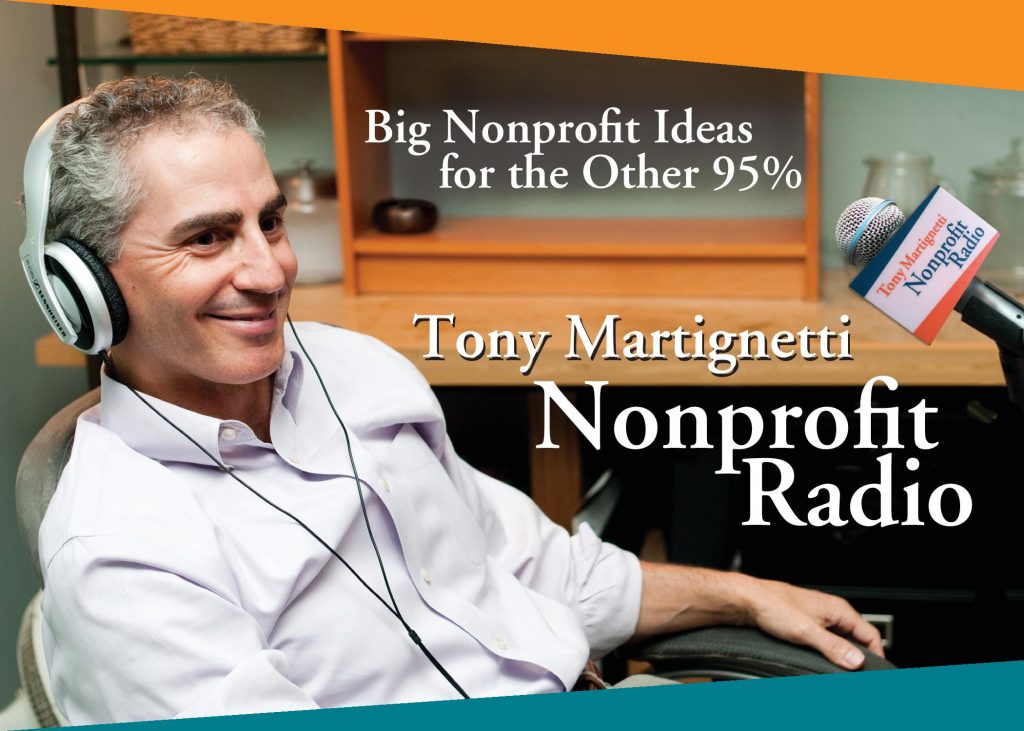
Every nonprofit struggles with these issues. Big nonprofits hire experts. The other 95% listen to Tony Martignetti Nonprofit Radio. Trusted experts and leading thinkers join me each week to tackle the tough issues. If you have big dreams but a small budget, you have a home at Tony Martignetti Nonprofit Radio.
View Full Transcript

Welcome to Tony Martignetti Nonprofit Radio, big nonprofit ideas for the other 95%. I am your aptly named host and I’m the podfather of your favorite hebdominal podcast. Oh, I hope you loved last week’s show, the 750th. Great fun. Great fun. Hope you’re with us. And I’m glad you’re with us this week. Because I’d suffer with duodnitis if you inflamed me with the idea that you missed this week’s show. Here’s our associate producer Kate with what’s on the menu. Hey Tony, I hope our listeners are hungry for more of our 25 NTC coverage. Fundraising storytelling, to show your impact. Lots of nonprofits don’t have direct monetary impact to promote their work. If that’s you, Meghan Cassle has practical tips and strategies to collect and distribute quality, down to earth stories from your real supporters. She’ll help you engage your audiences, increase donations, and save team time. Megan is CEO of Soapbox. Then 5 common email marketing mistakes and how to fix them. Yes, email performs well, period. But you want your email campaigns to perform best. Are you making typical mistakes with inducing folks to join your list? Welcoming them, bloating your messaging, talking too much about you, and in who’s sending. Patty Bree explains these common mistakes and how to correct them. She is founder and CEO of The Purpose Collective. On Tony’s take too. Beware of this planned giving scam. Here is fundraising storytelling to show your impact. Thanks for being with our 25 NTC coverage. That’s the 2025 nonprofit technology conference. We are all together at the Baltimore Convention Center where our coverage is sponsored by Heller Consulting technology services for nonprofits. With me now is Megan Cassle, CEO at Soapbox. Welcome, Megan. Thanks. Excited to be here. You are. I am. I’m glad to hear it. Your session topic is show. Don’t tell your impact using stories as a foundation of your fundraising. Uh, first, before we get into storytelling. Your advice and uh strategies around that. Why don’t you just share what the soapbox about the CEO? Sure, yeah, so is a software platform that was built for nonprofits to help different organizations collect and share stories from their supporters for advocacy purposes, fundraising, marketing, really anything that you would want to use user generated style storytelling for. So our mission is really to help organizations that often have low capacity. Low resources, low budgets, collect stories that are really authentic and not highly produced like a style videos, but people sitting on their own couch in their own living room talking about ways that they’ve been impacted by policies or different things in their own communities and leveraging those stories for nonprofits to be able to use them for a number of different ways. So is your background as software developer or nonprofits or both? Good question. Uh, my background is in journalism and nonprofit marketing. Yeah, so I started off as a journalist, but this has really been an interesting intersection between storytelling and marketing in my current role because we do a lot of storytelling, of course, but with a lot of different nonprofits we’re working with a little over 70 but um it’s a lot of marketing too because once you get the stories, how to get the stories and how to share the stories is all about marketing. Right. Um So you’re um. I guess your your session is about uh helping nonprofits that don’t have a direct uh monetary impact to to share with with folks uh so the easy case, you know, for $5 a day you can buy lunch for children or pay for spay neuter, etc. so folks that don’t have this kind of monetary impact. So what um what types of organizations are you focusing on in your session? Yeah, so it was hard to come up with the learning objectives because I think there’s a lot of different ways that we could go with this, um, but it sounds like you read the description. That is true that it’s excellent work, homework you listen to some of our episodes. I listen to. preparing for each other. Trying to be as eloquent and analytical as the rest of them. Um, but yeah, so we work with a lot of organizations like I said that are doing advocacy work and it’s really hard to show that there’s like a tangible impact to that kind of work which often deincentivizes donors, not only to donate more amounts but also to donate more frequently or become a reoccurring donor, things like that. It feels in a world of instant gratification it’s really easy to want to donate somewhere where you know exactly what essentially product you’re buying for that and when it’s an organization that says that they’re going to work on economic justice or childcare policy and maybe that’s a 15 year fight or something that we’re still fighting for, it’s really hard to prove that those donor dollars actually went to something that’s making a real difference in their own community. And beyond that, even just proving that it’s something that’s going to impact their family as an independent person and not just like the whole of America. I think a lot of these things become very abstract, so being able to tell somebody that. By donating this $20 on a reoccurring level, it’s gonna be something that’s gonna impact your individual family is something that’s really, really difficult for nonprofits to prove and through storytelling I think that’s really the only way to do it is being able to have people that they can relate to and that seem like a real person and a real human kind of show the impacts that they’re actually making on like a daily or yearly or quarterly kind of way. I there any kind of Uh, infrastructure, uh, I don’t mean that technical sense, but like processes that we need to have in place before we can start to get, you know, these down to earth good, good stories, valuable stories. Yeah, I think that there is. I think a lot of organizations often go for quantity over quality in this sense and that. They also because they’re usually the bandwidth of the capacity that these organizations have for marketing or communications is has a big play here. I think a lot of the times when you say you need to be collecting stories, the first thing that nonprofits think is they’re like oh we don’t have a person for that, we don’t have the capacity for that, we don’t have a video crew for that and you really don’t need any of those things. Um, it’s something that a lot of Almost everybody in the world has a smartphone with a camera on it and it could be accessible for them to be able to record something right there that can help your organization make a really big difference, um, but also meeting people where they are I think is really important. So if it’s a written story that comes from email or it’s a comment on Facebook that you can kind of use to turn into a story or potentially contact that person on an individual level to get a video from them later, I think that’s great. Um, that’s really what our tool has done in a lot of ways is just make the storytelling more accessible to people so it doesn’t feel like such a heavy lift to do it, but I think in terms of the idea of like what kind of process we can have, I think like I said, meeting people where they are to make it incredibly easy and being OK with it not being perfect. I think a lot of organizations want the really polished like end of year wrap up video that looks beautiful. And costs like 80 for a 3 minute video that they can use for a bunch of different things, but truly the most impact we’ve seen with the stories that come in are often like I said, like somebody sitting on a couch in their own living room talking about how expensive childcare is and how a specific organization can maybe help that. um. Very low production value, high sincerity, right? People speaking from the heart, genuine, not actors like their hair is messy doesn’t matter what the lighting is. I mean, as long as they can be pretty well and it’ll be. Yeah, maybe they have a cluttered kitchen behind them or kids running around in the background yelling and that’s all the better. Uh, people feel the same way about editing the videos when they come in. There’s gonna be a lot of ums or ahs or any of these things in them, and they’re always like, well, how can we cut these out so it has a higher production value, but in the end that’s how we all talk on a daily basis, so making it seem really conversational and relatable is actually a lot more impactful than having a highly produced video style ad. Um, you just complimented, uh, nonprofit radio without knowing it because I don’t edit out ums and ahs and somebody on a previous panel today said, uh, you know, there are video editors, I mean audio editors, and there are that you can just give your file to and they’ll, they’ll spot the ums and ahs. and I said no, but that’s human. You know that’s the way we talk and I want a conversational show, you know, uh, we’re, it’s not David Muir. And I I think it’s easier for people to follow along if it sounds like a conversation than it is if it’s like perfect. I think, yeah, I don’t you think it’s easier to follow too? I do. I mean if it’s we’re used to dialogue, right? I think that we’re used to having this is we’re having a conversation right now that I could have with valid. I think your podcast is the best podcast. On the market, yeah, but you’re gonna make me sound perfect, right? Yeah, there’s nothing to do. OK. Alright, so we’re talking, the point is it doesn’t have to be high production value, right, to be sincere. I mean you were saying you think it’s more listenable, more approachable it’s more approachable, right? It is, yeah, and I think, um, just to repeat myself again, I think meeting people where they are is really important. I think a lot of nonprofits have the issue also that their donors aren’t always the same people that their organization is impacting. So creating like networking capabilities or just like being in the community and making partnerships with community members that are maybe working on the ground with people that you are impacting is a really good way to connect with people to get stories, but this is also something when we talk about this we want it to feel, especially my session is specifically about fundraising, how to use storytelling to increase your donor dollars and we don’t want this to feel exploitative. It shouldn’t feel like something that’s like we’re gonna use your really personal story about Medicaid or something like that. able to get donor dollars. It should be something that feels really empowering. People are really struggling out there and that’s why nonprofits exist, right, is for the common good of people that are having issues or things in their in their world that they need help with. Um, so empowering people to uplift their voices is Really, I think in a lot of ways empowering to them but it it it works really well for nonprofits as well, but it should feel like something that they’re a part of and we often see that organizations that include their donors or people impacted in their own storytelling um are actually usually going to donate more because now they have an attachment or like a sense of ownership in the organization because now they’re a part of it. It shouldn’t just feel like something that you’re going to use in a fundraising ask but. It’s also something that the staff is listening to when you’re working towards your mission and like creating operating values and all these things of having member voices. All right, so, um, after we’re, uh, conscious and reaching out to folks where they are, we, we see a potential, you see a potential story you mentioned maybe a Facebook post or something or some social post that is a potential story, uh, what’s where, where do we take from there? How, how do we how do we reach out to the person. Again, now from our perspective, sincerely nonexploitatively, but you know we think that there could be something there that would encourage others to to support. Yeah, that’s an interesting question partially because for the the work that I do specifically we work with so many different organizations and they all have a little bit of a different approach for this because their audiences are so different. I think a really common way we see it is people that are already on a list like a marketing list obviously if you have like a really big email list sending out and ask for stories is really helpful. I like to do anybody that’s already taken an action so donors are obviously great. I think giving money is like the highest bar action so even in like a donation receipt email that they receive, you can include an ask for storytelling there, whether it’s a Google for asking. For a written story or a link to something where they can upload a video or something like that. I think that’s a really good way to do it. Same thing with live events. If somebody is willing, especially in our day and age where everything is virtual, if somebody is willing to physically show up at an event for you, they’re for sure going to be willing to record a 20, 32nd story of something that they’re dealing with because they obviously have a deep value or attachment to your organization. In terms of like at the events you could ask them right there. We have a lot of people that do that, absolutely, and it helps just add like a little bit of fun to the event too like I don’t know, you go to a wedding and there’s like a goofy photo thing, you know, like people like to do that kind of stuff and it. There’s a lot of different ways you can do it. It doesn’t even have to be a video. It could just be a photo or something. Um, I think that too is like having a little bit of a user journey is often helpful. You don’t need to go from 0 to 100 right away. It doesn’t have to be like, we heard you have this issue, we want to get a 30 minute interview style story with you. It could be something like we would love for you to even like signing a petition, like, so you sign a petition first. If they sign the petition, you send them an ask for a written story. And then after they sign on a written story, you could even just send them back their written story and ask for a video. Um, that’s actually advice that I got from uh somebody named Felicia at Mom’s Rising. That’s the way that she does user journeys to get videos on soapbox and it’s been really effective for them. So it’s kind of like again meeting them where they’re at and then asking for like a little bit more every time um and getting them into something that they feel really comfortable with. Although the journalism part of me is like if you see a comment on Facebook of somebody saying something, I personally would reach out to them personally and ask them like just in a message or something, we saw that you wrote this, we’d really love for you to get involved and I think that’s a good way to do it. It’s not saying we need a story from you to use for this thing, but saying we would love for you to get involved um with our mission and it will help us in these ways are great strategies gave us like half a dozen. Methods of gathering story whether it’s an event, uh, you know, face to face, uh, or, uh, or virtual, um, other, uh, so this is, you know, I mean this is, I think this is the part where it it may break down like there’s we see potential but we don’t. Take advantage. We don’t, we don’t reach out to the person, not take advantage of the person. We don’t take advantage of the potential that’s there to, to support our mission, you know, we just kind of let it go or, you know, oh that that sounds interesting, and then we’re on to the next post or something, you know, or I’m glad that glad she said that, but then nothing more comes of it, um. So anything else at this at this stage that um yeah I mean I think storytelling has to be intentional like you’re saying, I think people will even like hear the things that I’m saying now and be like, well, maybe we’ll think about it or like it’s gonna take effort. It is something that you have to like consciously think about. It’s kind of like. I, to be honest, I think about this a lot like fundraising. If you, they say on average it takes 7 touch points before somebody will actually donate, it might take a couple of different touch points before somebody’s actually going to give you their story, but if we asked once for donations and they didn’t do it, no fundraiser would stop asking, right? Like you have to come up with other strategies to do it and once you come up with a strategy for storytelling that really works for your specific audience and your organization, it can really help make those asks a lot easier so it is worth the effort. Um, I do think though it shouldn’t feel storytelling shouldn’t feel like something that’s sort of parallel to the work that you’re doing, it really should feel integrated. It shouldn’t feel like, well, I really need a second staff person or something to be doing this. It should be something that feels really in line with the fundraising and the marketing strategy that you already have like for nonprofit to have a marketing strategy that doesn’t include storytelling, I think. a really big loss. Um, it should feel very integrated in that and if you’re doing it correctly, it shouldn’t feel like it’s like the work for 3 people. It should feel like it’s integrated into what you’re already doing. It’s part of the process see something that could be valuable. You talked about the journey, the content provider journey, you didn’t call it that, but uh. I don’t know why I’m using jargon. I have jargon tail on my own show, and I’m, you know, no, but it’s a journey for the person. They may not be a content creator. They are for you, but um. Yeah, no, it’s very like low lift in the beginning. Like it could just be a photograph we just use the post that you just quote the post that you just wrote something like that. You’ve already written it we use it on our website. Can we quote that in an email in a newsletter? That’s a really compelling story. We’d love to put that as a pull out quote in our next newsletter. People love that kind of stuff. Yeah. And people will feel special about it and then they might even share your newsletter on their own social media because they’ll be like, look, I’m quoted little vanity, yeah, we love to brag about ourselves, especially if we’re given a good opportunity. Look how we become validation personal validation now we’re the and there’s no humility on this podcast, um. OK, so now we’re at the right, so we’ve gathered some content. Some folks have said yes. Some said no, but that’s OK because like you said, we wouldn’t stop asking if it was fundraising. So we’ve got some, got some stories, different formats, um, suppose it’s just, well, you suppose it’s just a written story and, uh, we got their authority, their consent to use it in a newsletter. Anything more that we thank them. I just wanted these little mechanics. We thank them before we ask them if they take a further step like write a paragraph or something or a little fuller story. Any anything else we should be doing? Yeah, I think. Not to use the classic, it depends, but I think it does depend a little bit on like. It does kind of a little bit come down to capacity and volume like we have some partners that will be collecting hundreds if not thousands of videos at the same time. So it’s really difficult to be able to have a personal touch with like each of those individuals, right? Um, but I do think having like an auto triggered this is where tech comes in like having an auto triggered email that can go to every person that submits it saying thank you for the the video or the submission and also telling you, telling them what you’re gonna use it for. I think it’s really helpful. um I think a lot of nonprofits fall into abstract when they talk about use cases where they’re like we’re gonna use this for like tech justice or like. You know, fight this economic disparity, um, but that’s not really telling them what you’re actually going to use their story for and what it’s actually going to do and that kind of falls into that impact part is like now they feel like they’re submitting it to a black void that’s never gonna happen, um, so telling them like this is potentially going to be featured on our social media or embedded on our website like do something that’s actually going to tell them where to look for it. I think it’s often really helpful and deeply incentivizing for them to want to submit it and also potentially want to submit again in the future um and to share it, which is helpful. Um, but yeah, otherwise like we see a lot of people that will put stories on, yeah, like embedded on their website or like we work with a lot of member organizations if you’re looking for members, um, have members talk about what they like about your organization and embed a bunch of videos on your website under the membership page or take action page. um, yeah, otherwise. Mechanics, I guess it just it so depends on the on the people. I think if it’s a small group, like if you’re asking 5 volunteers, we have a lot of organizations that will do this even with just volunteers. They just have volunteers talk about different things and ask their friends to submit stories. If it’s like a group of just a few, I think even like a handwritten note thinking them or something would be amazing. I’m a big fan of handwritten notes. I think a handwritten note or like maybe a discount on like an event registration or something or a free event registration or something, a t-shirt, anything like that. I, I, I think it’s important to steer away a little bit from being like here’s compensation for recording a video because I do think once you compensate people will kind of say whatever you want them to say and it does affect the authenticity of it a bit. Um, but providing them a t-shirt with your logo on it, I think it’s a gratitude. It’s like some of these stories that we’re collecting are really personal about people’s use of Medicaid or gun violence or abortion care and so for people. to put themselves out there and really do that for you to be able to make a difference at your organization I think deserves a thank you in some way. And that’s how you’re building engagement, right? Like so you want them to be a donor in the future like you’re just building a relationship with them and they took a really big step so you should take at least a medium sized step to meet them. You got a good story, you can share? Um, let’s see. Yeah, we have, uh, I mean we have lots of places that are using it really effectively right now. I think I keep mentioning Medicaid because it’s so topical that we have 4 or 5 organizations right now doing save Medicaid campaigns um for advocacy purposes. Um, we work with the National Education Association, um, and they’ve been doing a lot of getting a lot of stories from educators about why public education is important, why the Department of Education is important, um, things like that which have been really great. Um, we worked with, trying to think of like volume over over quantity a little or like quantity over quality. Uh, we have some places that like I said, we’ll collect thousands of videos on our platform for something like Color of Change collected thousands of videos after George Floyd’s murder, um, on our platform, basically just saying that they like stand with the family and that things need to change, um, but then on the flip side of that, we have an amazing organization called. Community catalyst that they work on health justice and they’ve been getting a lot of really, really amazing stories about medical debt that have actually like done a lot to impact policy and we talked about personal stories. I mean, medical debt now you’re now you’re saying to the world that you’re suffering financial difficulties, things are challenging for you and that’s, that’s very personal. I mean, a lot of the stuff we’re talking about is we talk about abortion access and that’s also a deeply personal. Um, they specifically do a really good job of, I think you can use storytelling in a really tactful way to distill really difficult information or like policy, right? Like. We’re not, not all of us are really well informed about what certain policies will mean for us on a day to day basis or like for our family and community catalyst in particular I think does a really good job of taking like high level decisions and distilling it down to what it actually means on a human level through storytelling. They did a campaign about nonprofit hospitals and I had no idea like what the impact of nonprofit hospitals were before they did this campaign. Um, it’s something that almost everybody has in their community, but we’re not really aware of, um, so storytelling is a really powerful tool to be able to change those kinds of things. Um, have you done your session yet? I haven’t. You haven’t. It’s coming. OK. OK. I know I’m giving away all my tips. This is not gonna nobody listens to this podcast. Um, no, we have 13,000 listeners. That’s amazing. It’s good. It’s a, I’m grateful to have that many people listening each week. Um, otherwise, yeah, otherwise I would have asked you, uh, some of the questions that you got from the audience, but, um. So, uh, leave us with something that uh we haven’t talked about yet or maybe amplify something we did talk about, but you wanna go a little deeper. Um, with some encouragement. Leave us with something good. Yeah, um, I think a big reason why just like a little bit of my own story I guess like I went to school for journalism and a really big part of that was um making sure that voices are being heard that aren’t normally being heard by the mainstream media or just different things and I think in nonprofits it’s easy to target people that have like a really good story or um are already active or have a community following or things like that but I think some of the most impactful stories are the people who have tried to tell their story a lot of times and felt like it never has gotten heard and so they just stopped telling it. Um, that was a really big part of my sort of like journalistic career was um talking about the um so I’m like stumbling a little bit I just haven’t talked about this story in a minute but. Um, was talking about the healthcare access and like federal funding access on Native American reservations in rural Montana during COVID and they had like absolutely no belief that the federal government was going to be helpful um through IHS funding at that time and they there was no coverage in Montana about what was going on in those areas um through like funding. And it was a really big sort of like catalyst for me to be like I just want there to be a really accessible super easy way for people to not only tell their story but feel like that story is being heard um and like actually get used for something that could be impactful. So that’s sort of really like a big part of why our company is the way that it is now is just feeling like everybody has the same opportunity to tell their story in a meaningful way. Megan Castle, CEO of Soapbox, thanks very much for sharing all your ideas. Yeah, thanks Tony. It’s been. Thank you, my pleasure and thank you for being with Tony Martignetti nonprofit radio coverage of the 2025 nonprofit technology conference where we are sponsored by Heller Consulting. It’s time for Tony’s steak too. Thank you, Kate. I have to thank our long time listener and fan of nonprofit radio, Cheryl McCormick. She’s Been with us for many, many years. She’s CEO of the Athens Are Humane Society in Athens, Georgia. And she alerted me to a planned giving scam. That has been run in two charities in Canada. And the exact same thing, storywise and. Document wise happened at. The Athens Are Humane Society. What happens is they’re preying on small charities that would get excited by a $95,000 planned gift. And they promised to send you the check, and, but Cheryl and her team had some suspicion about the, the way the conversations were going and the strange email address was an AOL address, but the person was claiming to be an attorney. And there was no obituary for the person that they claimed had died. There was no will available. So these are the things that raised their suspicion. Uh, the, uh, $95,000 check did arrive. To the Humane Society, but Cheryl and her team had figured out the scam in advance because they found some news coverage of the exact same scam run against two charities in Canada. And I did a LinkedIn post, if you want to go back to my, look at my LinkedIn posts from last week, you’ll find a link to the news coverage of that, uh, that scam against the two Canadian charities. What is the scam? They send you the $95,000 check, then they tell you, oh, you made a terrible mistake. We sent you too much money. We need you to wire back 70 or $75,000. You were only supposed to get 20 or 25. You wire the money back. And after that, the $95,000 check bounces. And you are out the money that you wired them because they’re long gone. So Beware. Uh, it’s people preying on small charities, uh, who would get excited, you know, uh, well, any charity, I think would get excited by a $95,000 gift of any type, planned gift or, uh, lifetime, immediate gift. Take your time. Now you’re aware of this scam, but generally, Trust your intuition. Do your due diligence, research. If you’re not sure about something, don’t say yes. You know, you don’t have to urgently accept a gift. Of any type, whether it’s a lifetime gift or or planned gift. Take your time. Make sure you Do the research. Because there are some folks uh taking advantage of our community, which Boils my blood. It was miserable. We we’re gonna fucking. Scammers picking on our community. Damn you, damn you scammers. That is Tony’s take too. Kate. We hear that scammers would be going after small nonprofits and not like. Rich people, they can do both like Jeff Bezos or something like Amazon and yeah I think they’ve got enough, uh, Bezos, but uh you can do both. It’s not mutually exclusive. So, I want folks to be aware that there are people preying on nonprofits. My favorite scam is the one that dad got, your brother, he got in the, in the mail that. He was like some long lost relative of some prince overseas and he has to like claim money or something and he’s like royalty now. Yeah, yeah. I think he told me about that. He asked me, I think he asked me about that at the time. That was a few years ago. Yeah, I remember we’re we’re descended from royalty or something like that, yeah. Martin Etis. The Martignetti uh science, the uh the. The, the Duke and Duchess. Oh yeah. I, I would be the duke, your dad would be the duchess. Well, we’ve got boo but loads more time. Here are 5 common email marketing mistakes and how to fix them. Hello and welcome to Tony Martignetti nonprofit radio coverage of 25 NTC, the 2025 nonprofit Technology Conference. We’re all together in Baltimore, Maryland. Our 25 NTC coverage is sponsored by Heller Consulting technology services for nonprofits. With me now is uh 33 timer back on nonprofit radio, Patty Bree, founder and CEO of the Purpose Collective. Welcome back, Patty Breach. Thank you so much for having me. I’m pretty sure it’s, I think that sounds right, yeah, it is, um, and this year. Your NTC session is uh 5 email marketing mistakes you’re probably making and how to fix them. That’s right. Uh, I think you and I kicked off our uh NTC journey with, with the, uh. The the with with an email journey, your your your email welcome journey, isn’t that what it was called your journey, yeah, that’s right. I’m a little bit obsessed with. OK, yeah, that the previous session attributed the 55 email journey to you and you’ve got exact time frames and first one should look like it came from the CEO or what like it was personally prepared. Yes, we’ve been through that. Um, so, uh, the 5 email marketing mistakes, why don’t you just tick off the 5 and then we’ll be happy to go into detail. Go ahead. What are the 5 you’re probably making mistakes. Yeah, so the first mistake has to do with how you’re collecting emails for your list and that is the mistake that you’re probably making is that you’re just asking people to subscribe to your newsletter. Um, the second mistake is that after you convince someone to subscribe to your newsletter. Um, you do nothing. You answer that with silence. Even just one email would be great, but a lot of people don’t have that. OK. Um, the third mistake is that your your emails are trying to do everything. They’re just they’re way too full. And the 4th mistake is that your emails are talking about you not talking to me. And then the 5th mistake is that your emails are not coming from a person. OK. Uh, some of these sound familiar, like talking about you, you, you like, you like it donor centric, donor focused, not about us, the work, about you, the donor, but we’ll get to that. That’s number 4. I’m jumping ahead, but some, some of these sound familiar, including the, uh, how you’re welcoming the welcome series. OK, but let’s start with number one, how you’re, how you’re collecting what what what’s, what are we probably getting wrong there again? Yeah, so I think um most of us are probably just putting something really simple on our website that says subscribe to our newsletter or join our email list with a little box to put your email in and I argue that that’s not very compelling. Nobody really wakes up in the morning thinking I need some more newsletters today so uh I’m gonna go to this organization’s website to get my fix. I’m so glad they asked me to join an email list I was really hoping to do that today. Um, so I encourage organizations instead to invite people to be a part of a movement, um. You know, include a call to action that’s really inspiring. What is it that you’re offering people like is it that you’re gonna provide stories of hope in their inbox every day which all of us could use a little bit more hope in this day and age? Is it um that I mean politicians are really good at this if you go to their websites and see what their call to action is on their email newsletters, it’s things like you know we’re gonna. We’re gonna dream big, we’re gonna fight hard, we’re gonna put power back in the hands of the people, like really inspiring messages where you read that and you think, yeah, I wanna do that. Absolutely, sign me up. Um, what pop-ups, uh, light boxes, what do you feel about, are, are, are pop-ups and light boxes, are they antiquated? No, pop-ups are still, I think those are good. Can you, can you do those like, well, you said it for like 15 seconds on the site and then it pops up or how do you feel about those? if they’re not good then say, say you’re, I’m out of, I’m out of line. No, I think those are great um I think what you said is really important like wait a little bit before a lightbox shows up so you can either do that with a time delay or you can do it with scroll depth on the page depending on your website so I think something that’s annoying is when you go to a site and you’re trying to read. Whatever it is you came there to read and like almost immediately something’s in your face and you’re like I was trying to read that like get out of here. I came here for a 1015 seconds with the info that I wanted 15 seconds in the world of websites is actually a long time to spend on a page so if you’re delaying something that long, great, like at that point someone if they’ve been there for 15 seconds, they’re probably interested in you enough to sign up for your email. But you want to know what your average time on the. On the site is, I mean, if it’s, if it’s 8 seconds, that’s, that’s pretty bad actually. If people are, people are leaving your site after 8 seconds, that’s bad. Well, now you know what, it it depends on the reason they go though if they, if they, if it was a search and now, now that brings in the Google AI summaries that is that is now reducing organic, uh, organic hits right because we’re getting it from the AI summary we don’t even scroll past that, but if you get past that and people came with a specific question and you’ve got the answer. Um, they might only be 10 seconds. Yeah. Yeah. They might only be 8 seconds on your home page and then click through to a different page. Um, so yeah, I think, I think lightboxes are great. I would just make sure they’re not immediately in your face. OK, OK. Um, right, so you wanna, you’re trying to draw people into your work in inducing them to join you, so not just get a, get a get a weekly. Yeah, you’re inviting them to be part of something bigger than themselves, joining a movement, solving a problem, being a part of the solution, being inspired, that’s really the call to action that I want every nonprofit to have on their website for their email newsletters. I have a good friend. Credit her because I’m gonna use her material, uh, Sherry Quam Taylor. Uh, we spent a lot of time together on LinkedIn. And she says that her advice is that you’re not giving. To us, you’re giving to the cause through us, so it’s 2 versus through. You’re giving to. Uh, solving world hunger through Feeding America or you know, um, etc. you know, do you, do you buy into that or you’re welcome to agree with Sherry disagree or disagree I should say. No, I definitely agree. Yeah, I think that’s that’s totally right. One of the examples I use in the presentation is a. The action that says let’s end malaria. It’s from an organization that’s working and you know it says like we believe this is possible. Join us. Like we’re we’re going to get rid of this disease. Let’s do it. And so the people who are signing up for that email list and donating to that organization. They’re trying to get rid of malaria. They’re like, Oh, is that what you guys are doing? I don’t know who you are. I want to get rid of malaria, you know, that’s the one thing I’ll join your list because, yeah, no, no, absolutely, alright, something bigger, right, something big, the bigger cause. Yeah, right, right, that’s the sort of inducing, uh. An opening relationship, you know, hear from us regularly. OK. OK. Um, so how are you welcoming? Uh, here we are now. 5 email, the, uh, the ubiquitous Patty Breach, uh, purpose collective 5 email welcome journey. Is that, is that what this is? How are you welcoming folks after the first one? I’m sorry, after they say yes, I will, I will, I’ll take your email. Your, I’ll take your newsletter, sorry, yes, I’ll join your newsletter. What should happen first thing. Yeah, so what I like to point out to people is that the journey that it took for someone to give you their email address, that didn’t happen in a minute. They probably, you know, first heard about you through word of mouth or some other means and so they maybe spent some time poking around in your social media. They liked what they saw, so maybe they ended up on your YouTube channel watching some longer form videos, maybe they popped over to your website, read even more about you, looked at your blog, and then decided. Yeah, I like this organization. I like what they’re doing. I wanna be a part of it. Here you can have my email address so that process that might have been days, hours, it was like by the time they give you their email address they are fired up about you. They’re like, yes, I’m in, sign me up, let’s do this let’s end malaria or whatever it is and if we’re not meeting that enthusiasm with our own excitement then it’s a really missed opportunity. So I recommend sending at least one email that just says yay, you’re here, you made a good decision, welcome. OK, OK, uh, that’s at least 1. Let’s let’s review the uh the 5 email welcome journey. You we we’re not gonna go into the 35 minutes that we spent, uh, 2 years ago, uh, no, 3, no 2 years ago. Yeah, this is the 3rd. Um, but you know, remind us what the, what this ubiquitous journey looks like. Yeah, so the idea is to capitalize on the window of opportunity immediately following someone’s action. So I recommend sending 3 to 5 emails starting as close to immediately as possible, so at least within the 1st 24 hours after this action. And going up to 3 or 4 weeks later. So, um. You can send as as many or as few as you like in that window depending on your team’s capacity depending on what you feel like you have to say um but I recommend starting with something simple that’s like congratulations we’re so glad you’re here you made a good decision, welcome to the team, yay um and then from there you can go into um more content that. Talks more about what it is that you do broadly, but we always want to make sure we’re giving someone something of value, so saying like. Um, here’s our most popular piece of content that we put out in the last year. We thought you might like it. Everyone else told us it was really great. Have you seen it? Have you seen this video? I’ve read this blog post, um, you can invite people to come hang out with you if that’s appropriate, like, hey, we have events we’d love to see you at one of them. We have volunteer opportunities we love to meet you, um, something that’s like really drawing them in to the work and making them feel like they’re an important part of what you do. And if you want, you can throw in a donation ask as one of those emails as well. So the, the second one, not certainly not the first one, no ask in the first one that I have your attention, can I have your money? Alright, so 2 or 3 you could put it in. OK. It could be, it could be a different ask too. It could be a volunteer ask, could be a sign, uh, a petition is a ubiquitous one. Survey, maybe you have a survey about your interests that are all valid calls to action, right? Absolutely, yeah, and they’re like I said, they’re very fired up about you at this point, so it’s an excellent time to ask them for something like this. And the second one initially joined 2 to 3 days after that initial action and the first one came within 24 hours. OK. OK, why don’t we suppose we’re we have the capacity for a 555 step. what are we doing in 4 and 5? Yeah, so, um, I would say that the time between emails should basically start doubling so you wanna have one email immediately, a couple days later another 15 days later another one, a week later, another 12 weeks later, the last one. Um, and I think you can’t tell too many stories in these email welcome journeys, so I like to do, um, you know, a simple welcome message for the first one, tell a story of impact meaning here’s the story of lives that are being changed thanks to supporters like you, like this is what the work that you’re making possible now that you’re part of this community. Third email can be some call to action like volunteer with us, come to our events, take our survey, make a donation, whatever it might be. 4th email tell another story, and then that 5th email it could be another call to action like we want you to read this, we want you to watch this video, we want you to donate if you haven’t asked that yet, whatever it might be. OK, thank you. Good overview of the welcome journey. All right, that’s how you should be welcome, but your advice was at least 1. That’s not just the regular newsletter, at least one personalized thank you, yeah, you’re with us. Thanks so much. Yeah, exactly. I mean it can be overwhelming to think about creating a 5 part series, so maybe just start with one, just at least get that going. OK, um, your emails are too full, too much, too dense. What, what does this look like? What’s, what, what are we probably getting wrong here? So, um, it sounds like you could have called this most likely like 90% chance that you’re getting these wrong instead of probably, but you’re being, you’re being thoughtful to to the community. You’re probably getting this wrong, but overwhelmingly likely. All right, what, what’s the matter with our, our dense emails? Yeah, so one of my mentors describes marketing communications as like throwing ping pong balls at people and so if I were to throw 72 ping pong balls at you at once, you might just like cower in fear like what is happening? You probably can’t like focus on catching one of those, um, and I think a lot of times that’s what our. Emails end up being like in the nonprofit world it’s just information overload it’s just this this this this this this this and this and it’s like whoa this is like too much I I don’t know what’s going on in this message and a lot of times also I think they fall into this category that I like to call the phone call to mom which is if you could imagine. You know, a mother figure in your life calling you and saying like, hey, how are you? What did you do today? What did you do yesterday? What did you have for dinner? Where are you going tomorrow? This is a phone call from mom, that’s a better way to describe it. Yeah, but I think it’s better if the rare as that is, we know mothers never pick up the phone. No mother’s phones outgoing calls. They only they only receive calls. Uh, but if you know, but the, the phone call from hell or the phone call from mom. OK. Um. So that type of reporting. Of like this is what our nonprofit has been doing we bought new computers our CEO won an award that is only interesting to your mom. No one else wants to hear those kinds of updates so um I really challenge nonprofits to look hard at what they’re putting in their email newsletters and see if they can cut it down to just things that are relevant to their supporters like a story of impact could be relevant. And saying like you know here’s this wonderful uplifting story that we wanted to share with you it’s so heartwarming, it’s so inspiring and you’re a part of this work with us so thank you for being here and also you know inviting people to come to an event sharing a resource that might be helpful to them. That’s the type of content that I’d like to see more of in these newsletters, and it could be really simple just three pieces of information in an email. You could even just do one. You could have a newsletter where you send one topic, one story. You can do that. OK, yeah, your supporters don’t need to know everything, right? Like you serve a rack. We moved the server rack, uh, out of the ladies’ room. Now the devoted server closet. Thank you for your support. Alright, uh, yeah, see, the audience likes our idea. That’s the, uh, keynote keynote session going on in the background, but we persevere. Um, OK, yeah, so take a deep edit to your, your bloated emails like, so is it. All right, so some info just doesn’t need to be shared, like the, the, the new laptops and the server rack. That doesn’t need to be shared. But if, if, if we feel the information is relevant. Are you saying it’s better to maybe send more frequent emails that are less dense? Exactly, yeah. So if you’re an organization that is frequently updating your constituents, maybe you have a lot of events, maybe you have a lot of free resources there’s a lot going on. I would recommend sending more emails that are shorter. OK, what’s the maximum and maybe there isn’t a hard rule uh maximum number of emails. Let, let’s not even say a week. I mean, in a month. How many, how, how many would be too many, thank you, in a month. Um, that’s a good question. I don’t know that there is a hard and fast rule. You could go weekly, so that would be 4 in a month. Um, you could send 2 a week if you have a lot to say, if there’s a lot to update your supporters on. I wouldn’t do 2 a week if you’re just repeating the same content across those emails. Um, you might get people starting to to tune out, but if there’s a lot going on, yeah, weekly emails I think. All good. What’s your advice on uh resending to non-openers? Um, yeah, great question. That I think um it’s about time. It’s only 18.5 minutes in. You got a decent question. All right. That can be a good strategy, um, that has more to do with your Deliverability like getting people to interact more with your messages, um. My answer to that also I think would depend on like what is the bandwidth of your team’s capabilities and if getting the newsletter out the door is already a lot of work and it doesn’t really feel possible to go back and resend to not like that’s just too much on top of everything then I think you can skip it. OK, I mean, I, I think it’s an auto like just click click a button. Depending on your email provider, yeah, it can be. I use MailChimp. I know it’s, it’s an option. Just tap the button and then they’ll ask when do you, you know, when do you want to resend? OK. Uh, all right, so you’re not opposed to the idea. No, not opposed. OK, all right. Um, but you’re not enthusiastic about it either. Yeah, I mean, I guess. I have mixed feelings on it because I think that. I think that sometimes we can get a little fixated on the people who are not opening our emails, people who are unsubscribing. I hear this a lot from nonprofits they get. Um, they’re hurt by the people who are unsubscribing from their email list like why are these people leaving like look at all these people who don’t want to hear from us anymore like this is hurting our feelings, um, and I really want our attention and energy to go to the people who are opening your emails and are engaging with it like those are your supporters who are happy to hear from you. They’re excited about what you’re doing. And the other people who don’t want to read your messages, don’t wanna open them, don’t wanna be on your list, that’s fine, let them do whatever they want. Let’s focus on the people who are excited. OK, all right, very positive. The positive purpose collective, um, I guess the other thing you could do is look at how the resend does. If it’s very low, then you, then you’re just annoying people a second time. But if it, I don’t know if it does like 20, 20% or more. Of the the non-opener, now we’re now the population is the non-openers of the first one. I don’t know if it does 20% or more. That’s that worthwhile? Yeah it was probably worth sending, but it’s like 2 or 3%, people are, you know, they’re blowing you off a second time. Don’t resend again. I don’t know. How about this thing. 6 months later you’re getting the same email you got. All right, don’t do that. That’s another one you’re definitely doing wrong. If you’re doing that, you’re, that’s definitely a mistake. OK. Um, all right, so that do we cover email density, there’s almost only so much capacity in. Could be just 12 or 3 if you feel it’s necessary, but certainly no more than 3. And same thing with calls to action, right? Are you, you’re you’re a subscriber, I think or believer one call to action per message, right? Yeah, yeah, keep it simple. Um, click rates are, I mean, famously low across email. A good click, an amazing click rate would be 10%, meaning 90% of people are not gonna click on your email. And so I think we can do ourselves a favor by making that one click really count and just have the one call to action. So rather than saying you know you could do this or that or this or that like sometimes that creates decision fatigue and people choose nothing or not even just 2, not even 2 choices. I mean you could, you could definitely do too like um something that’s common is to include a donate button in the footer of every newsletter so maybe your call to action in the body is something different like. You want people to register for an event. That’s your main call to action. I think it’s fine to keep that other donate link in the in the in the body, keep it to one or QR code you like QR codes. Um, yeah, I love QR codes. I don’t know how often QR codes are effective in emails. Sometimes you’re on your phone that’s right. Most emails are opened by phone, right? It’s a very high percentage. Yeah, very true. OK. Right, those are more for social website. Yeah, or paper, you know, if you have like a poster somewhere, if you’re handing out a flyer QR code is a great way to get someone online really quickly. Yeah, you’re absolutely right. The vast majority of emails are on the phone, so you’re welcome to say no. Uh, talking, talking the subject matter, that the pronouns are wrong. Too much us and we and not enough you and us together. All right, expand on your, your thinking there. There’s the team. Here’s the team together. Purpose Collective, all three. Julia and Michelle just joined, uh, watching, watching the CEO. All right, you’re getting content. All right. Digital content. Don’t put too much in those emails though. Don’t fill those emails. All right. I told them, I told them in the previous, I’ll probably run these back to back week one will be probably be them with panel of three with uh, with, uh, Michelle Julia and, um, and Sarah from Brack, um, and then, and then this, this will probably be, will probably follow. I told them. Uh, you’re overexposed. The purpose is overexposed. Like every year now we got 100% of the team is on two different sessions. Next year it’ll be 4 people and you’ll want to bring them all in one sessions, yeah, so you need to sponsor. What you need to do is start sponsoring the podcast. That’s what. That’s what should be, says sponsored by Heller Consulting should be sponsored by the Purpose collector. So put that in the budget for for 2026, or even a spot opening, uh, even this summer. So you don’t have to wait you have to wait till next year. All right, so all three of you have heard it now. Yes, you do. All right, um. we’re we’re looking I think is what we’re probably doing wrong. So you might have heard me say this before. I believe the most important word you can use in any of your marketing is the word you and it’s really understandable how we end up talking too much about ourselves too much we focused language. Um, it makes perfect sense. We, we wanna show our supporters that we’re doing a good job. We wanna. Make a strong case for why our organization matters um we wanna prove that we’re doing what we said we would do with your donations um but unfortunately that can come across as um I mean one it can make it seem like we don’t need any support because look at us, look how great we’re doing we did this and we did that. Um, but the other thing is it doesn’t really invite the reader in to say you have a place here and you’re a part of this. It’s just, I mean it comes across as bragging like look at us, look at what we did, we did this and we did that and we did this other thing and now we’re doing this and we also did that. Aren’t we great? And so it’s a simple shift to just use more you focused language. So you know thanks to your support we’re able to do this um you’re changing lives, you’re helping to make the world a better place, um. I like it that you’re doing the work, not that you’re supporting us in doing the work because they all know that they know they’re not on the ground. They know they’re not visiting the homeless camps. They realize that they don’t do that. They know, but you can see it’s not like lying, you know, you’re, you’re, you’re saving lives, you know, whatever you’re improving the climate in Detroit. You know, it’s it, you don’t have to use the, you know, where you’re helping us do it. Yeah, exactly. And also you know just more gratitude when you when you add more language you end up with more gratitude statements like thank you so much for being someone who cares so deeply about this thank you for for making meaningful steps towards this goal thank you um I think that can really help your emails feel like. They’re relevant to the reader. It’s not just me talking about myself at this organization, it’s me saying to you, you matter, you’re a part of this, you’re really important, couldn’t do it without you. OK, OK. Um, email is not coming from a person. Yeah, so, um, I see this a lot where an organization will put the nonprofit name in the center line and the subject line will say something like spring 2025 newsletter and that just feels very corporate feels very one size fits all it feels like you know we’re just this. Nameless faceless organization that’s sending you an update. I think it’s much better to remind people that they’re humans who work at your organization, so put that, put a person’s name in the center line. You can still include the organization after that name if you want to. Um, but say you know this is from Patty Breach and sign the email as if it was from me, Patty Reach include my photo, you know, put something in there that shows people there are real human beings doing this work and we those real human beings, we want to talk to you are very important supporter and we want to send this message to you from us. Um, I think that personal touch can really help people feel more connected to the work that you’re doing, feel more connected to your team, and in the presentation I I include a screenshot that I pulled from my own inbox a few days ago where it’s just like corporate message after corporate message it’s like a receipt from the parking structure where I left my car to come on this trip and it’s like Toyota sent me. An email and Verizon sends me an email. It’s just like we’re so used to getting these meaningless corporate emails from companies. So if you put a person’s name in the center line, I think you’ll really stand out in the average inbox. I’m sorry, the line. Yes, yes. OK. OK. Yeah, right, right, yeah, Tony Martignetti. I do that. OK, good. I got 1 out of 5. Uh, no, this is not about me. Uh, all right, valuable, yeah, yeah, it’s, it’s the person and then you could say like CEO. I mean I’d be more apt to open a CEO’s email than, you know, if I get maybe I wouldn’t say director of development. I’d probably just leave that out. But yeah, a person, right, that’s a simple one. That’s a simple one. How do you feel about the uh yeah, using the name, you know, like addressing, you know, hello, hello Patty or you know, hey Patty or something like that I think it’s a really good idea, you know, you know, you know, the person didn’t write it personally, safe bet, you know, unless, but hey Patty, you know, hi Patty, you know, you’re into those dear, dear, yeah, yeah, great. OK. Even just even just first name yeah um Seth Godin says that what our supporters want most is to be seen and so to use someone’s name is one way you can say like I see you I remember you, I know who you are glad you’re here. Yeah, right, and now it’s person to person if the sender is a person and uh they’re saying hello yes exactly. How do you feel about uh leaving it there with personalization? That’s great. Is that right? Yeah, OK. Patty breach spelled like uh spelled like breech birth, not like breach, not like breach of contract breach, yes. Founder and CEO of the Purpose Collective. 5 email marketing mistakes you’re probably making and how to fix them. That’s what we just talked about and we are sponsored here by Heller Consulting. Technology services for nonprofits. Um, thank you very much for being with our 25 NTC coverage. Next week. Congrats, you’re a manager. Now what? And facing feedback. If you missed any part of this week’s show, I beseech you. Find it at Tony Martignetti.com. Our creative producer is Claire Meyerhoff. I’m your associate producer Kate Marignetti. The show’s social media is by Susan Chavez. Mark Silverman is our web guy and this music is by Scott Stein. Thank you for that affirmation, Scotty. Be with us next week for nonprofit Radio, big nonprofit ideas for the other 95%. Go out and be great.

Nonprofit Radio for November 17, 2017: Your Little Brand That Can & The Future Of Email

I love our sponsors!

Do you want to find more prospects & raise more money? Pursuant is a full-service fundraising agency, leveraging data & technology.

WegnerCPAs. Guiding you. Beyond the numbers.

Credit & debit card processing by telos. Payment processing is now passive revenue for your org.

You’re not a business. You’re a nonprofit! Aplos Accounting: software designed for nonprofits.

Get Nonprofit Radio insider alerts!

Listen Live or Archive:


My Guests:

Julia Reich & Stuart Pompel: Your Little Brand That Can

Control your brand. Respect your brand. Consistently message your brand. Recruit strong ambassadors for your brand. Julia Reich is from Stone Soup Creative and Stuart Pompel is with Pacific Crest Youth Arts Organization. (Originally aired June 10, 2016)


Sarah Driscoll: The Future Of Email

Email still rules and it will for a long time. Sarah Driscoll urges you to be multichannel, mobile and rapid responding. She’s from 270 Strategies. (Also from the June 10, 2016 show)


Top Trends. Sound Advice. Lively Conversation.

Board relations. Fundraising. Volunteer management. Prospect research. Legal compliance. Accounting. Finance. Investments. Donor relations. Public relations. Marketing. Technology. Social media.

Every nonprofit struggles with these issues. Big nonprofits hire experts. The other 95% listen to Tony Martignetti Nonprofit Radio. Trusted experts and leading thinkers join me each week to tackle the tough issues. If you have big dreams but a small budget, you have a home at Tony Martignetti Nonprofit Radio.

Get Nonprofit Radio insider alerts!

Sponsored by:


View Full Transcript

Transcript for 366_tony_martignetti_nonprofit_radio_20171117.mp3

Processed on: 2018-11-11T23:44:16.284Z
S3 bucket containing transcription results: transcript.results
Link to bucket: s3.console.aws.amazon.com/s3/buckets/transcript.results
Path to JSON: 2017…11…366_tony_martignetti_nonprofit_radio_20171117.mp3.90107214.json
Path to text: transcripts/2017/11/366_tony_martignetti_nonprofit_radio_20171117.txt

Hello and welcome to tony martignetti non-profit radio big non-profit ideas for the other ninety five percent on your aptly named host oh, i’m glad you’re with me. I’d be hit with see alaska sis, if you made me stomach the idea that you missed today’s show your little brand that can control your brand respect your brand consistently message your brand recruits strong ambassadors for your brand julia rushes from stone soup, creative and stuart pompel is with pacific crest youth arts organization that originally aired june tenth, twenty sixteen and the future of email email still rules and it will for a long time. Sara driscoll urges you to be multi-channel mobile and rapid responding she’s from two seventy strategies and that’s, also from the june ten twenty sixteen show. I’m tony steak, too promote the rollover, responsive by pursuant full service fund-raising data driven and technology enabled tony dahna slash pursuant and by wagner cpas guiding you beyond the numbers wagner, cps dot com you’re not a business you’re non-profit appaloosa accounting software designed for non-profits non-profit wizard dot com tell us they’re turning payment processing into passive revenue streams for non-profits tony dahna em a slash tony, tell us, here are julia rice and stuart pompel your little brand that can welcome to tony martignetti non-profit radio coverage of sixteen ntc the twenty sixteen non-profit technology conference we’re hosted by n ten the non-profit technology network. We’re in the san jose convention center san jose, california with me now is julia, right, and stuart pompel they’re topic is the little brand that could multi-channel approach for the small non-profit julia is branding consultant at stone super creative and stuart pompel is executive director, pacific crest youth arts organization julia stuart welcome. Thank you. Pleasure. Pleasure to have you both. Julia. Welcome back. Thank you. From lester’s ntc we are highlighting a swag item at each interview. And it’s, i think it’s only appropriate to start with. And ten non-profit technology network score and which i love the reverse side of as zeros and ones. You have your bits and bits and bytes. I believe that. Anyway. Zeros and ones swag item number one goes into the swag pile. There’s more to come. All right, julian stuart let’s. Talk about the little brandraise multi-channel approach. Small non-profit. Tell us about us. About the organization, please. Stuart okay. Pacific crest is a drum and bugle corps, and a drum and bugle corps is an elite marching band and it’s made up of students who audition it’s, a maxes out at one hundred fifty members. And this is a group that performs on field competitions and civic events. But primarily the unique aspect is a tour that our students go on for two months during the summer. Based where so we’re based in something california headquarters in the city of diamond bar. But we have kids from one hundred cities across the state, and we actually have some kids from other countries as well. My, my father was a percussion major, taut drum while taught elementary school music. But his major was percussion. And i, his son, was a failure of the drum. And then i must a clarinet. I tried violin. I practice. So you went from the easiest instrument to the most difficult. I yes. Yeah. My progress showed it. And i was just i was a bad student. I didn’t practice. If you only go to lesson once a week, you’re not gonna learn. I have to practice it’s. Very true. What is your background in? Music. So i was a musician growing up. I didn’t major in music in college, but one of the founders of pacific crest on when i first started, i was percussion instructor. But the group is made up of brass, percussion and dancers, and then a show is created very intricate blend of music and movement. And then we take that show on the road, as i said earlier. Oh, and the unique aspect of it is a two month tour where the kids leave the comfort of their homes and we travel by bus and stay at schools and performed four, five times a week. And just how old are the kids? Sixteen to twenty one. Okay, all right, julia let’s give you a shout. What is? Tell us about stone super creative. Well, i’m a branding consultant and i work mostly with non-profits and hyre ed and i help them to find and communicate their authentic brands to help them maximize mission impact. Okay, very concerned. We need to be multi-channel right? Because our constituents are in all different channels. And of course, we want to meet our constituents where they are, so we need to emphasized multi-channel. Ism is that true? Multi-channel is, um, yes, okay, it’s, like not discrimination, not, we’re not discriminating cross channels. How do we know where which channels we should be focused on? Because there are so many, how do we know where to be and where to place emphasis? Wow, it really depends on the organization. It depends on the organization’s audiences. I’m sorry, we’ll dazzle too broad. How do we know where our organization’s, how do we assess where our organization ought to be? I think that’s a better question for stewart to ask t answer in terms of his organization. Okay, all right, well, all right, where is where is? Where is pacific crest? So way have we have a number of channels, but the website obviously is the first communication place, but on social media, we’re where we limit ourselves to instagram, facebook and twitter and youtube as well we’ve not moved to any others and there’s some philosophical reasons, for example, snapchat is not one that we’re going to move towards of, but we know that the demographics of our organization are trending, you know, in terms of people who are fans and kids who are interested in being a part it’s going to be in that younger age group, and so we know that twitter is becoming more popular with that age group, and so we’re going to do a little bit more there to attract that age group. We also know that facebook is trending mohr a little bit older now, and so there are certain things that we do on facebook that we’re not going to do on twitter. Sorry or vice versa. That’s okay, wait, we have a small set here squeezed into ten by ten so don’t worry if you knock the night a night, not mike’s, okay? And so that’s, how we make some of our decisions, you know, we start with what’s out there a lot of times the kids bring it to us, we should have a snapchat, you know? Or we should have a facebook page, or we should have a facebook page for the trumpet section and a facebook page for them, you know? And so we have to, you know, we had to be mindful of which ones of the official ones which ones of the unofficial ones and how are we using social media to communicate? We may be using the facebook page to communicate to the outside world, but we also use social media to communicate within the organization because students, by and large, do not read email that’s for old people. I’ve been hearing that. Yeah, okay, okay. And so so were communicating to our members. Of course i’m going to send email to them in their parents, but we’re also going to follow-up with did you check your email on facebook? Okay, uh, now, i think it’s important people know that you do not have any full time employees. We do not pay anybody full time, so we have people who work. Ah, lot of ours. Yeah. Say that jokingly, but no, we do not have full time employees. Most of the money goes right back into the program. Okay, back-up what’s the philosophical objection, teo snapchat i think for us, the fact that a picture could be taken and or a comment could be made and then it khun disappear and the fact that it doesn’t necessarily disappear because it can be forwarded on, we lose control over it. And so for us, it’s, not something that we’re comfortable with right now. Snapchat is not a bad thing in and of itself, but when it comes to having kids in the group in the organization, we just felt that we’re not ready to do that at this point. Okay, it’s, time for a break, pursuing they’ll help you bring new donors to your work. They’ve got a new content paper on donor acquisition it’s the art and science of acquisition paper covers strategies that work from successful acquisition campaigns, and this is a campaign plus it’s got the numbers side pursuing you know them data driven as well as technology enabled, so data rise. What metrics should you be paying attention to? How do you know whether your campaign is succeeding? If you’re not looking at the right metrics, you’re not going to know and if you’re not succeeding, you need to pivot all the data that you need to be looking at. They’re going to cover that too. Um, it’s on the exclusive non-profit radio listener landing page that’s where you’ll find this content paper, it is the art and science of acquisition you’ll find it all at tony dahna slash pursuant and i am very grateful to them for their sponsorship. This show was back in june twenty sixteen when it first aired and pursue it was our sole sponsor. They’ve been with us that long. Check them out. Tony dahna slash pursuant capital p now back to your little brand that can julia anything you want to add? Teo building a a fiercely loyal group of supporters. Well, i would just add to what stuart was saying in terms of controlling the brand, you know, that’s something that’s important to consider and something we talked about in our session as one of the differences between the for-profit sector and the nonprofit sector is that we want to take control of our brands so that, you know, we’re in control and people aren’t just making up our brand for us, but at the same time, you know, i think traditionally for-profit sorr yeah, the for-profit sector and, you know, they kind of tightly policed their brands or at least they have, i think that’s changing, but i think with non-profits it’s more there’s, more flexibility built into the brand. So, you know, snapchat i can understand, you know, that’s not gonna work, but it’s not it’s more about, like, guiding your brand across the channels and, you know, there’s more of ah, sense of collaboration, i think inflexibility with with guiding your brand across the channels, there’s more of an interaction with your audience rather than tightly policing it. Okay, yeah, on stuart, especially the age group that you’re dealing with, there has to be a degree of flexibility absolutely right. That’s why? When the kid comes to me with an idea than you know, that’s, we listen to those ideas because especially now they know how they want to communicate, and sometimes where we come in from the management side is that’s great information. Thank you so much, but you need to understand that there’s a larger picture here. So when a kid comes to me and says, i think we should have different facebook pages for different sections, you know, and we should have a brass facebook page and we should have ah, regular facebook page and a percussion facebook page. My question back to that student in this case, a nineteen year old kid just asked me that in who’s, a member of the corps for three years, i said, can you please explain to me in your mind what’s the marketing reason for that? What is the marketing benefit of having so many different channels that essentially say the same? And so then we get a conversation going to help the students understand that while he may be seeing a small piece of this there’s a larger piece to consider who becomes a teachable moment in that way, but it also then opens up the question of well, if you want to communicate that way within sections that’s a great idea, let’s. Go ahead and make those pages. Make sure that i’m an administrator on them so i can see what’s going on. And then that’s and that’s how we kind of grew the internal facebook and the i think it’s the official facebook okay, you knocking mike twice now? That’s enough! I’m going to stop using my there’s just we’re so excited. We’re just just stick yah late ing wildly teo convey their passionate we are. Thank you so much, stuart. Thanks. You also let’s say, julia that’s every file of something something stuart said, not little listening, listening he’s listening to the nineteen year old who want to do something that probably isn’t isn’t in the best interest of organisation, but there’s still a conversation about it listening and all your channels way amplify how that gets done effectively and really, you know, really? Exgagement well, i think it’s about knowing who your audience is, um, you know, you don’t want to just put your brand out tio every single channel in the hopes that it sticks somewhere. You know, i think, it’s what stewart saying is really important he’s listening to his audience, he knows exactly. Who is audience is on and he, you know, he’s he’s lucky in that sense, because it’s kind of a built in audience and he’s able to listen to them closely and know, you know, where they want to learn their information, where they want to get engaged, and i think, you know, ultimately all of this leads to trust and trust in the brand, you know, if they feel like they’re being listened to, they’re going to trust the brand, and once they trust the brand, they’re going to support the brand, become advocates, let’s spend a minute defining the brand way you mentioned a few times. I want people to recognize that it’s more than just logo and mission statement amplify that would you for us that the brand? Sure, well, you know, i present the definition of brandon my session, and it was, you know, generally accepted for for-profit sector definition, which is that it’s your reputation and you know it is your reputation, i agree with that, but it’s your reputation in order to gain a competitive advantage, so that doesn’t really work with non-profits it is about your reputation, it is about your sense of identity. But you’re not really looking for a competitive advantage, per se. I think what you’re trying to do is clarify what your values are, what your mission is in order you fit in the community, right? And then ultimately, i think, it’s about collaboration, you know, that’s where non-profits do the best work and make the most of their impact. Their mission impact is by collaborating, okay. How do you think about you’re the brand? Stuart, a cz you’re dealing with, a lot of young people are exclusively young people well know their parents also how do you how do you think through this that’s? A good question, because we’ve we’ve had to come to terms with that a number of times because especially with the youth group, the thing that you’re doing is not necessarily what you’re doing, okay? So this producing a show and going on the road and performing that is what we’re doing in terms of the actual product. I guess you could say that we’re creating the program we’re putting together for the kids, but when you’re dealing with students or young people in general, you have to go beyond that. You have to go beyond the we say, you got to go beyond the music, you’ve got to go beyond the choreography and the competition. There’s gotta be a larger reason there’s got to be a so what? To this whole thing and for us, it’s the unique aspect of leaving on tour for two months and something really transformative happens to a kid when he is forced to take responsibility. For himself or herself for sixty days of lock down? Yeah, and for us, it’s maturation, maturation requires coping skills, and as adults, we cope with challenges throughout the day wouldn’t even realize it anymore, but there is an issue in this country, and the issue is that students don’t have the coping skills that are past generation tad there’s a variety of reasons for that that i don’t want to get into, but we create that a pacific crest when you go on tour and you’re living on a bus and you’re driving through the night and not getting as much sleep is, maybe you want to and it’s still hot, but you still have to rehearse and we have a show tonight and people are depending on you. The coping skills get developed quite quickly and learning how to cope and learning how to deal with those challenges leads to maturity. Maturation is a forced condition isn’t come from an easy life, and how does your use of multi-channel strategies online contribute to this maturation process? Right? So they don’t necessarily contribute to the maturation process, but when we communicate what we do, it’s always about the life. Changing experience, even we’re recruiting. We’re recruiting kids and we’re saying we want you to do pacific crest or come check us out because this is going to change your life. It’s not about performing in front of the audience is they already know that’s what they do, they already know they’re going to get into that we want to explain to them and their parents. This is why you’re doing this. You could be in the claremont, you symphony you, khun b in your local high school marching band, you can play little league, you go to the beach, you can do any of these things. But if you want an experience where people are going to applaud for you and it’s going to change your life were the place to go. Julia, how do you translate what stuart is saying, too? Latto cem cem strategies for actually achieving this online in the in the network’s. Uh, well, you know, stuart and i met because we were working together. I was helping him with his rebranding a few years ago on dh as part of the process of re branding. You know, there were several questions that i posed. To him, gee, i don’t have those questions in front of me right now, but, you know, it was it was pretty much about, like, you know, who are you? What do you dio and most importantly, why do you do it on also, you know, what is it about what you’re doing is different than what other organizations are doing? What makes you unique, you know, and then ultimately that lead tio three different what i would call brand messages that pacific cross has been able to use in one form or another, you know, across their channels in their promotion of their brand, i don’t know, stuart, do you know the brand messages off the top of your head? And we could maybe give an example of how those have been used, okay, what are they? So the first one and these air paraphrased is to bring together a group of kids who are like minded and and want to be in a very high quality, superior quality performance group that pushes them right, okay, the second brand messages that were here to develop your performance skills, okay, which is an obvious one, but needs to be stated. And the third one is the life skills that i mentioned earlier, where we’re going to create an experience that changes your life because of the unique aspect of the tour. And so we hit those super hard in all the channels and all of our communications. So when you mentioned, how else does this manifest itself in communication, when we’re talking to people about donating to pacific crest? We’re not talking about donating so we could make beautiful music. We’re talking about donating so that they can change a kid’s life through music so that the drum corps becomes the way we change lives, not the thing we do in another cell vehicle, right method rights and it’s about consistency in promoting those brand messages in some form or another, you know, distilled down to their essence. And i think that that is really important when you’re talking about brands. But how do you achieve this? But this consistency multi-channel some channels, very brief messages. How do you how do you do this, julia? Well, we gave several examples of what you have to think about. Like you know what should be in your mind? Well, i think with every type of marketing communications thatyou dio you want to think back to what the brand represents, you know? So, you know, let’s say your values are, you know, integrity and education, you know, when your personality is fun, you know you can think about while is every message that i’m putting out there. Is it fun? Is it promoting this idea of integrity, of educating the child? You know, that’s, those are just examples, but i mean, you can kind of use those as benchmarks, it’s, almost like the brand is your like, your north star pointing the way i’m actually not very good that’s. Excellent metaphor, maybe seen analogy? No, i think. Okay, stuart, who at pacific crest is is producing our managing the channels? Is that all you? No, we have a social media manager. Okay? And what he does is he uses a nap location called duitz sweet to queue up her posts, but he’s also, we also use him as an internal manager. Two that doesn’t make sense. We use them to monitor what the students facebook pages because students might say all kinds of things about the organization and once in a while there might be something that gets said or posted that is not reflective of what we are, who we are, and then i can always count on brandon to send me an email saying, i saw this on the kids site and i’ll i’ll contact the kid and say, we need to have a conversation about this post and that’s, so so we kind of do it both ways. We manage it internally a cz well, as externally, i don’t know if that answers your question completely, but i’m i’m not in every box of the orc char, but when it comes to communication, i’ve got my finger on that pretty, pretty tightly. Julia dahna maybe how can i be a larger organization but not huge? But, you know, just a five person organization and how can they shouldn’t manage this the same way stewart is trying way stewart is doing, but on a you know, smaller scale organisation, how do you sort of manage the integrity and without it being controlling right? That’s a great question eso when i work with clients, i make sure that if we’re going to go into a branding process that there’s a branding team that really represents all levels of the organization and its not just the marketing people or it’s, not just the executive director. I think it needs to be the executive management team, but i also think it needs to be, you know, everybody, not every staff person, but just every level represented, you know, at the organization, you know, the admin person, maybe it’s a programme, people, i think it could even be bored members, beneficiaries of your services, you know, on some level, i think that they need to be involved in that branding process, and then what happens is that the end? You know, everybody has kind of bought into this idea they’ve contributed, they’ve been heard and they become your brand ambassadors. So you’ve got internally, you’ve got people who are being consistent and gauging in conversation in the same way externally, you know, it’s it’s kind of this marriage of internally, the brand identity is matching with the brand image externally, so it’s, you know, it’s, you are who you say you are, you’re walking the walk and people people get that yeah, i’d like to add to that because julia said something that i hadn’t really considered we were even talking in our session today. We have a very dis aggregate. I love that we have a recession idea for a new session. So we have ah, what i call a disaggregated staff of people. So, you know, we have a few full time or sorry for full time focused on admin like myself in our operations person and finance person book keeper, right? But we also have all the people who teach the kids and these folks have to be ambassadors for the brand as well. So when our program director hires a new person to be in charge of all the brass instructors are all the percussion instructors. And we have a team of forty people who work with these kids. So the person in charge of the brass section we call the caption head he and i are gonna have a conversation and we’re going to talk about what the goals are. Pacific crest. And the first thing that he’s going to realize is competition is not part of the goals because it’s not part of the brand. Okay, it’s, it’s. Definitely something we do. But when i talked to him or or her, anybody who’s going to be in charge of the staff? They need to understand what pacific crest is all about, what we’re trying to do and that, yes, i expect you to make helped develop the best brass program that we can have so that the kids have an amazing experience and we can represent ourselves, but there’s a larger reason for that cause i want these kids to learn howto work hard, i want them to learn the coping skills, to mature, to feel responsible for themselves and to each other, those air, the outcomes, you’re exactly not not a prize at the company, right? And then and and i and i have jokingly say that every single person on the staff is part of our retention team, you know, and part of our fund-raising team like as good a job as they do of instilling that brand all the way through the organization through the death of the organization is what helps tell her tell her story. More importantly, if i’m in charge of the brass program and now i’ve been told by the director that this is what we’re looking for now when i go find my trumpet instructor and my french horn instructor and my tuba instructor, i have to make sure that they also believe in that same philosophy. And so the nice part for me is once the caption had buy into it, then i’m pretty confident that the people they hyre are also going to buy into that, and so it flows all the way through the organization. Okay? Yeah, essentially grand ambassadors, yes. Julia and ambassadors, he’s recruiting brand ambassador, random brassieres duitz a new head of of the percussion section or the right. Yeah, because i mean, the way i used to do it is i would go and i would meet with, you know, the executive director or the marketing director or whatever your dork, right? Right? Right. And, you know, and then we would talk and, you know, then i would, you know, go back to my studio and, you know, work my magic behind the curtain and come back and present them with their brand. And guess what? That doesn’t work at all. No, you know, because that it’s you know, either like it or you don’t like it collaborative, right? You haven’t been part of the process. Right. So it’s, harder for you to become an ambassador for it to buy, to get that buy-in right, right? I mean, have the body. Yeah. Now, it’s just really about facilitation, making sure that everybody’s heard and, you know, getting everyone on board so that they can own the brand. When it’s, when we’ve come to the end of the process, okay, that seems like a cool place to wrap it up. Okay? I like the idea of the brand ambassadors. Thank you very much. All right. Julia. Right. Branding consultant with stone soup. Creative on stuart pompel executive director, pacific crest lugthart organization. Julian stuart. Thank you so much for sharing. Thanks for having us. Thank you. Thank you. Thank you. Is tony martignetti non-profit radio coverage of sixteen non-profit technology conference? San jose, california. Thanks so much for being with us. The future of email coming up first. Wagner, cpas. They really do go way beyond the numbers for you. Way beyond being cpas. The guides, all these guides that they have there’s a couple of dozen of them on their resource page, each one specifically for non-profits ordered committee versus finance committee. Independent contractor. Versus employee checklist ali versus frazier disaster arika even find ali versus frazier disaster recovery plan church internal audit plan floor plan there’s no floor plan. All right, there’s, no floor plain, but there is a koa cost allocation plan. I’m not even sure what that one is. I went through it, but if you’re allocating costs, then it’ll make sense to you cost allocation plan, but they’re ah, bank statement, bank statement review form your viewing your bank statements all the time. Are you checking for the right things? Ah, wireless device policy. So they’re going way beyond the numbers. Very generous with all these free resource is just browse the list for god’s sake. It takes you a minute toe, look through and see what applies for you. Take a look at everything they have wagner cps dot com click resource is then guides at blow software i think you’ve heard me say this you’re non-profit but you’re using accounting software made for a business. I never thought of this. It was completely outside my ken then apples came along, wandered over, walked through the sponsorship door and i found enlightenment non-profits need accounting software that’s made for non-profits not quick books or terrible cash or microsoft or escape, those are built for corporations for businesses. Appaloosa counting is designed for non-profits built from the ground up for you, for non-profits to make your non-profit accounting easy and affordable. Non-profit wizard dot com now for tony steak too. My latest video it’s still out there, promote the ira rollover this’s a fantabulous gift for you for end of year only applies for those who are seven and a half and over. I explained that you know the details of the advantages last week for donors and for you just amplifying the benefit for you is this is a gift for you now today. So i considered a planned gift because it comes from someone’s ira, their retirement assets. But the cash comes to you today, not at the donor’s death, so that distinguishes it from most planned gift. Very easy to market. You could put a buckslip in the mailings you’re already doing, do a sidebar in an email blast. Maybe the email blast pertains. Teo your annual fund on dh yeah, your annual fund for the end of year appeal put a sidebar in promoting the ira. Charitable roll over, it’s. Really simple. The donors just go to their hyre a custodian and get a very simple form which is usually on the custodians website. They fill in your name, your legal, your legal man, your tax idea, your address boom and it’s yours. So, um, prote the ira roll over my video. Is that tony martignetti dot com? And that is tony. Take two. And here is sara driscoll with the future of email. Welcome to tony martignetti non-profit radio coverage of sixteen ntc non-profit technology conference. This is also part of ntc conversations. We’re in san jose at the convention center. My guest now is sara driscoll. Sarah is the email director and vice president at two. Seventy strategies. We’re gonna get to sarah in a moment talking about the future of email for the next ten years. First, i have to do our swag item for this interview. And it is some locally sourced cooking. Nothin crackers from crowdster crowdster non-profit radio sponsor. Actually. So crowdster and local crackers. The crowdster cracker. Thank you very much. Crowdster way had these two the swag pile four today. Okay. Sara driscoll. The future of email for the next ten years, twenty sixteen to twenty twenty six you’re pretty confident. You know what this is going to look like? Absolutely. Absolutely. You’re not just pretty calm. You’re absolutely confident. No qualifications. Okay, um how do we know what? Well, how do you know what’s going on what’s gonna happen in ten years? Well, i should say i don’t know exactly what’s going to happen, but what we do know is that email isn’t going anywhere. So there’s all debate right now in the tech and non-profit space about, you know, is email still a resource that my organization should be investing in, you know who even check their email anymore? No one reads them everyone’s going way too much of it all the, you know, millennials are on snapchat and twitter what’s the point of, you know, really investing my email list anymore, and the truth is, email is still stronger than ever. I actually just came from another panel where email revenue was up twenty five percent in twenty fifteen the year before, so people are still reading their e mail. They’re still donating it’s still one of the most powerful ways to reach people online. We have to get smarter and more strategic about it. Okay, now maybe there is some age variability, so if your if your constituents he happens to be exclusively sixteen to twenty five year old, maybe email is not the best channel for you. Ah mei is still maybe a channel, but maybe that’s not what your priority should be. That’s ah, great point and something that where we’re definitely looking at in terms of you know, you not only want to just you don’t want to just rely on one tool for everyone multi-channel write. The most important thing is to look at who your supporters are, what your goals are and make sure you’re meeting your people where they are, um and so that’s kind of the biggest piece that we talked about yesterday. I had folks from the sierra club and act blue join me to talk about their current email, listen, what they’re seeing and the number one theme was yes email, still alive and well, but it’s no longer king the most important thing is to make sure you’re going not just with email, but really integrating it with all of your digital tools, so making sure supporters are seeing you, not just on email but also on social media on dh, just using email as one of the tools in your toolbox, not the only one and consistency across these messages, right? Absolutely we actually to seventy. Our digital ads team recently has been ah, playing around with testing facebook ads that correspond with email. So is someone who reads an email, maybe clicks away from it, then goes on facebook and season ad with the same ask, are they more likely to then go back and don’t have that email on dh it’s across the board? We’re definitely seeing lift there. So with so much of all human, so many touchpoint these days and people having such for attention spans, the more you can get in front of them, the more you can get into their brain, the more likely they are to take the actions that you want them tio okay, a lot of lessons came out of the obama campaign four years ago now, so center in a presidential cycle again want to refresh our recollection about how groundbreaking a lot of their work was? Absolutely, yeah, and that’s something that you know, we are three xero everything about this now is, you know, the obama campaign was four years ago, email is absolutely huge then is it as huge now as it was back then? And the answer is yes, you’re seeing it with hillary and bernie raising tons of tons of money on line, and and it was that same back in in twenty twelve, we raised more than half a billion dollars online over email alone, and i think to really key things came away with from that campaign one was that you should not be afraid of sending maury male ah lot of people, you know, probably complain, and when i tell them today that i was on the obama joined brovey multi and they say, oh, god, they were sending you yeah, yeah, and so they say so it was you who sent me all those e mails, but we tested it thoroughly and we saw no, really no effective sending more email, not everyone’s going to read every single one of your e mails that people who are really, really, really upset about it are might unsubscribes but they’re not the people who you want. To reach anyway, they’re not going to be your your top online advocates and supporters if they’re not willing. Tto gett une male and and you didn’t see large rates of unsubscribes onda well, especially in terms of the people who we want to hit those online donors people. We had one group of people that we segmented out and sent maury mail every single day, so we sent him one or two additional messages. So we’re talking now for five, six emails a day those people actually gave more than the other group because again, it’s about, you know, people have so much email in their in box that you want to just make sure you’re getting in front of them. A lot of people won’t even notice how maney you send, and you want to make sure that you’re hitting them with the message is that they’re going to respond, teo but i think more importantly, the reason why are our strategy of sending maury mail worked was because every single email felt really personal and really relevant. So, you know, all this is your other take away, yeah, yeah, yeah so we spent so much time crafting the messaging developing really, really unique center voices that the emails felt like they were coming from the president from the first lady from rufus gifford, the national finance director on dh that’s, the philosophy would take a two, seventy two is making every making email personal, so it doesn’t feel like more email or too much email if the email that you’re reading is really strategically targeted to you and feels really personal and timeline relevant what’s happening in the world, it doesn’t feel like, oh, they’re just sending me another email, it’s oh, they’re sending me an email right now because they need my help to achieve this, and if we if i don’t step up and help right now, there’s going were not i’m not gonna help solve this really urgent problem, and and one really clear indicator of that twenty twelve was when we sent the last email from the national finance director rufus gifford, and he said, you know, it was election day or the day before like, this is going to be the last time here for me on this campaign, you know, it’s been a wild ride sort of thing, twitter actually kind. Of exploded and people were legitimately sad to see rufus go there like we’re going to miss burnam is your proof is i’m gonna miss seeing you in my in box every day, and that was someone who had sent them hundreds of emails, so it just shows that if you take the time to craft really personal messaging that really treats your email subscribers as human beings, they’re most of them will respond really, positively. All right, you gotta tell me what it was like to be just part of the obama campaign and specifically in the in the email team when when you were breaking ground. Yeah, it was freaking like i’m a fourteen year old cause i’m so excited. What was that like? It was incredible is definitely one of the best experiences of my life. How do you get that job? Honestly, i i actually just a applied through ah, an online form. One of my friends sent me listserv inside the job posting was writers and editors for the obama campaign needed, and i were actually fording that to a friend and saying, holly can talk about dream job, i’ll never i’ll never get it. And i didn’t expect to hear back, but i did, and you know, the leadership there, it shows that they really were looking for people who are committed and also just great what they do. It wasn’t about who you knew. They were biggest one to find people from outside the normal realm of politics, and i was working in a really small non-profit at the time, and they saw me and they they liked my rank simple, and here i am today, that’s outstanding, so they didn’t they didn’t want that the established direct mail on email consultants for inside the beltway, they truly wanted really good writers and on dh that’s something that that i talk about all the time now my current job at two seventy, whenever i’m hiring, i always say i want great writers first, whether it’s for email, whether it’s for digital, anywhere because digital is all about storytelling and that’s how you move people to take action is by telling them a story that they were gonna feel andi want teo to respond to. And so it all comes back to the words, even in this tech age around a tech conference, but i’m still you know, the tools and tech is really important too, but it will only take you as far as the words that you write twice. Yesterday it came up in interviews that a logical appeal causes a conclusion, but an emotional appeal causes inaction on the action is volunteer. Sign forward, share give you know, whatever that is, but it’s the emotional appeal that it creates the action that we want absolutely people are goingto take the time out of their busy days. Toh ah, volunteer or, you know, give any their hard earned money unless they really feel and they really believe in it. Okay, all right. So let’s ah, all right, so let’s dive into this now a little more detail. The future um, mobile. Now we already know that email needs to be mobile response is is that i hope they’re way past that stage or people still not providing mobile response of emails right now. We actually said that on the panel yesterday when when we when i introduce the question the panel, it was, you know, whether or not my e mail needs to be mobile optimized shouldn’t be a question anymore. It’s more you know, how can i continue innovating and continue optimizing for mobile something like my julia rosen for mac blues on my panel said that somewhere around forty percent of all donations they processed this last year were from mobile, and they brought in. They just celebrated their billion dollar. So you think about, you know, how i consume email in digital content these days, it’s mostly it’s on the bus when i’m goingto work, you know, it’s when i’m on my couch, watching tv on and it’s almost exclusively on my phone. So it’s not just about making sure it looks pretty on a phone the most important piece now and where where i think especially non-profits can continue to push is making the entire user experience really optimized and really easy, so that goes to saved payment information platforms like act blue and quick donate making sure you’re capturing people’s information so they don’t have to pull out their credit card on the bus and type in their numbers if they’ve given before you should have it and they nowadays people can click, you know, with single click of the button and their donation goes through same thing with the advocacy messages and it’s things like making sure that your, you know, landing page load times are really fast on that they aren’t being slow down with too many forms or too many images. You want people able to hit your donate link on, get there immediately or whatever action you want them to take because you’re gonna lose people if they have to sit there on the, you know, again on the bus forever waiting for your page to load and it’s the more barriers that you can remove, the more likely people are going to follow through. Should we be thinking mobile first, designing the email for mobile first rather than as the as the add on? Absolutely. Jesse thomas, who is at crowd back, was also on our panel yesterday, and he said that he which i thought was brilliant, he now has his designers and developers do their previews on on a phone. So usually when you’re previewing a new website, you know it’s up on a big screen, but that no one is going to be looking at it on a big monitor. So he literally has the developers pull up a phone and say, you know, here’s where we’re at in staging so they can, you know, make edits and go from there. Okay, okay. Okay. Um, mobile acquisition. You have ideas about acquiring donors and or volunteers or whatever constituents, supporters? Absolutely eso from now until twenty twenty six? Yeah, i think it’s just going to get harder and harder. We’re noticing, you know, the quality of of names are going down more and more people want a piece of the pie and i think it’s so it shows just how strong a male is because people are still are trying to grow their less, which they should and the traditional platforms like care too and change it order still great. But again, with mohr and maura organizations rightfully looking to grow their list, we need to start figuring out how else we can get people in the door. So i don’t have the answer. I think this is one of these places that the industry really needs toe latto innovate in. I think that one area that non-profit especially can really ah, invest in maura’s peer-to-peer on dh that also there. People are constant asking me how do we get you gnome or more teens where millennials onboard and just going back to like we’re talking about the emotional appeal. People are much more likely to do something if, if asked, comes from their friend or family member esso, i think the more we can get people to reach out to their own networks and bring people onto email list into the these communities on their own, those people are going to be so much more high quality to than any donor that you, you know, that you buy or any listen let’s build that you do that way. So i’m just gonna ask, is the state of acquisitions still buying or sharing lists with maybe buying from a broker or we’re sharing? Or someone with a similarly situated organization means that still where we are? Yeah, it’s definitely still worth it to invest in list acquisition. I always say you have to spend money to make money, but it also goes backto, you know, quality over quantity. I would never recommend an organization going out just buying swaths of names just to say they have ah, big list. You only want a big leslie you can go to those people, when you need that truly yeah, yeah, i do think one area that the industry has grown a ton lately, and i just really going to continue to is in digital advertising, so in the past used to be that you would never you wouldn’t think that you could acquire donors, you know, through facebook ads or that sort of thing and that you don’t want to ask money over advertising. But in the last year, we’ve really seen that change, and people are really starting to respond more to direct ass over advertising and there’s so much more that we can do there, and in general, the non-profit industry really lags behind corporate marketers, so i think about, you know, my own online experience, and i’m constantly being followed around by that those boots that i wanted to buy, but i didn’t and things like that and the corporate spaces so good at really targeting people with exactly what they want the booty just glanced at exactly, but then they’re there and then suddenly they’re in my head and i’m like, oh, maybe i do want them, and more often than not, i buy them, which i shouldn’t but i think that’s where the organization’s really need to go is really highly targeted, highly personalised messaging that responds tio people’s previous actions are they bun hyre kayman on having been on your site for exactly, you know, the most simple exactly just let people tell you the messaging that they want to receive and the type of types of actions that they’re interested in and yes, you can, and that digital advertising is going is a huge, huge space for that. But, you know, not every non-profit has a butt huge budget, but you can still look at your own data and figure out okay, who are my people who seem to really like social actions or people who are on ly about advocacy petitions and target your messaging that way? Let your own data show you the types of emails you should be sent there. Okay, so you so you have a lot of the intelligence, you just have to mind it. Yeah, you have to know what to look for and you have to take the time which i know having worked a non-profits time is your biggest scarcity, so but it’s so worth it. Really, make sure you’re looking at your data and tailoring your messaging that way got to take a break keller’s credit card and payment processing. How about this passive residual revenue stream pays you each month? That’s what tello’s payment processing is offering when you refer businesses to them, the businesses that sign up will get discounts, and you will get fifty percent of every dollar that tell of urns from the businesses that you refer. And on top of that there’s the two hundred fifty dollars offer, which is on ly for non-profit radio listeners, you refer a business if tello’s decides that they can’t save them any money that this business has such a great credit card processing fee structure that they can’t save them any money, they will give you two hundred fifty dollars so it’s worth it for youto start making referrals to tell us and, you know, same businesses you’ve heard me mention, but i i’m going to drill this home because i need you to think about businesses that you can refer the ones owned by your board members, local merchants in your community, the maybe restaurants, car dealerships, storefronts of any type big. Small. Anybody who accepts credit card your family members do they have a business that accepts credit cards? You can save them money and you can earn half the revenue that tello’s urns from the businesses you refer that sign up with. Tell us. The only place to find this offer on the two hundred fifty dollars is the landing page. Tony dahna slash tony tello’s. Let’s. Get them some referrals. Now back to sara driscoll and the future of email. You have ah, advice around. Rapid response. Yeah, i love rap response so way. Talking about after a donation or, well, after some action has been taken by that we mean no wrappers. One’s mohr is just respond to something that happened out in the world. Ok, yeah. So event that’s. Topical? Absolutely. Yes. So on. And this is a struggle that we had in twenty twelve, and i think every ah lot my clients have in that every organization has is where you spend so much time cal injuring and planning and designing these amazing campaign’s a cz you should. And then, you know, something happens. And every single time i’ll tell people you want to respond to what’s actually happening in the world doesn’t matter how how much you love the campaign you had planned for may be this day people are going to respond much more to what they’re seeing and hearing and feeling rather than what you’re, you know that if your community trying to crack for them from you, so and i think there’s ways that organizations can set themselves up for success with rapid response so first is just having a process for it. So, you know, anyone who works in email knows that you can spend a lot, you get bogged down approvals processes and getting emails actually set up and out the door, make sure you have a plan for if something happens that you need to react, tio, that you’ll be able to turn something around quickly expedited approval, absolutely put out the layers that we don’t really need you to get this out within hours. Really, we’re talking about our absolute the quicker you want to be the first person in their in box and that’s, you know and and and also you don’t wantto on lee send the one email, though, and then walk away and say, we did our apparatus rapid response? We’re done, it’s, a big enough moment. Keep it going. You should, you know, make sure you’re following up with people who took the action with different actions to take and just keep the keep the drum beat up for as long as its people are paying attention to it. Okay, okay. Let’s see are their automated tools that we can weaken you can recommend around rapid response that that that help i would say automation is actually the is is great and i think is a huge space that non-profits and grown as well. So again, corporate marketing so much of what you see, those drip campaigns, the re targeting you get is automated esso they have a lot more time tio, you know, think of the next creative thing to dio rather than just manually setting up the next email to send you know, an hour after someone visit their website, but it’s, when you’re playing with automation, it’s really important to not just set it and forget it because of moments like rapper response. So if you have ah triggered welcome siri’s set out for new people who join your list, don’t just let it go for a year and not updated with what’s actually current and relevant, same thing if you if you know that you’re going to be having automated message and going out and then something happens, you want to make sure that you’re going back in and either revising or pausing it, especially if it’s unfortunately, we never want this, but if it’s a tragedy or something out in the world, you also really don’t want to seem tone deaf, so automation is great, but and we actually talked yesterday about, you know, if we’re all going to be replaced by robots, one day robots can do all of the automation take a lot of the work off your hands, but they don’t have the brains and the heart to think about. Okay, wait, what? What does a user really want to be hearing right now? Be sensitive, exactly sensitive to what people are feeling? Yep, reading okay, okay, fund-raising you have ideas around fund-raising lots of ideas about fund-raising i think about it way too much, i mean, this could bea, you know, you talk about fund-raising for hours, i think the interesting thing right now that people are seeing is we saw we saw this huge boost in email on online fund-raising, you know, around twenty twelve and with all of the ground that we broke their and things like quick donate all these new technologies appearing, making it easier for people to give online, so we saw a huge boost around then. And now i know so my clients and organizations i’ve been hearing around here are kind of seeing a plateau effect, so let’s say, you’ve done all the optimization sze yu have the tools, but and so you probably saw some huge a huge boost in your numbers, but now you know, what do you d’oh and so and with and it’s also like the cat’s out of the bag with the male fund-raising right, like people know that it works so now everyone’s doing it, and that gets back to the volume issue where how do you break through the noise? That’s? Why, i think it’s super important toe really? Look at first, we’ll continue toe investing your list, get those new people on board, but also look at the people that you currently have and make sure that you’re you’re targeting them effectively, so things like making sure that you’re sending the right ass amounts for people segmenting by previous action taker. So if someone’s dahna someone who is an offline volunteer could probably be a wonderful online fundraiser for you two and too often, organizations treat their people in silo, so they’re volunteers are out in one. Area and digital isn’t really touched them their direct mail people are in a whole other area than their online givers are also treated differently and it’s so important to look at each user individually as a whole person and making sure that you’re there recognizes that there recognized for their relationship with the organization surveys could help. Here is really simple where we had someone on the show yesterday talking about just like five or six questions surveys? How many times do you want me to do? Do you want to hear from us? What channel do you want to hear? When should we ask you for for your your gift? If they’re assuming they’re in annual about a sustainers but, you know, so simple, like survey and listen yep, yeah, and then adhere to what they ask absolutely so again because there’s so much volume the more personally khun make your messaging, the more like the people are to respond. Another thing i’d say is there’s also, people often ask what the magic number of fund-raising emails is a year, but i think it’s so much more important toe to make sure that you’re developing really creative and interesting and timely campaigns. So look at your entire year and you really do have to start a year back and figure out what’s, you know, if they’re big moments that you know of that you can create fund-raising campaigns around. So, you know, giving tuesday is a great example of it that’s when it’s really blown up in recent years because it’s such an organic fund-raising opportunity that people are listening to in paying attention and they want to be a part of, and now the challenge is figure out how to create those moments your own moments, right? Because so many people are now involved in giving tuesday it’s hard tto tto break through the noise. So look at your calendar. Figure out what your giving day could be. Where can you drum up noise around your organization? And the more that you can tie it to a specific date so you can then have a deadline and a goal and ramp up your volume towards it. The more likely people are toe to pay attention. Um, you know, it’s all about crafting that urgency in a really authentic way. Okay, we’ll leave it there. Sara driscoll. Okay. Great, thanks so much. You’re loaded with information could talk about enough for our how did you get this into ninety minutes are over long. Okay? Sara driscoll she’s, the email director and vice president at two seventy strategies and this is tony martignetti non-profit radio coverage of sixteen ntcdinosaur the non-profit technology conference. Thank you so much for being with us next week. There’s no live or podcast show happy turkey day affiliate’s you’re covered. We’re going to replay this week’s show for you. If you missed any part of today’s show, i’d be seat. You find it on tony martignetti dot com. We’re sponsored by pursuing online tools for small and midsize non-profits data driven and technology enabled tony dahna slash pursuant bye weinger cpas guiding you beyond the numbers wagner, cps dot com by apple it’s accounting software designed for non-profits non-profit wizard dot com and by tello’s credit card and payment processors. Passive revenue streams for non-profits tony dahna may slash tony tell us ah, creative producers claire miree sam liebowitz is the line producer. The show’s social media is by susan chavez and are very cool music is by scots diner brooklyn. Thank you for that information, scotty with me next week for non-profit radio. Big non-profit ideas for the other ninety five percent. Go out and be great. What’s not to love about non-profit radio tony gets the best guests check this out from seth godin this’s the first revolution since tv nineteen fifty and henry ford nineteen twenty it’s the revolution of our lifetime here’s a smart, simple idea from craigslist founder craig newmark yeah insights, orn presentation or anything? People don’t really need the fancy stuff they need something which is simple and fast. When’s the best time to post on facebook facebook’s andrew noise nose at traffic is at an all time hyre on nine a m or eight pm so that’s, when you should be posting your most meaningful post here’s aria finger ceo of do something dot or ge young people are not going to be involved in social change if it’s boring and they don’t see the impact of what they’re doing. So you got to make it fun applicable to these young people look so otherwise a fifteen and sixteen year old they have better things to do if they have xbox, they have tv, they have their cell phones. Me dar is the founder of idealist took two or three years for foundation staff, sort of dane toe add an email address card. It was like it was phone. This email thing is right and that’s why should i give it away? Charles best founded donors choose dot or ge. Somehow they’ve gotten in touch kind of off line as it were and, uh and no two exchanges of brownies and visits and physical gift mark echo is the founder and ceo of eco enterprises. You may be wearing his hoodies and shirts. Tony talked to him. Yeah, you know, i just i’m a big believer that’s not what you make in life. It sze, you know, tell you make people feel this is public radio host majora carter. Innovation is in the power of understanding that you don’t just do it. You put money on a situation expected to hell. You put money in a situation and invested and expected to grow and savvy advice for success from eric sacristan. What separates those who achieve from those who do not is in direct proportion to one’s ability to ask others for help. The smartest experts and leading thinkers air on tony martignetti non-profit radio big non-profit ideas for the other ninety five percent.

16NTC Videos: Fundraising

Fundraising video interviews for Nonprofit Radio from the 2016 Nonprofit Technology Conference (#16NTC), to help your charity raise more money for its social change work. The annual conference is hosted by NTEN, the Nonprofit Technology Network.