Tag Archives: DoSomething.org

Nonprofit Radio for June 30, 2025: Tech To Amplify Youth Voices & Donor Diversity Redefining Social Fundraising


Sam Kussin-Shoptaw, Sahil Gupta, Katelyn Gillum & Bee Lee: Tech To Amplify Youth Voices

Our panel from the 2025 Nonprofit Technology Conference, examines how nonprofits use Artificial Intelligence, social media and other technology to uplift young people. They share challenges and successes to increase your awareness and help you give voice to younger constituencies. They’re Sam Kussin-Shoptaw, from Amazon Web Services; Sahil Gupta at DoSomething.org; Katelyn Gillum with Crisis Text Line; and Bee Lee, CEO of Epilepsy Foundation.

Demetria Lightfoot & Nikki DeFalco: Donor Diversity Redefining Social Fundraising

GenZ, Hispanic and Black donors are driving shifts in event fundraising, giving days, peer-to-peer campaigns, and more. Demetria Lightfoot and Nikki DeFalco, also from our 25NTC coverage, share the trends to help you tailor your campaigns to resonate with these growing donor bases. Demetria is at Youth In Need and Nikki is with OneCause.


Listen to the podcast

Get Nonprofit Radio insider alerts

Apple Podcast button


We’re the #1 Podcast for Nonprofits, With 13,000+ Weekly Listeners

Board relations. Fundraising. Volunteer management. Prospect research. Legal compliance. Accounting. Finance. Investments. Donor relations. Public relations. Marketing. Technology. Social media.

Every nonprofit struggles with these issues. Big nonprofits hire experts. The other 95% listen to Tony Martignetti Nonprofit Radio. Trusted experts and leading thinkers join me each week to tackle the tough issues. If you have big dreams but a small budget, you have a home at Tony Martignetti Nonprofit Radio.
View Full Transcript

Welcome to Tony Martignetti Nonprofit Radio, big nonprofit ideas for the other 95%. I’m your aptly named host and the podfather of your favorite hebdominal podcast. Oh, I’m glad you’re with us. I’d be forced to endure the pain of otitis externa if I had to swim around with the idea that you missed this week’s show. Here’s our associate producer, Kate, to tell us what’s going on. Hey Tony, here’s what’s going on. Tech to amplify youth voices. Our panel from the 2025 nonprofit Technology Conference examines how nonprofits use artificial intelligence, social media, and other technology to uplift young people. They share challenges and successes to increase your awareness and help you give a voice to younger constituencies. They are Sam Cassin Shoptal from Amazon Web Services, Sahil Gupta at dosomething.org, Caitlin Gillam with Crisis Text Line, and B. Lee, CEO of Epilepsy Foundation. Then, Donor diversity, redefining social fundraising. Gen Z, Hispanic and black donors are driving shifts in event fundraising, giving days, peer to peer campaigns, and more. Demetria Lightfoot and Nikki DeFalco, also from our 25 NTC coverage, share the trends to help you tailor your campaigns to resonate with these growing donor bases. Demetria is at Youth in Need, and Nikki is with one cause. On Tony’s take 2. Thank you. Here is tech to amplify youth voices. Thank you for being with our 25 NTC coverage. We’re all live at the Baltimore Convention Center, where we are sponsored by Heller Consulting, technology consulting for nonprofits. Our session topic that we’re talking about now is harnessing technology to amplify youth voices. My guests are Sam Kasin Shapta. Did I say that correctly, Sam? Yes, I should have asked you off mic as I did for everyone else. Sam is enterprise account executive for nonprofits at Amazon Web Services. Sahil Gupta, did I say that? Did I? Yes, thank you. And he is senior data engineer at dosomething.org. Caitlin Gillam, director of community at Crisis Text Line. And be Lee, CEO of Epilepsy Foundation. Welcome all. Thank you. We are 4 people with 3 mics. We are doing the best that we can. Uh, because I do not want to not have the panel just because, you know, the, the hardware is a little short, but we two folks are sharing. All right, we’re talking about technology for amplifying youth voices. Let’s start with you down the end. What, what brought this topic to the panel? Why, why, why is this important for, for, uh, the community here? Well, it’s extremely important, you know, the students that we deal with at the Epilepsy Foundation, many who are living with epilepsy are looking for opportunities to find their voice. And in a tech savvy world, being able to provide that at a nonprofit so that individuals can share their voice and share their advocacy is extremely important. And how does the tech like I mean we have plenty of time together but just like overview how does the how can we leverage technology for this? Well, one, let’s start with social media, right? It is this generation’s platform. And offshoots of that are able to move us into directions of chatbox, LMS, and other technologies that are supporting individuals one finding the training and resources and tools that they need, but also being able to amplify their own voice needs and advocacy utilizing these platforms. OK, uh, if you could pass the mic to, to Caitlin, uh, when we talk about youth voices for what, what, what ages are we talking about? I mean for us it’s it’s all sorts of ages so I’m I’m the director of community at Crisis Text line so for just a little bit of context we’re a crisis intervention service that is entirely text based so if someone is in a crisis or needs support they can text 741-741. They get that support through a volunteer based model and so um when we think about youth and this, you know, younger generation. Um, and we talk about that age range, you know, if someone has access to a cell phone, um, they can utilize our service and so what’s really great about how we’re structured, which is entirely text based, is that it can be discrete, it can be safe for younger populations to, um, reach out and often, you know, we were talking about be social media but text is the main form of communication for a lot of our younger pop. as you know, they are digital natives and so uh it can be a really safe and discreet and easy way for them to reach out and get support when they need it. I grew up doing handwritten notes that, uh, so here, let’s turn to you, uh, overview, but you know, give us, give us, uh, your, your sense of the importance of the topic. Well, I, I think technology for do something is sort of part of our, our lifeblood. Uh, do something does not exist without our platform which is entirely custom, uh, technology is something we developed over our 31 year history. Um, in terms of youth voices, I would say one thing that we’ve used, uh, recently was actually using GPT’s, uh, technology to content moderate. Um, some of our youth, uh, intentions we call them. So when, when a member in our demographic is usually 13 to 25 signs up for the platform, we ask them to state an intention that’ll start, start with I aspire to. So it could be I aspire to change the world, I aspire to better my community, and we wanted to show those intentions, uh, on the website publicly, um, because we’ve heard from our members that they wanna have more interactivity, they wanna see what other, other members are up to. Um, but we, we don’t have the resources to moderate by hand each one of those intentions to make sure that they’re safe to display on the website. So we’ve been using, uh, GPT’s API along with human moderation. Um, for particular cases, and that’s just one instance in which we’ve been able to use technology to make do something actually amplify not only the intentions of the users but also have them share those intentions with others and be inspired by one another. Isn’t there a relationship a founder relationship between and Crisis Text line weren’t they both founded by Nancy Lublin? They were. Is she still at Crisis or or no? No longer at Crisis Text line, but certainly a through line in our origin story as an organization was leading to something and then saw someone reaching out for support and was like we’ve got to find a way to meet these younger populations where they are like we talked about earlier and that sort of sparked the idea for for Crisis Text line for being able to provide crisis support. Through text, so yeah, definitely some synergy between the two. I’m I’m that’s what we’re going with the self-proclaimed. I didn’t see anybody else with you the uh the point on all of these stories is technology amplifying the missions for folks that are utilizing the technology. Um, I, I work for AWS, Amazon Web Services. When we come to nonprofit conferences, the most that people know about us or we’ll talk about is, hey, we’ve seen your smiley face on boxes, right? Or we know that maybe you can help out with fundraising and what what we’re trying to do and and show with this panel is not only are these different organizations that are helping their mission using technology, these are different people and different personas within nonprofits that are interacting with technology, right? We’ve got people that are directly in. Field advocating and talking with people in need to serve their mission. We have builders here as well as CEOs, right? So my job is to kind of help amplify their voices and how they’ve utilized and and and had that firsthand experience because from us really hearing from the customer directly is gonna be the most valuable thing for other nonprofits to go, ah, aha, that’s what they were able to do to leverage, uh, any of the AWS services or just technology writ large to make a bigger impact against their mission. Have you had your session yet? No, this is, this is a very nice warm up. This is before we walk up. Well, I like to think of this as the pinnacle. It’s all downhill. I’m, I’m, I feel bad about the session being later on that folks will just, you know, they’ll get the best thing they could from it. Um, all right, so sorry, since you are the panel moderator though, I will ask, what’s the best way for us to Uh, uh, acquaint our listeners in small and mid-size nonprofits with this topic, you leveraging technology for youth voices. What, what’s the best way to, to introduce our listeners? You know, I think, I think what every nonprofit wants to do is to be able to actually touch their users in a way, make those touches and inroads, and I think that’s the, that’s gonna be the thing that’s gonna work across all of these organizations is how do you use technology to actually engage with. Folks, is it social media? Is it direct, uh, campaigns that are going out for fundraisers that are helping keep your platform running, or is it even just changing the technology that you’re using to be smarter and be more targeted in how you actually go out and and advocate with folks? OK. All right. That may be the last we hear from you. I’m not sure, but uh I’m not sure. I it’s not a guaranteeing your mic off, but OK, so let’s start with our CEO then. So, uh, I guess you’re you’re sharing, yeah, yeah, of course, you’re sharing how epilepsy Foundation, like what, what tools you’re using, what platforms, um, again, our listeners are in small and mid-size nonprofits, so probably similarly situated so you’re bigger than some, maybe smaller than some, share your experience. Sure, so the Epilepsy Foundation of America, which I am CEO, has 26 affiliates across the country. Um, with our affiliates we are using technology one to connect us all, right? We, you know, we have a shared mission, shared vision, but technology really helps propel that and one of the projects that we’ve been working on with AWS is our empathetic chatbot which is uh built on the bedrock platform at AWS. And why we call it an empathetic chatbot is because the chatbot is trained to respond to an individual 24/7 in their most difficult moments. And so I, I, I, I give you this picture. 1 out of 3 individuals living with epilepsy experiences depression and anxiety. If they are to reach out to our chatbot and say, you know what, I’m titrating on and off medication. I’m starting to have feelings of depression, what should I do? Our chatbot will only scrape the information off of epilepsy.com, which is the foremost website for epilepsy information in the world. It will not pull in information from Chat GPT will not pull in information from Google. So one, it’s physician led verified information that the patient will receive, but also the reason that we’re really emphasizing that empathetic is that it starts the conversation with words such as I’m so sorry that you’re going through this. Let’s see how we can help you, and it continues to engage that individual in a conversation. Therefore, making sure that as we talked about, particularly with our youth, they’re very comfortable with interacting with chatbots with texts, but necessarily don’t want to interact with the individual. Oh really? There there might be a preference for the. They know they know it’s an automated tool that they they know it’s not a human that’s not a human they know but they know that they know that up front. It is not a human that might make them more comfortable, right? And they can ask questions that they may be embarrassed or afraid to ask otherwise, you know, um, I live with epilepsy myself. And so there’s many times when you’re in the physician office, you have 12 minutes with your physician. Right, they throw terms at you that you may not understand. The chatbot allows our patients to go to the chatbot and get that information, get clarification and knowledge that they probably would not be able to get otherwise in an empathetic way. And again, we feel like for our youth this is a safe space like my colleagues have said, it allows them to get this information and tools that they need to better manage their epilepsy in a very safe space. OK, um. You did mention social media too. You were the one person who mentioned social media, so what, what, how are you leveraging that? Yeah, so we have a campaign, um, that’s called, uh, Share your story. And what we’ve seen is an uptick of young people submitting their story to be shared. You know, epilepsy affects 1 in 26 individuals in the country. 3.4 million individuals live with epilepsy, but epilepsy has a stigma, right? Many people don’t know how to. Interact with the seizure. Like how do you take care of someone who’s experiencing a seizure? So sharing the epilepsy story allows our young people to be to empower their voices to talk about their epilepsy, right, in their own voice, how it’s affected their lives and more importantly how they’re empowering their communities and families to live with epilepsy, right? Seizure safe, seizure, uh, seizure safe safety, right? We have a first aid for epilepsy. It’s called seizure safe. I’m, I’m literally like I’m living with epilepsy, um, but you know it, it allows seizure first day to happen in the community, right? Do you know what to do, Tony, if someone had a seizure? Um, I think you’re supposed to help them not choke. Stay safe side. It’s 3 words. You stay with them, you turn them on their side, and you clear everything from around them. Right, but many people don’t know stay safe side and our amplification on our websites and in our social medias help us to teach individuals that, and many of our young people take that and share it within their own, uh, social media they share it within their school website, and it really helps amplify seizure first aid and one because it keeps them safe. Right, and also just raises awareness on a on a on platforms that youth voices are accustomed to being on. And so they’re sharing with their peers a lot of times and let me tell you, um, that has allowed us to start seizure safe schools laws in 23 states. The first one was started in 2018 by one of our Teen Speak Up individuals, a young lady. Her name is Lindsay Crunk, and it’s called the Lindsay Cronk Bill in the state of Kentucky, which now mandates that all school personnel be trained in seizure first aid. OK, and how do you, how do you credit. The the technology for that for that advocacy success. Well, we have a program called Teen Speak Up where we bring and we bring young people to DC to learn how to advocate but again within those sessions we really talk about how they advocate. Right, it’s not like you said, you know, pen and paper, going to the hill, and yes they do those things, but also it’s when they get back being able to tell their story online, being able to amplify their story through social media, right, so the and the and the tools, OK, OK. We’re gonna go to Caitlin. How’s that sound? Thank you, B. Uh, a crisis text line, you know, it’s basically the same. I mean, how are you leveraging again our listeners, small and mid-size nonprofits, what can they learn from what you’re doing? Yeah, it was really interesting listening to you talk about how you leverage certain elements of technology and as you were speaking I was thinking about. You know, we take a slightly different approach but again leveraging technology in the right ways for whatever your organization is to make the biggest impact so when we’re thinking about technologies that are allowing us to scale that human human connection. Um, we’ve recently built out what we call a conversation simulator, so we have volunteers, we’ve trained over 100,000 volunteers in our existence to, to, you know, help us in this work of crisis intervention. Um, I happen to run a lot of our community efforts around that, that group, uh, but they go through a pretty async. Remote training it can be done from anywhere um but before they actually step in and take an actual conversation with someone in crisis we have a conversation simulator tool that allows them to practice to you know go through certain scenarios to get, you know, outcomes based off of what they share in that conversation to better prep them to. Then go into that environment where they’re taking a conversation with someone who is in a crisis or in a moment of need and so that is uh one way that we leverage technology and then I would say on the platform side where conversations are coming in we handle thousands and thousands of conversations um throughout you know, a day, weeks, um, over a million in a year. And so as part of that process we actually leverage AI as a tool in our platform to uh allow us to assess what is the most imminent risk in these conversations that are coming through so you can imagine it sort of like a mental health emergency room right where AI is allowing us to identify what is the most imminent risk conversation or high risk, how does that get moved up to the top of the queue and then. Our volunteers are able to intervene and then we sort of have that cascade um from there and so that’s another way that again we’re using technology to scale to make ourselves more efficient, but we’re still maintaining that volunteer based model, that human to human connection side of it. Do you use a limited language model the way like the way B was describing it, it only draws from epilepsy foundation content. Do you, uh, how, how, so how, how are you, how, how do you constrain what, what the model is basing its its decisions on? Yeah, that’s a great question. Where I think where this comes into play is the conversation simulator tool that we’ve built. And that’s entirely um generative sort of AI that is an anonymized that is not based on real actual data so what we’ve done is we’ve worked with our clinical team to identify trending topics and conversations, things that we see our volunteers struggling with to handle um certain topics or conversations and then we. Sort of build that model off of those scenarios um but not leveraging sort of any real data when building those out and we only have a handful of these scenarios in place today. It’s a relatively new tool, um, but that is how we’re configuring that with you know AII best practices, um, making sure that we’re of the practice. of do no harm and that we’re being, you know, fair and as equitable as we can in those practices um when building out these tools and so I hope that gives a little insight at least into that and say a little about the metrics how are you measuring it to it or learning it. Yeah, so we have a lot of ways that we sort of measure success or quality with our with our volunteers and our community. Uh, but what we do in terms of the conversation simulator and the training itself, we’ve embedded that into the training process. So when we’re thinking about success, it’s, you know, how are we getting as many people going through our training, how are we getting them to utilize that tool not only go through the training but then actually practice with the simulator that then increases quality on the platform and then we have all sorts of measures for how we maintain and enhance. quality once our volunteers are having conversations on the platform through um our clinical team so they serve sort of as the you know our volunteers are handling the conversation sort of our front line of defense um but then as things escalate we have an entire clinical supervision team that is uh taking over conversations if need be, but we tend to de-escalate, you know, 90% or more of of uh any conversation that comes in, um, just by having that ability to connect with with someone. Uh, right, and to talk through something with somebody in a discreet way like we do it via text, um, also super impactful. So yeah, thank you. What, uh, how about it to do something? What you know, how are you leveraging the technology for, for youth? Well, I think for, you know, if we do something we sort of pride ourselves on being at the forefront of technology change in in the nonprofit space at least and you mentioned in our, in our previous generation we were one of the first nonprofits to leverage SMS in sort of a programmatic way via code, um, and that sort of led to our shared history with Crisis Text line. Um, in this new generation that forefront is, is seems to be AI and so, uh, what I mentioned before is one way in which we’re leveraging AI core to our platform. There are various other methods, um. In terms of accessibility, for example, um, we just use GPT to generate alt text for 2500 images on our platform that didn’t have all text, which is essential for people, uh, navigating the web using screen readers due to vision impairment. Yeah, for folks who may not know what all is on an image. So for people with vision impairment who use screen readers, which basically read out loud. Um, the content of a website as they browse, when they encounters an image, it relies on a metadata field of that image called the alt text or alt label, um, and we use that, that label to read out loud sort of and it should be descriptive, that’s the goal, right? It should. Uh, the person who is vision impaired should not be deprived from understanding the media content through the, uh, because of their impairments, so the all text, which can often be lacking in, you know, across the web, uh, you might just have an alt an alt label that says this is an image or this is an image of a person, but we really want multi-sentence, although not too long, so the screen doesn’t get caught up on that image. Uh, we want descriptive all text and, and that’s something that we just didn’t have the resources to to scale, um. Through uh through uh a human contributor, so we had to, we had to leverage AI and it worked, it worked really well. We were even able to use it, um, and, uh, to, to be sure that we included gender neutral language even to optimize our SEO through the alt label, so, um, and it cost us $10 for 2500 images so it was a really powerful use case and that’s one of, I would say 5 different, um. AI use cases across do something in our, in our uh previous year we built a tool called Chat something which was a chatbot focused on providing election information. So like B and, and Caitlyn mentioned, we hooked into um sort of a grounded data source. So in this case it was a turboVote API and through TurboVote, we were able to find out for a given user through the chatbot what elections are coming up and, and how they can uh get registered. So, um, that was another case in which we’ve been able to use AI to, to really amplify our mission. Um, and, and just to, to wrap up, I, I think there’s an, an upcoming use case that I’m really excited about where young people who historically we’ve had to give them scripts, um, to message their, uh, congress people, the representatives, um, we’re hoping to be able to use AI to have them generate their own letter that is unique to each, uh, member of do something. Uh, through AI, so it doesn’t have to be like, you know, we tell the members sit down and write a full page letter, but through a chatbot conversation they can actually generate a very unique, uh, message to their to their representative that more accurately targets what actually, you know, they, they want to get template that I think you see 90% of the time everybody’s sending the exact same message and obviously the, the officers realize that diminish the impact right yeah exactly. All right, um. I, I didn’t ask you about, uh, I didn’t ask you about metrics, measurements. How, how are you evaluating? I mean, I know you’re the CEO, so you’re, you’re not, uh, you know, defining the metrics, but, but overall, you know, from the CEO from the C-suite, how do you determine the, the effectiveness of these the the the tools that you were describing that that platform you were talking about? Well, it’s all about engagement, right? How are our constituents utilizing the tools that we have available? And so we’re always interested to understand the time that they’re spending on the chatbot, how in depth those conversations are going. Um, and, and you did ask the question earlier like at what point do we provide human connection? We do have a 24 hour, uh, 7 day a week hotline as well that can take over any chat that is happening within our chatbot if the information, um, or if the conversation to what to to your point, Kaitlin becomes um concerning. It will trigger a human connection. So the bot will flag it to a human who’s available 24/7. Exactly, exactly. And so, um, our hotline, our our 24 hour hotline is funded by the CDC and so we have a very demonstrative um metrics for the hotline that also translated into our, our chatbot, uh, again it is all about amplifying awareness and advocacy. And also making sure that the engagement is uh supportive and um that the resources are robust for our constituents so uh our main uh gathering is around survey and feedback through evaluation and so we we with that we try to um monitor what that engagement looks like and how effective that engagement is for that constituency. Are you at all concerned about your CDC funding? We’re very concerned. Um, the Epilepsy Foundation, the epilepsy, uh, program at the CDC was eliminated about 3 weeks ago, um, and so that is our public health arm which allows us to do awareness and advocacy, uh, on behalf of our community but also. Uh, is our surveillance arm of the condition overall meaning that is how we determine the 3.4 million individuals living with epilepsy and more importantly, um, not more importantly, but equally as important, those who are experiencing suit up which is sudden death by epilepsy. Yeah, the surveillance, the monitoring, you know, it’s like people consider this background data, but, but it’s benchmark data, it’s benchmark data and trends are important and and can be reacted to, but only if we know them. Exactly and you know as we think about um our rural communities and our veteran communities and other marginalized communities, we understand that um we were just getting to a place where we were having effective reporting. On the condition, um, and now having that program eliminated will affect that um immensely. All right, thanks, thanks for sharing with me. Um, alright, well, Sam, I, I feel bad. No, no, you don’t have to. I, I did, I actually, I. You prompted something that I think is a valid question for this group when you were talking about most of the people that are listening are from mid to to sort of smaller size nonprofits. We’re talking about huge impact with technology and I think for listeners. That maybe aren’t um as used to or working with the technology. One thing I’m curious from the panel and I and this is part of why we want to talk about this is, you know, in listeners’ minds, they’re probably thinking there’s an army of people doing all this work, right? You must have a technology team of 35, 45, however many people that you have developing. You know, I know you were just talking about some of your metrics, but I’d love to know just as you guys think of your technology teams and take that with what it is because some folks have data teams, some folks have other technical development teams, what loosely is that size of folks that are helping on these initiatives just so folks can understand how much effort goes in for how much is coming out from an output perspective. I have for each of you, yeah, please be brief because we just have, we have a couple of minutes left, but yeah, OK, thank you. OK, Caitlin. I, I might have based on conversations I’ve already, I might have the largest one out of this group, but it’s not huge. Uh, we’ve got around 30, uh, at Crisis Text line, so they, they are one of our larger teams, but we have a big platform that we’re driving 24/7, so yeah, yeah, yeah. I am one of 4 engineers that do something right. Thank you. All right, thanks, Sam. You did contribute something. You’re welcome. You’re welcome. All right, um, that’s great. We’re gonna leave it, leave it there. Thank you very much. They, uh, they are, uh, Sam Cusin Shopta, Enterprise account executive nonprofits for Amazon Web Services. Sahil Gupta, senior data engineer for DoSomething.org, Caitlin Gillam, director of community at Crisis Text Line, and B. Lee, our CEO at the Epilepsy Foundation. All right, thanks to each of you. Thanks very much to you, pleasure and thank you for being with our 25 NTC coverage where we are sponsored by Heller Consulting technology services for nonprofits. It’s time for Tony’s Take too. Thank you, Kate. It’s time for me to say thank you. Thank you for listening to nonprofit radio. You know, just a few weeks ago, we were named a top 10 podcast by uh by a million podcasts. We’ve got our 750th show coming up in a few weeks, 4, I believe it’s 4 weeks now. 15 year anniversary, 750 shows coming up. Thank you. We, we wouldn’t be reaching these milestones if we didn’t have you listening. Week after week, week after week after week, oh my God, when, when is the show gonna be over? Now, hopefully it’s not a slog like that if it were, if it was a slog, you wouldn’t be listening right now. You, you would be exhausted and you would have unsubscribed. So thank you for listening week after week. I’m grateful that you’re with us. Keeps us going. Because we know we’re helping. The nonprofit community throughout the country and especially in the, the current context, when the nonprofit community is under fire. We need To be uplifted and supported. I believe we’re doing that. You’ll let me know if we ever fall short. Please do. In the meantime, hopefully that never happens. Thanks. Thanks for being with nonprofit Radio. I’m grateful. That is Tony’s take too. Kate. I’m so excited for the 750th where we get all the gang back together. Um, I don’t know about you, but I’m so excited and I’m like counting down the days. I got it in my calendar and telling my family. Oh, excellent. Yes, of course, we’ll have the live music with Scott Stein. Yeah. um, our creative producer, uh, Claire Meyerhoff is gonna bring some kind of game or whatever. She, she always got something entertaining, something fun. Yeah, yeah. Definitely. There’s always a celebration, every July. Well, we’ve got Beauco but loads more time. Here is donor diversity, redefining social fundraising. I’m hungry. That too. Hello and welcome to Tony Martignetti nonprofit Radio coverage of 25 NTC, the 2025 nonprofit Technology Conference. Where we are supported by Heller Consulting. Technology for nonprofits. Our topic now is how social fundraising is being redefined by younger, more diverse donors. Our panel is Demetria Lightfoot and Nikki DeFalco. Demetria is senior director of philanthropy at Youth in Need. And Nikki is director of partner success at One Cause. Demetria and Nikki, welcome to nonprofit Radio. Thanks for having us. Yeah, glad to be here. Pleasure. All right, we are talking about social fundraising redefined by younger, more diverse donors. Your your session description says that Gen Z Hispanic and black donors are driving the shift. Who wants to begin with uh like an overview Nikki does yeah I’ll take it yeah OK that’s right the picture says Nikki. So essentially younger, more diver diverse donors um give differently and we can’t continue doing fundraising the same that we have always done and so looking at how they like to participate and meet them where they are. Uh, give an example or two of how they’re differently. Yeah, well, well, for starters and Demetri has a great story here is they don’t carry wallets. They don’t give with their checkbooks they give digitally and we often do not offer. Them that opportunity you have a great story. I don’t know if it’s a great story. However, I have a child who’s 18, about to be 19, and I taught her the traditional methods of how to use cash, how to use her debit card. I even taught her how to write out checks, all the things, right? Um, however, when I went to visit her recently at school. She just kept pulling out her phone to pay for all her stuff and I’m like what’s this about? but it’s the ease, which is one of the things that we discussed in our session um donors like to have the ease of giving. They don’t wanna have to find their wallet, pull out their card, type in a 16 digit number and the expiration date, the CVV code, all those things, right? They wanna just hit a button and know that they made an impact and. So those traditional methods of consumerism and how consumers have made well companies have made it easy for consumers to pay for things is the same thing that we wanna in part in the philanthropic area as well. OK, so how do we start to break down some of these barriers? I mean, the, well, essentially this is the same thing we’ve been talking about for a long time making giving easy it’s just that. Giving is easier for Gen Z and more diverse younger folks in different ways and it’s easier for the, well, the two of you, I’ll put you two together or me even older than the two of you. So it’s the same topic it’s just the answers are different, right? So how do we, so Demetri, how do we start to break down barriers to giving? For for younger more diverse folks. Yeah, one of the things we talk about is um digital, uh, what do we call frictionless tech, um, so offering the digital options, the Apple Pay, the Google Pay, um, Cash App, Venmo, you know, things that are already connected to your financial institution where you really just have to press the button one and done. Um, but it is like I said, still creating the impact for the individual. Um, younger donors are, they’re already astute of the causes that they want to support, and when they see the opportunity to be able to give, they wanna do it in like a community type setting. They don’t wanna go to the galas and pay a lot of money for a ticket and uh eat steak or chicken and. Wear a dress. I mean all of those things have a bunch of parameters and barriers built into them that are not attainable for many people in itself, right? Buying the ticket is number one, then you gotta get an outfit, maybe some new shoes, hair and makeup if you’re a woman, right? All of these things, um, so the price point continues to increase. however, in these opportunities for younger donors, they just wanna make create the impact so they see the cause that they wanna support. They, you’re it’s on they’re on your website just give them the opportunity to be able to hit the button and then you continue to engage them further down the line. Are they interested in in community in a different way other than the $750 ticket? Absolutely and they’re authentic and they’re guests what is what’s this give us some examples of of the the type of community. Well you have to meet them where they are and they’re very interested in giving to an individual instead of giving to an organization so you have to appeal to that in a way that they feel that you’re being genuine and innovative that some of our our data shows that they aren’t going to trust you unless you are appealing to the ways that they like to give. OK, you said they like to give to an individual instead of an organization. Yeah, the, the story needs to come from an individual so instead of giving necessarily to a nonprofit organization they’re giving to a person that represents that nonprofit so they like to be. Touched by the story by the mission um but they like to see the need to give to that individual they’re very interested in mutual aid they’re very interested in challenges they’re interested in current needs as they arise. Um, do you have an example of, uh, what you’ve done? That uh that uh brings us to life for us. Yeah, Demetria actually has a really great example of how they do with you the need and changing their events to appeal to a younger audience. Oh yeah, yeah, she’s a, she’s a frontline fundraiser together but. Over here cause we are a client of one cause, yes we are, um, alright, so yeah, so we do offer a gala. We have the traditional gala we have a golf tournament as well, right? And that’s gives to a donor who has a specific type of, uh, discretionary income, um, for younger donors and by younger we are classifying them in like, you know, mid to late 20s, 30s, early 40s, maybe even late 40s, early 50s, right? Um, but the discretionary income for that individual looks a little bit different than it does for somebody who might already have an established career, family might be moving on to the next stage of life, like kids are out of college, you know, things like that. So instead of uh marketing the gala in a space which there’s a story about that as well, how we can shift younger donors into that space, we try and highlight and promote another event that is um a trivia night turned bingo night. And bingo is a big thing in Saint Louis at the moment or in our region and we have found a way to engage our younger donors in that space so that way it’s a $25 ticket um you can bring a bunch of your friends to come with you, you bring some snacks just like trivia night you sit down, you’re having a good time, you’re having fun, but you’re participating still in an event. But it’s a community based event so you feel a sense of communal um gathering from others, um, who are also making an impact in your space but you might bring 6 other people with you to come play bingo and now you’re giving them the opportunity to learn about another organization that you feel passionate about they buy in because you have buy in. And then you all have buy in and engagement in the organization, right, so giving them a way that we can show up where they are at a price point that they feel comfortable with and then as their income levels start to increase or their careers start to um project a little bit more and they have the ability to do a little bit more, then maybe they can switch to the gala which is something that I mentioned in the presentation I make all my friends come and. Volunteer, um, many of them may not have the opportunity to participate in the gala or understand what the inner workings of a nonprofit are, so they get to see that they see it from the backside because I’m their friend, so I give them all the details, but then they see it firsthand by in by volunteering. Um, and a couple of my friends have now transitioned to become like my mid-level donors. They’re, they’re sponsoring at the higher level. They’re getting the tables because we now have the ability to do those things, but they’re also still participating in that bingo trivia night type event because that skews more of a fun. quote unquote aspect piece of it that we like to do, but then we wanna feel fancy and still go to the gala. How do you find out what uh what’s gonna be appealing? You said trivia night is is popular in the Saint Louis area. trivia people. We’re huge trivia people in Louis. I’m gonna be in Saint Louis, uh. Uh, for the National Association of YMCA, NATO, it’s a great conference. I’m speaking on fundraising there, just a couple weeks. I’ll come over. OK, um, so how do we find out what our youth are interested in doing? You gotta ask them. Yeah, you have to ask, is it that’s what they like to do like we’re planning an event. What would you like it? Exactly. Or how do you like to participate, right? Just don’t make assumptions. Maybe they do want to go to the gala. Maybe they don’t, right? So we just have to ask them. OK. Demetri, you said you created volunteer opportunities around the at the gala. Oh yeah, there’s always an opportunity to volunteer at any of our events we’re targeting that for folks who are younger, that may be financially out of reach. So you can come and be something as small as a greeter or the person to help with registration, help with the fund and need auction in the middle of the, the Dutch auction and some of those folk folks have transitioned to buying tickets at the to being sponsors, so buying tables, sponsors, yes, I know I’m very happy for my friends we’re trying to do here is unlock the secrets to. so that we can not only engage them where they are now, but we all know that they would like to be in a couple of years from now. All right, so what are the secrets now? I’ll ask a question. I was going to say that unlock the secrets for our listeners. Yeah, 100%, um, Gen Z and millennial donors, they participate differently in the gala space as well. So some things that we’ve learned. From other nonprofits, um, our friends at the Human Rights Campaign is that group tickets and group discounting is very much of interest to Gen Z and millennials, and that’s how they like to come in groups and participate so offering they can choose their own community, yeah, pretty much your community of 10 for a discounted table or less, you know, they might, they might wanna bring 7, right? So giving them an opportunity to participate in the ways that they like to do. OK, excellent, um, Demetri, you had mentioned. Um, Venmo, Google Pay, Apple Pay, anything else? I mean, that’s kind of like low lift that nonprofits should be providing as, as, uh, as payment. Yeah, PayPal, all of it, it’s, uh, and, uh, PayPal do younger folks use PayPal? I mean, I would assume yes because we have it on our website. I think they use all of the above is cutting edge, so yeah, I don’t think so, but I think it’s also has to do with, uh, what does, what integrates well with your system, right? So how you, uh, what. Grades on your website, how do you keep your donor data and glean uh online contributions, right? So if your CRM or your website doesn’t do well with PayPal but it will link to Apple Pay, then yeah you should have that as an option. Um, most people do have an iPhone unless there’s that group of Android users. The green thing you wanna offer G Pay everybody’s got a yes, then you wanna uh offer G Pay for um people who have a Google phone, right, like things like that. So yeah, you really have to figure out what fits your organization, but it would behoove you to be able to offer those um digital options for payment donors. Are consumers, right? They expect that consumer driven experience across donating as well so just considering that. Yeah, so um we’re seeing a little bit of fatigue on Giving Tuesday, right? And there’s so. So Many causes to donate to you and it’s really overwhelming so where we’ve seen success is to really build out your own Giving Day that is not on Giving Tuesday pick a day that’s important to your cause or as Demetrius said in our session, a day where you’re available as an organization and set that up for success. What did you do, Demetri? We don’t have our own individual giving day yet, um but we are working towards it yeah so hopefully later this year we will implement our own day um in Saint Louis we have what’s called Give STL Day which is kind of like Give ST or Giving Tuesday where everybody comes together and they support their Give STL Day, yeah, uh, for Saint Louis, um. But that is a space where majority of the nonprofits, there’s over 2500 nonprofits in Saint Louis, but we all kind of gather in that one space and then you as a donor will go to that space and that’s where you give. However, you kind of can get lost in the shuffle, right? 2500 is a lot. Uh, I’ve found personally myself some organizations that I became supporters of or a supporter of through Give SDL Day, but. It I mean they were like I just kind of like picked a rabbit out of the head just happened upon them, but the Giving day does give you intentionality to highlight to your donors and engage maybe some new people about what you guys are doing specifically so the spotlight is directly on you and not somebody’s trying to find you in the middle of a larger group of people. OK, right, so don’t fear, uh, creating your own giving day. Not at all. Yeah, OK, uh, what about peer to peer work? So Demetri, I think you said people like to give to individuals so that was Nikki, but so is that peer to peer is is that a part of that it’s a wide array of things within peer to peer, but we find that Gen Z and millennials like to give through peer to peer to challenges, right, which are individuals as. Well as um giving days as well uh they just wanna take it back to community and to real people so uh peer to peer gives you that opportunity and it’s also a smaller entry point um to that donation pipeline. Is uh birthdays over is that still a thing, you know, for, you know, doing it on your birthday, having a campaign on your birthday. Yeah, I think that was really common in uh uh the geriatric millennial community like Demetria and I but uh I’m not seeing it as much with Gen Z. would you say? I don’t even know what that is. Yeah, so it’s where you’re pledge your birthday to announce that I have to revamp it and steal it and make it a thing again. Well, good luck sounds like a bill. I don’t know. Uh, all right, but, so what is, what are some examples of peer to peer if it’s not, it’s not the birthday giving. Yeah, so it can be like on your giving days, right? That is a great way for you to share a link to your peers that says I’m giving to this or I support this cause and you guys should look into it and we love your support as well. And that is the easiest way to do something like that, um, or even just inviting people to come to like an event or come volunteer with somebody like I’m gonna volunteer come volunteer with me learn more about that place and that will give you the opportunity to engage a little bit further with those individuals. Do you have uh support resources for for folks who want to do a peer to peer. Is there, is there like brand, you know, branding stuff that they can use so we see a lot of the nonprofits that we work with do you have a set up where it’s almost peer to peer in a box, right? So a donor can come and say hey I wanna fundraise for your mission and easily set up a campaign to. Um, make that happen. OK, what’s what goes into that toolbox? Essentially it’s you need a story. You need the mission, you need the organization and then you tell your story and you ask your peers for donations and it’s, you know, the simplest way of giving. what is the nonprofit offering in the toolbox that supports the peer to peer. They would just offer samples of how. To get set up they would recommend how you set up your page, um, give it an example of a mission story and how that individual could get involved with the marketing materials all the elements logos, yeah, exactly. Yeah, and then tips on fundraising, right? Like who to ask, when to ask, how to ask. All right, great fundraising advice. What else? uh, we could spend a couple more minutes together. What what have we talked about you did your session on the nonprofit radio listeners. I think one of the things that we didn’t touch on is really remembering that younger, more diverse donors want authenticity. They want to know that they’re helping um individuals that are directly impacted by your mission and they don’t want performative actions they have to be. Believe that you are truly making a difference and that they can help and often they respond to what’s going on in the world at the time and Gen Z donors are more likely to give to a moment in need um whether it is Black Lives Matter or conflict in the Middle East right? so um that is how they like to respond. Yeah, I would say don’t discount the young professional groups, um, a lot of people, uh, so I would say myself as a geriatric millennial. Um, or better than a baby boomer. It’s that I’m on the Gen Z millennial cusp, so I call myself a Genial, um, but there is a certain aspect of our careers that we were on the hustle and the bustle right like. How do we move up to the next level, um, getting degrees and propelling ourselves in our careers and getting better titles, making more money all of those things, right, um, that should not be discounted because another generation looks at it a little bit different because we. Still feel the exact same way we still wanna support those causes um we still wanna be involved intricately in nonprofits, especially ones that we’ve identified as something that we care about in our own hearts um but we just do it a little bit different than maybe Generation Y does, right? um, like my daughter, she is just like, yeah, no we don’t support this store this store this store anymore mom and I’m like, OK, well why? And she’ll tell me her reasoning and I always say, OK, you gotta find your. You gotta find some stand for something or fall for anything right? so that’s cool, but where do we draw the line in some of these spaces um so I don’t discount the way that she looks at things, um, as a younger generation of people coming up and how she wants to support things and then. I know that I’ve worked really hard to get to a certain spot so I have discretionary income and now I’m at a point where I can really make impactful contributions to a nonprofit so don’t, uh, I want the frictionless type of digital giving as well but I still wanna be engaged almost kind of like the. are engaged, you know, like take me to coffee, you know, make me feel kind of special, um, let’s talk about some things. How can I not just give you dollars but how can I also give you my time and my talent in other spaces than just volunteering at an event. Um, serving on boards of directors, all of those things that are older tried and true methods that we kind of feel failed by the wayside, there’s still a group of us that really put a lot of value in those those efforts, right, um, and that kind of breeds the life of nonprofits, so to speak, um, but I think that. Community aspect is something that we all have in common no matter what the generation is we’re looking on how to impact the community it’s just done differently by each generation um boomers are more trust they wanna know that they trust the organization to give what they’re they’re giving their money to do what they need to for the mission. Um, Gen Y wants to be have the E’s and Generation Z and millennials wanna know that you’re mission driven, right? Like you’re actually focusing on things you’re supposed to, but we all still want to impact the community in some way. All right, I think we should do it there. Perfect, perfect closing. Thank you. Thank you, Demetri. That was Demetri Lightfoot, senior director of philanthropy at Youth in Need. With Demetria is Nicky DeFalco, director of Partner success at One Cause. Thank you, Demetria. Nikki, thanks very much. Thanks for having us. My pleasure and thank you for being with Tony Martignetti Nonprofit radio coverage of the 2025 nonprofit Technology Conference where we are sponsored by Heller Consulting Technology services for nonprofits. Next week, our 25 NTC coverage continues with we’ve been hacked and smart data storage. If you missed any part of this week’s show, I beseech you. Find it at Tony Martignetti.com. Our creative producer is Claire Meyerhoff. I’m your associate producer Kate Martignetti. The show’s social media is by Susan Chavez. Mark Silverman is our web guy, and this music is by Scott Stein. Thank you for that affirmation, Scotty. Be with us next week for nonprofit Radio, big nonprofit ideas for the other 95%. Go out and be great.

A Taste Of Nonprofit Radio


Featuring:

— Naomi Levine, executive director, NYU Heyman Center for Philanthropy and Fundraising
— Seth Godin, author & thinker
— Craig Newmark, founder, craigslist & craigconnects
— Andrew Noyes, when he was manager, public policy, Facebook
— Aria Finger, COO, DoSomething.org & CEO of TMI
— Ami Dar, founder, idealist.org
— Charles Best, CEO, DonorsChoose.org
— Marc Ecko, CEO, Ecko Enterprises
— Majora Carter, public radio host
— Eric Saperston, chief creative officer, Live In Wonder
— the music of Scott Stein

Nonprofit Radio for September 13, 2013: Cause Marketing 101 & Internal Social Networks

Big Nonprofit Ideas for the Other 95%

Listen live or archive:

My Guests:

Tricia Napor and Muneer Panjwani: Cause Marketing 101

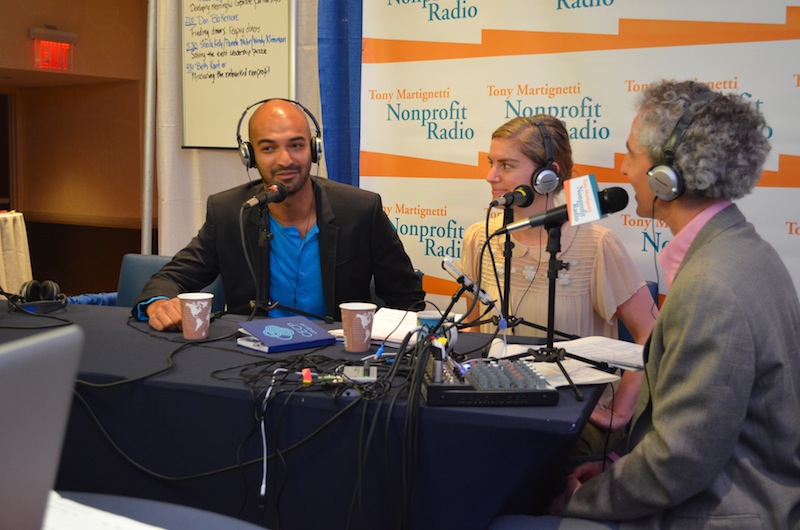
L-R: Muneer Panjwani and Tricia Napor at Fundraising Day 2013
Muneer Panjwani and Tricia Napor at Fundraising Day 2013

Tricia Napor, principal manager at Alcoa Foundation, and Muneer Panjwani, business development manager for DoSomething.org, share tips for getting started in cause marketing: what it is; what small- and mid-size shops have to offer companies; goal setting; transparency; and aligning missions and needs. Recorded at Fundraising Day 2013.


Scott Koegler: Internal Social Networks

scottkoegler2009-150Scott Koegler, our technology contributor and editor of Nonprofit Technology News, explains how internal social networks complement the external networks like Twitter and Facebook. How to get started, who to invite, and how to promote them. Plus, his one-minute wonderful wine recommendation.


Top Trends. Sound Advice. Lively Conversation.

You’re on the air and on target as I delve into the big issues facing your nonprofit—and your career.

If you have big dreams but an average budget, tune in to Tony Martignetti Nonprofit Radio.

I interview the best in the business on every topic from board relations, fundraising, social media and compliance, to technology, accounting, volunteer management, finance, marketing and beyond. Always with you in mind.

When and where: Talking Alternative Radio, Fridays, 1-2PM Eastern

Sign-up for show alerts!

You can also subscribe on iTunes to get the podcast automatically.
View Full Transcript

Transcript for 159_tony_martignetti_nonprofit_radio_20130913.mp3

Processed on: 2018-11-11T23:01:17.217Z
S3 bucket containing transcription results: transcript.results
Link to bucket: s3.console.aws.amazon.com/s3/buckets/transcript.results
Path to JSON: 2013…09…159_tony_martignetti_nonprofit_radio_20130913.mp3.41626681.json
Path to text: transcripts/2013/09/159_tony_martignetti_nonprofit_radio_20130913.txt

Hello and welcome to tony martignetti non-profit radio big non-profit ideas for the other ninety five percent for friday, september thirteen i’m your aptly named host oh, i hope you’re with me. Last week i’d be forced to endure him okra mathos iss if it came to my attention that you had missed the overhead myth letter signers written to the donors of america, the three co signers of the letter are the ceos of the better business bureau wise giving alliance guide star and charity navigator. I dubbed them the three tenors of charity evaluation art taylor, jacob, harold and ken berger and explained what led up to the overhead myth letter, why it was necessary and why they feel many charities should spend more on overhead, then good overhead, bad overhead. Jean takagi are legal contributor helped you understand what may be sensible and appropriate non-profit graham expenses for your non-profit and what you should avoid, how to protect your board officers and employees, but not go overboard on overhead gina’s principle of the non-profit and exempt organizations law group this week cause marketing one oh one, trish in neighbor, principal manager at alcoa foundation and mounir panjwani business development manager for do something dot org’s share tips for getting started in cause marketing what it is, what small and midsize shops have tto offer their corporate partners gold setting, transparency and aligning missions and needs, and that was recorded at fund-raising day twenty thirteen last june, and internal social networks scott koegler, our technology contributor and the editor of non-profit technology news, explains how social internal networks like your blawg you are blogging, right? Compliment the external networks like twitter and facebook. Also his quick wine recommendation between the guests on tony’s take two my block this week is there is no shortcut to getting planned gif ts here’s my interview with tricia naper and muneer panjwani on cause marketing welcome to tony martignetti non-profit radio coverage of fund-raising day two thousand thirteen for at the marriott marquis hotel in times square, new york right in midtown and with me now, teo, talk about cause marketing are tricia neighbor she’s, principal manager with alcoa foundation, and mounir panjwani, business development manager for do something dot orc tricia mounir, welcome. Thank you. Thanks for having us times a pleasure. Pleasure. Nice and quiet here now some of the other recordings have not been this silent. We got lucky s o. Everybody will be very attentive to you. No background noise, let’s, let’s. Define this cause marketing and distinguish it. Maybe from sponsorships or some other things. Tricia, i want to start. What are we talking about? Certainly. Well, so at i work at alcoa foundation, which is the ah charitable arm of alcoa incorporated the aluminum company, which is mostly a business to business company. So we don’t do a lot of marketing. The foundation does a lot of wonderful social programs. And when you look at the issue with this particular partnership with do something was focused on is recycling when you look at the bismol recycling rates of aluminum in the u s you realize that you there’s an awareness problem that people don’t know about the importance of recycling and the amount of impact on the environment that recycling has. So we went, we started looking at ok. How do we really increase increase awareness? A cz well as access and incentives to this. And then ah, oui. I heard that ceo of do something speak and was blown away by the reach that they had with young people. And we really wanted find a way to reach young people with this important message. So that’s how this caused cause marketing campaign began. All right, mounir, why don’t you explain? What do something is? Get let’s, get, uh, started their servers on the same day. So do something, dot or it is the largest organization for young people. In social change, we create about twenty five costs campaigns that young people care about. You have about one point. Six million young people that participate with us every single year reaches all actually close to five million people on dh young people we define as anybody under the age of twenty five. So anybody over twenty five is considered an old person, which would make all of us here in old. Okay. And i was going to my question, andi, if viewers listeners would like to know more about do something have had aria finger on who’s the ceo, you’ll find that video on youtube. You also find the podcast on my block at tony martignetti dot com. She was talking about engaging people under twenty five. Got it had to do it. What is cause marketing money, or how do we distinguish this from other relationships we might have with with the corporate side? So a lot of corporate partnerships are often about, you know, like stopping on a logo on a campaign and that’s, usually where that’s usually where stops caused marketing, specifically aligning cos purpose and values to a cause that their constituency cares about or because of the companies, product or service actually impacts in some way. So we’re a fast food industry talking about hunger in the in the country or alcohol foundation, which is the largest producer of aluminum. Talking about recycling makes sense. So parting with a nonprofit organization that has the expertise and the ability to have a major impact in that space and quitting a partnership between the two, the two organizations is what cross marketing it’s. Okay, and that partnership could take lots of different forms slowly. I mean, i see a lot of point of sale. I know that’s, not your relationship, but it could be ok to be solicited back-up now, but point of sale, or or mohr causes like recycling or could be anything. I mean, this is very broad. Topic, right? Oh, yeah. It’s, it’s, it’s, it’s. Incredibly broad. And i think what’s happening now is the now that the spaces has become increasingly competitive. So every single company wants to do a cause marketing campaign, which is great for the non-profits it’s great for the world, however nobody’s trying to be bold yet, right? So they’re very few cause marketing campaigns are bold enough that they stand out from the crowd. So the challenge, their concern for latto non-profits is what big ideas do we have to separate ourselves from all the other ones? And, yeah, i suppose we are. A local organization. Doesn’t have the reach of do something, you know, five million constituents paying attention. What? What can that smaller to mid size shop offer? Well, the one thing i would advise him on is find out what your unique identity is, right? What a unique asset. So what’s one thing that you bring to the table that nobody else can, and it could just be an idea. It could be an expertise in a space it could be. It could be a service. It could be stories. It could be something specific that nobody else. Can offer that is valuable to the corporation and i would add, i know that this is about caused marketing, but i think from a corporate perspective, if you’re looking for corporate donors, you do have to take it beyond the marketing and that’s something that do something does really well is that they actually have significant impact. So in addition to getting the word out there and the millions of people who are listening to what do something is saying, they also had fifty thousand youth actually go and recycle fifty cans for this campaign, and then we can measure that and say, the results of this of this of this program were this on the environment and this many youth actually participate in the program, so for smaller non-profit that’s looking at caused marketing toe also look beyond just getting the message out, but is there a way that you can quantify the results in the impact of your programs on the community around the environment? Okay? And i’d say within the past, like four years or so, we’ve been hearing a lot more about four to five years, a lot more about impact measurements we need to quantify our outcomes and not just say it’s, good work, but but prove it definitely. So now how about for the smaller shop? Does it make sense for ah, smaller midsize non-profit to approach a company like alcoa? Or should they mawr have their sights set on something smaller, maybe more local to their community? What do you think? Well, i think it does make sense to approach a company in your local community. So, for example, alcoa foundation or an endowed foundation, we have a budget of about twenty five million every year, but we take half of our budget and give it to our local offices all around the world, so they have budgets that range on the amount of employees that are at that location. They might range from thirty thousand to three hundred thousand dollars a year that they give to local non-profit partners. And if a local non-profit partner in one of our facilities in iowa or california went to them and said we could do a really great cause marketing campaign that would also have significant impacts than definitely our local people would probably want to know more and potentially fund that partner, okay? And are you able to speak to what those local the company’s offices would be looking for? Yeah, well, specifically with alcoa foundation were focused on education and environment because there are two key themes that aline very much with our business. And so under the environment, we look at projects that reduce the use of natural resource is and reduce waste that recycle primarily aluminum and that also replenish so a lot of different tree planting in biodiversity programs. And then on the education side, we’re very much focused on stem education, science, technology, engineering and math. I’m sure your parents know what that is. Well, maybe not down. And i have drug in jail on the show. So if if you hadn’t defined it, i would’ve put you in georgian jail. Okay? And then i quickly quickly paroled. We also look at a lot of work force development specifically around manufacturing. Okay? And more generally, it sounds like i mean, the advice would be aligned. Find the company that aligns with your work. Exactly. Find a company. Fight like men when you’re sad. You know, find what your unique offerings are. Do your research. Find what? The company’s. In your local area are focused on check online to see what other kinds of partnerships they have and then come in, prepared and have a good conversation. Okay, let’s, talk about the preparation in here. How do you how do you make that first contact once you found some some good prospects stalking them? That’s the first thing on twitter is like talking about it, google them watch the videos, learn about the companies which is you can learn about the other, the partnership that they’ve made and the success they’ve had in the failures that they’ve had so often times you will look at a company that would say, you know, we had three thousand people like our facebook patient will say, well, what’s the impact of that right? And they might not have an answer to that. So when i sent an email out, i’ll say, you know, you had three thousand people like a facebook page, what? What was the impact? I would love to know what the impact was and if you don’t have one like we love to talk to you about, how can increase that number, not just a number, but actually engagement. Number right. So a tte the parties with alcoa came about after nancy, our ceo, spoke at a conference last year, and the conversation was little patricia restart to us, saying, you know, we loved her speech. We want a partner, seems like you guys to do it right. You guys know what you’re doing, and you’re the expert in your space, and the brand is really, really exciting and engaging, and they were trying to reach a youth market also, yeah, well, let’s, continue that that that threat, because it’s, not just enough to be on social media on dh tout numbers. Those air, you know, sort of vanity metrics, absolutely number of likes. Number of followers of a number of connections on linkedin, talking alternative radio, twenty four hours a day. Do you need a business plan that can guide your company’s growth? Seven and seven will help bring the changes you need. Wear small business consultants and we pay attention to the details. You may miss. Our culture and consultant services are guaranteed to lead toe. Right groat. For your business, call us at nine. One seven eight three, three, four, eight six zero foreign, no obligation. Free consultation checkout on the website of ww dot covenant seven dot com are you fed up with talking points, rhetoric everywhere you turn left or right? Spin ideology no reality, in fact, its ideology over in tow. No more it’s time for action. Join me, larry. Shock a neo-sage tuesday nights nine to eleven easter for the isaac tower radio in the ivory tower will discuss what’s important to you society politics, business it’s provocative talk for the realist and the skeptic who want to go what’s really going on? What does it mean? What can be done about it? So gain special access to the ivory tower. Listen to me very sure you’re neo-sage tuesday nights nine to eleven new york time go to ivory tower radio dot com for details. That’s. Ivory tower, radio dot com e every time i was a great place to visit for both entertainment and education. Listening. Tuesday nights nine to eleven. It will make you smarter. Hey, all you crazy listeners looking to boost your business? Why not advertise on talking alternative with very reasonable rates? Interested simply email at info at talking alternative dot com dahna let’s, uh, i had a guest earlier talking about linc dane and the corporate pages. What is what is ah, do something dot org’s do around linked in. Well, forcing it the founder of lincoln is on the board, so we sometimes have to be oh, there you go. Read happens on a board. Okay, then he spent hours. He’s been a huge support, but for from organization perspective, we have a page on it, and we usually post a lot of the things that are useful for prospective employees. Anybody that’s looking for internship? Our job on the side is their information. Is there? The other thing is nancy serves as one of the writers, so she has, i think, closed down about twenty thousand ceo seo yeah, so she’s, always riding pretty pretty sort of engaging in and fun articles about to do something culture, but also how to advise other smaller non-profits on how to do it, right? Right. So some of the learning that we’ve learned she’s very willing to share that in a very fun and sort of uncensored, weighing a lot. A lot of times, tricia, i think there’s going to be great value. If if you can share what the i’ll call foundation might have done in its research before it approached, do something so heard, nancy speak very engaging sounded of threshold level appropriate, right what’s the next step before you actually spoke to them? Well, eso how cold foundation’s been around for sixty one years, so we just have a lot of experience in working with different non-profits i had heard of do something dot org’s previously, and some of my colleagues had actually gone to their fundraiser the year before and said it’s organizations really fun they actually had their their fundraiser this year, two nights ago when we went back, and it is really fun it’s kind of unlike any other organization, especially just because they’re so focused on youth that that culture pervades everything that they do. So i had heard really good things about it on and then when i heard nancy speak, the thing that she said that really stuck out in my mind and in addition to her colorful language, which you don’t often hear of these conferences that we attend, is that the non-profit incorporate corporate partnerships. It’s a true partnership that the non-profit is not a vendor but their partner, and that has to do something. They have a lot of assets, they have a lot of expertise, they have huge constituent group on dh there, bringing that to the table, and what is the corporation bringing to the table and what are the unique needs and assets of both groups? And i love it when non-profits think that way when they don’t see themselves as a vendor, but as a true partner and that they can enhance what we’re trying to do on education and the environment. So hearing that and hearing that philosophy was pretty much enough, but of course we do our homework. We checked charity navigator and guide star and things of that nature is important for charges to hear it, to make sure that there are legitimate group and then actually are grant application processes pretty thorough, and they have to supply a lot of different information to show they’re financially stable and they have to share with us the list of people on their board of directors on and things of that nature so that we can verify that they’re not affiliated with any terrorist groups and things like that. So we do our homework. So? So before this relationship became was closed, they had to do a grant application. You know, this was not a great relationship that this was a great relationship. Yeah. Okay. Oh, i see. All right. All right. Um did it doesn’t go any further. Are there any? Is there any employee engagement? Definitely way worked. Everything that we look at we look at can we got our employees engaged. So the website that do something put up for us on fifty cans that had a lot of information about the benefits of recycling, i worked with our chief sustainability officer and our other experts in house at alcoa, on recycling on getting some really fun stats for people so the youth could go and see. Oh, wow. When i recycle it saved this. It saves this much energy. Or if i recycle this many cans, i save enough energy to fly to cancun for spring break and things like that. And we all work together on that. That was fun. And and then we turn and know it out to all of our employees saying if you have kids at this age group tell them tio participate and a bunch of them did because there was a five thousand dollar scholarship prize. Didn’t end up going to one of our employees. Children, which was good. You know, we want to spread the wealth, but but we did hear that a couple of our employees encourage their children to apply. And they were getting really into it and looking up where the different recycling facilities were in their towns and things like that. Okay, so yes, definitely went much deeper than the money. Yes, it always does. For us, we look at, you know, the the grant and we want to have the results. But we really want to be engaged and share our expertise as they are with us and money you want. You sound like you want to say more about that. I was going to just go back to the part about partnerships. I think. Do something you know has a very specific philosophy in partnership, which is that, like a partners have to be fun, that they just have to know how to have fun way we know that partition partners is not between organizations there between people. Right? So just like hanging out, patricia on the other night was really, really fun. And nancy, our ceo has always says if you make any any of her staff members cry will cut off the relationship that’s like it’s, like that’s the end of it. And i think i think that speaks really loudly to how how a lot of operatives don’t work, which is like hell bent over backwards to do whatever they can, even if their employees are unhappy. One of the projects not going so well are to make sure that you get the money, which is not the right way to go, because, you know, the part of just will. And as soon as that the program ends right, and we want to make the partners go on for as long as possible. And for that to happen, of forcing that it’s happening, their status meant honest conversation on the table. About what exactly? We’re looking for that big old setting that are realistic goals are in place, and we both understand that we can actually reach them and have our assets in place on the table, not saying that l krauz giving us money. And we’ll just take the money and do what we want with it, but really engaging, i’ll call in to the conversation about well, what can you what else can you bring to the table? And lastly, communicating with them continuously throughout the campaign about the progress off the campaign? So they were a couple challenges in the middle of the campaign where way we’re hitting the numbers because we weren’t getting the report back from the young people. So we told way said that to you. Trish ensues and her colleague about what was going on, and they were very honest about their, like, well, let’s think about other ways to engage our audience even more, and we pivot or just a little bit, but put together when you strategies and ended up getting one point, three million cans collected by about eleven weeks. No, that was that was the whole campaign was all gonna be okay. All right? So i see the nature of a true partnership sharing the fact that things are not. We’re not meeting targets and let’s collaborate about how we can we can make that make that change. And the other thing that was helpful from my point of view is i was looking for innovative recycling projects on dh. They came in and they had their template. This is who we are. This is how we run campaigns. We send out this many tax messages, this many emails, we set up the website, and then, you know, we just kind of to some degree plug and play the recycling messages into what we already dio. And we can show you the success that these campaigns have had on other subject areas. And so it was not like reinventing the wheel, although it felt so specific to us. And they really did hear what we were saying, where our main goals of the campaign and we far exceeded. I think we exceeded our cola foundation’s goals. And i think we even exceed to do something it’s goals. So it was the success for sure, it’s part of your seminar topic is avoiding some of the possible negative consequences. I know when here you mentioned communication being critical, what other ways might we avoid problems in these in these cause marketing relationship, i think transparency in every single wife. So transparency in any of the challenges that we’re facing a transparency and asking for help when we need it. So when we you know when when alcohol wanted to engage the employees, they they said, we need to engage employees, and we need to make sure that this campaign is open to the kids over employees. And he said, ok, that’s great. So here’s the messaging that you can send out the employees that’s going that they can pass on to their kids to get them involved in the campaign. S o i was a transparency is one of the biggest ones, because a lot of the initial reaction for anybody that’s in trouble is to hide the fact that something is wrong, right on dh we are always always honest because i mean, honesty breeds more honesty and honesty. Bill’s good relationships so that’s why i think that’s one of the reasons why most of our responses keep coming back to work with us, it’s because we never tell them something that they don’t have something that they just want to hear, we tell them, what’s the truth and i would say also with some cause marketing campaigns, you could have something occurred that might look like green washing or might look like, oh, we’re just marketing something. And what was successful about this campaign was we had a lot of stats and a lot of data from alcoa about the importance of recycling, and we know a lot of people have heard of you should recycle you should recycle, but i think that we frame the message in a really compelling way and do something worked with us, how i mean holding our hands, saying, ok, that message is appealing, but to appeal to this age group, you could just tweak it like this, and then people would really like it. So they helped us with our language and things of that nature. And i think for successful cause marketing campaigns, you want to make sure that the cause is clear and that the impact of what you’re trying to get people to do is clear. Okay? Meunier mounir, we you mentioned goal setting. You do that? I’m sure is a collaboration, both both there’s to be a two way street, right? Both sides need to benefit. What was the what was the main benefit for? Do something or some of the benefits. Do something it’s literally lives on data. We have two chief data people on staff, so all they do is crunch Numbers to figure out 1 what? What causes people care about and and what what campaigns we should be planning a number two was a measuring the impact radcampaign so, like he said, cause marketing campaigns usually are really hard to measure, and they’re usually measured in just media precious, right? We got a million media pressure, but that’s about it. But what about the number of people that you reach that actually took action over you of this campaign? So we have a very sophisticated tracking mechanism with our members, so every time somebody signs up on our website or signs of being mobile, we can we can track that every time somebody reports back, we contract because we have their cell phone numbers, we can track the locations where they add their age group, the high school, that they go to their demographics. All that data is that we have so we can at the end of the campaign, we can figure out exactly who participated in the campaign, which is incredibly, incredibly useful for any corporate. Partner on that. And we also know that, like, numbers tend to nam in stories into stick, so don’t number is going to be huge. We always find one or two stories that are really, really meaningful impact to share, too sort of to to, to me to make the numbers more colorful. Underlying one year’s discussion was spinning of the wheel in the jason booth. So, for listeners are, or even watching video, you’re not seeing this wheel’s been, but there’s, a company that we’ll let you spend it, we don’t take a chance at winning mug t shirt kapin or ah, and i paid many drawing entry, so that’s, what that’s, what you’re hearing let’s, see. Tricia let’s, let’s, leave. We just have a like a minute and a half for shoulder let’s. Leave small and midsize non-profits with the first step. Really tio engaging in this kind of relationship with company? What should they should be thinking about first, um, i would go back to what muneer said it. No, i know what it is that you do that is unique on look at who your audience is and who your constituents are that you have access to and then really clarify that. Say, these are the people who are following us on twitter. And we have this many facebook people and we have this many people that we can reach. You read our newsletters, etcetera. So if you work with us on this cause marketing campaign, this is how many people you would reach. And then also be sure that there’s something what’s great about this is that do something. People cycled fifty cans. Then they went online and they said i recycled fifty cans. They got put in a lottery to win a five thousand dollar scholarship so that data that he was just talking about, we can actually say fifty one thousand use recycled one point three million cans, and that is something that you, the corporation’s really do want. They really do want those metrics. Okay, excellent. Thank you both very much. Thank you, tony. My pleasure attrition. Naper is principal manager for the alcoa foundation and mounir panjwani is business development manager for do something dot org’s. Thanks again, tony martignetti coverage of fund-raising day two thousand thirteen. Thank you very much for being with us, thanks to everyone at fund-raising day, the organizer’s there for helping me set up and work the logistics of getting all the terrific interviews that i got that day back in in june, we’ll go away for a couple seconds. When we come back tony’s take to there’s no shortcut to plant e-giving and then scott koegler on your internal social networks. I hope you’re blogging. Stay here. They couldn’t do anything to getting dink dink dink dink. You’re listening to the talking alternative network get in. Nothing. Good. Are you suffering from aches and pains? Has traditional medicine let you down? Are you tired of taking toxic medications? Then come to the double diamond wellness center and learn how our natural methods can help you to hell? Call us now at to one to seven to one eight one eight three that’s to one to seven to one eight one eight three or find us on the web at www dot double diamond wellness dot com way look forward to serving you. Hi, i’m ostomel role and i’m sloan wainwright, where the host of the new thursday morning show the music power hour eleven a m we’re gonna have fun shine the light on all aspects of music and its limitless healing possibilities. We’re going invite artists to share their songs and play live will be listening and talking about great music from yesterday to today, so you’re invited to share in our musical conversation. Your ears will be delighted with the sound of music and their voices. Join austin and sloan live thursdays at eleven a m on talking alternative dot com you’re listening to the talking alternative network. I’m leslie goldman with the us fund for unicef, and i’m casey rodder with us fund for unison. You’re listening to tony martignetti non-profit radio big non-profit ideas for the other ninety five percent. I can’t send live listener love this week because we’re pre recorded, but i do love all the live listeners and, well, we know the standard the regulars who check in all the time north carolina, california, texas, new york, new york has been checking in. And, of course, all our asian listeners probably very good chance south korea, japan and china live listener loved to each of you and podcast pleasantries always gotta remember the thousands of you who are out there listening to the podcast. Thank you so much time for tony’s take two my block this week is there is no shortcut to plant e-giving i have been seeing recently on twitter and some email marketing and promotion messages that i get people suggesting that there’s quick ways to get planned gif ts these are, of course, gif ts from people’s state and retirement plans it’s the work that i do in consulting that’s that’s, my fund-raising niche is planned e-giving um, there are plenty of quick ways to promote planned gif ts, but there aren’t quick ways too close planned gif ts i list on the blogged a bunch of about a dozen ways to promote plant giving very quickly, like just a nisi short sidebar in a newsletter or in an e mail blast, adding a checkoff to your year and reply cards, adding a check off to the back flap the of all your envelopes um, and they said, list about a dozen in this in the in the block, those air quicken and cheap ways of promoting planned giving but closing the gif ts that takes time because these air gif ts that require lots of personal thought and personal factors going into the decision. Think about your estate planning your retirement plan. The the most basic example is a gift in someone’s will what would it take for you to include a charity alongside your husband, wife, children, grandchildren? That takes a lot of thought? You don’t just do that because you got an e mail blast so there’s no quick route to closing these gif ts and that’s what i’ve been objecting to that i’ve been seeing on the on the social networks and in my email lately, the block post is called there is no shortcut to plant e-giving my block is that tony martignetti dot com, and that is tony’s take two for friday, thirteenth of september thirty seventh show of the year. Scott koegler returns he’s the editor of non-profit technology news, which is that n p tech news dot com on twitter he’s at scott koegler. Scott koegler welcome back! Hey, tony, thanks a lot, it’s a pleasure to have you it’s a pleasure to be had. Thank you. I just gave you a shout out for twitter, but something very disturbing has come to my attention since you were on last you are not following me on twitter, is that right? Believe possible? You believe that? I don’t know i’d like to ask you that question you’ve been on for. Ah, just about probably this has been like three years on the show. I tried to send you a direct message and, uh, i couldn’t do it. You are not following me on twitter, let me see here alright, you’re you khun you khun rectifying martignetti there. There you are and yeah, look at that. No following, thank you very much. I think i was going to say you could take care of it after the show. But thank you for resolving that. Okay, that’s the end of the official admonishing, wait, we’re talking about the internal sense social networks, which can complement the external ones like facebook and twitter, right? Absolutely. And, you know, there’s been so much talk about, obviously about social networks, facebook, twitter, google plus, you know, ad, ad nauseum and, you know, those were great, but and they they are useful, and in connecting with people that you may not know, that your friends may know, or that your associates may know so it’s a good way to reach out, sure, right? Um, the good part about that is that is that it can expand your fear, events, your sphere of influence. But the bad part of it is that that bleeds over into possible competitors. Er, um, you know, competitors, organizations that may also be friends with other people that you are friends with, that your friends are friends with, you know, how that goes, right? So it works both for and against you, no. So that said it’s, something that he really can’t ignore and you should certainly be posting to and participating in all right, but the whole point of internal social networks is that it’s i don’t want to call it a captive audience, but it’s more of ah, well, it’s, internal, it’s, it’s something that is within it’s, usually attached to your website and it’s kind of internal club that people that are interested in what you’re doing are participating with okay, short definition. Okay, we’ll talk more about this internal club. What are the advantages of setting this up internally to complement the external well, the advantages that you can you have control over over the messages that are being sent now that you don’t have control over the messages in your in your facebook princeton’s, but if you post something on your own website, the internal social network, then you know that at least the people that are that are participating in that are going to get your message. Additionally, that message can be then reposted, and a lot of the systems that are available for internal social networks will automatically take your posts from the internal network and re post them to twitter, facebook, google, plus and whatever else. So you’ve got this kind of ripple effect going out, okay, um, isn’t there? Ah, ah, also a reason to do this because you can capture data about the people. Sure, sure, you know, facebook profiles are great because you know, they’re they’re available, but they’re very generic, right? You look at my facebook profile, it just kind of says who i am and what i like. I wouldn’t know what it is. We’re not. We’re not friends on facebook. Yeah, you know, when i when i saw that, they’re not when i saw that you don’t follow me on twitter, i unfriended you on facebook. Not that i think we’ll be following you on twitter. All right, not that i’m vindictive, but i i’m vindictive. Okay, i got it. I don’t want you to think i’m vindictive, okay, but so is a okay, go ahead. I know you know, i know them. All right, so facebook is yeah, there’s so much you can learn about someone on facebook, okay, right, but if if you have a social network internally to your system and to your organization than the profiles on people generate, there are much more specific they will talk about, you know, how they’re involved within your organization, and so it kind of brings things closer to what what your organization is about. People will say, well, i went to this particular event, or i helped with this project or i i’m participating in such and such and so it’s much more, more focused, you get people a better view of what’s going on within your organization on also branding, right? You have total control over the way this sight is going to look, absolutely, and you can take some of your, uh, good way to get to get participation is there is to take some of you block post opposed internally on your site and offer those up as questions or or request for commentary through your internal social network. Those then post out to your facebook your twitter, whatever else, right? And as people see that, whether there, um whether they’re currently on your internal network or not, when they click on those the comment that click should and they don’t always but, uh, if you look at the facilities that are available, who should bring you directly back into your internal social network for comment? So it’s kind of ah, you know, it’s reaching out and pulling in is what it’s doing? Ok, now you said block posts would go to your your internal network. I thought we were talking about blogging. We’re talking about something different than your organization’s blawg when we talk about this journal club, correct? We’re talking about a a way for people to communicate to each other, not a blob. Blob, you know, is an external in an article that was posted that then goes out, um, there’s a there’s. A really good example of an internal social network that’s done by sales force. Self a link for you, sales force foundation dot or ge? Okay, uh, you know, i’m not really promoting sales force, although i think it’s a it’s a great tool. Uh, that sales force is a, uh he’s a manager of contacts. Right. So c r m a contact. Management, not sierra constituent relationship management system. Thanks, but i don’t have time for you to get all your people, your list of people in there, and then they can interact with each other. It also allows you to manage how you talk to folks and what kind of messages you get out. So, yes, it’s different from a block. Okay, so so the concept is you write a blogger and you say, hey, i wrote this block and you posted into europe for instance, sales force or non-profits serum, and that then gets posted out to the people that are currently members of of it. So it goes directly to them. It also gets posted out to your twitter followers and to your facebook followers into google plus followers. So it’s a way of just before kind of reaching out and bringing in. Okay, okay, um and i want to be fair toe sales force that not that they support this show in any way or have any relationship with me. But they do have, eh? A program where non-profits can use up too. I think. It’s up to ten licenses sales force for absolutely free. We’ve had guests on a couple of guests have have mentioned that in the past maria simple is one of them, so we won’t be fair to sales force. They do have a non-profit program on dh, so it does work for non-profits as well. So we have just about a minute or so before we take our first break. What what does it take to get started in creating this? This this club internally? Well, let’s, just take sales for since we’ve been talking about that, since we also know it’s free and it’s probably one of the most widely used managers of of for any kind of internal networking. Uh, just goto salesforce foundation, not order signed up for there will be instructions there on how to integrate that into your website, and it should be connected through your website that’s kind of the whole purpose is so that it brings people back to your website on then start to use it, you know, announce your post your blood articles written on through that, uh, do that system and let it do its job. Okay, if you also want to ask people to join and all that kind of thing, yeah, we’re gonna talk more about bringing in. Some early adopters and things like that. So we’re going to go away for a couple seconds. We come back, scott, and i’ll keep talking about your internal social network. Keep listening that. You’re listening to the talking alternative network. Are you stuck in your business or career trying to take your business to the next level, and it keeps hitting a wall? This is sam liebowitz, the conscious consultant. I will help you get to the root cause of your abundance issues and help move you forward in your life. Call me now and let’s. Create the future you dream of. Two, one, two, seven, two, one, eight, one, eight, three, that’s to one to seven to one, eight one eight three. The conscious consultant helping conscious people. Be better business people. Oppcoll have you ever considered consulting a road map when you feel you need help getting to your destination when the normal path seems blocked? A little help can come in handy when choosing an alternate route. Your natal chart is a map of your potentials. It addresses relationships, finance, business, health and, above all, creativity. Current planetary cycles can either support or challenge your objectives. I’m montgomery taylor. If you would like to explore the help of a private astrological reading, please contact me at monte at monty taylor dot. Com let’s monte m o nt y at monty taylor dot com. Talking alternative radio twenty four hours a day. Bonem oppcoll welcome back, big non-profit ideas for the other ninety five percent or it’s got, um, once we have this, we’ve built this buy-in how do we start to get people to come to it? Well, the old fashioned way and ask them and you can ask them in the same manner that you would, uh, post a blonde post onto your internal social network simply hey, we’ve got this new thing and we invite you to join our club it’s probably say it better than i just said it, but, uh, you post that out, it would go out to your two or three people that you’ve got internally and they’ve got to your to your facebook, twitter, google, plus but there’s one other trick that probably is a better way to handle it and at least a good way to get it started and that is to go to your people that are currently participating with your organisation in other ways and simply ask them to be pilots for for this, for this new venture that you’re putting together, just ask them to join asked them to comment and ask them to invite their friends, you know peer-to-peer usually more effective than just kind of a blind invitation. These are the people who are the most active in your existing networks, right? Exactly. Okay, um, and as your as you’re promoting this and inviting people to come, you need to be sharing what? What the value is, why they should spend time with you, right? And hopefully that’s part of what goes on in your blondes because that’s really the topic anyhow, what are we doing? Why is it important to the world? Why’s it important to you? And maybe it will take one or two sentences as a preface to that block post to say, you know, here’s, something new we put up, we really think this is important. Please come here and read it. And while you’re here, please join our into our internal network of conversations as we are ongoing promoting this durney we need to be listening back to the community right for feedback, right? And and that’s really no different again from what you would do with twitter, facebook, right? Well, plus you certainly want to interact and that’s the whole point. And if you’re trying to concentrate your efforts to your internal social network and provide, uh, even better interaction there. You should be paying at least a little bit more attention to the internal than you would be to your external. Of course, you know, it all kind of balances out. You don’t want to ignore anyone, but you always want to say, you know, please come, join us here rather than out there. Yeah, you have, ah, article, that is a couple of years old, but it talks about this very, very, uh, thoroughly and there’s. Also, ah, suggestion of another place. Besides what you had suggested, sales force that will help is a platform for setting these up. The right but i can’t seem to remember which wanted what which one they’re talking about, but you obviously dio advanced solutions international? Uh, right, right. Of course, it’s a d v s o l dot com. So i like to give, like, to give listeners a couple of choices. What else? What else you wanna tell us about these thes internal networks that i haven’t asked you about? I think the message is that they’re adjunct to the one two what you’re already doing. And and in some ways that probably putting one of these together probably make your social media life a little bit easier because it is, and it should be the starting place for all social media conversations you can post there and have it automatically post out to your other social networks, which means you’re not going to everyone of your social networks and posting, uh, crusher probably is in some kind of some kind of tool to automatically post anyhow, but this this is one place to concentrate on again will bring things back together into your eye. Your designated location? No, i guess that’s really the most of it. But overall it’s going? To help you to concentrate your constituency on the things that you think are more important and toe let that conversation build internally rather than just kind of out in the wild. Okay, and then you also have the advantage of finding out more about your people as we talked about, right? As they develop their profiles, you get learn more about them and you can then contact sales force again is a great tool to do exactly that because i mean that’s the whole point of sales forces knowing who you’re dealing with, knowing what their last interaction was, knowing what they’re interested in and then being able to communicate directly with him. Okay, we got just enough time for you to give your quick wine recommendation. What? What is it? All right. I have wanton it’s, a california wine it’s, an alexander valley cabernet sauvignon it’s a two thousand ten and it’s been one of the one of my most consistent, highly rated it’s under under twenty dollars. Generally seventeen dollars, or so. And you can get it a lot of places. Total line wine warehouse. Those kind of places. Ok, say it one more time. What is? It alexander valley cabernet sauvignon the one i like is the two thousand ten okay, scott koegler are non-profit technology contributor, editor of non-profit technology news, which is that n p tech news dot com he’s at scott koegler on twitter my newest follower and the article that we talked about this at at and p tech news dot com is called non-profit social media smarts, internal or external social networking tools. Scott koegler thank you very much. Thanks, tony. Take care. My pleasure. Thank you. Next week. Maria semple is back. She’s our prospect research contributor. She reminds us that newspapers and magazines are valuable prospect research tools. They sound like they’re very nineteen, ninety nine, but they can be valuable and she’ll explain why if you like this show, then you’ll love my podcast for the chronicle of philanthropy. It’s called fund-raising fundamentals it’s monthly and it’s ten minutes it’s on the chronicle of philanthropy website and it’s on itunes. Our creative producer is clear miree off. Sam liebowitz is our line producer shows social media is by deborah askanase of community organizer two point oh, and their remote producer of tony martignetti non-profit radio is john federico. Of the new rules that music i hear in the background are music is by scott stein. I hope you’ll be with me. Next friday, i’ll be back live in the studio. On the twentieth of september, we’ll be at talking alternative broadcasting at talking alternative dot com, one to two p, m eastern. Oppcoll didn’t didn’t. Didn’t dick tooting. Good ending? You’re listening to the talking alternate network, waiting to get you thinking. Are you a female entrepreneur? Ready to break through? Join us at sexy body sassy sol, where women are empowered to ask one received what they truly want in love, life and business. Tune in thursday, said noon eastern time to learn tips and juicy secrets from inspiring women and men who, there to define their success, get inspired, stay motivated and defying your version of giant success with sexy body sake. Soul every thursday and me in new york times on talking alternative, that calm. Are you suffering from aches and pains? Has traditional medicine let you down? Are you tired of taking toxic medications, then come to the double diamond wellness center and learn how our natural methods can help you to hell? Call us now at to one to seven to one eight, one eight three that’s to one to seven to one eight one eight three or find us on the web at www dot double diamond wellness dot com. We look forward to serving you. You’re listening to talking alternative network at www dot talking alternative dot com, now broadcasting twenty four hours a day. This is tony martignetti aptly named host of tony martignetti non-profit radio. Big non-profit ideas for the other ninety five percent technology fund-raising compliance, social media, small and medium non-profits have needs in all these areas. My guests are expert in all these areas and mohr. Tony martignetti non-profit radio fridays one to two eastern on talking alternative broadcasting are you concerned about the future of your business for career? Would you like it all to just be better? Well, the way to do that is to better communication. And the best way to do that is training from the team at improving communications. This is larry sharp, host of the ivory tower radio program and director at improving communications. Does your office need better leadership? Customer service sales or maybe better writing are speaking skills? Could they be better at dealing with confrontation conflicts, touchy subjects all are covered here at improving communications. If you’re in the new york city area, stop by one of our public classes or get your human resource is in touch with us. The website is improving communications, dot com that’s improving communications, dot com improve your professional environment. Be more effective, be happier. And make more money. Improving communications. That’s. The answer. Talking. Hyre

Nonprofit Radio, February 24, 2012: Take On Teens, Pursue Your Hero’s Journey & Going Greater Into Google Search

Big Nonprofit Ideas for the Other 95%

Sponsored by GE Grace corporate real estate services.

Listen live or archive:

My Guests:

Interviewing Aria Finger at NextGen:Charity 2011
Aria Finger: Take On Teens

Aria Finger, COO of DoSomething.org, gives ideas for motivating teens and finding their passion points to get them engaged in your work. (Pre-recorded at last year’s NextGen:Charity conference.)


Interviewing Eric Saperston at NextGen:Charity 2011
Eric Saperston: Pursue Your Hero’s Journey

Eric’s journey took him across the U.S. in a VW microbus, inviting 200 of the country’s most famous and powerful to coffee. Eric Saperston is chief creative officer at Live In Wonder, and he learned some amazing lessons over coffee. His story is told in the Disney documentary, “The Journey.” (Pre-recorded at last year’s NextGen:Charity conference.)


Maria Semple
Maria Semple: Going Greater Into Google Search

Maria Semple, The Prospect Finder, and our regular prospect research contributor, goes deeper into Google search. How do your search results differ when you’re logged in or not logged in to Google? Plus, advanced search tips. It’s a short course on search to help your prospecting.


Top Trends. Sound Advice. Lively Conversation.

You’re on the air and on target as I delve into the big issues facing your nonprofit—and your career.

If you have big dreams but a small budget, tune in to Tony Martignetti Nonprofit Radio.

I interview the best in the business on every topic from board relations, fundraising, social media and compliance, to technology, accounting, volunteer management, finance, marketing and beyond. Always with you in mind.

Sign-up for show alerts!

“Like” the show’s Facebook page.

Make sure to tune in at 1pm ET on Friday and participate in the live tweet by following the #NonprofitRadio hashtag on Twitter.

Here is the link to the audio podcast: 080: Take On Teens, Pursue Your Hero’s Journey & Going Greater Into Google Search

Sponsored by:
View Full Transcript

Transcript for 080_tony_martignetti_nonprofit_radio_02242012.mp3

Processed on: 2018-11-11T22:48:56.063Z
S3 bucket containing transcription results: transcript.results
Link to bucket: s3.console.aws.amazon.com/s3/buckets/transcript.results
Path to JSON: 2012…02…080_tony_martignetti_nonprofit_radio_02242012.mp3.431510984.json
Path to text: transcripts/2012/02/080_tony_martignetti_nonprofit_radio_02242012.txt

Dahna welcome to tony martignetti non-profit radio big non-profit ideas for the other ninety five percent of your aptly named host it’s february twenty fourth, twenty twelve if you were with me last week, then you would have caught my guest, penelope cagney. She was she is the author of non-profit consulting essentials. What non-profits and consultants need to know. We talked about how to make the relationships with your consultants work, whether they’re helping you with fund-raising governance management or something else this week. Take on teens. Are you finger ceo of do something dot or ge gives ideas for motivating teens and finding their passion points to get them engaged in your work. This was pre recorded at last year’s next-gen charity conference and pursue your hero’s journey. His journey took him across the u s in a vw microbus, inviting two hundred of the country’s, most famous and powerful people. Two coffee, eric sapper stone is chief creative officer at living wonder, and he learned some amazing lessons from from those coffees. His story is told in the disney documentary the journey this is also pre recorded, a tte next-gen from last year and also going greater. Into google search. Maria simple, the prospect finder. Our regular prospect research contributor, goes deeper into google search how do your search results differ when you’re logged in or not logged into google? Plus advances? Search tips on google it’s a short course on search to help your prospect research between those segments, it’ll be tony’s take to look at some outstanding posts from my block recently, we’re live, tweeting the show we do every week, use hashtag non-profit radio to join that conversation on twitter. The show is supported by g grace corporate real estate services, and i very much appreciate their support. Right now, we take a break, then we’ll return turned with the first of my next-gen charity interviews. Take on teens, so stay with me. You’re listening to the talking alternative network. Are you suffering from aches and pains? Has traditional medicine let you down? Are you tired of taking toxic medications, then come to the double diamond wellness center and learn how our natural methods can help you, too? He’ll call us now at to one to seven to one eight, one eight, three that’s two one two, seven to one eight, one eight, three or find us on the web at www dot double diamond wellness dot com. We look forward to serving you. Is your marriage in trouble? Are you considering divorce? Hello, i’m lawrence bloom, a family law attorney in new york and new jersey. No one is happier than the day their divorce is final. My firm can help you. We take the nasty out of the divorce process and make people happy. Police call a set to one, two, nine six four three five zero two for a free consultation. That’s a lawrence h bloom two, one, two, nine, six, four, three, five zero two. We make people happy. Hey, are you crazy listeners looking to boost your business? Why not advertise on talking alternative with very reasonable rates? Interested simply email at info at talking alternative dot com. Welcome back to big non-profit ideas for the other ninety five percent on tony martignetti non-profit radio. Very happy now to give you a pre recorded interview from next-gen charity conference last year, take on teams with aria finger here’s that interview welcome to tony martignetti non-profit radio coverage of the next-gen charity conference two thousand eleven we’re at the tribeca performing arts center in downtown manhattan, and my guest now is aria finger she’s the ceo of do something dot or ge in that responsibility, she covers marketing and cause campaigns, finance, business development at do something, and her message today was about inspiring young people and that’s what i’d like to talk with you about are you welcome to the show. Thank you so much pleasure to have you here. What? Thank you effusive generally welcome that’s great. So our audience is small and midsize non-profits why don’t we start? Just generally do you think they’re doing everything they can to bring young people to their cause is well, i hate to answer that, no, but i would have to say that not-for-profits heir not having enough fun. Young people are not going to be involved in social. Change if it’s boring and they don’t see the impact of what they’re doing. So you got to make it fun applicable to these young people. Look so otherwise. A fifteen and sixteen year old, they’re better things to do. If they have xbox, they have tv. They have their cell phones. Okay, on dh when you say young people, do you do mean teenagers? Is that to us? Young people is twenty five and under. But our target market is teenagers, and we think that’s a really untapped resource. Okay, but obviously the future of social change is in today’s teenagers. Course. Okay, um so what is it? Do something thing doing tio that we can learn from? Well, i think a few things to one is using technology. So a lot of people, when they talk about cell phones, they talk about mobile aps. They talk about iphones that have about blackberries. Young people don’t have those things. Young people have boring old regular cell phones that text message. So and they send thirty, three hundred text messages every month. So let’s use that is that is that the average thirty seven receive more than a hundred girls. In forty two hundred girls are crazy, so why not use what they already do? Lets go where they are, let’s go into their hands into their backpacks, wherever they keep their cellphones to get to them onda second thing is, i would just say use their passion points, so don’t tell them what to care about. If they care about sports, i find out what derek jeter’s causes or find out what dwayne wade’s causes and you something they’re passionate about to get them even more excited about, you know, the cause and the work that you’re doing, whether it’s sports, music, entertainment, whatever. Okay, if we want to be in the within the forty, two hundred mics for, ah, sixteen year old girls text that we want to stand out, what do we need to be texting them about? How should we be approaching them so we can stand out in this message? You know, one hundred fifty messages a day, i think just by texting them, you’ll be standing out because so few not-for-profits air really using mobile to the best of your abilities, but i would say ask for something a lot of people when they take someone, they just push out. Hey, we’re doing this hey, come volunteer here and they’re not expecting anything from you, so treat them as part of your organization, asking their opinion. Ask him with you. They want you to do ask them what they think. It’s better just expect a response because teenagers like to talk a call to action. So teenage called to action? Yeah, but you want something back from them and engage them in that conversation, do you? You actively survey text message over the text has a link to a survey or something like that. We don’t do a link to a survey because they mostly don’t have smart phones. But so a great example is last week we sent out a text that said, what do you think of college? A it’s? You know, awesome. And i’m excited to go be over her price, not worth it. See, i have no idea, and we sent out one hundred thousand people and we got sixteen thousand people to respond and our sixteen percent so amazing just immediate response rate. And then we were able to send that out to the young people and say, hey, you know, this is what your peers had to say. Let’s have a discussion right now about education and poverty in this country, you know? Okay, how else can we use text? What else should we be doing? Diving deeper and help non-profits think about the details of their own promotion and branding and what they could be doing. Well, the other thing is, you need to get a short coat. So for instance, if you are, you know sloan kettering, you’re short code could be cancer or cancer sucks or cancer bites or whatever you want. But you need to figure out what that short coat is. And then wherever you go, if you have any advertising on taxi tops or banners or wherever you can say, you know, text cancer sucks. Teo a number, you know, three, eight, three, eight, three is do something short code. And then even if people don’t have the web right with them, they can sign up right on their mobile phone, no matter where they are. Concert event, volunteer event. Whatever. Okay, excellent short code. Give us one more. One more thing that we ought to be doing. Well, the last thing do something doesn’t dio because we don’t fund-raising anyone, twenty five are under, but i would talk teo the mobile giving foundation, and see if there is an opportunity for you to use text to give or any of those platforms, whether it’s at a fundraiser or just in general, if you have any public service announcements or anything else in the mix, all right, now you just said something very interesting do something does not fund-raising twenty five and under now presumed that you weren’t fund-raising among fifteen sixteen year olds, but your why not under twenty five? And why are we talking about engaging youth if if you’re not engaging under twenty five for fund-raising because we just we don’t believe in it. We want our young people to take action. We want them to donate genes. We want them to create awareness campaigns. We want them, tio, you know, advocate for music, education and so fund-raising it’s awesome, but every other not for-profit in the world is doing a lot of it so we can leave. It altum okay, okay. Other other calls to action clearly. Exactly. You also mentioned passion points. How are we going to assess what the passion points are for the teams that were trying. Teo, bring, bring, bring into the family. I mean, first you can ask them, but you can also look at, you know, why pulse or any other source out there that gives you teen trends of the moment. So last week you would see that the hunger games was the biggest trailer to hit, you know, tv ever and teens are really crazy about this book and this movie. And so how can you use hunger games, which is ah, movie about sort of oppression by the government and lacking freedom of speech and all these actually teachable moments? How do you use that? To get young people to get involved in what you’re doing? Just follow pop culture. Okay, okay. Let’s, follow pop culture. So where where should the forty and fifty year olds who want to engage the fifteen and sixteen year olds be looking that they have sites they never even heard of? Where should we be going to follow team culture? S o they can email me and ask and i’ll let them know. Or like i said, why pulse dot com it’s a great place to go and it’ll letter. Why? Why, yes, pulse and it sort of is the pulse of teens technology cause and they will give you they have a daily email and they’ll tell you sort of everything that’s going on in the teen space and that’s actually where i get a lot of my information. Ok, is there another suggestion? Where else can we look? We’re struggling where people are parents and maybe even grand parents, but they don’t know how to connect with their grandchildren at on this level. What else besides wipe all? Well, i mean just you can just go to basic things you can see. They’ll say what the biggest opening weekend was for a movie that came out. You can see what is on the itunes top ten list and all of those which is publicly available. You know, you could do a quick google search on you know what teens are watching and reading these days? Oh, teen choice awards, people’s choice awards any of those award shows that people are doing then you know, who’s hot in the teen world. Okay. And try to find the connection between what? What is? Trending and what your work is i mean, there’s always going to be that exactly every day at ten o’clock do something. Does this thing oppcoll tenant ten and so we have ten minutes at ten a m where the whole office comes together and we talk about what’s going on in the news. So, like, you know, we check out the new york times, cnn people dot com whatever and try to relate anything that’s trending in the news to cause on how to make that relevant to teenagers. So any time you can sort of hook onto new stories that teenagers care about, you’ll be able to give your organization’s message legs that it didn’t have before. All right, i’m gonna stop. There were stopped on legs. Are your finger? Are you? Finger is seo do something. Dot org’s he’s. A terrific suggestion. Really very valuable advice. Are you? Thank you very much for being a yank you very much. Pleasure. This is tony martignetti non-profit radio coverage of the next-gen charity conference two thousand eleven. Are you finger? Thank you again. Thanks. Bye. You didn’t think to get independent. You’re listening to the talking alternative network e-giving. E-giving good. Are you stuck in your business or career, trying to take your business to the next level, and it keeps hitting a wall? This is sam liebowitz, the conscious consultant. I will help you get to the root cause of your abundance issues and help move you forward in your life. Call me now and let’s. Create the future you dream of. Two, one, two, seven, two, one, eight, one, eight, three, that’s to one to seven to one, eight one eight three. The conscious consultant helping conscious people. Be better business people. Dahna hi, this is psychic medium. Betsy cohen, host of the show. The power of intuition. Join me at talking alternative dot com mondays at eleven a. M call in for a free second reading. Learned how to tune into your intuition to feel better and to create your optimum life. I’m here to guide you and to assist you in creating life that you deserve. Listen. Every monday at eleven a, m on talking alternative dot com. Are you feeling overwhelmed in the current chaos of our changing times? A deeper understanding of authentic astrology can uncover solutions in every area of life. After all, metaphysics is just quantum physics, politically expressed hi and montgomery taylor and i offer lectures, seminars and private consultations. For more information, contact me at monte m o nt y at r l j media. Dot com talking alternative radio twenty four hours a day. Lively conversation. Top trends. Sound advice, that’s, tony martignetti non-profit radio. And i’m samantha cohen from the american civil liberties union. Now i have for you another next-gen interview with eric sapp. Kristen pursue your hero’s journey he’s a very interesting guy, very interesting journey here’s that interview welcome to tony martignetti non-profit radio live coverage of the next-gen two thousand eleven charity conference. We’re in lower manhattan at the tribeca performing arts center, i guess now is eric sapp wriston his film is the journey, which is based on a trip that he took around the country cold calling ceos, entertainment icons, authors, artists, global leaders and taking them out for a cup of coffee and conversation. Except kristen, welcome to the show, tony. Glad to be here to play pleasure to have you. You must have learned a lot, and i listened to you when you’re onstage, and the one that caught me was one of the people that you spoke to was volkswagen mechanic. If you were driving a volkswagen, won’t you tell us a little about your story? And that way we’d get into what the volkswagen mechanic share? You bet you know, i graduated from college and i decided i was going to take a year off and follow the grateful dead and work of ski. Season and aspen and challenged by my mentor to make the trip more meaningful, i decided that when i wasn’t following the dead and work in a ski season, i was going to call up some of the most powerful people in the world and take them out for a cup of coffee. And ah, as john steinbeck, who wrote a book called travels with charlie, said, sometimes you take a trip and sometimes the trip takes you, and this trip has taken me well beyond what i even could have imagined. I spent four years on the road. I picked up three other travellers. We learned how to use a video camera. We shot over five hundred hours of footage interviewed over two hundred of most extraordinary people on the planet ended up getting a development deal with walt disney studios, turned our journey into an award winning feature film that played in theatres, and he put us on the today show, cnn, new york times and launched us into an international speaking career and brought you tony martignetti non-profit radio also, you know which it is mentioned that in your credentials, well, that’s, because i was just about ready to say that cause that’s that’s now, i think the evolution of this journey has now brought me to this moment. Thank you. Equally is amazing. Is the other movement who was the mentor in your life? You know, i met a college professor who has gone on to be one of the top leadership consultants in the world, dr tony smith. And when he was getting his master’s thesis, i ended up walking into a speech communication class. And that meeting ended up changing the trajectory of my life. He was the one who stood for me to be greater than i thought i could be. You interviewed? Well, you met you sat with jimmy carter and no jerry garcia’s. Well, but i’m really intrigued by the volkswagen mechanic because you mentioned him just as an aside and on the stage. And i’m really interested in what he or she shared with you. You know, when you have ah, nineteen, seventy one volkswagen bus. One of the nice things about that is you get to meet lots of volkswagen mechanics on a journey. And you know, the breakdowns are are super important and valuable. And you know when i met this mechanic. The thing that really struck me is that that the journey was never about, you know, ceos or necessarily, you know, becoming financially successful. Though i met many people who are financially successful. Ah, the definition that we carried with us for, uh, the criteria in which we wanted to meet people was, are they getting up in the morning, excited and going to bed fulfilled. And this particular volkswagen mechanic that we met in houston was just he ran his shop like the ritz carlton. You know, you sat down to give you a cup of coffee. Really made sure that you were well taken care of. And i was just moved by his passion. He loved what he did and you know, the that he was really who he was being that really struck me. It just reminded me that you don’t have to. And i guess that really relates to the to the non profit world. Is that it’s? You know, success is what you measure. You know, it’s what? You determine its successful. A lot of people think that success is something in the future where if you accomplish enough things, you do enough things that someday you’ll be successful, but i tend to believe that success is with you right now, doing today and every day excellently, whatever it is you’re doing and then sooner or later you may get a reward which you may interpret a success, but it’s only a reward for doing excellently, whatever it is you say you’re going to do, and this volkswagen mechanic really just showed up with that level of excellence and compassion and and it just it was really moving and recognizing to that success isn’t from external sources were, as you said, where we most people are enjoying success right now, just not recognizing it. It doesn’t have to be recognised externally and brought to you, but that were in it right now. Totally one of the things that that i to on all the time is that success is what we measure, right? So my invitation to people is always tio to get really clear about what your measure of success is and don’t let other people dictate what success means to you. So for example, i’m a big fan of the hero’s journey and you know, if you if you go down a path that’s uniquely your own by definition, you can’t be successful unless retroactively. And what i mean by that is that if you’re a real estate agent, and this year you sell thirteen homes and then next to you sell fifteen homes, well, we can measure that your three home was more successful than you were last year, and everybody gets that. But if you are on a heroic journey in which you are following your instincts and you’re going down a path nobody has trod before, then you can’t be successful unless retroactively because there’s nothing to measure because the people who love you are trying to measure your success, and right now, it’s unclear what you’re doing. And so even the people closest to you, the ones who love you the most, were tried to guide you off of that path because they want to guide you to a place they can actually understand and measure. So if you for me, for example, when i was talking about, you know, i was traveling around the country, and i was telling people that i was going to call the most powerful people in the world and take him out for coffee. Nobody understood what that was going to turn out to be. You know what that was going? So everyone tried to advise me against it. Now flash forward a few years later and my movies playing in theatres and i’m on the today show. Then people go that’s, what you’re doing now, now you bring back the elixir. You bring back the goods, though community goes, oh, now we see i believed in you all the time, but it’s that space in between and i think that space in between prevents many people from living extraordinary lives because people are afraid of being judged and and misunderstood and ostracised. But i think if you’re on the hero’s journey, that is just par for the course with their ah categories of sort of lessons that you learned, they thinks fit into some generalized lessons that that that you share with people and you’re from your conversation after meeting after meeting to hundred the most extraordinary people on the planet. I mean, obviously people have asked me to try to come up with some of the commonalities of successful people. And so mike white, my question just is so if you’ve heard it a million times, nothing it’s not all insightful is really, really not much to it your your question is a shallow question your question is, equally is profound. You know, if i if i thought about a couple of salient messages that i’ve i’ve learned from the people that i’ve met, um one it’s it’s super important to trust your instincts toe to meditate, to be quiet, tio, to listen to that voice inside and trusted, you know, when you ask people oftentimes some question they go, i don’t know on my follow-up is well, if you did know, what would it be? You know, it’s like it’s your ultimately the journey is you against you and to get really clear about what you’re up to in the world. Oh, and and trust yourself. I think another lesson i learned from these amazing people is is teo be humble and to ask for help that if you can figure out what the what is thin, go seek out lives people and get the how and i think on stage you shared with the audience that that was one of the primary lessons that seeking help, but we’re it’s not about ego it’s about the people you bring around you. Yeah, you know, i think that it prevents people from living extraordinary lives if they get their ego out of out of whack. You know, i’ve done so many things in my life and and i don’t really have any credentials to do any of them. And so, you know, i’m very clear about what my vision is and then sought out people much smarter than me to help guide me and that people love to do that. If you’re passionate and you’re clear, you could get access to the most powerful people in the world that will give you insights, direction, support, money, resource, arses. But you have to be willing to ask for help, you know, i interrupted you. Go ahead. There were some some common lessons. You will understand you. Another common lesson is finish what you start. You know where it we’re a culture of easy starters, but very few finishers and tenacity is a great value. And even if your friends are advising you against that path, it depends. You know, i guess there’s another insight there too. And that is be really careful on who you’re taking counsel from. There are a lot of cynics out there and people who have gone and have not pursued what they believe is their higher purpose and out of good intentions, they will try to guide you away from that. I didn’t listen to just anybody. I went to talk to people who are getting up in the morning, excited, going to bed, fulfilled, who had been successful over multiple generations, who have done extraordinary things. And when they told me to jump, i’d say how high. But if i met somebody else know doesn’t mean that cynics can offer you a great insight i took, i took insight from everybody i could be on a bus and all of a sudden, you know, a city bus, and somebody offered me a great pearl. I’d like thank you and a za counterpoint to this, the cynics and naysayers or some of my best allies, because i’m an optimist and i tend to look for what’s possible and the people who are cynics are looking for whats not possible and often times if you’re open to hearing them, they could point out something. That you’ve missed and also make that part of your plan. So i i’m just i’m a sponge. I listened to everybody, but then again come back to my own intuition and and then now choose i love your inspiration toe follow what you believe in, take advice, but you would stick to that that path i mean, tenacity, the passion sort of things that you you got when you invited the audience to yell out, you know, what does it take to be successful too? I forget i don’t member how you phrased it, but a cheese or what virality what separates those who achieve from those who do not know and the audience rattled off. You know, ten answers from courage to communication, teo having a vision and and the differentiating factor for me was what separates those who achieve from those who do not is in direct proportion to one’s ability to ask others for help. Ask others for help. I’m gonna leave there. Alright, tony it’s been a pleasure. Thanks for let me sit. And for anybody that your listeners are interested, we have a website which is www dot live in wonder dot com l i v i n w endy r and there’s tons of videos, and we have a new book on living wonder, and we have our movie, the journey, and and we’d love to get a message from me, there’s, a contact us button. And right now we have a campaign to inspire the world to live in wonder. So if you’re out there living and wonder, please let us know we are eric sacristan. His film is the journey there’s, much more to his story, and you’ll find it at live in wonder. Dot com. This is tony martignetti non-profit radio coverage of the next-gen charity conference two thousand eleven. I want to thank eric sapperstein again, sitting down with us, tony it’s. Been a pleasure. Thanks for my privilege. You’re listening to the talking alternative network. Are you feeling overwhelmed in the current chaos of our changing times? A deeper understanding of authentic astrology can uncover solutions in every area of life. After all, metaphysics is just quantum physics, politically expressed, i and montgomery taylor and i offer lectures, seminars and private consultations. For information, contact me at monte m o nt y at r l j media. Dot com are you stuck in your business or career trying to take your business to the next level, and it keeps hitting a wall? This is sam lebowitz, the conscious consultant. I will help you get to the root cause of your abundance issues and help move you forward in your life. Call me now and let’s. Create the future you dream of. Two, one, two, seven, two, one, eight, one, eight, three, that’s to one to seven to one, eight one eight three. The conscious consultant helping hunters. People be better business people. Hey, all you crazy listeners looking to boost your business? Why not advertise on talking alternative with very reasonable rates? Interested simply email at info at talking alternative dot com welcome back to the show, it’s time for tony’s take two at roughly thirty two minutes into the hour my block this week. I don’t know what’s on my block this week, i’m recording this twenty february twenty fourth show about three weeks early, and i don’t know what’s going to be on the block when you’re listening to this. So i’m going to point you to two recent posts that have gotten a decent number of comments one was share my optimism for twenty twelve i’m always optimistic at the beginning of a new year, and this one is certainly included really doesn’t matter that we’re in the midst of a recession. I’m still just optimistic at the beginning of every year, and a bunch of people agreed with me so you could see that post share my optimism for twenty twelve another one that did pretty well was say thank you before you have to. This was the story of a one of my credit cards that got compromised and the card was canceled and i had a few automatic payments on it and the companies that i had those payments with, along with their requests for the new number the new credit card number. They had started thanking me, but they had never done that before. And i had been a customer of theirs for, like, five or six years for each of them. So it just got me thinking that they’re not really thanking me out of gratitude there thinking because it’s embarrassing. Now, if they don’t thank me when they’re tryingto get the new number and just get back into my pocket so that didn’t sound like genuine gratitude and ah, and i blogged about it. So that’s ah, that post is called say thank you before you have to. These are both on my block at tony martignetti dot com note the new girl tony martignetti dot com and that is tony’s take two for friday, february twenty fourth, the eighth show of twenty twelve with me now is maria simple, the prospect finder, our regular prospect research contributor she’s, an experienced trainer and speaker on prospect research. Her website is the prospect finder dot com her book is panning for gold. Find your best donorsearch prospects now, ria simple. Welcome back. Thanks a lot, tony it’s, great to be here with you again. Always a pleasure to have you were talking about going greater into google search this week. Google search results have changed very recently. What? What’s what’s up there? Yeah. You know, i thought we might devote some time talking about this because i started seeing headlines in some very reputable publications like mashable. Dot com and the headline read, google merch is emerges search and google plus into social media juggernaut. And then i read another article through comes stant contact that said, google blurs the lines between social and search. I got to thinking about what would the impact be on the overall prospect, a research community where in most cases are first place we turn to for information on individuals, foundations, corporations, whatever is google, right? I think. And i found something that said in september of two thousand eleven, google represented sixty percent of all searches that was that was, according to experian hitwise. And so i got to thinking about what is all this going to mean? So let’s, break this down a little bit first, just to kind of give people a little bit of background, you know, google set up something called google plus so their own social media network okay? And i kind of didn’t pay too much attention to it for a while, and i knew that eventually i would have to get on board and open up a google plus account, and not only for me personally, but for my business. Then i realized what the impact would be, whether you had this account or not in terms of your potential search results. So let’s talk about this a little bit, because in addition to google plus, which they say has now has ninety million users and they’re expecting it to grow very quickly. This is this is google’s expectations. Um then you couple that with what they recently just launched in the last few weeks, which is search, plus your world. So it impacts your search results, whether you’re logged into your google account or not. So i wanted to take a closer look at that, and i did some experimenting. And would you like to hear about some of the search results and how they were influenced us to whether i was lobbed into google or not? No, not really. I think we should skip that now, of course. That’s why we’re here? Of course we’re interested in your results. Yes. Ok, so what was interesting thing? First thing i did was i went ahead and i set up a search on somebody’s name who you’ve actually had on your show. And i wanted to see how the search results would differ because you and i are now connected in a circle in google plus, right? We are, i thought, well, let’s, see how the search results would be impacted now i love google plus, because i don’t know the name of the circle that you have me in, which is probably annoying pseudo friend, radio host. But you don’t know the name of the circle that i have you in either, which is why i don’t and it’s glamorous prospect researcher, but but that’s inside. So i have you in a colleague circle that’s, very thoughtful, very nebulous. Okay, all right, so but we are connected on google plus. So? So who did you search? So who did you search? Scott koegler actually had on your show talking about google, plus another regular contributor yet, and i know that you’re actually connected to him on google plus because i actually was able to see that he was in one of your circle, so you might be a perfect example for me to test. So i logged into i went ahead and i logged in, and when i put his name into the search engine without any parentheses, so again, i was not searching for the phrase scott koegler so it really picked up anywhere where there was mention of god or koegler is that how you do exact phrases? You do parentheses. Okay, we’re goingto get around. Okay. Later on, we’re going talk about advanced searches. Well, okay. And, uh the search results came up at two million three hundred sixty thousand. Now again, it wasn’t as a phrase, but it turned out that there were twenty personal results. So this is how google categorizes thie search plus results there your personal result? How do you tell personal from non part from the general right? So the personal results cama with a little icon of a person’s head. Oh, that little bust i’ve seen that ok? Is that? Does that little bust your personal results? Meaning that somebody in your world that you’re connected teo in in google has has shared something about this. So it turned out that all those twenty personal results, in fact, were things all shared by you, that that would make sense because there were things like your facebook posts on your on your radio show page, your block posts, etcetera, anywhere that now i only kind of printed out for myself is page one of the results. But anyway, those those twenty results all had to do with the fact that you had shared it. Which makes sense. And i pretty much expected that those results would look like that because of the fact that i knew going into it. You were connected to god. Okay, okay. So, interestingly enough, though, when i when i toggle off now, there is a way to to see your search results, um, so that you can opt out three result. You can see the results as if you weren’t signed in. Is that what you mean? Ok, so how do you do that? Talking right next to the top of the search results page, you’ll see the icon will have a little person’s head and right next to it, it looks like more of a a little circle of globe, i think that’s what it’s supposed to represent the globe? So if you click on that, then it filters out away all of those personal search results, and when i did that, interestingly enough, none of those for top twenty results came back at all connected to you, which means i don’t i don’t rank it all. I’m right in the global world. I’m nothing so in the global world, yeah, and and and it’s even more depressing when i want to tell you about my search results on plan giving and prospect research, but anyway, we’ll get to that a moment so very interesting anyway, that that that would happen that way. So my takeaway on that is make sure that you have an opportunity, whether you’re you know, especially if you’re logged into google while you’re doing your searches that you go ahead and you toggle off the personal search results so that you might get more of those relevant results because don’t forget, when you’re doing as a prospect researcher let’s say, you’re you’re profiling an individual. This is an unknown individual, you’re not connected to them in any way you want. To be ableto have google bring back the most relevant results for you, and we’ll talk about how you can use, i think the advanced search page, which would be even more used as a prospect research so someone in an office they could accidentally be logged into their google plus are not a sort of locked into google plus, but just logged into google somewhere. Maybe they were just looking at a google doc or something like that some other property of google’s, and then they go into a search, they need to know that their search results are going to be personalized, and they might prefer to have the global depending on what the purpose of their searches but if they’re doing, if their office that they’re definitely gonna want to global, right do if they’re at home and their log into google and they’re looking for a fun restaurant or the best pizza place in the neighborhood to eat at, well, then they might want to incorporate their friends. Searchers are absolutely something like that because that now you’re changing the whole scope of why you’re doing the search. Okay, um, i’ll tell you that there’s a link. If you want to even share it on your block at some point, that gives a really good overview. Basic overview with some videos and so forth that google has put together and it’s at google dot com forward, slash inside, search forward, slash plus dot html, and i’ll send you that link, tony, that we can get that we’ll put that on the block. I’m sorry, we’ll put that on the facebook page. We’ll put on the show, i’ll shoot you that lincoln that would. That does provide a pretty decent, basic overview of what’s going on there. Now. One of the other things that i wanted to talk about was wade just talked about controlling what you see, but also i don’t think google is going to be you’re not going to be able to ignore google plus anymore. Andi, we’ll talk about this just for a minute. You mean, in terms of having your own account, we’re having our or non-profit having a non-profit having its own write what you would call a business pages, but why do okay? Because being now as a non-profit being found and the relevancy and so forth is going to come into play and it’s really kind of changing up the whole thing in terms of search engine optimization. So i think that no longer can people ignore google it’s just too powerful, too large and expected to grow the google plus, at least is expected to grow rather large, okay, and listeners can can listen to my interview with scott koegler excuse me, we talked about this several weeks ago about getting a google plus business page for your non-profit right, right, so that might be something they want to consider doing because they would want to, of course, be found and so forth, so that is definitely something not to be. Ignored so let’s talk about then what can you do with google ignoring the whole google search plus your world thing? Okay, why don’t you just introduce us? We have just about two minutes before break s so you just get a started and then we’ll come back, okay? Great. So what we’re going to do is talk about google advanced searches, which are extremely useful. How do you find out? How do you find the advanced search so well, i’ll talk about that in a moment exactly how to get to that. And then also setting up of google alerts could be their use oppcoll for a prospect, researchers so those are two aspects of google that you can use whether or not you are a google user on google, plus user or a google search plus your world use their again understanding how to utilize some of what we’ll call the you know what existed already old school, google style, and they would be very useful, awful okay, any prospect? Researcher? So the advanced search, how do we find that? So what you would do is that used to be easier to find, but at this point what? I would say is put your search term into into the google search box at the very and then you get your search results. He hit search, you get your search results at the very bottom of the page, you will see something that says google advanced search, and then i would suggest that you clicked through on that page and then that would bring back to you an entire new set of items that you could do a search on and filter your search results much further, so that they’re more relevant to what you’re looking for. Okay, so you find this on the bottom of the first results page that’s, correct cab called advanced search. I think, personally, i think that’s the easiest way to get results, and then we have just about a minute or so before no, we don’t really have much time for a break, so we’re going to take a break. And when we return, maria will return, and we’ll talk more about google advanced search tips. So stay with me talking alternative radio twenty four hours a day. Hi, i’m carol ward from the body mind wellness program. Listen to my show for ideas and information to help you live a healthier life in body, mind and spirit, you’ll hear from terrific guests who are experts in the areas of health, wellness and creativity. So join me every thursday at eleven a, m eastern standard time on talking alternative dot com professionals serving community. This is tony martignetti aptly named host of tony martignetti non-profit radio non-profit ideas for the other ninety five percent technology fund-raising compliance, social media, small and medium non-profits have needs in all these areas. My guests are expert in all these areas and mohr. Tony martin durney non-profit radio fridays one to two eastern on talking alternative broadcasting are you concerned about the future of your business for career? Would you like it all to just be better? Well, the way to do that is to better communication. And the best way to do that is training from the team at improving communications. This is larry sharp, host of the ivory tower radio program and director at improving communications. Does your office need better leadership? Customer service sales or maybe better writing are speaking skills? Could they be better at dealing with confrontation conflicts, touchy subjects all are covered here at improving communications. If you’re in the new york city area, stop by one of our public classes or get your human resource is in touch with us. The website is improving communications, dot com that’s improving communications, dot com improve your professional environment. Be more effective, be happier. And make more money. Improving communications. That’s. The answer. Talking. Welcome back to the show. I’m with maria simple maria samples with me. We’re talking, going greater into google search, and we’re just about to get into advanced search tips. We we you know how to find it. What’s your first suggestion, maria with advanced search. Okay, so right before break, we talked about going in and just doing a search on, say, a kn individual’s name. So if you were searching doing prospect research on a person, you could put their name into the regular search box. I would highly suggest that you, when you do that, you put quotations around the name. So if we were researching tony martignetti, we would want to make sure that it had quotes around the names so that google didn’t pick up any search where the word tony or martignetti showed up, right? And now earlier you said it was parentheses. I’m sorry. What did i just say right now? You just said quotes. It is, quote, quote. So so sprint okay princessa steak before. Okay? Yeah. Quotes. Okay. I was wondering because courts are standard, but i thought maybe quote, quote. Okay, definitely quotation. Mark. Okay, so you’ll put quotation marks. Around the person’s name and then that will let google know you’re looking for that as a search treyz um when you then get your first paycheck search results all the way at the bottom, you’ll click on advanced search and then let’s say there are just way too many search results for you to want to filter through this advanced search page will do that leg work for you. There is a box called search within a site or domain and here’s what i suggest that everybody does their doing there prospect research you want you’re interested, of course, in knowing where somebody is connected in the nonprofit world or perhaps, uh, connected to their alma mater. Perhaps they’ve given a lot of money there, so i would normally when i do my prospect research, i would put the person’s name in and have have it filtered, bound out by dot or ge and dot edu, so i’ll perform the advanced search twice, so i would look for tony martignetti with quote and i would search for it and tell google hit back to may the on ly search results that come back with a dot or go after it and then i would do the search again with a dot edu i would be interested in knowing if your name is showing up on the web sites of any non profit organizations, it could very well be that i’m going to come up, and i think this happens to me all the time when i’m doing research, i will find if your name is ana non-profits website is having given on as part of their annual report, so if you’re listed on an annual report and let’s say you are in the president’s circle and you’ve donated at a level of, you know, five million and above tony let’s go big here. I was thinking that was kind of small example, go ahead, so five million and above, i’m at least gonna have a pretty good idea that, yes, tony is definitely a major donor here, very close he’s not showing up in the ninety nine dollars and below level. So it’s not going to give you an exact a gift that tony has made, but at least it’s going to give you the range that tony has made other organizations, and i think that could be particularly useful as you’re thinking about your approach to a donor and how much to potentially asked them for excellent and also if you did, as you said, the dot edu, then you could might find where they’re on the water is right, and maybe not even then ferilli donating to the alma mater, but that could be a piece of the puzzle that you didn’t have you just didn’t know, and maybe you are somewhat activewear here alumni association. Or maybe you go back to our alma mater and you do some speaking there, etcetera, and and it has shown up on their website, so anything connected to a dot edu where your name shows up? Of course, your name is it’s, probably not all that common in the united states, but if you were searching, you know, john smith, then this maybe not even quite useful, because you’re you’re going to come up with an awful lot of john smith who have donated to their alma mater. Interactive, etcetera? No, if you search my name under dot gov and you’ll find my prison record well, you have to go to the right state. Let’s, go in the right state. But i’m not revealing which which state that is that in which i have served the time. Okay, that’s. Excellent. So what else is there under advanced search so you can search down by date. So let’s say you’ve already done some research. You had previously researched a prospect. Maybe it was a year or two ago when you’re really just going to refresh the data so you can actually have google search back the results to you in the past twenty four hours the past week, the past months, the past year. So let’s say you’re just looking to get the most recent search results on an individual’s name. You can have it filtered down. Now they’ve got other different types, filters and so forth. But i think that in terms of a ah prospect researcher and the type of information they’re looking for, a donor prospects relevancy in terms of having the most timely information on then also where also they showing up in the non-profit space. Yeah. And also you might know that there’s some reason that some one of your prospect is in the news. So then you want to do something just within the past. Twenty four hours. You don’t want all the back history. That’s, right? Right. So if it really is something that’s just hit the news recently, you khun definitely have google filter down those results to just the past twenty four hours, which is particularly useful. Can we talk about google alert? You know what? We just have one minute left, so i don’t i want to i want to have you come back, which you were going to do anyway, because you’re you’re on once a month. So why don’t we devote some more time to that than just the one minute that we have now? Is there anything else that you can recommend about going going greater into google? Well, i think that i would encourage people to go ahead and sign up for a google account or a google plus account on just to really pay attention to what their search results are ta going on and off that little icon of the head so that you can see how the search results are going to be impacted for you and as much as possible, use the advanced search page, i think it’s going really filter down and get the most relevant results that you’re going to need for your own research efforts. Maria semple is the prospect. Find her you’ll find her at the prospect finder. Dot com and maria will look forward to talking to you next month. Ok, great. Thanks, tony. Thank you very much. My thanks. Also, of course, to aria finger and eric sacristan and the organizer’s dahna next-gen charity conference next week. Andy robinson and nancy washington on their book the board members easier than you think guide to non-profit finances your board members who don’t know how to read a balance sheet should listen. They can be taught it’s not that hard, and they’re putting themselves at risk and also your good work if they don’t learn how to read your balance sheet, keep up with what’s coming up. Sign up for our insider email alerts on the facebook page like us. If you like the show like the page, you can listen live our archive, you’ve taken care of the live, but if you want to catch us archive goto itunes, subscribe and listen. Any time on the device of your choice, you’ll find our itunes paige at non-profit radio. Dot net on twitter you can follow me and use the show’s hashtag use it widely the hashtag is non-profit radio the show is sponsored by g grayson company are you worried about the rising cost of rent for your organization? Do you need a plan for real estate that you’re non-profit owns gee grace and company will give you and your board full analysis so your real estate decisions are made transparently and thoroughly. George grace has been advising non-profits on their real estate decisions for over twenty five years. G grace dot com or eight eight eight seven four seven two two three, seven. Our creative producers claire meyerhoff sam liebowitz is the owner of talking alternative broadcasting and he’s, our line producer. Today, the show’s social media is by regina walton of organic social media and the remote producer of tony martignetti non-profit radio is john federico of the new rules. I hope you’ll be with me next friday one two, two p m eastern at talking alternative broadcasting, which you’ll always find at talking alternative dot com oppcoll you didn’t think that shooting getting depending. You’re listening to the talking alternate network. E-giving duitz cubine xero looking to meet mr or mrs right, but still haven’t found the one. Want to make your current relationship as filling as possible? Then please tune in on mondays at ten am for love in the morning with marnie allison as a professional matchmaker, i’ve seen it all. Tune in as we discuss dating, relationships and more. Start your week off, right with love in the morning with marnie gal ilsen on talking alternative dot com. Hi, i’m julie, hi, i’m julia, what are you wearing? Welcome to jay and jay. Secrets of style and beauty. We know there’s, beauty and style, and all you do, whether it’s a job interview, first date or wedding, we also know that not everyone understands what works best for him or her. We’re here to help. Think of us as your personal beauty style and grooming guru’s, as industry experts will give you the best information for men and women on howto look phenomenal. Tune in tuesdays at eight pm tto. Learn how to look your best. Are you fed up with talking points, rhetoric everywhere you turn left or right? Spin ideology, no reality, in fact, its ideology over in tow, no more it’s time. Join me, larry shot a neo-sage tuesday nights nine to eleven easter for the ivory tower radio in the ivory tower will discuss what’s important to you society, politics, business, it’s, provocative talk for the realist and the skeptic who want to know what’s, really going on. What does it mean? What can be done about it? So gain special access to the ivory tower. Listen to me, larry. Sure you’re neo-sage tuesday nights nine to eleven new york time go to ivory tower radio dot com for details. That’s, ivory tower radio, dot com e every time i was a great place to visit for both entertainment and education listening. Tuesday nights nine to eleven it will make you smarter. Are you suffering from aches and pains? Has traditional medicine let you down? Are you tired of taking toxic medications, then come to the double diamond wellness center and learn how our natural methods can help you to hell? Call us now at to one to seven to one eight, one eight three that’s to one to seven to one eight one eight three or find us on the web at www dot double diamond wellness dot com way. Look forward to serving you. Talking dot com.