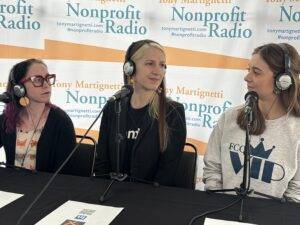
Keara Klose, Kate Meyers Emery & Ashlee Dean: Confessions Of Nonprofit Social Media Managers
Approval processes. Posting frequency. Constant emergencies. Managing AI. To overcome those challenges, our panel offers time-saving tactics, strategies to fight burn out, smart ways to use AI, and more. They’re Keara Klose from Cats In Bloom, Kate Meyers Emery at Candid, and Ashlee Dean with Iowa Association for the Education of Young Children. (This is part of our 2026 Nonprofit Technology Conference coverage.)
Leah Lundberg & Chris Lundberg: Convert Your Member Website Into A Thriving Community
Leah and Chris Lundberg are spouses who met at a previous NTC. They reveal their thinking on creating a community by auditing your current experience, applying opportunities for connection and leveraging available tools. We also dive into their opinion that SaaS is dead amid a move to data democratization and the own-your-data movement. They work together at Engine 9. (This is also from #26NTC.)
Bridge Conference: The conversations happening at Bridge will shape strategies, careers, and organizations long after the conference ends.
We’re the #1 Podcast for Nonprofits, With 13,000+ Weekly Listeners
Board relations. Fundraising. Volunteer management. Prospect research. Legal compliance. Accounting. Finance. Investments. Donor relations. Public relations. Marketing. Technology. Social media.
Every nonprofit struggles with these issues. Big nonprofits hire experts. The other 95% listen to Tony Martignetti Nonprofit Radio. Trusted experts and leading thinkers join me each week to tackle the tough issues. If you have big dreams but a small budget, you have a home at Tony Martignetti Nonprofit Radio. View Full Transcript
Welcome to Tony Martignetti Nonprofit Radio. Big nonprofit ideas for the other 95%. I’m your aptly named host and the pod father of your favorite hebdominal podcast. We have a listener of the week, Byron Coke in the London area of England. He messaged me on LinkedIn, quote, I came across nonprofit radio through your episode on AI in fundraising and the small org focus. The other 95% is the exact gap I care about, end quote. Byron, you are in the right place because we are devoted. To the other 95%. And I’m glad, I’m thrilled that you’re paying attention to, to that, to that vast minority, majority, the small and mid-sized nonprofits. Uh, Byron’s work is in, uh, grants, the grants consultant. Congratulations, Byron, on being our listener of the week. Thank you. Thank you so much for being with us. Oh, I’m glad you’re with us. I’d be thrown into supravergence if I had to see that you missed this week’s show. Here’s our associate producer, Kate, to tell us what’s up this week. Hey Tony and Byron, we have Confessions of nonprofit Social media managers. Approval processes, posting frequency. Constant emergencies. Managing AI. To overcome those challenges, our panel offers time-saving tactics, strategies to fight burnout, smart ways to use AI, and more. They are Kira Close from Cats in Bloom. Kate Myers Emery at Candid, and Ashley Dean with Iowa Association for the Education of Young Children. This is part of our 2026 nonprofit technology conference coverage. Then Convert your member website into a thriving community. Leah and Chris Lundberg are spouses who met at a previous NTC. They reveal their thinking on creating a community by auditing your current experience, applying opportunities for connection, and leveraging available tools. We also dive into their opinion that Sass is dead, amid a move to data democratization and the own your own data movement. They work together at Engine 9. This is also from 26 NTC. On Tony’s sake too. Tales from the gym, bootleg vodka. We are sponsored by the Bridge Conference. Tony will be with more than 2400 nonprofit professionals at Bridge, July 29 to 31 in National Harbor, Maryland. Info and registration at bridge.org. Here is Confessions of nonprofit Social media managers. Welcome back to Tony Martignetti nonprofit radio coverage of the 2026 nonprofit Technology Conference. This conversation wraps up our 2026, 26 NTC coverage. This is the final one of 20. We’ve done, we’ve we’ve done 19, we’re about to do number 20. With me are Kira Close, Kate Myers, and Ashley Dean. Who’s that for? Who’s that for all three or just one? Is that one person’s fan. It was for all 3. All right. Uh, you’re just, well, she’s welcome to stay if she, she wants to contribute. Um, our subject is confessions of nonprofit social media managers, and, uh, we’re calling on, uh, Kate Myers Emery, senior digital communications manager at Candid. Give us an overview of what the, uh, what the screaming nonprofit social media managers are all about. Yes, a nonprofit social media managers often hold a really interesting role. They don’t just do social media, they have to do a lot of other things. They wear a lot of other hats and we’re a unique role in our organization and you know this has been an exceptional year for social media. A lot has changed. We faced a lot and so we wanted a space where we could talk about what it’s actually like to do this work. Um, our tips, our tricks, how we’re managing burnout, how we’re managing AI, it was just a, you know, an open space for conversation and discourse around what we’re actually dealing with. OK, thank you. Thanks for kicking us, kicking us off. Let’s, uh, let’s dive in a little bit. Um, let’s go far. Uh, well, furthest away, Ashley Dean. Uh, Ashley is communications coordinator at Iowa Association for the Education of Young Children. Um, I understand that, uh, managing social is kind of overwhelming according to your session description, but, uh, Kira, uh, I’m sorry, Kate got us started, but why don’t you dive in a little deeper about why this is overwhelming work. Yeah, there’s just a ton of moving parts with the ever changing algorithms between Facebook, Instagram, LinkedIn, or even TikTok and other platforms that you might be utilizing and what to put out on those platforms along with leadership. What they want out there approval processes and even how frequently you’re posting, which at the end of the day that’s why some other places only have social media managers for that role rather than in our roles where. Like Kate said, taking on other hats along with that. Yeah, what are some of those other hats? Um, for me, I’m also doing a lot of email marketing. I help out a lot with design within the organization, so design for advocacy efforts along with reports and a lot of fundraising stuff. It really, there’s really no start and no end. Whatever they need, I, it gets added to the task list. All right, Kira close. Kira is sitting closest to me, but her. Name is also Kira Close, uh, social media manager for Cats in Bloom. Why is that? Why, why are, why are, why are nonprofits turning to the social managers for design work, for, for instance, that’s just one example. Um, I think I’m a little bit of a unique case, so I am not a paid staff member. I’m just a volunteer for, um, Cats in Bloom, the nonprofit, um, but I think a lot of it really has to do with, you know, not. Enough staffing, not enough expertise and not enough funding to kind of cover all of those roles, so it kind of always falls to the person who’s maybe most intertwined with communications or most intertwined intertwined with campaigns and stuff like that and it’s just kind of a natural progression to social, um, and then it just kind of gets added, added to the list. All right, so it feels like unfair creep to me as well. You probably are sympathetic to that, uh, that’s the way it sounds like you’re, you’re allied, you’re closely related, so you may as well do it. All right, that doesn’t sound fair. All right. Um, You have some, I don’t know, so I don’t know, should we start with like the rants or, or do you want to start with the, uh, the more, let’s start with the rants because that’s, that’s fun. That’s fun. So let’s just, let’s, um, let’s just keep going. Kate, we’ll just go down the line a little bit, we’ll bounce around, whatever, but Kate’s in the middle. Um, it could be your personal rants or, or, uh, what you heard from, I’m sure the conversation was energetic and robust to put it in, uh, like kind terms, you know, I wasn’t, I might, might like to have been a. Fly on the wall in the in the session, but so what are some of the, you know, what, what are some of the rantings out there? Yeah, so my, um, favorite rant to go on is that nonprofits don’t need to do video on social media. Experts are always saying that like that’s what you have to do, that’s how you get your voice out there, um, and I’ve gotten into fights on this on LinkedIn, uh, because I feel very strongly that, you know, if your organization doesn’t have an easy source of content like, you know, cats or like cute. Animals, um, if you don’t have someone charismatic on your staff who wants to be on camera, doing video work is a lot at Candid, the way that we did it is we did a test for 3 months to find out if we could actually take on video so we were able to go in the conversation with data about like, all right, it would take 30% of my job, which means 30% of other stuff needs to get moved off my job, um, and like now we’ve actually taken a break from it because we don’t have the capacity to do it and so I think. Giving nonprofits like the forgiveness around like you don’t have to do this experts are saying you do you don’t if you don’t have capacity and you don’t have time you can still be very successful and not do video. OK, Candid feels like an organization that doesn’t have ready content like to me it seems like a pretty kind of a cerebral organization. We’re a data organization so we don’t have like cute charts that we. And like just pull out and show you and we’re all remote so I don’t even have like people that I can show you. I see. OK, um, Ashley, how about, how about you, uh, either your own rant or or something memorable from the session. Um, I definitely think have making sure that what you’re putting out is quality over quantity. A lot of times people want. Post Something every single day when in reality you do not need to post every single day so really just focusing on what needs to go out and what it what’s impactful rather than just trying to fill feeds because you wanna have that quality content out rather than something that you’re just quickly putting together to get out there. OK, that’s that sounds contrary to the. Conventional wisdom, which doesn’t make, which I chose that deliberately because it doesn’t make it true, but it’s conventional wisdom. They just, I mean, depending on the, the platform, it’s LinkedIn, you’re not supposed to post. 8 times a day, but if it’s Facebook or, or X or Blue Sky, maybe. So that you’re, you’re saying what’s contrary to the conventional wisdom, yeah, and it really just depends on what your audience to me looks like my, um, at my. Association Facebook is really our best platform, so if I needed to for some reason post 5 times in a week, I’m gonna do that on Facebook because that’s where the traction’s gonna be. However, on Instagram, realistically I should not be going over like 2 times a week because that second post or even both posts might get hidden by the algorithm and like less than 50 views, no engagement, no click through rate at all. OK, OK, Kira, either your own a personal rant or something from the session, um, I think my own personal rant, uh, I was talking about this in the session as well, is just I’ve taken a little bit of a strong stance for the Cats of Bloom nonprofit, um, on our social media channels, and a lot of it is made from the heart, not with AI, uh, I think there’s just such a push for AI and I get where it can be helpful and it can be useful, um, in many different contexts, but I think especially as a. Rescue organization that deals with kind of uh life and death situations for felines every day and kind of the realness of that and the realness of human circumstances within that I really like to show the human side of things and like the authenticity side of things so like I really try not to use AI and especially nowadays I feel like it’s so obvious when people are using it that I, I’m kind of not using it at all except for some video editing for the cat cafe. Then they’re using it wrong. If it’s so clear that they’re using it, it’s like Botox. You’re not supposed to see it. You’re not supposed to know, I guess. No, I think, you may not care for my analogy, but, but you’re not supposed to, it’s not supposed to be obvious. Maybe you’re supposed to be transparent and say that it was, it was generated initially from the, um, whatever it’s chat chat or, or Gemini, whatever, uh, but it’s not supposed to be obvious. Yes, yeah, OK. Now you’re particularly committed to Cats in Bloom because you’re a volunteer. All right, you’re, but you’re standing among professional social media managers here. I’m paid paid staff. I’m you’re volunteer. I’m a paid social media manager in my day job as well. Oh, you are. Oh, in a different, in a different capacity. Is it a nonprofit? No, it’s not. Oh, OK. All right, so you, oh wow, so you are, I mean, you’re committed to Cats in Bloom. You do your professional work. For free as a volunteer for Cats in Bloom. Yes, that’s a great commitment. Well, thank you, thank you. I don’t know Cats in Bloom, but if you look at her top is her top is all cats. Some of them have glasses like she’s wearing glasses. That’s cool. Alright, I mean, that’s particularly committed. Am I, am I right? Or she’s doing her work like, OK, um, these two are though as well. Oh, they are too. Well, they are, they’re committed, of course, but I, I volunteer volunteering is a is a higher, that’s, I don’t know, it’s like a higher echelon, I think you’re giving your time. You’re giving your time, alright, not to minimize the people who get paid for it. I get paid for my work. I, I’m not saying you should be ashamed or anything like that. I get paid for work I do, you know, we all should. Um, OK, uh, rants, uh, uh, what about, how about channeling some of the, OK, so you each gave your personal, how about something you heard that stood out, anybody stood out from the session like, wow, yeah, that, that really resonated, or it was, it, it got the most applause or the most laughter. I mean the thing that we talked about I think as a group the most was burnout among social media folks because you know you’re doing social media and communications during the day you’re seeing kind of the worst of the Internet and then a lot of people like to do social media in their free time or they’re volunteering and doing social media and finding ways to protect yourself from all that so that that definitely got the most conversation because people were sharing. How to, you know, see that you’re burned out, how to fix the burnout, um, what that looks like for different organizations because it’s so unique. All right, let’s stay with you then. What, what, what does it look like? Well, Candid, um, because of who we are in the sector and because we have, um, comprehensive data about all nonprofits, we get cited a lot in X conversations by people that want to hurt nonprofits, so they will use our data to find quote unquote bad nonprofits to try to harm them, um, and so we see all that because we’re tagged in these conversations that were mentioned. Um, and it’s helpful for us to see the negative because then we can figure out positive things we can do. We can get data to organizations that we’re seeing like, all right, these types of organizations are under attack right now. How can we help them? Um, but as a social media person having to look at that and look at the, the hate and the violence all the time. Is is really challenging, um, and so I actually do no social media outside of work hours like I have to be completely blinders personal, not personal social, yeah, I don’t do any personal social media anymore um I completely turn my phone off in the afternoons. I don’t, I don’t look at anything on weekends. I fully check out on vacations, um, and I think that’s challenging because I feel like in some ways like I’ve lost some connections to friends that I used to be with on Instagram, but. I need to protect myself. Yeah, yeah, Ashley, how about you? You know, you, the, the agency’s work is the association’s work is with young children. I, I, I can, it’s hard to imagine, but I can imagine that there, there could be a backlash against the work that you do, uh, maybe some of the populations that you serve. Do you see some of this negative, negative, do you have to deal with some of the negativity that, uh, Kate is describing? Um, not at my current organization. However, the one that I was at previously centered its work around refugees and immigrants, so, yeah, um, when I was working there, I actually had my accounts, the organization’s accounts linked to my personal ones and had my notifications on 24/7 because. We were getting such hateful and like threatening comments that I would need to go on there right away, report them, block them, otherwise the people that we were serving were just getting scared and would be fearful to leave so that they could get the help that our coalition was providing, um, which became very draining and a lot of burnout occurred because of that. Luckily at the Iowa Association. For the education of young children, we have nothing but positive comments, so I have been able to create that boundary where when I’m at home I am only on my only my personal accounts. I don’t have any organizational accounts on my phone. OK, at the previous agency, did you have to do any of what Kate was describing or how did you protect yourself when you were at the earlier agency where you were. Uh, uh, uh, certainly prone to, uh, attack and backlash. It really depended on the comments that we were receiving. If it was just, um, lack of presenting facts, then it would be, hey, here’s this study that was done, which is why, um, when we were doing, um, COVID vaccines for immigrants, we would. Set up clinics so that they could get vaccinated and which got a lot of hate and we would be like this is why we’re doing this but then there would be just. Straight up threatening ones and then that would just be blocking the user as well as removing the comment so it really just depended per incident. OK, but you, you didn’t go as far as Kate was describing like turning off or ending your own social, your personal social no, I’m I’m not that disciplined. OK, alright alright um. So Kira, uh, I imagine there are people who are not in favor of saving cats. You probably get some backlash. How, how do you manage that? How do you manage the negativity? Oh, plus you do this work in, in your own, I don’t know if you’re in a lightning rod organization of your own, or maybe it’s something benign like American Dental Association, you know, then I don’t see them. Getting a lot of backlash and like cavities, you know, cavities backlash or you maybe root canal or something if you had a bad root canal you might backlash against the American Dental Association, but it’s probably not very common but you probably don’t work for the American Dental Association anyways. I don’t. It’s one I chose. I have my own rant about dentists. No, no, I have good teeth actually, so I’m fine. But what, uh, alright, so how do you deal with it, uh, I bet there is a backlash against helping cats, right? Helping, yes, so we do encounter some backlash, especially, um, with our work in, um, kind of rescuing cats and not just like, you know, relocating them to magical fairyland where they won’t bother people anymore. So I think a lot of it is just. Helping people understand and educate people on what can be done to help not only the feline population but the human population who may be dealing with cats that they don’t necessarily want to be dealing with or people who want to be able to help but maybe don’t have the funding or the support to be able to do it so I think a lot of the backlash that I deal with on our social is just helping to educate people or like Ashley said if it is somebody that kind of can’t be reasoned with or is just being like really inappropriate and really abusive, I will do. In extreme cases I will do the thing where I delete the comment and I block them because to be honest as a social media manager, especially as a volunteer social media manager, I don’t have to deal with that for my mental health when I’m managing that in my free time. OK, um, is that as far as you go like. Uh, how about in your own personal accounts? You’re, you’re, you’re still active personally, and yeah, I’m really active on my personal accounts, but it’s a really curated space that I have, so it’s really friendly and positive and that kind of thing. So, but I also have them pretty well locked down, so it’s only the people that I invite into the space. OK, OK, um. How about um. Yeah, I feel like we channeled enough of the ranting and you know, and, and, and, but also how to manage it personally. This is good different degrees of uh how you’ve each managed the, uh, the, the negativity of the web, you know, in your own, in your own businesses, in your own and personally, um. have some advice around time saving tactics, I believe. Who wants to kick off? Let’s go far, furthest meaning furthest sitting from me. Ashley, time saving tactics, ideas for your your counterparts, um, just reusing as much content as you can and. Whenever you post something, your entire audience isn’t gonna see that post the first time, so if you reuse that exact post again, you’re gonna reach even more people. Something that I like to do through Canva, you can just click the shuffle button on your colors. So if you do wanna spruce it up a little bit for the next year. for example, um, Iowa AUIC, we have a spring and fall institute so to shuffle the colors that I used in the same template last year and then utilize that don’t have to do that much work compared to creating the templates in the first place and then I have a full campaign ready to go. OK, cool, um, Kira, what, what do you do that time saving, uh, time saving tactics for me really are, I think I’m lucky in that we have a lot of cute felines and cats to feature at the cat cafe and also in our foster home, so it’s inviting those people to kind of help me with social. So like, oh, you took that really cute picture, can you send that to me? We have an internal, uh, volunteer Facebook group where people will post photos and stuff like that. So it’s kind of getting people to help. Me cover content, especially during my work day when I can’t be at the cafe to cover stuff, so kind of bringing people into the fold for covering content and then being able to use that on social even if I wasn’t there personally. Alright, public curation, yeah, cool. How about Kate? What, what do you do? We do a lot of do a lot. What is name a couple of tips you do a lot, um, we do a lot of remixing of content. So if I make a long form. Piece of content like a carousel that’s about, you know, perceptions of nonprofits right now from the public. I will take the individual charts that were in that carousel and I’ll make them into standalone posts or we’ll turn them into like pop quizzes that we put on LinkedIn, um, or like a short video so we try when we make something to get the most out of it. Um, and we’ll reuse it over and over again, um, because, you know, I think it is like 7% of people see what you did, so you might as well keep using it, right, to Ashley’s point, yeah, people, it, it’s, it’s OK to reuse, yeah, all right, um, is there more? I mean, time saving, you know, you guys are all, you, you’re all experts, but is there more? You got more tips. Who’s got to throw somebody throw out another time saving resource saving. Mind saving tip. So I have a really silly one, but it’s my favorite thing. um, if you are on a Mac computer and you do command control space, it brings up your emoji keyboard and it’s like this little fast track to getting an emoji keyboard. Other people love it, um, and like as a social media manager you you need quick access to emojis and it’s a very simple easy trick but it saved me so much time. Yeah, what is it? What’s the key strokes command control space command control space. All right, uh, is there a counterpart in the Windows environment? What is that? Windows colon, the Windows button and colon. OK, OK, um, anybody else want to help, help your, help all your colleagues with more resource saving tips, time saving. Something that I do for my organization that has really helped me, but I know it’s not realistic for everybody, we have a very specific schedule year by year, so we always have our fall institute, we always have our spring institute, we always have the week of the young child. There’s a whole bunch more that I could list off, but that would take way too long and putting in one document what you’ve already done. And then every year just taking that same exact timeline and fixing the dates. OK, so this was on this Friday here’s the new Friday so you already have your marketing timelines that are going on social media or for my case I also have the email marketing timeline that you’re able to reuse year by year so you don’t. You don’t have to worry about that every single year when you’re coming back around to the Fall Institute or anything like that, but I know some other organizations are a little bit more sporadic and they don’t have that really set schedule that we do. But if you do have that cadence, valuable reuse, right, very sensible. OK, um, I don’t know, across the three of you and in the session, is there a, is there a particular. Uh, um, platform that is annoying that, that we should, we should, we can, uh, call out as, as such. Is there one that really, I mean, it really just annoys the hell out of everybody? I mean, X, I think X Y is Y X because since it became X, it’s kind of turned into like a cesspool for conversation and so it used to be this really helpful space. It was great and I think it was great for when it was Twitter. It was, it was doing good work like crowdsourcing emergencies and things and and rescue efforts and. That that’s in the past, yeah, I think with the way that it’s changed and they’ve gotten rid of a lot of the safety guard rails, it’s just a place for the proliferation of hate and so yeah, I think, you know, we had a lot of conversations with social media managers over this week saying like, hey, I want to get my organization off X. How do I convince people that like we need to leave this space? Have any of your organizations left? We were never on it. You were never, OK. The, um, I’m sorry, Iowa Association of Education of Young Children was never on it. Candid has left. We were Bloom never on. All right, so the three of you, nobody’s on it. And Candid, uh, how hard was it to convince? Is that a big deal to, to say, I mean, I’m the social media manager, I’m the social professional, I’m advising we get off this shit channel. How hard is that? Is that hard? And when we actually made the move, it was not hard. I think had we made the argument right at the beginning, it would have been a little bit more challenging, um, like right when Elon Musk took over I think it would have been harder because that was our biggest audience. We had 160,000 people that were following us and we did have a lot of great conversations and great things were happening, but over the course of the year after. After that we saw most of our followers leave our engagement dropped, and so I was able to make the argument based purely on our data. It’s not worth the time investment, and I think that is a much easier conversation to have than being like, oh, I don’t want to be on there because of Elon Musk. Then it feels more personal, but, yeah, it feels politicized. You made a data driven decision. All right, good, savvy. Um, somebody touched on AI. I don’t know, Kira, it may have been you. Uh, let’s talk about the, uh, appropriate use or valuable uses of AI and maybe some boundaries too. Uh, let’s start with you, Kira, because you brought it up. Do you use it? I do. Cats and Bloom. Yeah, I do, only in a very specific case. Um, so I use a video editing tool called DScript, and you can actually put the video that you’ve. Record it into there and it will transcribe it and you can edit the video by like erasing things like words in the transcript um because I’m not a video editor I’ve never been like a trained video person and I’m amateur at it at best that is really helpful for saving time you can work you can work from the transcript you don’t have to go into the video and then it takes that takes the the uh the corresponding part out of the video as you delete it from the transcript. OK, what’s it called again? Descript descript. OK. Anybody else? AI appropriate valuable? OK, Ashley, I use it a lot for proofreading items just to make sure grammar is looking good as well as verbiage with IOAUYC we don’t use the term kid, we use child or children. So just making sure that anything we’re putting out is following brand guidelines along with copyrighted symbols. We have like the early childhood teach. And wages program which need copyrighted symbols but not in every case and I don’t wanna be the one messing that up when it goes public so just making sure that I’ve already trained Chat GBT to know where to put that and then have it proofread those items. Is is chat the soul uh app that you use? Yes, OK, I’m sure the kids appreciate that. I did that on purpose, kids. Sorry, sorry. I, I respect children. Um, OK, uh, yes, Kate, what, uh, AI usage? Yeah, so, um, Candid uses AI on a lot of the work that we’re doing now. We’re exploring different things. We have our own internal LLM, um, but for communications we’re basically using it as like an intern, so we’ll use it for, you know, helping brainstorm, come up with new ideas, um, if we wanna reuse content, we’ll have it like create a starting point of rough drafts, but. Everything that goes out online has been made by humans, so we really wanna make sure that things feel authentic and that they’ve gone through a human and we’ve really made sure that there isn’t um anything that we’re missing um I think language is so important right now and people are reading into words and so being very careful about language and the way that we’re using it and just keeping that like integrity and authenticity is really important. Let’s talk about the favorite favorite channels we talked about the least favorite. Ashley, let’s start with you. What, what’s your, what’s your favorite channel? I love LinkedIn. Why? Why? Um, it just feels like it feels like what social media was made to be. It’s so it’s become such a community for me rather than whenever I go onto Instagram and Facebook. I feel like I’m just getting thrown ads at all the time as well as. Whenever I’m using it for personal use, it just seems like I want all the likes, especially in my age demographic. It’s like I’m gonna post and then my personality is gonna be revolved around how many likes I get, which I’m just kind of over, but on LinkedIn I’ve been able to think, yes, um, 2004, which on LinkedIn I feel like I have a community. Like I just put everything out there, yeah, yeah, yeah, that’s all right, all right, um, is LinkedIn the association’s most, uh, popular channel, most followed channel? Um, Facebook is our most followed channel and our most viewed, however, we have, um, the highest click through rate and engagement percentage through LinkedIn. OK, how about you, Kate? Favorite? Yeah, LinkedIn definitely is my favorite, um, both personally and for Candid. It’s by far the best. Um, when I started at Candid in 22. Um, it was like our like least favorite one. It was the one that we were not posting and now it’s just transformed into to such an amazing community. That’s where we’re having real conversations. It’s where people are sharing things and they’re digging in and you can see people making connections like through our posts, which is really exciting. It’s, it is, it is what you want social media to be. It’s like Instagram was in like 2010. It just has this great feeling in community and you don’t feel like you’re being promoted to, you feel like you’re being invited into conversations. I love that. Yeah, I, I also have my my favorite is LinkedIn. Akira, we’re gonna get to you. At 64 years old, I’ve seen so many disappointments. My concern is that LinkedIn will go the way that Facebook went, that Instagram went, that others have gone, you know, they’ll, they’ll be serving up more ads. The algorithms will change. It may become a cesspool. That I, I don’t want that obviously, but that’s what I think about. That’s what I, uh, it doesn’t even keep me up at night. But if I was thinking deeply about social, I’d be concerned about the future of LinkedIn because so many other, uh, so many of the other sites have let us down. All right, it’s my rant. Kira, what’s your favorite? So my personal favorite is also LinkedIn. Um, I think it really is like. What 2014, 2013 Twitter was for me where I kind of found that community and I have friends from that time in my life on Twitter who I’ve met in real life, um, and now I think LinkedIn is kind of like that Kate and I actually met on LinkedIn and Ashley and I and we’re friends from a social media platform and I just think it’s such a positive collaborative space if you curate it to let it be like that and then. Uh, professionally in the realm of the cat cafe, Facebook is my favorite mainly because that is where we see the most engagement. People see our posts on Facebook and that’s why they come in and visit at the cafe. That’s why they come in to adopt cats and that kind of thing. So Facebook is my personal, my professional favorite for the cat cafe. OK, alright. I just feel like we should leave it on the positive, or favorites without my without the uh without the host’s cynicism about LinkedIn. I hope it never happens. I mean I want LinkedIn to stay vibrant and, but you know we’ve, we’ve been let down more than, more than a couple of times. Uh, who wants to wrap us up? Uh, it, it can’t be Kate because you did the opening, so somebody has to bookend, you know, with, uh, like a summary, the, the, the love of the love of the good side of social. OK, Kira wants to end with the good side of social. OK, so I think overall, while there are certain pockets of social media that can be an absolute cesspool and very depressing and very hateful, I think there are positive. to social where I know I’ve said this a few times already, but where you can curate the space you can make it what you want it to be like use that block button you know like make it into the positive place and kind of interact on social the way that you wanna be interacted with and then if somebody doesn’t follow those guidelines you can kind of block them and get rid of them so I think overall social and especially in my role at the cat cafe I’ve seen so much good. Come out of social like cats are rescued from like terrible environments. Cats are rescued from like struggling out in -14 degree weather and that kind of thing. So I’ve just seen like a really good positive side of social and like the good that it can do and the good word that it can spread so it can be good um in certain areas and I think we just kind of have to hang on to that and find that space both in our professional lives and our personal lives if we choose to. That’s great. That’s Kyra Close. Close is with a K. She’s a social media manager at Katz in Bloom. With Kira is Kate Meyers Emery, senior digital communications manager at Candid, and with Kira and Kate is Ashley Dean, communications coordinator at the Iowa Association for the Education of Young Children. So thank you very much, Kyra, Kate, Ashley, thanks very much for sharing. Thank you. Thank you. You wrapped up our coverage. This is it. Like tables are coming down, like 3 quarters of the tables don’t even have cloth cloths on them anymore. They’re naked. But that’s where we persevere. We’re we’re not wrapped up until. Until the host says so, which is, which is now. We’re choosing now, not 15 minutes ago like everybody else. Everybody else dashed out at 1:45. We’re here until 2 o’clock on the nose, as a matter of fact. So thank you. Thanks to each of you for sharing. Thanks for being with us. Thanks for wrapping up our coverage. Thank you. Thanks for having us. It’s a pleasure and thank you for listening and being with Tony Martignetti nonprofit radio coverage of the 2026 nonprofit Technology conference. It’s time for a break. We’re sponsored by the Bridge Conference, produced by AFP DC and DMAW July 29 to 31 at the Gaylord National Resort and Convention Center in National Harbor, Maryland. More than 2400 professionals will gather at bridge. Tony will be with them. The question is, will you? Thought leaders from nonprofits, associations, foundations, hospitals, higher ed, faith-based, and mission-driven causes across the country come to Bridge to discover new ideas, solve real challenges, and connect with smart people shaping the future of our industry. From 125+ educational sessions and hands-on pre-conference workshops to Bridge Tech, the faith and fundraising forum, and inspiring keynote speakers, Bridge offers something for every mission and every role. The conversations happening at Bridge will shape strategies, careers, and organizations long after the conference ends. Don’t hear about it afterward. Be in the room. Register at bridge.org. It’s time for Tony’s take 2. Thank you, Kate. Another tales from the gym. I don’t know what’s going on here. Uh, I, when I, Pulled into the parking lot, uh, I pulled next to, uh, a man, uh, I’ve introduced you to before, Sam. Sam is the man who, uh, Sam is the man. Sam, Sam. Sam, what was that? Sam, Sam the Sham and the Pharaohs. Oh, they, that was an old, Sam the Sham and the Pharaohs had, I think they were a one-hit wonder, like in the 60s or. 50s maybe? Sam the Sham and the Pharaohs. I’ll look it up. You don’t have to, you don’t have to let me know cause I, I’ll bet I’ll think of it as soon as we’re done here. In any case, our friend Sam, he’s the guy who had me sign the birthday card for Jerry, the 92 year old, and I didn’t sign my name because nobody knows my name. So I just signed it, Jim Rat. You may recall that. It was a few months ago. So I pull up next to Sam and he’s got some people, uh, two others congregated. They’re, they’re, they’re at the back of his, back of his SUV. He’s got the, he’s got the rear gate open, and he’s showing them something and, and I parked and so I, and they were close, so even with my windows up, I could hear that he was talking about vodka. So I just, you know, I was on my way to the gym. So I got out of the car and took my time because I was kind of curious what this vodka conversation is at, at the back of his, uh, car. And, uh, and he’s showing off a bottle. It said Jim’s vodka, and it had a picture of a guy, uh, I, I, I saw the label. It was a color picture. Of a guy, I presume his name was Jim. It was Jim’s vodka. And, uh, he was showing this bottle to the, to the two women. Uh, I recognized one of them, I don’t know the other one. I just, I walked by, I said hello to Sam and, cause I, I know him. So, and I just kept on walking. So I didn’t, I didn’t join the, this, uh, illegal bootleg conversation. I did notice that the bottle did not have a North Carolina, it’s called a tax receipt. It’s a, it’s a, a tag that goes over the bottle cap. You can’t, you can’t open the bottle without tearing this paper, paper sticker, but they call it a tax receipt. That, that goes over the, over the bottle. And I know the bottle, I know this because, uh, when you buy bottles of liquor at the ABC stores, that’s what we have in North Carolina. They all have this, this pink tag on them, but Jim’s vodka did not have the tag, so. Between the name it being called Jim’s Vodka and it being shown in the back of a, uh, uh, uh, the back of somebody’s car, and it doesn’t have a tax receipt on it. I don’t know, it sounds bootleg to me. But I’m not in law enforcement, so I, I, I won’t, I won’t draw the ultimate conclusion. I’ll just ask the question. What do people say? I’m just asking a question. I’m just asking a question, but I’m not gonna question Sam on it. If he’s got a little side hustle, selling Jim’s vodka, I don’t, I don’t wanna ruin it for him. He has a little pop-up shop at the back of his truck in the parking lot of the gym. And that is Tony’s take too. Kate, So he had like cases of it or just I only saw the one bottle. I don’t know. Well, there was probably more the way, I mean, he had it in the back of his truck. So it seems to make sense that there would have been more, but I only saw one bottle of Jim’s vodka. Maybe he was just giving like a friendly review, like, hey, have you tried this? I don’t know. Could have been, could have been very innocent. I’m just, I’m just asking questions, that’s all. We’ve got Beu butt loads more time. Here is convert your member website into a thriving community. Welcome back to Tony Martignetti nonprofit radio coverage of the 2026 nonprofit Technology conference right here in Detroit, Michigan. My guests now are Leah Lundberg and Chris Lundberg. Leah is vice president of marketing and operations at Engine 9, and Chris Lundberg is CEO and founder of Engine 9. Leah, Chris, welcome to nonprofit Radio. Thank you so much. It’s a great pleasure, pleasure to have the both of you. Uh, your session. Topic is, have you done your topic yet? Yes, we did yesterday. OK, a playbook to turn your member website into a thriving community. Chris, could you give like a 30,000 ft view of the topic before we go into detail? Yeah, sure. So things have dramatically changed in the last 3 and 6 months with AI and all these other technologies that are out there. So fundamentally how you think about members should not be thought of as tech platforms out in the cloud, SAS platforms, that type of thing. It is now moving back towards centrally hosted databases of information from all of your members connected to with Replet or other web development tools directly back into a database you host and run. So SASS is dead is the kind of best way to think of it. OK, thank you. Thank you for an overview. Let’s, uh, let’s just start to go into some detail, um, about, uh, um, well, first we have to, uh. Recognize and acknowledge that we have a uh an NTC. Here you go, Amy. We have an NTC couple here, uh, Leah and Chris, they’re not brother and sister. They met, they’re married, and you met at an NTC. We did. This is an NTC love story. Alright, so first we’re gonna do that story before we have anything to do with membership websites or membership or anything else. So who’s gonna tell the, alright, it’s your turn. Tell the story, tell the love story of Leah and Chris at NTC. Sure, so um I’m originally from Australia and I was living in Canada, Western Canada at the time. And they used to run the do-gooder Video Awards many years ago, uh, run by C3 I believe, and that’s right, yeah, so, um, it was, oh my goodness, uh, Michael Hoffman. Michael Hoffman, exactly, Steve, like I said, Michael Hoffman, right, C3, the do-gooder. I remember those. This is our 12th, this is our 12th NTC, so wow, we were, were we at the one where you met? I think so. That was about 99 years ago now, yeah, so, um, so we won my hospital foundation. I was in charge of running the campaign. for the video campaign and it went viral, which you can’t plan, which was great. Um, and we won and the prize was 2 tickets to the next conference, which was in DC, which is where Chris happens to also live. And so I came along and actually one of his clients brought me to his party, who I met at a Salesforce party, weirdly enough. So I was at my first NTC and, uh, yeah, and we kind of had a fun time and then we wooed each other for 9 months and then I moved over to the US and That’s outstanding. Does, does N10 know that? Yes, they do. We’re one of many apparently. We’re one of many. Yeah. Oh, OK. All right. So what year would it have been that you both came to the, you want, so you won a ticket 2017. We missed it. Alright, I, we started it in 2014, but we skipped 2017, so we were not here, but we’ve been to everyone since this is our 12th. All right, so, but it’s about you. Alright, so 2017, that’s fantastic and one of many in 10 romances, yeah, apparently I, I told Amy and she said. We’re one of many marriages that have come out of N10 and yeah, we’re thinking about starting a birds of a feather kind of thing for married couples out of N1 and NTC, they have birds of a feather tables where people can flock together, um, and oh that’d be cool, the married couples. Have you met any of the other NTC married couples? We have not, no. Perhaps, but not that we have known. They haven’t exposed that they were introduced here, but yeah. Well, it doesn’t come up ordinarily in conversation. But I used to work for nonprofit and now I’m on the vendor side, so that was the trend. time for that too because we started working together right after that. Engine 9, so you had founded Engine 9, Chris, before, um, kind of fractured. Yeah, we were at fracture at that point. So Engine 9 is actually much more recent, only about the last year or so. So, um, but I’ve been going to N10s for 20 years now. OK, OK, it’s it is a great conference. That’s a great conference. Yeah, I know they care about the people, the food is excellent. They’re thoughtful about, I mean, the community chooses the sessions. I like that. I admire that. Alright. All right, let’s go to the more mundane, uh, member websites. It all feels like downhill from here, you know, we’re not, it’s not love stories anymore, you know, member websites. So let’s talk about membership program first. Somebody, somebody identify what we’re talking about when we say a membership program. Sure, so N10 is a good example of a membership program, right? So you, uh, work with Antenna, another nonprofit. Uh, you become a member to try to engage with other members of the community to build community to kind of, uh, build out your relationship with the organization and with each other. So, so membership is one of the most important parts of society and the technology behind it only exists to help, uh, people engage with those relationships. OK, so we wanna have a more more robust. Member member experience, yeah, we all do. I mean like there’s just community, right? So it’s like community x 10 and more custom. I think people want to be able to see their own information, have control over that, particularly these days. So there’s an element of that too of access. OK, and we’re talking about the member website. So this is the place where you go to manage. Web manage your membership but also to engage with the rest of the membership. So I mean for a while like we started to use technology to enhance membership like whether it be N10 or other tech organizations. Membership is as old as humanity, but like in the last 20 years a bunch of technologies have been built up to build out like member engagement work. Uh, I remember, uh, I did some work on the Obama website in 2007, so he had this huge membership engagement tool set which let people connect with each other and it really became a way to organize politically and make change effectively using membership. Um, so starting then a bunch of technologies have kind of like come and gone to help people use technology to build that membership out. Some of them suck, some of them are good, uh, but most of them at this point are now dated and old because we are seeing complete change in how we use tech, um, and, uh, that has been, uh, wild and revolutionary to be a part of. So as a part of your session identifying the. The the tech that doesn’t suck you talk through some of the tools, yeah, and mostly it was we originally thought of the session that to present some existing SAS platforms out there that were good at membership management, right, like plug-ins for WordPress and all that kind of stuff, right? That is gone now. So if that, that all that tech, uh, if you’re currently working for a SAS company, I’m really sorry if you still have your job, you’re lucky. Um, but a lot of these look for other work, look for other work rapidly. There’s no future in SASS, yeah, if, if you track stock prices, like, you know, all the SASS companies are down 40% in the last 2.5 months, so Salesforce, etc. So a lot of the membership management technology which used to be this massive SASS product line, they’re just gonna go away. They’re just gonna go completely away, OK, um. What, what does the community look like? Um, maybe that, maybe the answer is it depends on what your work is. I don’t know, but what, what can Leah, what, what, what kind of membership, like an average membership community look like? Well, it really depends because I think in a nonprofit space that membership can be donors, right? So like there’s not really any ability to for people to log in and see what they’re donating and alter that. Like we don’t have exposure to any of that data. Some of that’s deliberate because if you had access to. Change your monthly giving, you might cancel online. Like some of it’s a little bit, a little bit deliberate, but I think, um, a lot of it’s just the infrastructure’s not in place. So even from a nonprofit perspective, I think that’s really important to have access to to that, but also to be able to create create community and be able to have an an an awareness of what people are into and be able to create, you know, events for to cater for that because really we’re getting back to the age of connection. Particularly after COVID, and I think we’re just not really in the space where like you have to convince people to get off their couch, like you have to do something worthwhile that’s meaningful and hopefully bespoke to what they need, and in order to do that we’ve really got to interact with them in a more personal way and membership kind of allows you to have that constant contact and, and really cater that for the people that need it in whatever context you’re in, whatever type of org. OK, I just want to pull on something you mentioned. Are we going to where donors can go online and see their own giving history without without asking for it from thank God because why can’t we do that now, right? I never even thought of that, right? Like I can go to my local gas company, which is Joe who lives down the street, and he’s got a website and he can tell me how much I’ve, you know, how much I’ve paid him and everything else, but you can’t go to ASPCA’s website and figure out how much you’ve given them. How crazy is that that even the largest, the largest and most well funded nonprofits still cannot figure out how to give me a place to interact and with my membership information to work with other folks who might be interested in similar things that we’ve kind of worked that out. You have to fill out the form on the latest mailing to change your address. Exactly, yeah, it’s so archaic when you. Think about the age we’re in now, right? It’s so basic, but we’re not doing it. So we’ve sort of designed a platform that can enable you to do that and a lot more other things, but we’re really here to just talk about how to change our way of thinking because I think we really have to start doing that. This is not a fad. AI is not a fad. It’s a tech technological revolution, and we just need to get on board. So we’re here to try to, I guess, shepherd people through that process. OK, so when we talk about membership, you’re, you’re not just thinking of like a strict membership program where people have, it’s everything you, you, you’re sent a male piece and you pay $35 a year and you’re a member. You’re thinking of donors, volunteers, it’s everything. They call it connections, right? You can name it any other thing, but I think fundamentally I think membership speaks to the current structure and I think we need to think much broader than that. Should we start with. Evaluating, auditing our own member experience. Yeah, how do we, how do we take that on? So one thing you need to start out with is figuring out where your data is. So a lot of people have membership data that lives in a legacy system. Sometimes they call that the system of record, but then they have membership data in their email platform. Then they have membership data in Eventbrite or their eventing system or all these different platforms that data lives, right? That’s so weird because we don’t know any other way to think about it, but if you think like, if you think of something like Amazon or some of the for-profit companies, all that data lives in one spot, so they can use it for, in their case, targeting, in their case, you know, for-profit things, but nonprofits should be able to do the same thing. And so step one. Is get your data out of these uh companies’ technologies, get it out. Like they’re holding it hostage, they charge you for access to your own data, isn’t that mental? So, so change that first. Yeah, so first, yeah, get that data centralized and once it’s centralized, now you can start to think about how to organize around that data. centralize it, uh, data warehouses is the typical phrase for it, uh, usually a database that’s, um, vendor agnostic, uh, for small and mid-size organizations you’ll usually outsource that to an agency. So a lot of agencies, uh, who are here now like M&R and Authentic and other, other folks at N1. Um, do that data warehousing and work with, uh, with, uh, uh, techies to establish that larger entities will run their own, uh, so they’ll have their own database, uh, under their own control, not outsourced to Salesforce, not outsourced somewhere else, a data warehouse with all that information centralized. So depending on if you’re small or medium or large, depends on how you solve that problem, but the most important thing is to not treat your CRM. Which is outsource data as your primary residence of information that needs to be in your control. So that’s step one. If you’re a large organization. Do you have to build this, this data warehouse, or does the solution already exist? Usually you want to build it, um, because, uh, if you, if you’re a large enough organization, you’re gonna have a data team, right? And that data team is gonna be 5, 1020 people, and those smart data folks are gonna wanna be able to control and own that data in a world that they like, whether it be Azure or Amazon or what have you, they’ll wanna control that data itself, so. It is building a bit, but at the end of the day, because of AI building stuff is now super, super cheap. So it’s no longer about this massive cost to build. Now it’s like, how should you build it, uh, given infinite resources. OK, and if you’re on the smaller mid-size, uh, size, where, where would you house your data? Where, where was that? Sure, usually the agency that you pick. So if you’re using the agencies, yeah, so like someone like M&R. Houses a massive data warehouse for their clients so they’ll be able to work with the smaller mid-size organizations to centralize the data into that warehouse. So MNR has the staff, uh, the great techies to be able to understand how to work with that data and so the, the smaller mid-size nonprofit doesn’t need to do that, but the agency becomes in charge of it. You gotta outsource it somewhere and agencies are becoming a great home for that information now. What if, what if it’s all in different forms. Formats because it’s coming from different places, it’s different formats. How does that, how does it all get standardized? Yeah, but how does that happen, Leah? Like your husband is turning to you, so besides, it’s your turn. Data warehousing’s more his area, um, but we bring it in, we standardize it through, we fracture is a data warehousing platform that we also run and we standardize all of our data through that, but the methodologies Chris actually has more information on than I do specifically. Well, you nailed it on the head with the challenge. Challenges is that cleaning and standardizing it, right? Like transforming it into common schema and that’s where the work tends to be. It tends to be in cleaning it up, standardizing it, getting into that warehouse format. And uh like Leah said, there’s uh tools like fracture and everything else that connect to lots of platforms already. Right now, frankly, you can also build it yourself. Just go to cloud code and say, build me a connector to Salesforce and it’ll just do it. Data warehouse, whether you’re small, mid-size or large, coordinate with or or relate to your CRM, right? So you’ll pull in some of the data from your CRM, but like we talked about before, not all the data is in your CRM, right? So oftentimes you pull the data from the CRM, D dupe against your direct mail platform, D-dupe against your email platform, so the warehouse becomes this clean repository of all your important information. Your CRM team can still use the CRM if they want. There’s a reason why CRMs are starting to go away because uh they no longer do as much as they used to. But then once that data is in that warehouse, uh, that’s where you start to interact with the data directly. And this is where it becomes cool. So step two is now that you’ve got the data all cleaned up from step one. You can connect your website directly back into that database. So this is something that, you know, every for-profit company that we know of does. They have a big database of information and the website can just say, go find me the last donations or let me update this person’s address information, right? That all happens in the warehouse through the website. And for some reason we’ve completely lost track of that, right? Like that, that it seems so obvious, but we’ve kind of like started to fork all this stuff out to all these other platforms that we forgot how easy this is. And uh so that’s kind of where we see a lot of things heading. Yeah, and we see a lot of nonprofits that are using multiple tools and sometimes not efficiently. Someone’s wasting money on some of these tools and partially that is due to the fact that they just don’t, they can’t control all of it. It’s too much. So in that sense, data warehousing is like having You think of like an Amazon warehouse keeping all your boxes in the one place and you can pull from that at any time. And we know that that data’s clean and as you said, like, you know, standardized so we can pull it into any format that you need for any platform. For instance, like not to plug us too much, but Engine 9 is a we’re a marketplace play where you can plug in any of your systems into your data warehouse and there’s no migration, there’s no risk because we know the data’s already clean. So there’s a lot of, uh, there’s a lot of opportunity that comes with that too. Wow, OK, it’s very, very interesting stuff I’ve never heard, which is, which is valuable, you know, I, I just, I just always assumed the CRM is the core. It’s a it’s a fallacy. I think they would have you believe that they’re, they’re monetarily incentivized to make you believe that they’re the hub of your data and they’re not. They just are selling you shit. Your data is your, your, your, your, your repository of your data is the hub. Well, and they charge you to access it, which I think is the craziest. It’s your own data that they charged like sometimes there’s a charge for special reporting. Exactly, and it doesn’t have to be that way, we can be far more efficient and cost effective by being a bit smarter about how we use these tools. OK, alright, and then, alright, so now bring this back to the member experience, uh, and where, I don’t know where, where should we go next? I mean what, what, what, what can we do with this now that for a robust member experience. We talk a lot about membership because membership we think is one of the things that we have sacrificed. The most, um, uh, through this process, uh, and bringing back, uh, membership and being able to do that on your website again now becomes a very almost trivial thing. So if you’re using a tool like Replet, you can create a member portal which suddenly you just ask Replet to say create me a member portal, and people can go to your member portal and interact with other members, give money, donate, give recurring gifts, do all the things you would want to do with, with that just using commonly. Use tools right now. These tools like Replet used to have to have, you know, engineers, 10 engineers and a $20,000 website project to do this stuff, but Replet or other vibe coding tools uncorks all of that. So now you can start building membership sites, much better membership sites. Also event sites. How crazy is it that we have to go to another event site to, you know, you know, like, uh, uh, Eventbrite or something like that. To attend an event for an organization, why doesn’t the organization have it on their website? When it’s not at all custom either, it doesn’t, I’m a big branding person and it’s just, it’s not, there’s no continuity with your branding then having to go to another website. So why not do that in-house when we can. Like Replit’s one of a great example. I’m a creative, I’m a web designer, but I’m not a coder. But now I can do anything I want because I can create the vision using these tools through just asking the right questions. That’s not to say everybody can just go out and do these things. You have to have some breadth of knowledge. As far as development goes, as far as what to ask it to do, because you have to ask it, say, to put in security measures and you have to ask it to do those things. So I think there has to be some knowledge, but it’s really bridging the gap for people to be able to go from the creative vision into the, the actual deployment of something that’s useful and very, very custom, which means we can build that out for anything. So we’ve built custom event sites, we’ve built custom membership portals just from purely like in minutes, not months. It’s kind of insane. And this is all related to vibe coding which Chris you mentioned. Now we have jargon jail nonprofit radio. Everyone may not know what vibe coding is, so please define your term. So vibe coding is more of a way to, it’s, well, for I don’t know if I’m, I’m answering this correctly because Chris is the engineer here, but. Uh, but it’s really the, it puts a layer on top of a development tool. So Replet, for instance, is a full development tool that you would use to do pure coding. So this puts an agent on top of that, an AI agent that you can then ask to execute things narrative, exactly, exactly. And you can actually like for instance, I build out custom dashboards on the back end of our website purely for insights. I wanted about our party tonight, for instance, so you know, I know how many attendees are coming. I know how we have a happy hour this evening which you should come and join us at Firebird Tavern, 8:30. Where is it? Firebird Tavern, 8:30, sorry, 5:30 to 8:30 tonight. 5:30 to 8:30, but what’s the location again? Firebird Tavern. Firebird Tavern. Sorry, get him to say it in Firebird. work on my American accent. 5:30 to 8:30. OK, digression. Yeah, but, but even that just being able to see because we want to know who’s coming, we want to know if people are returning, so even just being able to create that in 30 seconds, I have those insights and those reports are customed. So it really just allows you to have full access to all of your information and all those things that you wonder, you can just. Ask it and it will give you that information. It’s not perfect. You really do have to, you know, check your work and make sure that, you know, it is turning out what you want it to do, um, and you know, you have to do certain things like to have it, but you can do a list that you just ask it to do, like, we can give a framework around that, uh, but it’s a great opportunity to really bring things from, you know, imagination to reality. OK, and for the members, the member. People are just customize it, yeah, whatever, whatever you want whatever like whatever you want about events, talking about members managing their own changing their own credit cards for their monthly recurring donors, taking action, contacting Congress, advocacy, right, like signing petitions, like going to local meetups with friends nearby, right? Everything that we associate with membership of an organization. Now you could just organizing rallies, all kinds of rallies, the whole thing, marches, everything, peer to peer fundraising, all of these are tools that previously were stand-alone tools you would pay for. You’d give them some data, then you’d sit in the database on their platforms for a while, but now completely, completely washes away and it’s wild to just think about all these things we’ve been talking about for the last 20 years about technology and it’s like 95% of it is gone and when. will be gone. So it’s kind of a fun time right now to look at this. I mean, one of our taglines is imagination, but now with help, because essentially that’s really where we’re at now. And if you want to build it. Remember when people used to say, you know, there’s an app for that, just build it. Like there’s all this opportunity out there and I think there’s a lot of fear around it, but I think we just have to build those guardrails to eliminate that fear and give access because we have so much access to this wonderful tech now and everyone has access to it. You don’t have to be an NG. But I think part of it is an education piece and that’s kind of what we’ve been doing the last few years is make people more comfortable, see that it’s not that scary. It’s actually, you should, you should be embracing this for your organization. Why wouldn’t you? Imagine going to a gala and knowing everyone on your table because you’ve actually got information about them without it being stuck in a database somewhere on a spreadsheet. Like you could really, really drill down to organizing a gala based on people’s interests on a table rather than their giving. For instance, like there’s, there’s things that we can do that make people feel special and make people feel they’re a part of something that we’re not doing right now. We’re treating people like they’re another number and we’re in a world where we need to feel connected. Yeah, OK, I see, so this is like data democratization, kind of, yeah. OK, let’s talk about, let’s talk about the future of Salesforce and um Razor’s Edge and you know, OK, we said SASS is dying or SASS has no future in SASS, but so. Uh, let, let, I, I just want to flesh that out more. Like, like, so many, so many of our listeners are on Salesforce or Black Blackboard or, um, virtuous. So let’s, let’s say you’re a mid to large size nonprofit. You have a 500. Make it small to mid make it small to mid-size for our listeners. So you have a 10 seat Salesforce instance, right? So you have 10 folks on your staff who are logging into Salesforce and, you know, looking up donor information, etc. right? Salesforce is getting paid for each of those seats. But what if rather than logging into Salesforce and, uh, you know, getting the information from the reporting in Salesforce, you just had. The AI do that, and the AI can use just one seat for there. So suddenly, you would ask an AI, hey, pull me these numbers from Salesforce. The AI would use one seat to go in, grab that data, pull it back to you, and deliver you the same reports. Even better, you can interact with it, you can do all the things you ever would, way better than in the Salesforce UI. Great, that’s amazing. The problem is for Salesforce is you no longer need 10 seats. You now need. One seat, which means that you are paying Salesforce 1/10 of what you were before. So this is their revenue on seat-based plans. So this is an existential crisis for anything with a seat-based plan and why you see their stock prices absolutely cratering right now. So anything with a seat-based plan, the hubspots, the sales forces, those folks, like their revenue is just gonna drop like a stone. Counter also in a very similar vein, valuations are also dropping like a stone. It used to be that Sas companies were valued at 10x their revenue. So, if you were a $10 million Sas company, you were valued around $100 million right? Because of AI, those valuations are now 1 to 2X. Suddenly these companies that were raising money at $100 200 dollars, $300 million dollar valuations are now worth 10 $20.30 million dollars. So this creates a huge crisis because they can’t raise any more money, which means they have to fire people. They have to make profit or fire people or go away. So whether you’re a for-profit company or a privately traded valued company, everything in the SAS world is just completely cratering for those reasons. OK, and it’s, it’s, it’s really, it’s around. Uh, not only the, the number of seats, but it’s also the, the access to the data. We don’t, we don’t need Salesforce to, to give us our, give us reports or give us our data back. You’re, you’re all saying put it in a warehouse that you own, you own the data, so now you don’t even have to pay for one seat of access. Correct. That’s right. Yeah, just cancel your contract, right? So and you want to build it, like you don’t, you’re not restricted by the, the platform anymore. You don’t need eventbrite as you mentioned. And you also don’t need to know, like, I don’t know if anyone. One’s tried to query things on Razor’s Edge, but you need like almost a degree to know how to do it. It’s ridiculous. And I’m a techie, and I’m like, it’s just, but, but it’s almost like they kind of trap you in like these 10-year contracts. I’m like, I feel really bad for anyone who signed a long contract in the last few years because I don’t know what’s gonna happen to, to those because yeah, it’s kind of an insane kind of lock-in that they get you into and it’s just not necessary anymore. So it’s gonna be very interesting to see what happens over the next few years to see how these organizations evolve or don’t. Uh, because they’re going to have to find a new play to stay in business, like, essentially, uh, and the more people get on board with this, which they are getting on board every day, um, the more impact it’s gonna have to those organizations. But the more that these our organizations like the nonprofits can do by not having that sort of jail sentence of dealing with a restrictive platform. Interesting. All right, so we’ve gone way beyond just. No, it’s all I pulled you. I pulled you in a different direction, but way beyond, yeah, it is related to the member, the member experience, yeah, it is, and this is, I think so in the session we gave there were some folks yesterday, uh, who were like, wait, wait, wait, but we wanna hear more about technology membership platforms and we’re trying to say like. You don’t need them. You don’t need them anymore. And so like, so the question is like, yeah, but how do I do membership? I was like, just do membership. Just do it. Just, just go build a site and if, if you want the feature, just literally ask AI for the feature, just ask it. It’s pretty good too. Replit builds really pretty things like and there’s some other, other ones. There’s lovable. There’s a few other vibes. There’s a few on there. So Leah, you mentioned relit L E R R E P L I T. OK, replit a couple of times. Mother love what you. Uh lovable I think is one of the other ones. Yeah, I don’t know the actual domain name of that guy, but there’s a few different tools out there that are really, really good at this, uh, so it’s not just like one tool, it’s a number of tools that use AI first to build stuff and I think that’s where people are, are caught in this mindset of like, no, no, no, we need to pay a tech company to solve this problem for us and breaking that mindset is. Extraordinarily difficult and so I think that’s one of the things that even in the session we’re trying to explain to people like you didn’t talk about membership. It’s like we talked all about membership like it’s think, think more broadly, you know, and I think traditionally nonprofits, some in certain sectors are the latest, like the last ones to adopt some of these things, but I’m, I’m hoping that that can change with some information and education that they don’t need to be the last ones. You can take that risk. You just have to convince your board, but you know. There’s, there’s enough out there now, I think that there’s a compelling case. And that that comes after you have centralized your own data after you own your data, your own data warehouse, whether you use a a vendor or you build your own, right, first you have to consolidate your data from all like Luminate and free your data free your data. For your data into your own and then you can access it. That’s right. Build, you can build what you need to access it for the for the purposes that you want. And then it becomes volunteering, petitions, anything you want tables at the gala. Yeah, you don’t have to run that you’re trying to organize like all of you no longer have to fill out the form to change your address. That’s right, that’s right. You just go in and log into one place and fix it yourself. So it just. Changes everything to be far more people centric where it’s not anymore. It’s very tech centric. It doesn’t have to be that anymore and as nonprofits we should be focused on people centric activities. This is damn, I mean this is data you’re you’re you’re you’re talking about data democratization and it’s our data, we own it, so we’re gonna put it where we want it and then we’ll access it in the ways that that are best for our members. And one of the reasons we like Repli is because they’re about code democratization democratization as well. So they’re one of the open source organizations that you can download your code directly. So they don’t own it either. They can host it or you can build it and extract your code from there. So it really is a builder’s dream at the moment, to be honest. We’re creative, all of us. We have an opportunity to build exactly what we want it to look like and how we want to interact with a specific audience that we’re trying to get on board or trying to continue a relationship with. Damn. My job Alright, is, uh, Engine 9, is that a public company? No, probably not. OK, alright, I was gonna say Engine 9, Engine 9. Alright, that’s why we can do what we want because we’re not public, right by the futures, uh, OK, that’s great. That’s a great place to stop. Thank you. Alright, Happy, happy 9th anniversary, 9th and 10th 9th anniversary of meeting in 2017. Thank you so much. That’s Leah Lundberg. Leah is vice president of marketing and operations at Engine Nine, and her husband Chris. Chris is the CEO and the founder of Engine 9. This is their 9th NTC anniversary. It’s a real pleasure. Uh, very eye opening. Uh, it’s really excellent. Thank you. Awesome. Thank you for having us. Thank you, Tony. Thank you. We really appreciate the time. Oh, absolutely, uh, my pleasure, and I learned, I learned, I learned a lot. Drinks. Oh yeah, oh no, wait, you’re a performer. What, what kind of performer you? I’m a burlesque performer. Are you really? Yeah, you don’t have, oh, you don’t look like a, uh, you don’t. What does a burlesque performer look like, Tony. Beefier, I think you’re, you’re petite, you’re like a size 2. Alright, you’re where, where, where you, where do you two live? DC we’re in, well, we’re, we’re in Northern Virginia, but we do all our business mainly out of DC. OK, yeah. And are you in burlesque in DC? Yes. Is there a club you want to shout out? Uh, Beer Bar and Tavern. We have a show at the 22nd and 29th of March. It’s a fairy tale, but musical burlesque. We sing and dance. Not you and Chris, just me, no, OK, Chris writes some of the songs for our trip actually, so I don’t know if this will air by the 22nd or 29th of March. We have other events at that same club? Yeah, you can follow us at the Sirens of Sin on Instagram. Wait, you have to say it slower at the Sirens of Sin at Instagram. The signs of. Sirens, the sirens of sin on Instagram. OK, that’s the, that’s the, that’s the burlesque. That’s the burlesque. I’m known as Lady Rocket is my Ernest, Ernest Lady Rocket. Lady Rocket’s my, my burlesque name. OK, Lady Rocket, yeah, so you can follow me on that. That’s Lady Rocket is the vice president of marketing. And uh Lady Rocket’s husband is uh is the CEO and founder of Engine 9 Mr. Rocket, I believe is Rocket. I won’t go like Mr. Pocket Rocket. No, no. All right. They’re the Lundbergs, L U N D B E R G S for Lundbergs for for the plural. And thank you for being with Tony Martignetti nonprofit radio coverage of the 2026 nonprofit technology conference. All right, Chris, Leo, thanks so much. Thank. Next week, 5 project management tools for non-project managers. And make confident tech decisions. If you missed any part of this week’s show, I beseech you, find it at Tony Martignetti.com. We are sponsored by the Bridge Conference. Tony will be with more than 2400 nonprofit professionals at Bridge, July 29 to 31 in National Harbor, Maryland. Info and registration at bridgecf.org. Our creative producer is Claire Meyerhoff. I’m your associate producer, Kate Martinetti. The show’s social media is by Susan Chavez. Mark Silverman is our web guy, and this music is by Scott Stein. Thank you for that affirmation, Scotty. Be with us next week for nonprofit radio. Big nonprofit ideas for the other 95%. Go out and be great.