Adrienne Figus: 5 Project Management Tools For Non-Project Managers
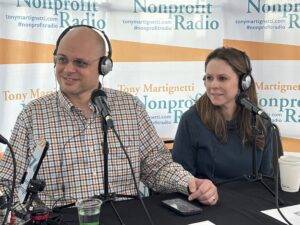
From project charter to closing report, Adrienne Figus walks you through the essential tools to help you take control of the changes you may find yourself leading. She’s with Madison College. Here are the resources Adrienne refers to.
Edward Wilson & Ellen Samuel: Cybersecurity On A Shoestring
Our panel covers 10 essential security measures every nonprofit can implement right now, without an IT team and without breaking the bank. From knowing where your data is to changing default configurations. And from firewalls to offboarding data. They’re Edward Wilson at ArchTech and Ellen Samuel from Just-Tech. Here are their resources.
Simone Carvalho & Rebecca Kaplan: Make Confident Tech Decisions
Simone Carvalho and Rebecca Kaplan explain when you need an audit of your tech stack, and the steps to conduct the assessment. Along the way, you’ll lean on surveys, interviews and process maps. Simone is with Skeleton Key Strategies and Rebecca is at Feeding America.
Bridge Conference: The conversations happening at Bridge will shape strategies, careers, and organizations long after the conference ends.
We’re the #1 Podcast for Nonprofits, With 13,000+ Weekly Listeners
Board relations. Fundraising. Volunteer management. Prospect research. Legal compliance. Accounting. Finance. Investments. Donor relations. Public relations. Marketing. Technology. Social media.
Every nonprofit struggles with these issues. Big nonprofits hire experts. The other 95% listen to Tony Martignetti Nonprofit Radio. Trusted experts and leading thinkers join me each week to tackle the tough issues. If you have big dreams but a small budget, you have a home at Tony Martignetti Nonprofit Radio. View Full Transcript
Hello and welcome to Tony Martignetti Nonprofit Radio. Big nonprofit ideas for the other 95%. I’m your aptly named host and the pod father of your favorite Hebdomadal podcast. I have to apologize for the audio today in our 2nd and 3rd conversations. Consistent with the lackluster host that you know you suffer with, uh, he, I, Failed to plug in the, uh, microphones to my phone. For these two conversations. You see, at, at NTC, of course, I got all my remote gear. We’ve got 4 microphones set up, one for me and one for, and 3 for, uh, the other, for the panelists, the guests, and those mics go into the mixing board, and the mixing board plugs into the phone because my phone is where my recording app is. I use an app called Hindenburg. Well, for these two conversations. I didn’t realize that I had not plugged my phone in from the mixing board, so the sound you’re gonna hear in those two is just. My phone picking up voices, uh, along with all the ambient noise. So, the phone, of course, is sitting in front of me, so I’m loud and clear in these last two conversations today, but the guests are a little quiet and there’s ambient noise, and I did the very best I could to strip out the, Ambient noise as much as possible without reducing the, the guest voices, and I tried to elevate the guest voices and make them as clear as possible, but Uh, my apologies for the audio quality on the, the last two of today’s conversations. But nonetheless, I’m glad you’re with us. Cause I’d be hit with stomatalgia if I had to say the words, you missed this week’s show. Here’s our associate producer, Kate, to tell us what’s going on. Hey Tony, I’m on it. We wrap up our coverage of the 2026 nonprofit technology conference with three conversations. First 5 project management tools for non-project managers. From project charter to closing report, Adrian Figgis walks you through the essential tools to help you take control of the changes you may find yourself leading. She is with Madison College. Then cybersecurity on a shoestring. Our panel covers 10 essential security measures every nonprofit can implement right now without an IT team and without breaking the bank. From knowing where your data is to changing default configurations, and from firewalls to offboarding data. They are Edward Wilson at Arch Tech and Ellen Samuel from Just Tech. Finally. Make confident tech decisions. Simone Carvalho and Rebecca Kaplan explain when you need an audit of your tech stack and the steps to conduct the assessment. Along the way, you’ll lean on surveys, interviews, and process maps. Simone is with Skeleton Key Strategies, and Rebecca is at Feeding America. On Tony’s take 2. Thank you, N10. We are sponsored by the Bridge Conference. Tony will be with more than 2400 nonprofit professionals at Bridge, July 29 to 31 in National Harbor, Maryland. Info and registration at bridge.org. Here are 5 project management tools for non-project managers. Welcome back to Tony Martignetti nonprofit radio coverage of the 2026 nonprofit Technology conference. My guest now is Adrian Figgis, project manager at Madison College. Adrian’s topic is five project management tools you need, especially if you’re not a project manager. Welcome to nonprofit Radio, Adrian. Nice to meet you, Tony. Thanks for having me. It’s a pleasure. I love this topic, project management, something we haven’t spoken about on the show for a long time. Could you give us a high-level view before we get into some detail? Sure, so this session grows out of what I wish that I had had handed to me when I was first becoming aware of project management as a discipline and the challenges of projects generally, uh, before I became a project manager and a lot of that was handed to me, you know, here at the NTC over the years, many years ago, and so this is I’m here to try to give back and. And see how can I help at least a little bit with people who are dealing with massive projects without a specific project management background and try to increase the overall culture for project management in our nonprofit community. All right, thank you. So let’s dive in. You have, um, you have 5. 5 steps, not 5 projects, 5 tools, 55 tools that you’re, you’re giving back to the community. I love that. I admire that. Thank you. I, I consider myself a member of the community. I’m, I’m not involved at all in project management. I have a one person company, so my projects are modest, uh, by scale and in terms of yours in comparison with yours, but. I can still say thanks for giving back to the community. That’s awesome, awesome. You’re very welcome and, and thank you for the same, you know, I think you, you clearly give a lot back to this community too, and it’s really what we’re all here for here to do at NTC. We’re all contributing. All right, uh, first, before we get into the 5, let’s define what what you mean by a project. So the, you know, technical formal definition of a project is a temporary endeavor that creates something new. So that is as opposed to operations, which is the ongoing work that makes up, you know, the, what we actually are doing. Regularly on a regular basis, but those things flow together, you know, and, and there’s overlap in a lot of cases, especially in smaller, you know, organizations like, you know, yourself a solo shop or small organizations that don’t have a formal culture of project management. Um, but I think that core of it’s a new thing we’ve never done, so we don’t already have a playbook for it, and it’s, uh, a temporary thing that at some point we will hopefully succeed and be done with it, um, or it will shift and become our operation. ongoing and so project management are those tools that help us with that newness and temporarineness to then hand over to a related but different set of skills for for optimizing the operations. OK, um, is it necessarily, uh. A tech related tech project? I mean, could it be a capital project? Could could these tools apply to that kind of project or absolutely these tools are, are project type agnostic. Um, I, most of the projects that I manage have something to do with tech. I work as a project manager in an enterprise project management office in a college and we rest. Inside the tech department, so just by virtue of that there’s usually tech involved, but we’re also doing organizational change projects we’re doing, you know, things that maybe only incidentally have tech, and a lot of what I’ve learned about project management, especially through the NTC goes back to work that I’ve done in my previous career in fundraising. So a fundraising appeal can be a project because it’s, you know, that appeal itself is a new thing that will end it goes into your operational flow of projects. So really anything, um, tech is, is just the, the, the hook here. Oh, that’s our, yeah, that’s our medium here. OK, cool, yeah, um, so let’s go. Into the tools. What, uh, what are they? All right, so the 5 tools that I brought, you know, they’re, they’re by no means the only tool I talked to a project manager. There’s hundreds, but the 5 that I think are, are a good head start for people who, you know, have, have not done this before and might apply to basically any project are the project charter, the stakeholder register, the communication plan, the meeting agenda, and the closing report. Um, and do you wanna go into reasons why I chose those, or yeah, yes, but would you say them one more time for me? Absolutely. The project charter, the stakeholder register, the meet, uh, communication plan, uh, meeting agenda. And a closing report. OK. Yeah, so let’s start with the project charter. Sure, uh, so the project charter is a document, you know, it can take a lot of forms. It’s less common in organizations that don’t have formal project management, um, but you can do it in a really lightweight way. It’s essentially a contract that sets out the basic terms of what are we doing, why are we doing it? Who has given us the authority, what kind of resources do we have, both financial and people and time, um. How will we know that we did it correctly? So, so like scope, like a, a, a scope of work, yep, it includes the scope of work. Um, it includes the, the mission and vision of the project. It includes, you know, the scope of work also crucially includes what’s out of scope, what are we not gonna do, um, and it also pulls together who is in the project team, who’s in the governance, who’s responsible for the project, budgeting as well as in here. The scope is gonna impact budget, obviously, clearly, OK. Um, all right, anything else on the, on the charter? I don’t wanna go through, I don’t wanna go through them too fast. I don’t want you to give short shrift to nonprofit radio listeners. No, I could tell you’re not doing that. The, the charter is one that’s really easy to skip because it seems intimidating, especially if you don’t have a project management office, so you’re not a project manager, but even just a single one page that says this is who said it’s OK to go ahead with this project. This is what we’re doing. This is what we’re not doing, and you know we have a budget. It came from this department or whatever, um, taking the time at the start of the project to have those discussions to identify so you don’t get six months into the project and realize, oh, turns out no one actually gave us permission for this, and now we’re getting a lot of pushback, that kind of thing or what we’re not clear what the budget, yeah, I can see. I mean, like a lot of things, the preparation and the planning are valuable even though they’re a time suck, but they’re gonna pay off in ways that you may never even learn through the, the remaining 44 tools, right? I mean you, you’re gonna get creep and uh yeah, accountability and authority issues and things like that that you’re gonna avoid if you’re intentional at the. Yeah, at the outset, OK, um, I, I got an interesting question from one of the participants, um, who was describing a situation where she’s, you know, new to a, a department in her Oregon is being tasked with picking up a project that has gone adrift because there was a lot of staff turnover. The people who were on it are no longer there. There’s uncertainty of what was done. Things are in some abandoned asana boards, and she was asking about what to do to move forward. And I really think that taking some time to write a new project charter and say like this is maybe the phase two of this project we’re starting over again we’re acknowledging what was done, but we’re not gonna be bound by like a contract that was maybe implicitly created even if it wasn’t written down by people who aren’t there anymore to carry out the terms of the contract, but that’s a proxy for the conversations that have to be had anyway and it’s the the the charter as a holder for that. And then the register, the stakeholder register, so you know, projects like operational work and anything else else we do in pro in nonprofits are actually all about people, you know, nothing is gonna happen. AI is, is not there yet. Um, I, I don’t think it ever will be, but that’s not our topic. Um, anything you do in a project involves people, and the lingo in project management for people is stakeholders. The formal definition of that is basically anyone who uh will be affected by your project’s outcomes or you know the the tech work it takes to do the project, um, anyone who can affect the project either affect the outcomes or affect the way that the project works, um, and anyone who can get in the way of the project or enable the project to move forward risks exactly. So, so some of your stakeholders are, are people who may be threats but also may be your greatest allies later. Uh, so the stakeholder register is really just a list of all those people, and I’ve provided a template that is, uh, you know, it’s a simple Google sheet that gives you some ideas of things that you wanna know about those people in order to get them to contribute as best they can to the project, hold yourself accountable to checking in with them. And um if they are people who may present threats or or be you know a potential challenge for your project, how to activate them and turn them into champions and assets for your project but it all comes down to in the first place you have to know who they are and that’s what the stakeholder register is all about. OK, OK, um. Yeah, the folks who are going to be impacted by the project, I mean, I hope they have influence in the project too, so it’s not foisted on them and, and assuring, you know, non-use. And that’s one of the things that is absolutely the responsibility of the project manager. It’s also the responsibility of everyone else in the project, but I, I see an important role of the project manager as being the communications hub for the project, the, the person who anyone can come to me and say, oh well, there’s this project going on. Adrianne’s involved. I’ll just ask her what’s going on, and then I give them all that. Information even if I already emailed them 3 times, I’m always happy to tell you again because the fact that you asked me matters but I’m also accountable, you know, if I had Tony on my list of users who’s gonna be affected by this change, I have to proactively reach out to you to understand, you know, if you’re, if you’re an core user to understand what your needs are, explain to you how things are gonna be changing. But even if you know you’re my user but you’re not in my org, you know, like I don’t know you, I have to understand as much as I can about you to be sensitive to that and so sometimes you might be on my list of stakeholders, you don’t even know the project is happening, but it matters to me that it happens in a way that works for you so all of these things, um, again it just comes back to knowing. Who we’re thinking about in these projects, I could see that’s an important part of your work because you’re, you’re a big university, well, college, whatever, but a big organization. I mean big enough that it has a project management team that you’re on, so you don’t know a lot of the people unless you made projects with them before, but throughout the college, you may not know a lot of the stakeholders because you, you work in a, you work in a project management team serving the whole college. So getting to know folks, buying, getting their buy-in. I mean, I would think that’s a big part of your work as a project management. Expert team member, absolutely. Anytime I’m starting up a new project, I’m, I’m just about 2 years into my current role, so I’m just now starting to get my feet under me and understanding where all the offices are and when people use acronyms, I think I know what that that is and. At this point now I’m starting new projects that that involve people that I knew before, but it’s still my first task to say, OK, what are all the offices and people that are gonna be involved? What are the groups of students that might be affected or faculty, sometimes community members outside the college, some of those, it’s groups, you know, so maybe it’s all of the students in one, you know, area of the academic area or sometimes it’s all of the staff members in, you know, the library. Um, and so I have that group, but then I start dialing in and saying how do I learn more about that group as individuals? And then when I have actual individuals, how do I use the networking tools that I have available to me inside the organization to say, hey, like I haven’t met Mike before. What can you tell me about him? How do I, how do I talk to him in a way that makes sense to him and then introduce myself as, as the project manager, um, and help them see how they can interact. Because I, you know, you never want a project to get too far along and end up being a surprise to somebody who needs to actually be involved. Yeah, yeah, that’s, yeah, that’s poor. That’s, that’s the, that’s the, uh, antithesis of. Smart project management. Uh, number 3 is your communications plan. All right, so like how are we gonna keep in touch with all these stakeholders that we identified in the, in the, uh, register? Absolutely, yeah, and that’s they, they go hand in hand and personally I actually like to use a single spreadsheet with multiple tabs, one for my stakeholder register and one for my communication plan. I can just tab back and forth and see, OK, for each of these stakeholders, some of them individuals sometimes groups, those are audiences that I need to communicate with what can I put on the communication plan as far as one on one conversations or, you know, road show presentations or, you know, email blasts or however I can communicate but then as I’m writing out the communication. And I think of other things that I might wish to communicate and think about the audience and then if that audience isn’t in the stakeholder register, I scurry back over to that tab and add new lines. Both of those are are living documents that keep going through the whole course of the project as I learn more about the project, I learn more about the needs and the people and build it together and then next time I do a project that’s similar, I can go back and sort of take some of that information and, and start, uh, the next project. OK. Go ahead with 4, our agenda meeting agenda. So this one is a meeting agenda meeting agenda, yeah, it’s, it’s, it’s the simplest one. I, I don’t belabor it in my presentation, but it’s so important and something that is so easy to ignore. Um, I’m not an anti-meetings person, you know. I think that meetings are an important communication tool. I put them on my communication plan. Um, you know, sometimes a, a week-long email chain could have been a meeting, um. But it’s a sort of a sacred trust to ask people to come to a meeting. You’re asking them for their time. You’re asking them to put themselves out there and hopefully feel that they’re actually contributing in this case to the project, and part of that is the agenda. You need to have a goal for the meeting. You need to understand who’s invited, who of your stakeholders are invited. You need to understand what are you, uh, attempting to discuss, accomplish, what decisions do you need. But also you need everyone who’s coming to the meeting to have access to that information up front. If I just call, you know, you and, and Amy and, and 3 other people into a meeting, but I don’t tell you what’s happening, you’re coming in puzzled, annoyed with me, not ready to engage. You might just like say no at the last minute. But if I send out the agenda and say like, here is the importance of this meeting, here’s why you, Tony, are coming. And if you can’t come, I need you to delegate somebody from your team because we need this decision. sharing that information up front helps to level the playing field, make sure we have everybody in line and really get value from that meeting. So what kind of meeting cadence do we need that varies by project and we have like an 18 month project. Yeah, um, that’s something that I like to negotiate with each project. Uh, very commonly I’ll have a core team that’s usually like, you know, between 4 and 6 people who are steering the project and maybe, you know, they’re doing hands on tech work and I’ll do a weekly check-in with them and we know it’ll be sometimes a half hour just to say here’s what we’re doing. Um, which we’re ready to cancel if nothing new has happened and so that’s a big part of the agenda is like check in a few days beforehand. Can we cancel this or do a asynchronous check-in. Then I like to do sometimes like either biweekly or monthly meeting with more of a steering committee that are people that have decision making authority or who are very, uh, concerned stakeholders but maybe not doing the actual work of the project. And then I’ll often, especially in a longer project like an 18 month or a 2 year project, I’ll have subareas within where we’ll have, you know, meetings once a week for 2 months for a sub team that’s working on something really heavily in that 2 months, but it’s only the people that are actually doing that heavy work like I, I had a project where we. We’re doing um some compliance uh regulatory changes that needed some technical updates but also needed quite a bit of um information sharing and communication to bring the whole college community along because it involves some somewhat significant business process changes to meet our new state regulations. So we had a communications subproject that involved doing a lot of website updates because you know for a large institution getting all the approvals to update the website and just the mechanical work of that is a lot so we had a, a little communications strike team of of 3 people and we were meeting once a month or once a week for a short period of time while the overall project team was meeting at a different cadence. OK, so it’s uh that’s part of setting up the agenda is if it’s a recurring meeting, getting everyone to agree on the cadence and then revisiting that. I, I also like to revisit a meeting cadence about every 6 months and say, or in, in higher ed I’ll do it on a semester basis like, so you know, for spring semester we met this regularly. Do we need to do that for the summer? And on our closing report, so the closing report, you know, it’s, um, brings us back to that definition of a project that by definition it’s a temporary endeavor that means it has to end, but this is a thing that really trips a lot of us up, especially those of us that don’t, you know, currently I, I work in a place that has very defined policies around closing projects for budgetary reasons, but at my previous roles, um, it is very common, and I know a lot of people that this is very common that a project will just keep going. You know, maybe you weren’t able to accomplish what you thought you were going to or you had some staff turnover and no one’s quite sure what’s happening or like, you know, a grant got pulled so you had to put it on the back burner but you didn’t actually close it because maybe that’s admitting defeat or you’re not quite ready to declare victory and it’s just there. And then it becomes a major, you know, psychic and time weight on everyone who was involved with it because even if you’re not working on it day to day it’s in the back of your brain and you remember, oh yeah, you know that that refresh on the website that we decided not to do. I’m still gonna think about it every couple of weeks and so having a way to close a project, um, by, you know, policy and will of your organization but also a practice and a template to do that. Whether it’s because you finished the project successfully and you’re gonna celebrate it, it’s wonderful, or we’re acknowledging, you know what, having this project open no longer meets our needs, so we’re gonna just close it down and we’ll have lessons learned, no blame, it’s just, it’s OK. Um, having a template ready to go that you know at the start of the project, um, you know, would help you sort of write your charter to say how will we know that we’re done preparing yourself to then close it, I think can help lessen that pressure of just having these projects that just don’t stop. It’s uh yeah it’s a boundary like we know this is completed good hopefully not bad let’s say just good or indifferent it’s it’s wrapped up you know we’re all moving on. OK, it’s time absolutely and then the report itself can live in your organizational files if you have a PMO. It lives in your PMO, but then it’s there for re, uh sorry, project management organization, and that’s the group that I that I work in. Um, but there are organizations that have what they call a PMO, but it’s just one person who holds all the templates and the records that, that can be a PMO. But your, your way of doing projects, and maybe it’s just a file in your OneDrive, um, but if you have those records of all these past projects, then when you do a new project and you’re gonna charter a new project that’s somewhat similar, pull out the closing report from the old ones that were similar and say, what do we learn on this project about how we operate. Great things we did that ended up not being productive for us, things that were really great, um, you know, and that will make your next charter and your next set of meetings and everything else much easier and, and better for the next time. Where do we document changes, uh, uh, process changes, maybe staff changes that are that have been made? We’ve been doing it this way at the college for many, many years and now that the. Our project has closed. Uh, Business processes have changed. Maybe reporting responsibility or who’s responsible for different things that changed? Where do we document all these these organizational changes? Oh, that’s a really good point. So that’s part of the closing report is. Acknowledging that you did the handover to operations and so the closing report should document the decisions that you made, the changes that you made, but just because it’s in the closing report of a project doesn’t mean it actually happened I think is what you’re, you’re, uh, implying, uh, or or alluding to and so, um, that’s where the like projects shaking hands with operations really comes in is you’re saying OK, this project made this happen. But then some team, you know, some operational team or department or person has to take responsibility for that, so you can’t actually close the project until you’ve done the handover. So, you know, oh, I’m, I’m, you know, did this project where I, you know, helped you implement your new scheduling system for your, uh, podcast guests, um, until I hand it over and you say, OK, I acknowledge that I have this new process and it’s, it’s in my area. I can’t say my project is done because you didn’t actually take it on and agree to do it. Um, do we have a ceremony or what is there a ribbon cutting? I mean, if it’s a physical project that could, but still, even so, that’s ceremony, that’s not operational continuation. Mhm, um, yeah, so you can have, I, I highly recommend having, you know, a, uh, some sort of a ceremony to close the project, a final meeting or a pizza party or something, but that sort of that handover of the new. Things I like the idea of it having to be some sort of a pomp or circumstance to make it happen um but the recording of the new policies should be done in whatever way you are recording your policies so like however you had it written before you change and put it in now if the project was to set up a change in tracking system for your things then you’ll have it. OK interesting all right um what else, what else did you talk about in your session that we haven’t talked about with our listeners. So one of the things, and, and you know I can share with you the link to the templates, um, yeah, actually, would you do that you email me the link and then I’ll include it in the show notes. Absolutely I can do that and, and I really encourage anyone to, to take a look. They’re all um. You know, the just Google Docs and Google Sheets. Anybody can download them, brand them yourself, use them, you know, fully free. I have a little CCB license on it, but really I assume you’re gonna be changing them enough that it’s your own work if you use it, so it’s my interest to get it out there. But in each of those, um, areas. As people who work in nonprofits and mission based institutions, I think each of these tools is an opportunity for us to like express and forward our values, um, so in the project charter you should be writing your project vision or project mission in line with your vision and mission of your organization. You should be expressing your values in your stakeholder registry. You should be expressing your values based on who you are targeting as your stakeholders that you know it’s not just like you. Googled and saw, OK, who should be a stakeholder for a website change it’s, you know, your people and your people who matter to you on a deep level as an organization, go for that. Um, there are some really useful things around accessibility that you can do in a stakeholder register. You can note, you know, are there people who have specific accessibility needs like do they need a wheelchair accessible meeting room, um, so you make sure that you have that for them or you have live. Optioning so that you don’t have to keep asking people the same questions in order to make sure that they are able to be in the room with you. Same thing with your communications every project communication you send out should be an expression of your organizational values, um, and that’s gonna play out differently depending on the project, but, um, I, I think if we keep this in mind and make sure that, you know, we’re, we’re not ignoring that aspect of it just to drive a project through we’re all gonna end up with better outcomes in the end. That’s a great place to end. That’s perfect and with values. Absolutely. Adrian Figgis, project manager at Madison College, Madison, Wisconsin, thanks very much. Thank you for sharing. Well, thank you, Tony. This has been lovely. Thanks and thank you for being with Tony Martignetti nonprofit radio coverage of the 2026 nonprofit Technology conference. It’s time for a break. We are sponsored by the Bridge Conference, produced by AFP DC and DMAW July 29 to 31 at the Gaylord National Resort and Convention Center in National Harbor, Maryland. More than 2400 professionals will gather at bridge. Tony will be with them. The question is, will you? Thought leaders from nonprofits, associations, foundations, hospitals, higher ed, faith-based, and mission-driven causes across the country come to Bridge to discover new ideas, solve real challenges, and connect with smart people shaping the future of our industry. From 125+ educational sessions and hands-on pre-conference workshops to bridge tech, the faith and fundraising forum. And inspiring keynote speakers, Bridge offers something for every mission and every role. The conversations happening at Bridge will shape strategies, careers, and organizations long after the conference ends. Don’t hear about it afterward. Be in the room. Register at bridge.org. Now it’s time for cybersecurity on a shoestring. Welcome back to Tony Martignetti Nonprofit Radio coverage of the 26 NTC. That’s the 2026 nonprofit Technology Conference where we are all gathered together in technology community in Detroit. My guests now are Edward Wilson, principal at Arch Tech, and Ellen Samuel, COO at Just Tech. Edward, Ellen, welcome to Nonprofit Radio. Thank you for having us. I’m very glad you’re with us. Your topic is cybersecurity on a shoestring, safeguarding nonprofits in the age of AI. Um, Ellen, could you do, uh, just give us a 30,000 ft view of the topic before we go into the details? Sure. So we wanted to make sure that nonprofits understand the importance of, uh, cybersecurity and securing their technology and their. Staff and the client information and data and we went through how we can do this, uh, affordably or as affordably as we can. So, um, we went through the importance of why, why, um, nonprofits are at risk and how they are attacked and then, uh, some, uh, list of things that nonprofits can do. Relatively cheaply in order to maintain their security. And then we had a bit of a dive into business and compromise and wrap things up at the end with some amazing questions from the audience. OK, well, we’re, we’re gonna talk about all that and uh maybe even some of the questions. We’ll see. So we’re gonna, we’re gonna go into some details. So thank you very much for uh giving a high level view. Um, why are we, uh, Edward, let’s turn to you. Why are we, uh, nonprofits at risk? How are we at risk? That’s a great question. One of the things that we run into with most of our nonprofits is that there is more demand for their service than there is budget to help them meet that demand, and that leads to a lot of difficult decisions along the way. Nonprofits are actually the number 2 target these days for cyber criminals because they’re aware that there’s some weakness in that area where we haven’t strengthened the whole picture. We underinvest in cybersecurity because we’re more devoted to mission and programs. Yes, and sometimes I think there’s that, again, it’s an education thing, right? So we’ve seen nonprofits who have spent a lot of money potentially covering one small space of what they need to work on. But leaving other picked areas of the business not covered. And so our goal was to help them get that 360 degree coverage for less than they might spend on one fancy tool on a shoestring, or cybersecurity on a shoestring. By the way, I love we have like some symmetry. Edward Nellen, Archtech Just Tech, uh, it all, it all seems to fit together very well. I wish he had the same. I wish you had the same initials, your last initial. Maybe you could change your name to Samuel. Edward, maybe you could change your name to Samuel. Yeah, Samuel’s, yeah, Ellen Samuel. It’s cool, like Ellen Samuel, Edward Samuel, Arch Tech, Just Tech. OK, we’ll, we’ll, we’ll work with, work with what we have, you know, it doesn’t say he’s, he’s, he’s open to the idea, but he’s not about to run out and do it, so change his name. So, all right. Yeah, all right, all right. So we’ll stick with the, uh, I like the architectch just tech. All right. Um, so, I don’t know, should we just do like do ping pong? Like you have 10 essential, oh, let me, uh, I do have a threshold question, um, from your session description, 10 essential security measures every nonprofit IT team can implement right now, do we have to have an IT team? To do a lot of these 10 essential security measures, or can we do it if we don’t have an IT team? Maybe would outsource IT vendor helping us. Is that OK? Or do we need to have an internal team? Absolutely we understand that most, a lot of nonprofits don’t have probably most our listeners are small and mid-sized nonprofits. We’re the other 95, we’re the other 95%. So exactly. So we have one person who is the IT team and they’re not trained in that. Um, that’s one of the services that we as new service providers provide more affordably to nonprofits is we can give them those services and that expertise without having to hire a full time. OK, OK, so we can still take advantage. Of the 10 essential security measures that every nonprofit can implement right now without breaking the bank, we can still take advantage of these. Absolutely. Otherwise the mics are going off and we’re done. We’re done in fewer than 5 minutes. All right, that’s good. Whether they have an in-house team or they’re using an external team, that list of top 10 items is a great checklist to walk through. And say, am I covering all of these things with our in-house or external team? So for decision makers, really important. All right, let’s get into the, let’s get into the 10s, kick us off. Give us numbers 1 and 2 because we’re not going to go 1 Samuel, I mean 1 Edward, 2 Ellen, Edward, Ellen, Edward. So let’s do like 2 or 3 at a time. Edward, give us our top 2. Sure, the first thing we say is that you need to identify where all of your information systems actually are. People store information in a lot more places than they think. They may think a server or an email system, but you’ve got your accounting platforms, your HR platforms, your telecommunication platforms, your backup platforms, backup email, online giving, making sure that you understand all the places that you need to protect, controlling what we call the information system boundary. And then we want to protect access to that by protecting the users who access it with things like MFA passwords, and so on, and even protecting the devices that access that where we can. OK, is that 1 and 2? That is 1 and 2. OK, so number 2 is the protection of the data once you identify where it all is, protecting that access. Absolutely. OK, protecting access. All right. Ellen, it’s your turn. So one of the highest ROI things that police can do or organizations can do is implement MFA multi-factor authentication. And this, for anyone who doesn’t know, is a way of logging into systems. Using both a password and something else. So a token, um, a text message, we all know about this using from our bank, um, other systems. It is one of the the best ways that you can protect your users from being Attacked or or people giving up their credentials to your system and it’s usually free or easily to easy to implement and uh we see a surprising amount of organizations that just don’t have it turned on. They just haven’t checked the button and we need to do it. OK, so number 3 is do MFA.A. It’s just, it’s just an extra step. I mean. Uh, I, I think initially maybe it was annoying, but now it seems like it’s just, OK, I’ll, I’ll get the text. I don’t know. Maybe this is true on Android phones. I know on iPhones you get the text and you don’t even have to put the numbers in. If you’re on, if you’re on the phone, it just says use, use from text. Put the numbers, yes, tap that and it fills in the 5 or 6 numbers. So you don’t even have 5 or 6 keystrokes that you have to do, key taps, I should say. So, all right, do MFA number 3. All right, what else? What else for? Talk about also changing your default credentials to your hardware that you get. So you get um a camera that comes with uh default credentials that are open and available. That information’s on the internet. And anybody can come in and log into those systems and do kind of nefarious things with those. And it’s really easy and cheap. It’s free to go in and change that information on your routers, on your Internet of things devices. Just go in and change those things so that people can’t come in and look at your video or get into your system because they’re because they’re standard format defaults, right? It’s like, yeah, I just right. I just learned one, you know, on WordPress, the admin, the admin URL is standard like WordPress slash admin hyphenWP or something like that, or WP hyphen admin like, so everybody knows that and, and it’s easy for a bot to, to. To exploit it, OK. And that also, that, that also applies at home, like your, your ring, your ring system, your refrigerator, whatever, you know, whatever, like you, you mentioned the internet of things. I’m just, I’m just drilling down. Whatever you’ve got, it came with some default admin password. Your, your home, well, home as well as office, um. Um, internet access, Internet, right? It’s like Ocean 307 is your Spectrum router default, yeah, change, yeah, Ocean 307. That’s not mine, right? That’s not mine. That’s not mine. That’s not mine. Yeah, mine is 307 Ocean. I’m very savvy about, I’m very savvy about passwords. Yeah, yeah, that’s it. No, no, don’t do that. That’s bad advice. Don’t follow that. Don’t, I don’t want anybody saying I did that, and he said it was a good idea. All right. All right, so number 4, change your default configurations on all your devices. OK. All right, Edward. Edward Wilson is up. I like the next one. Update your infrastructure. So I’ve actually got a story about this one from yesterday. One of the things we do is free security and incident response for nonprofits. They can just call us and we’ll help them out if they run into a security incident. And our most recent call came in yesterday from somebody who had had their router hacked, and they were using an old Ocean Ocean’s 307. It works. It works. You use that everywhere. That they were using a Cisco router that had been installed in 2014 and had gone end of life in 2020 with no additional security updates, and the interesting thing was as we got into this and we looked at it, the last time that it had been updated, the firmware on that was in 2014. Well, they hadn’t even done the updates from 2014 to 2020 we’re 12 years behind on updates for this, and that’s one example of just needing to keep that infrastructure up to date. On our laptops it’s our Windows OS updates. It’s our third party software patching, which a lot of people don’t think about. The browsers that we run, Adobe, keeping all those other programs that are on our computers up to date, so you just click the automatic, just tap the automatic updates option. A lot of times that’s going to take care of Windows, but it might not take care of everything else, so IT teams want to be conscious of that. OK, OK. Update the infrastructures. All right, that’s incredible. So they even, I mean, so the, right, the product had been no longer um supported since 2020. But even before that, from 2014 to 2020, they hadn’t done any updates. Missing six years of so, yeah, right, like 2015, it was out of date for the, and, and, OK, that’s a bad situation. Honestly, we were a little surprised it took so long for them to get hacked given that you’ve been lucky all these years and you should be, you should be thankful. But we do these um technical assessments, both our organizations do where we’ll go in and we’ll look at organizations and one of my very favorite standards for us to look at is the HIPAA compliance standard, the HICP that the government publishes and puts out there for free. And the smallest one that’s designed for physicians’ offices of less than 10 physicians, the average score on that is about 50%. So this is common in the nonprofit world. All right, you have one more, Edward. We’re doing 2 at a time. Got it. I like using the firewall, making sure that we’ve got that set up. We used to be very complex in our firewall setups, and now that we’re more cloud-based, that becomes less important. We want to secure the user and device no matter where they are. But firewalls still have great tools to help protect us at the office. And so just making sure that we’ve implemented many of our vendor best practices. It’s the same among most brands, not using some of those default configurations, making sure that the admin access to the firewalls is MFA protected, goes back to the story I just told. Change that default, make sure you change the default admin on the firewall. Yeah, but firewalls are so annoying. Yeah, they’re going to prevent content from, they’re going to prevent pop-up windows. Sometimes I need the pop-up window because I do want to subscribe to the, to the, to the nonprofits newsletters. I want the. The firewalls are radio programs and podcasts. We don’t have, we don’t use pop-up. Yeah, we don’t even, we don’t even pop, we’re not even that sophisticated. But no, all right, so how do I overcome the objection in the firewall, uh, it’s so annoying. I have to load the content directly or I’m, I’m missing out on pop-ups. I’m getting warnings from some sites. How do I overcome? How do we, how do you two at, uh, Just Tech and Arch Tech overcome these? Naysayer objections. I think that leads nicely into one of our other top 10s, which is to train your users and explain why we’re doing these things, why they’re important, what the risks are, and what these systems do. We find that our organizations really do not put the time and effort into training the people at the organization. About how to use their technology safely and efficiently and effectively and a lot of those concerns, a lot of those issues you can handle in those trainings and talking and explaining, yeah, this might make it a little more difficult for you to do your day to day work, but it’s important because we don’t want other people getting into our system. We have really important client information that we are protecting, so. You need to make sure that you’re training, training people on technology and safety and security. OK, can we call that number 7 then? Training, training in it. OK, training, train the users. You get another one. Go ahead, Ellen. OK. Another really important thing is that when people leave your organization, you need to make sure that you are completely off boarding a lot of. Organizations just kind of missed this step. They don’t lock people out of systems. They don’t clear their computers. They, um, they don’t make sure that people don’t have access to their systems anymore, and it is a huge security risk regardless of who it is. If it’s an intern or volunteers in particular, you know, they just kind of set up. Forget about them, but people can do a lot of damage and the systems can be opened and hacked if people are not properly. OK, so it’s more than just taking back the ID card. There might be a code for entry. They might have a personal code for entry into the office. You got to disable that code. You don’t want these people coming back. You just, you just perp walk them out. Let’s not have them come back on Saturday. Using their their personal code to enter the building. Another thing that we recommend is using a password manager because a lot of our organizations, even though they shouldn’t share passwords among their staff, and for example, we do use a, we, um, work with a lot of law firms and sometimes there’s court passwords and court system passwords that you have to. Share, um, and giving those out to people and having them save them themselves is really a risk. So having that in a company provided password manager that can better protect that information as well so that when somebody leaves they don’t have access to that. Oh, that’s interesting. OK, so there are some that have to be shared. OK, yeah, Edward, one that would be really interesting, I think, for your users is to realize that when they’re on that company device and they’re saving passwords to their browser, we’ve seen people do things like log in with their personal Gmail account. Not only is this problematic in terms of saving their passwords to their personal Gmail account, but when they leave the organization and they give the laptop back to IT, there’s the potential to get in and access that information. And this will lead users to support the adoption of company password managers. Highly recommended. OK, Edward, thank you. That’s a good one. That reminds me of a story I heard. The organization provided company phones. But uh I recently. Dismissed employee. Didn’t use the company phone. All her personal info was on her own phone, and all her company info was on her own personal phone. They took the personal phone, or, or maybe it was the other way around. She, she had all her personal info on the company phone. That’s what it was. She lost all her contacts because they took back, that’s what it was. She had everything on the company phone, they took back the company phone. They took it. She lost, like she had to ask for permission, you know, can I call my husband to let her, let him know that I, I don’t, I’m not employed anymore. Um, yeah, I mean, she lost everything, all her, all her personal contacts gone because it was on the company phone. Big mistake. If your company’s giving you a phone, you gotta, you gotta use it just for company info because if, even if you’re, you know, you don’t necessarily have to be perp walked out. You might, you might resign. You might go to another job when you’re surrendering your company phone, you’re surrendering everything that’s on it. Very risky, very risky. All right, that’s a good one. OK, so off board completely, that was kind of we spun off from offboard completely. So I think we have 2 left. Is that, does that sound right? One of my favorites is to separate admin and user accounts, and this goes out to the IT staff who are logging in as an administrator every day on their systems. If you’re logged in as an administrator and somebody compromises you, then they are the administrator, right? And so it’s really important that we have a daily use account and that we keep those admin credentials separate for only admin purposes. Don’t don’t share the admin credentials because it’s easier. OK, just use this, just use this and you’ll be able to change your desktop. Never. Share admin credentials, but also if I’m an IT administrator, I need to have an account that I’m using for daily work that does not have administrative privileges. The only nonprofit I’ve ever seen truly go under from a cybersecurity personally that I’ve seen go under from a cybersecurity incident happened because the IT director was just using their admin account for regular work all day long. They hit the wrong link. They ransomware the entire organization. I see. Oh, using, OK, using their admin account for day to day. All right, now I see the implication because now the attacker had admin privilege, had admin, right, right, right. They hacked the admin account, not just the user level account. OK, that’s an excellent one. You love these. I can tell you, Edward, Edward’s like smiling. He loves all these. I mean, Ellen is smiling too, but Edward’s OK, gleeful. Edward’s like gleeful. Ellen is just smiling. All right, passionate about making affordable cybersecurity a reality for folks because sometimes these are things we don’t work, work through or think about. All right, that’s why we’re cybersecurity on the shoestring here. All right, you have one more left. Are you? Deferring to Ellen for the final. OK, OK, because by right this would be Edwards because we’re doing 2 by 2, but he’s surrendering. Chivalry is not dead. Chivalry has not died. It’s, it’s embodied here in this seat. That’s right. So it’s a trade-off. Yeah, yeah. OK, go. So another thing that organizations really need to do is have a disaster recovery and business continuity. We see again organizations this is something that you don’t need to hire somebody for, uh, but you can, um, but you need to make sure that you have a plan in place if and when you are compromised um a lot of times we hear it’s not uh a matter of if you’re gonna be compromised, it’s when, and a lot of places actually don’t even know that they are currently compromised. And there’s people in their systems you can if you get ransomware then you get locked out of your system that’s not the time you wanna figure out what are we, who am I supposed to contact? Who’s our cybersecurity insurance provider? Who are my IT people? What is the cell phone number of the IT person, right? Like these things that you need to have worked on, have written out. I even recommend printing them out like old. School having a physical printed copy because when you’re locked out of your systems, you’re not going to be able to get in there and look at the documents. You’re the, you’re the second guest here at NTC to say print your disaster recovery. She, she and I were talking about disaster recovery and incident recovery, and she was making a distinction between the two, but she and, and the business continuity plan have these things printed because when you’re locked out of the cloud. You’re locked out, so you can’t get the, you can’t get the IT cell number, so print the things and keep them in your office and and keep them at home too, keep them at home too, because a disaster might be in your office. You might have a fire or flood or some emergency that you’re not allowed in. So you go back home and there’s your printed plan and do practice runs. Because, you know, you, you don’t know where your weaknesses are, you don’t know how it’s gonna go until you’ve practiced and gone through the information with everybody on the team who needs to know that information. So do it a few times a year. It’s, it’s always more things that people have to do, but it really is gonna save you time and money and the safety of your information when you get hit. Awesome. I love this. The uh Ellen Edward show. Ellen and Edward show. We have our own Arch Tech, just architectch, Just Tech, Edward Ellen. OK. Um, so there’s our 10. We’ve, we’ve, uh, enumerated our 10 and gone into some detail on each. You mentioned business email, something about business email. Don’t hold back. You talked about it in your session. You got to share it with nonprofit radio listeners. What is it about business email that we need to know? So we’ve been doing free security and incident response for nonprofits for about 5 years now, and we’ve only seen one incident that wasn’t compromised email in some way or another, and there are two main categories of that. The first is financial compromise, and it’s not an IT item. It’s actually for the finance team. Never change a payment method or process without picking up the phone and calling somebody. We’ve seen vendors get hacked and the vendor submits an invoice and says, please pay this invoice over here, and it looks completely authentic. They pay the invoice only to find out that they paid to the wrong account, the wrong person. That money is no longer recoverable. That’s a finance issue. But even on the IT side, there’s a lot that we can do in order to protect email. And in our session we went through how to get that number to close to 0. All right, let’s do it. We’re not just going to talk about what we talked about in the session. We’re going to talk about the substance here. Excellent. What do we do? There are front end and back end protections in email. OK. Front-end protections involve products like Proofpoint, Mimcast. They scan our incoming email to find bad things and make sure you don’t click those. You can actually do a lot of this for free in Google and 365 without even using those products, and I don’t know how to tell our listeners to download things, but if you put our contact info in, they can reach out. We distributed a step by step how-to for all of the attendees to harden those email systems, and I’m happy to send that out to. OK, what you should do is give me the URL. For where that where that is, and I’ll include the URL in the show notes. Perfect. OK, we’ve got you got to make sure you do it. Somebody has to email me and then when your show is going to be aired in your episodes show notes, I’ll include the URL. Excellent. OK, OK, so we can get we’ve got several downloads in there for you. All right, all right, but we’re going to walk them through how to protect that email account and get the odds of their being compromised as close to zero as we possibly can in this technical environment, and a lot of it involves backend protection. Eventually, no matter how good your front end protections are, an email is going to get through. The user is going to click a link. They’re going to enter in their credentials, their MFA, and they’re going to give that MFA token that access to a threat actor who now has access to the email account, and our ability to detect that, respond, and to shut them out automatically becomes key. OK, OK, Ellen, is there more we can talk about around? Business email safeguards. Just to echo what Edward said, nearly every attack that we’ve seen has come in through email and somebody giving away their credentials. So you’ve got the email issue, right? If those emails never come in, that’s great. But then you also, again, have MFA. That’s if, if an email does come through and somebody tries to give away their credentials, that MFA can stop the, the bad actor from getting it. All right. Business email, very, very common method of exploiting. Nonprofits, I would guess it’s in the 99%. You said everyone, everyone, everyone except one, yeah, in a, in a test that you did or in our experience where we have nonprofits calling us and saying we’ve been compromised. What do we do, right? And we try to help them through that process along the way. It’s been email every time but one, in the last 5 years. All right, I’ll tell you what, Edward, you’re so gleeful about this, passionate, I’m passionate about it. Why don’t you take us out since Ellen gave us the overview. You could take us out with, uh, you know, inspiration and empowerment, why cybersecurity on a shoestring is so important. I want to emphasize to our audience that we want to solve the problem with one expensive fancy tool, but usually that only covers a small amount of our attack surface. We want to look 360 degrees at the whole picture, and there are two open source sources that I would like to refer people to that are free and available online. One is the HIPAA standard, the HICP. They can start with Volume One. It is simple. It is approachable. It is designed for mom and pop doctors’ offices with less than 10 physicians. It’s written in clear, clean language and we’ll give them a checklist to start walking through. OK, so it’s valuable for nonprofits even though we’re not a doctor’s office, even though you’re not a doctor’s office. Every time it says PHI, protected health information, just insert my sensitive and protected information. And you’ll be fine. Excellent. OK. And number 2, number 2 are the CIS controls, the Critical Information Security controls, and that also is open source. It’s available to everyone. I prefer the HICP because I think it’s more approachable and a bunch of really smart people sat down at the table and said, how are we actually being compromised and wrote a list on that. To protect healthcare providers and number 1 is email. All right. And the second resource was CIS, the CIS controls. And what does CIS stand for? Critical Information Security Controls. But somebody may have to test me on that acronym later. CIS controls. The CIS controls version 8. If you Google it, it’ll come right up at the top. OK, but your preferred is the H. The HIC HICP, and this is actually HIPAA, yeah, it’s put out by the Department of Health and Human Services. It’s available online. It’s a free download, HICP Volume One. Outstanding. That’s Edward Wilson, principal at Arch Tech. It’s named Arch Tech because they’re in Missouri. The Arch. Ellen told me that before. It actually was supposed to have a play on the word architecture because we believe good design can solve most of your problems in advance. OK, I thought about that possibility, but then when she said it’s arch tech, it’s not, it’s not architect. So is it, is it architect or architect? To be fair, how do you want to say? How do you want it said? We call it Arch Tech. I started pronouncing it Arc Tech, but we’re in St. Louis, so the point applies. About 6 months in, I realized it was going to be Arch Tech forever because of the St. Louis Arch. I see. All right, so it’s, it’s evolved into it is Arch Tech, so I said it correctly. All right. Can you say? I think that is pretty easy to say. Yeah, just. Just, just tech. J U S T T E C H. That’s Ellen Samuel. She’s the COO at J U S T T E C H. Just tech with a hyphen in between. Well, if you’re typing it, you, you don’t want me to say just hyphen tech. The company is just hyphen tech. No. Oh, well, all right, well, they, they’re gonna Google Ellen Samuel too, uh, but the website does have a hyphen if, if you need that. OK. Edward, Ellen, thank you very much. Great fun and value. Thank you. Thank you for the value. Thank you for sharing. Thank you. Thank you, and thank you, listener, for being with Tony Martignetti nonprofit radio coverage of the 2026 nonprofit Technology Conference. It’s time for Tony’s take 2. Thank you, Kate. Thank you and 10. This is our final show from the 2026 nonprofit Technology conference where we were all together, as you, as you hear, episode after episode in uh Detroit, Michigan. I’m just grateful for the partnership. They take good care of us. They appreciate the value that we bring to the conference, promoting it for months after the conference. Amplifying their speakers to our, our complete audience, way beyond just the folks who attend the conference. So, and I appreciate the, the value that they bring. They give us, Accessibility and, and exposure for the show. And I appreciate the, the partnership and the collaboration for N10 year after year. This year was our 13th. Next year, I’m already looking forward to it. It’s in Portland, Oregon. It’s in March of 2027, and we’ll be there for our 14th. NTC So, looking forward to that. Thank you very much again, and 10. I’m grateful. Listeners, again, I apologize about the audio. It was. It was your lackluster host. I’ll make sure, uh, well, I mean, I’ll do everything I can to make sure it doesn’t happen again. Thanks, thanks for understanding. Kate, Are we coming up on episode 800? We most certainly are. This is episode number 798. 0, 2 more. Absolutely. We’ve got just about a buttload more time. Here is make confident tech decisions, finishing our 26 NTC coverage. Welcome back to Tony Martignetti nonprofit radio coverage of the 2026 nonprofit Technology Conference. We’re all gathered in Detroit, Michigan. This is the final day. With me today is Simone Carvalho, with me right now today, Simone Carvalho and Rebecca Kaplan. Simone is principal consultant at Skeleton Key. strategies and Rebecca Kaplan is senior director of member grants strategy and operations. That’s member grants strategy, not member grants, strategy and operations. She only has two things, not 3. Rebecca Kaplan is senior director of member grants strategy and operations, so operations modifies the grant strategy and the member modifies the grant strategy. So it’s a member grant strategy and operation. No, it’s quite simple. No, no, member grant strategy. And operations at Feeding America. OK. Welcome. Welcome, Simone, Rebecca. Thank you. Good to have you both. Thanks for having us. Pleasure. It’s a pleasure. Simone, would you do an overview? Give us like a, you know, a high level view of the topic to kick us off, please? Sure. Um, so Becca’s here with me today, and we’re at non, uh, the nonprofit tech conference to talk about competent tech decisions, um, and we specifically talked about the tech assessment framework. So a technology assessment, um, is a structured evaluation of an organization’s current technology, the underlying processes, and the capacity, um, within it. Um, and we walked through, and I’ll probably we’re going to do it here, yeah, yeah, yeah, I’ll walk through in detail. We’re not going to just talk about the session here. We’re going to talk about the topic here, yeah, um, the phases of the tech assessment, when to like anticipate or when you should really consider having your own tech assessment, whether or not you should involve consultants, um, and then ultimately like what are the potential outcomes on the benefits of conducting a tech assessment. OK, thank you, and I should have said that the topic is. Assess, don’t guess, a framework for confident tech decisions. All right, all right, so thank you very much, Simone, for getting us started. You can take off your little uh Mini Mike. OK, so we have uh the the opening threshold question. Let’s turn to you, uh, do you go Rebecca or Becca, do you prefer? Either Either is fine. You go by Becca, can I call you Becca? Is that all right? OK, OK. And then at the end I’ll say Rebecca Kaplan again, keep it formal for people who want to connect with you on LinkedIn. OK, Becca. So how do we know whether we should or we are ripe for an audit, an assessment of our uh tech stack? Yeah, so I can talk about Feeding America’s experiences. We think about it as internal triggers that might indicate your needs, something like this, or external triggers. Um, so that’s when you hear people say things like, oh, I’d rather look at this in my spreadsheet, or there’s workarounds, right? So those are some common links. And for us, um, we were deep in the workaround. So, for example, I do grant making, so getting funds out to a few things. And in order to pay our grants, we needed to download payments from our grants management system, reformat them in Excel, email multiple spreadsheets, when appropriate opportunity to our finance department for finance to upload in their system. OK, like it’s 45 different steps, and a lot of it manual or it’s all manual, right? And then we had no good record of our payments. They were in email, they were in spreadsheets. Finance had them, but they weren’t connected to our brands. So that was his workaround, his back side. The other was staff morale. So our system was a legacy system. I’ve been using it over 10 years. For close to 10 years rather, and it was slow. We had permits issues and staff morale was suffering and we knew that formally from our engagement survey. OK, OK. Things look bad and lots of, lots of multi-step processes that humans are involved in and employee satisfaction was low or mediocre. We were just frustrated by the technology and so are our grantees and so when it was also affecting our network partners, that was another trigger. OK, uh, Simone, sound like, looked like you may want to add something. Yeah, yeah, I can talk about, uh, so when Becca mentioned like external and internal triggers and goals, I’m borrowing that framework actually from change management. So change, uh, management theory often talks about like organizations change basically when they’re forced to, um, and External triggers. So Becca talked about like the specific scenario of Feeding America that initiated her tech assessment, but other organizations might hear whispers of a hedge fund has purchased your product and you’re gonna be sunsetting it, or, you know, they’re going to suddenly hike up the prices. So there’s external factors that are pushing you. Um, or perhaps like an external, that would be an external trigger. An external goal would be something like we want to aspirationally just be better serving our clients. We’re expanding our geographies internal, same thing, there’s internal triggers and internal goals where it’s coming from inside the house. Um, perhaps there’s a change in leadership, like employee dissatisfaction. Employee dissatisfaction was a great one. Um, that was like super interesting to learn that it came up in like her employee surveys, um. It could be the change in leadership or you could just simply find that like the processing is taking 3 days and 6 months. OK, all right, these are troubling symptoms, but, uh, but we have a, we have a therapy, we have a treatment. It’s a, it’s a tech, tech audit. Uh, I’m going to tick through some. I, I think these are your, your, your, your phases or your processes. I want to make sure for an audit that you’re looking at there’s a discovery, analysis, prioritization, and a roadmap. OK, and you’re including your people processes and your strategy. OK, let’s talk through these. That’s, that’s a great overview, but that’s all I can do, uh, like tick through. Let’s let’s talk about who the, who the folks are and what the processes are that should be involved in your, in your, your tech audit. Um, so, taking like one step back really quickly, uh, the reason why our tech assessments aren’t just about the technology is that, um, we often think about Technology as like one leg of a three-legged stool where it’s technology, people, and process all supporting strategy. So if one of the legs of the stool is a little bit wobbly, you know, you could potentially top it over. So our tech assessments aren’t just looking at purely the technologies and the systems itself. We always in our discovery and all these phases think about the underlying processes and the capacity and the folks. So, the first phase discovery is pretty self-explanatory. It’s lots of interviews, group discussions. It’s trying to glean as much information as possible. Um, and we often Uh, are pulled in because consultants don’t always have to be involved in it, but can be helpful when you find that perhaps you don’t have the internal trust or buy-in from folks and they need like an objective third party because I think that’s the thing consultants can bring more than experience is there’s a neutral third party that folks might feel uncomfortable discussing their, you know, system secrets with, uh, so that’s discovery. You’re gleaning as much information as possible and perhaps you would have a survey in there. Um, I should also say before all of these phases, there is scope definition. Um, the one thing that I think we really pressed upon was the like the essential need to document and define the scope of the tech assessment, um, because we often find folks are really not lied about what is a tech assessment and what’s included in the tech assessment, and scope creep like just explodes, yeah. Um, so knowing definitively because we want to go deep rather than wide explicitly what systems or departments or processes are involved or are not. Let’s just turn to Becca for a second. So more than 1 2nd, even more than 1 2nd. Becca. So what was the experience at this phase for Feeding America, discovery phase? Like, were there people who wanted to participate, who shouldn’t be, or people who didn’t want to, who should be involved, and you know, how did that discovery phase go for Feeding America? Great question. So Skelton Key did probably over 50. Interviews with stakeholders across many departments. So if you think about grant making, it’s touching finance, it’s touching development, it’s touching the teams that are, um, programmatically overseeing the grants. So we were lucky that folks are really invested and interested. Helping us define the processes of understandings and responsibilities. So the discovery was exciting for us because we had a lot of feelings about our system, um, and the mostly negative. Mostly and also dreams but about potential too, good feelings about potential, but frustration in the in the moment. Exactly. So we’re excited to come through like it would be really cool if those sorts of ideas, um. So I think there’s a lot of buying in the discovery of this in America. Yeah, cool. All right, all right, um. Should we, can we move to analysis? Is that all right? So we’re in our analysis phase. Analysis is taking the blobs of information and doing something with it. So, that’s when we start like actually combing through what we’ve collected through documentation and interviews and discussions, surveys, and we’ve compiled. There’s a couple of different outputs. It ultimately depends on like, you know, back in the discovery phase and when you’re defining your scope and the, the thing that has to be clearly defined is like what question are we trying to answer for Feeding America, I’ll let Becca speak to that, but there was some big questions. So, Some of the key outputs of this um analysis is developing user stories. So these are like human centric requirements. Um, so as Becca mentioned, it was like very future facing and aspirational. As a grants manager, I wanted to XYZ in order to fulfill a specific business, uh, objective. There’s process maps, so visualizations beyond the grants of managers, the grantees, right? I’m sure you interviewed some grantees among those 50. And the aspirations for them. Oh my God, these emails that I get from Feeding America, I mean, I love having their support, but my goodness, it’s enough, enough is too much. It’s too much already. These are, these are Becca’s emails coming that they’re commenting on, but yeah, but among the grantees, right? Yeah, OK, OK. Um, and then there’s process mapping, which again is typically like aspirational and future facing and folks really like that because we are daydreaming about like what I want my pieces to look like in the future. Um, and then, as I mentioned, you just get lots of information and not all of that information is like specific to the technology and especially with New America, we just started compiling what we called a process improvements inventory because there was lots of things outside of the GMS, the grants management system, like ownership struggles, everyone owning a thing. that also needed to be addressed before we talked about the actual technology systems. OK, so there’s the processes, the people, and the technology as well. All right, cool. It sounds like you really need an outside. Facilitator, coordinator of this kind of audit, I mean, I don’t know, can an internal IT team do it now? You have to be, I’m asking you to be objective, Simone. I do actually do think so. The key question to ask or for someone to determine whether or not they can do it. Internally, there’s a couple of things. I think the first thing is capacity, because it’s, it can be done internally. It ultimately depends on what is your timeline. So if it’s an external trigger like, hey, we’re going to be sunsetting your system, you might not have the internal capacity and velocity to get it done in 6 weeks in the way you need to. Um, there is also just that, that question I raised earlier, which is, are your stakeholders going to be honest with you? Sometimes there’s like the benefit of relationships, or, I’ll say more to an outside consultant than I will to a colleague in the IT department. Sometimes we’re the therapist, the data department, yeah, OK, OK. For us it’s also leadership buy in. So we, one of the reasons we brought in a consultant was that in order to have the business case to invest in the system. They wanted the confidence that consultant. Ask members to make that decision. OK. Leadership buy-in is important for a project like this, right? Everybody’s got to be participating, uh, and that encouragement comes from the top, plus there’s the budget, the budget. Uh, I was thinking of conflict. I don’t know why I’m focused on conflict, like people who don’t want to participate that should, or I said people who should participate, don’t want to, I don’t know why I’m focused on the negative, uh, but there’s also, you know, there can be decisions to be made, like about the scope, which is going to impact the budget, the scope of the audit is going to determine how much we’re spending on this, this venture, right, OK. Yes, leadership buy-in. Thanks, Becca. Excellent. OK, um, prioritizing. Becca, can you lead with prioritizing? OK, let’s mix it up a little bit. Yeah, yeah, so we had a long list. OK, from the analysis phase, yes, right, from the analysis. Ths of the things that we wanted to do and accomplish through this transition and we used, um, Simone mentioned it, but, uh, basically a uh prioritization framework that allowed us to think about what was the effort and what was the. Where we’re going to be. Um, and we picked a mix of things on our prioritization list, some that would be the That we can actually confidently accomplish some that were going to be really difficult and really important and then some in the middle so it was a realistic mix it had to be everything, um, and that framework really helped us. You can actually accomplish. OK, you want to talk to the framework, Simone? Yeah, um, so it was a pretty simple one for Feeding America because they did have a really long list, and I think the thing I would emphasize here is, um, and as we talk about roadmap, there’s the low hanging fruit, but there was also things that needed to be immediately addressed regardless of the system. Um, that were pain points that like had to be addressed regardless of how long it took to go to from existing. OK. You might also be looking for maybe low lift and high impact or it affects a lot of people and this one is not going to be difficult to do. Boom, that’s obviously a top priority confidence and buy in into like, oh, this was worthwhile, right, like versus the other quadrant, the, the quadrant opposite that one which is high lift and low return. You probably had some of those. OK, so what happens to those? Do they, I mean, realistically, do they never get done? I mean, I hope, but that brings us to the roadmap roadmap and also the scope. I mean, there’s only so much, there’s only so much we can do together. There’s only so much Feeding America is willing to pay for, so some of these things are not going to get done this, like this year as part of this process. OK, I’m sorry, that brings us to what you say, the road mapping. OK. Oh well, well, even the lackluster host can provide a decent segue. OK, good. What’s the roadmap? Yeah, so it’s, you know, you. Collect all this information, we’ve analyzed it. You have all these artifacts, you have this list of prioritized things, but now it’s about putting it down on paper, assigning ownership and like actually planning some scenarios, allocating a budget, and putting it on. And we got asked this question a couple of times, but like, what, how big is a roadmap? Um, we tend to do like two versions of the roadmap. There’s the immediate needs roadmap, right? Like we mentioned, there’s typically things that are like immediate pain points that have to be addressed in order to like, help people and their morale while migrations take time. Um, so, you know, between choosing and actually migrating to a system that could be a little easier. And so there are things that just have to be addressed in that year. So, we usually do like a short version of the, the roadmap. So, it’s gonna be like 3 months, the next 3 months, you know, the immediate things you guys can do based on how much capacity or budget you have. And oftentimes, we’re actually not doing these activities, we’re giving it back to the client, um, and they can decide things. I know the key thing here is ownership, because nothing is, nothing’s going to get done if nobody owns it. Exactly. And nothing is more disappointing than like spending all this time and investment in a tech assessment, and it lands in a room full of people who have lots of opinions, but then there’s no one. To act on it, um, so that’s pretty critical. And then depending on again the size and the scope of the organization and the tech assessment and what they’re going through, it’s anywhere from like a 12 month roadmap to a 36 month road. And this also includes total cost of ownership as well, which is what does that mean, yeah, that, um, total cost of ownership. So in Feeding America’s scenario, I’ll let you speak to that, Becca, but like oftentimes the tech assessment comes on the heels of some external factor like we have to move off of the system. And leadership wants to know, OK, but going to this new system, scenario A, how much is it actually going to cost us? So it’s not just the licensing, you know, ongoing licensing, it’s the implementation and data migration, the training, the backfill of staff, the consultants, and then the ongoing costs like you’re going to have to change your staffing model and hire a new admin to help you support this product. So that’s the total cost of ownership. OK, that’s great, Rebecca Kaplan. Senior director of Member grants strategy and operations at Feeding America, and Simone Carvalho, principal consultant at Skeleton Key Strategies. Thank you very much, Simone, Rebecca, thanks very much for sharing. Thank you so much for having us. My pleasure and thank you for being with Tony Martignetti nonprofit radio coverage of the 2026 nonprofit Technology Conference. Next week, a wide ranging AI conversation with 3 experts. If you missed any part of this week’s show, I beseech you, find it at Tony Martignetti.com. We are sponsored by the Bridge Conference. Tony will be with more than 2400 nonprofit professionals at Bridge, July 29 to 31 in National Harbor, Maryland. Info and registration at bridge.org. Our creative producer is Claire Meyerhoff. I’m your associate producer Kate Martinetti. The show’s social media is by Susan Chavez. Mark Silverman is our web guy, and this music is by Scott Stein. Thank you for that affirmation, Scotty. Be with us next week for nonprofit radio. Big nonprofit ideas for the other 95%. Go out and be great.
Brenna Holmes & Alyssa Ackerman: Engagement And Stewardship For Increased Giving
As our #23NTC coverage continues, Brenna Holmes and Alyssa Ackerman deliver systems and ideas that treat your donors right. They help you understand the value of multichannel touches that move the needle on donor retention and value. They’re from Mission Wired.
Joanne Jan: Data Maturity
Also from #23NTC, how data strategy and practices impact your ability to meet your mission. Plus a free resource to gauge your data maturity. Joanne Jan is from data.org.
Donorbox: Powerful fundraising features made refreshingly easy.
We’re the #1 Podcast for Nonprofits, With 13,000+ Weekly Listeners
Board relations. Fundraising. Volunteer management. Prospect research. Legal compliance. Accounting. Finance. Investments. Donor relations. Public relations. Marketing. Technology. Social media.
Every nonprofit struggles with these issues. Big nonprofits hire experts. The other 95% listen to Tony Martignetti Nonprofit Radio. Trusted experts and leading thinkers join me each week to tackle the tough issues. If you have big dreams but a small budget, you have a home at Tony Martignetti Nonprofit Radio. View Full Transcript
Transcript for 640_tonymartignetti_nonprofit_radio_20230515.mp3
Processed on: 2023-05-13T04:06:49.559Z
S3 bucket containing transcription results: transcript.results
Link to bucket: s3.console.aws.amazon.com/s3/buckets/transcript.results
Path to JSON: 2023…05…640_tonymartignetti_nonprofit_radio_20230515.mp3.812152413.json
Path to text: transcripts/2023/05/640_tonymartignetti_nonprofit_radio_20230515.txt
[00:01:43.26] spk_0:
And welcome to tony-martignetti non profit radio. Big non profit ideas for the other 95%. I’m your aptly named host of your favorite abdominal podcast. Oh, I’m glad you’re with me. I’d be forced to endure the pain of dextrose inclination if I saw that you missed this week’s show engagement and stewardship for increased giving. As our 23 NTC coverage continues, Brenna Homes and Alyssa Ackerman deliver systems and ideas that treat your donors right? They help you understand the value of multi channel touches that move the needle on donor retention and value. They’re both from mission wired and data maturity. Also from 23 NTC. How data strategy and practices impact your ability to meet your mission? Plus a free resource to gauge your data maturity. Joanne Jan is from data dot org. Antonis take to it is what it is is what I made it. No, no, we’re done with that. We’re sponsored by Donor box with intuitive fundraising software from donor box. Your donors give four times faster helping you help others. Donor box dot org. Here is engagement and stewardship for increased giving.
[00:01:49.59] spk_1:
Welcome back to tony-martignetti non profit radio coverage. Of 23 N T C 2023 nonprofit technology conference
[00:01:57.42] spk_0:
where we are sponsored by Heller
[00:02:12.89] spk_1:
consulting, technology strategy and implementation for nonprofits. It’s my pleasure to welcome back Brenna Homes and to welcome Alyssa Ackerman to nonprofit radio. Brenna is principal and senior vice president of Mission Wired and Alyssa is senior account director also at Mission Wired Brenna. Welcome back.
[00:02:25.08] spk_2:
Welcome.
[00:02:48.80] spk_1:
Thank you very much. Your topic this year, engagement and stewardship tactics that drive increased giving, writing the fundraising track. I’m sure part of fundraising track. Correct, Brennan, why don’t you kick us off? Just kind of give us a 30,000 ft view of wide. You believe that we need this session 23
[00:03:21.36] spk_2:
N D C. Um I mean, fundraising is harder and harder nowadays, right? It’s a very competitive market. There’s a lot of organizations out there vying for donor dollars. Um And while new generations of donors are coming up, the way they respond and the way they give is different from previous generations and then no matter who you are, nobody wants to be treated like an A T M. So building an engagement and stewardship opportunities is we found the best way to you get a donor from a one time giver to a lifetime brand, evangelist,
[00:03:28.30] spk_1:
evangelism, the evangelist for
[00:03:34.22] spk_2:
keeping them engaged, right? All the way through
[00:03:39.95] spk_1:
time. Have you done your session
[00:03:42.88] spk_2:
yesterday
[00:03:50.55] spk_1:
about how that went and what questions arose from that? Let’s see, I mean, I have your three learning objectives that were stated in the official document for your, for your session. Where would you like to start the topic? Where, where did you begin
[00:04:16.63] spk_3:
the session? Yeah, I think that it’s important to give an overview of why engagement is important as well as how it fits into the overall fundraising strategy. So yeah, I think a lot of organizations often time struggle with the balance and for us to be able to share the value of engagement.
[00:04:27.31] spk_1:
I want you to talk about it like you
[00:04:42.72] spk_3:
talked about it. So there is a strong value behind engagement and stewardship tactics. So you’re really building that relationship with your donor and potential donor. And by doing that, you’re building a case for support and they’re able to make their own decisions to give and quicker. So when you’re asking them to make that gift after an engagement, there’s little decision to be made because you’ve already helped prime and pave that path for them to make the easy choice to give, talking
[00:04:59.68] spk_1:
about giving, not just first time but
[00:05:08.81] spk_3:
any time. And we want to always try to lessen the time between the 1st and 2nd gift, get people to be giving at different levels. Um And so it’s not just about that first time donor and moving them down the marketing funnel, but also retaining those donors and moving them in their donor journey. Okay.
[00:05:24.86] spk_1:
So why don’t we stick with you kick us off with the first, we’re going to do engagement before we’re going to get the stewardship of the first engagement strategy.
[00:06:02.78] spk_3:
Yeah. So um engagement is really important in the beginning of a donor, potential donors journey. So thinking about um different ways to welcome an onboard. So someone who might have signed up for email, let’s get them into a automated welcome series. That’s explaining what the organization does, how they can make an impact, stay connected. And then when they get out of that series, get that first Baskin. So they’ve already taken the action of becoming a subscriber, but let’s get them to take that next step quickly, but also set expectations of how we’re going to be communicating, why we’re communicating. So really that onboarding is important to set the stage for how they are going to be included in the organization.
[00:06:23.07] spk_1:
How long does this welcome series last?
[00:06:57.78] spk_3:
So typically, um welcome series last could last 10 to 3 weeks having multiple touch points. It’s important, it’s important that when they are in a welcome series though, that you’re being mindful of other communication that’s going out. And so oftentimes, my recommendation is to suppress from other correspondents going out. So it’s very clear, concise and they’re on this track, they’ve been primed, they understand the organization and the communication stream and then get them into your normal cadence of communication. Um And it’s really about your organization. So you should test there’s not one prescribed timeline for a welcome series. And so based on your content and your audience, it might be shorter or longer, but it’s really important to test that
[00:07:45.73] spk_1:
out. You suggested that a part of that is informing them how you’re going to be communicating. Is that, is that really asking how do you want to be communicated or, or saying you’ll hear from us every three days for the next three weeks? I understand it would be, I understand this is not a template that everybody applies. You’re in the next 48 hours, there will be no communications after that. So, but how do you say to what degree are you informing them? How you’ll be communicating?
[00:08:44.86] spk_3:
Yeah. Again, I think it’s dependent upon your organization. I am a big believer in, in uh asking that question of what are you interested in? How do you want to hear from us? But sometimes if your system isn’t set up to actually do that or set those um standards of if you only want a newsletter, but we don’t have our system set up to only send you a news. Let’s not ask that. But we can be general to say you’ll be hearing from us and you’ll get newsletters, important updates. If you’ve given your cell phone number, you’ll be getting SMS messages from us. So you can be vague. But the big thing is you need to follow through on that. So if you’re asking how they want to be communicated to
[00:08:51.31] spk_1:
tell you. Okay. All right. How about you? What else about engagement before we get to stewardship? Yeah,
[00:09:39.62] spk_2:
definitely. So, I mean, engagement can mean many things to many people, right? And it really is in the digital space which is a lot of what we were talking about, um getting them to engage with content. So take an action, click something that is measurable in some way. Um Alyssa talked about onboarding, but we can take that even further throughout, you know, quizzes and surveys, getting their own preferences, even, you know, obviously action alerts for advocacy organizations, getting people to take action in a, in a more impactful way um and giving them feedback on what that impact is, is really critical. So depending on the organization, it’s a beautiful consultant answer, right? It depends, um you’re asking them to volunteer, asking them that they’re interested in these other opportunities to further bond them with the organization because whether it is engagement or stewardship or, you know, thinking of them as synonyms. It is about how they engage to stay bonded to the organization or become bonded in the first place.
[00:10:06.31] spk_1:
And there’s value in all these individual steps.
[00:10:07.38] spk_2:
There is definitely and some organizations can actually put a monetary value to them, right? Like they need this number of many signatures for this petition to take this to Congress or, you know, that sort of thing and some of it is a little bit more. Just feel good to calculate how folks are responding to the brand, whether it’s recognition and sentiment kind of things,
[00:11:13.73] spk_1:
any other strategies or tactics around engagement even beyond. So we, we’ve talked about the welcome series right? So now we’ve gone beyond the welcome series. Anything more. I mean, I guess we’re leading toward Alyssa. You had suggested a first gift or maybe, maybe, maybe the welcome series came after the after the first gift. So now we’re looking for a second gift. But the welcome series just to be clear, I mean, it could have come after some other action, right? A signature on a petition. I don’t know if you’re sophisticated enough, maybe a comment on a on a comment on a social post if you’ve got that kind of connection. But okay, so it doesn’t have
[00:11:14.76] spk_3:
to be so it could be, you know, an email subscriber, a new donor
[00:11:21.20] spk_1:
list,
[00:11:34.18] spk_3:
a new sustainer perhaps. Um or if you have like mid level giving or major giving, if someone’s made a mid level gift, they should have a unique onboarding experience as well. Um But beyond welcome series, as Brennan mentioned, having surveys and petitions to really bond and then that’s really focused in digital. But there are many opportunities in direct mail that can complement these as well.
[00:12:32.45] spk_2:
Surveys and petitions are a mainstay in direct mail, right? So those engage devices again, that’s the term that’s used in direct response for eras and eras is to get people to feel their impact beyond writing the check or making the gift. Um And you should be doing that. One of the things we focused on in the session was doing that on a recurring basis. So working, having the fundraising team either build them themselves as part of a comprehensive communications calendar or work collaboratively with a marketing communications team that may be already producing this type of more educational or quote unquote programmatic content so that it’s not just month 13 fundraising appeals and nothing else, we really want to make sure that the donor or prospective donor is having the opportunity to learn and engage with the organization in various ways. Okay.
[00:12:52.84] spk_1:
Okay. So anything else on engagement before we moved to? No, don’t hold out on non profit radio. I mean, what else did you share in your session?
[00:13:09.85] spk_2:
I feel like we touched on a lot of it. I mean, Alyssa talked about tactical opportunities to with whether it’s S M S or even like auto calls, voice recordings, things like that. Um And engagement and stewardship. Can
[00:13:13.80] spk_1:
people still people still react positively to
[00:14:19.92] spk_2:
the auto call? They do. I mean, we forget that our smartphones are actually phones oftentimes, right? Not just supercomputers in our pocket and getting a recorded message that is a human, sometimes even a volunteer or another donor from an organization that is thanking somebody, for instance, for their gift or giving them an opportunity to come to an event um or just saying, go online and check out this latest case that we just wrote this expose on again, depending on the organization is a really fantastic way to break through the clutter of somebody’s inbox, somebody’s direct mail, you know, actual mailbox. Um and technology now allows us to go straight to voicemail. So you don’t even necessary. Yes, ringlets, voicemail. Um and you don’t even have to, you know, have somebody answer the phone and it makes it feels very authentic for a recipient to just see. Oh, I have a missed call. Listen to the voicemail. It’s not a robo call, write personal
[00:14:35.80] spk_3:
messages. You don’t have to listen to the voicemail. You can see it written out in your transcript. And so, you know, that even is great. I like that is, you can see it there. It’s all written out, it’s emphasized. And if I want to listen to it, I can and I hear that real voice. But if I’m on the move and I don’t want to listen, it’s all written. How
[00:14:47.87] spk_1:
do we access ringlets voicemail as you’re calling the number. How do you do it? So,
[00:15:05.07] spk_2:
yeah, there’s third party partners um that work that offer these services um much like a telemarketing firm, but instead of the live callers, you are accessing a dashboard where your staff or volunteers can log in record a voice message. Um sometimes you can even record it just right on your iphone or whatever and then email the file over to the vendor um and then upload a list of phone numbers and the auto dialer spins amount. The vendor knows
[00:15:50.25] spk_1:
how to not make the phone ring. Exactly. Damn. Alright. Ringlets, voicemail. Okay. Very interesting. Okay. But again, I like the emphasis that these are personal calls. It’s not a, it’s not a, it’s not a robocall, it’s personal, you know, Brenna Alyssa, thanks so much. You sign that last petition a couple weeks ago and maybe the person says, um, and, and, and we’re so grateful.
[00:15:54.77] spk_2:
It is if you don’t have the time to do an old fashioned. Thank a Thon, right? This is a way that you can still give that personal touch and a very cost effective way.
[00:16:09.01] spk_1:
Um Okay, engagement. Have we exhausted?
[00:16:12.28] spk_2:
I mean, I guess that’s kind of stewardship to, right? So saying thank you. So kind of going back and forth.
[00:16:30.58] spk_1:
That’s true because we did say thank you. Right. Okay. Um But yeah, we want to keep folks engaged in your point early on. We don’t want to treat them like a T M. All right. All right. Um Anything else? So let’s move more formally to stewardship. Okay. What are your recommendations so we can increase, giving anybody?
[00:16:58.90] spk_3:
Yeah, I think that, um, one you need to make sure you have an auto responder set up for any action to say thank you. It’s very simple and it goes a long way and you need to be specific about what you’re saying. Thank you for. And so is it thank you for taking action. Is it? Thank you for making a gift. These things are important to take that kind of mass communication. And again, bring it to more of a personalized level and so digitally can have those auto responders for direct mail. I don’t think the written note is dead. It still makes an impact.
[00:17:27.55] spk_1:
It’s handwritten huge. I can’t emphasize enough uh fan of handwritten notes. They’re short, it’s not an 8.5 by 11 inch page that you feel you have to full, you have to fill their and nobody does them and they’re personalized and it’s somebody’s somebody’s hand handwriting. There
[00:18:02.83] spk_2:
are few organizations doing them but they stand out that hardly anybody, literally nobody. So that’s what we want. We want folks to kind of, it feels like going back to basics, but it really is just thinking about how would you as a donor, how would you want to be treated? How would you want to be recognized by an organization? Um And then thinking about what are the little things that you can do before?
[00:18:32.17] spk_1:
I want to emphasize the handwritten note. And then if you’re writing the folks, I’d say roughly maybe 60 65 over, don’t be surprised if you get a handwritten note back. Thanking you for your hand for thanking the time I’ve gotten scores of these giving everybody. I work with all the donors pretty much 55 over thanking you for taking the time to send a handwritten note. Thanking you for that. Thanks for your thank you. And they’re doing it another handwritten note back, especially folks in their seventies and eighties and nineties. Some of the donors I work with, that’s what they grew up with handwriting and postage note. So, absolutely. I mean, and also your mail is not junk mail to the folks that are giving to you, you know, an acquisition campaign that’s different. But we’re not talking about that for your, for your donors. Your mail is not your U S mail is not junk
[00:19:38.95] spk_2:
mail. Yes, people are touched and the generational giving studies that are coming out now too is saying it’s not just our elders in the United States that are feeling that way. Millennials respond to direct mail as well. They may not have checkbooks in the house. So you have to give them other ways to respond. Um But it stands out, we don’t get a lot of mail. Um And you know, it’s so having something, we talked a lot yesterday about the having a Q R code that is now ubiquitous, right? Silver lining of the global pandemic. But everybody knows how to use them. Do you remember Q
[00:19:46.98] spk_1:
R codes? They, I don’t know, eight or 10 years ago you’d see them on like a bus. And I thought, oh, these are brilliant and they didn’t take off them. What do we know what happened? 10 years? And if my timing is off,
[00:20:05.88] spk_2:
it was even older than that, actually, I remember them coming out really? In 2003. How come they didn’t take off then? Because each phone it wasn’t native in the operating system. And so if you recall, you had to download a specific app per code. So every company that was pushing these products or trying to get you to use their QR code platform to separate proprietary app reader that then had to be downloaded. So that’s a bridge too far for most of us.
[00:20:32.98] spk_1:
So every code could be a different, a different provider. I there was competition among them
[00:20:36.95] spk_2:
so we have to have the technology catch up. And thankfully now any operating system on any phone, has it native within the camera app. So you’re not asking the user to navigate their
[00:20:51.30] spk_1:
way proprietary app for our, for the company that provided our code. Alright. Yeah, I know it’s now native but I didn’t know why I thank you for explaining why they, why they died so many years ago. I thought this is a brilliant, okay, cool. Thank you for feeling that I’ve always had. Yeah. Now they’re right now they’re ubiquitous.
[00:21:53.24] spk_0:
It’s time for a break. Stop the drop with donor box. It’s the online donation platform used by 40,000 nonprofits in the U S, 50,000 worldwide. It’s no wonder it’s four times faster, checkout easier payment processing, no setup fees, no monthly fees, no contract. How many of your potential donors drop off before they finish making the donation on your website? You can stop the drop donor box, helping you help others donor box dot org. Now back to engagement and stewardship for increased giving.
[00:21:58.73] spk_1:
Okay, millennials. Gen Z, no checkbooks in the house most likely, but give him a code, the
[00:22:49.47] spk_2:
donation page and like integrating that whether it’s donation page or you know, connecting from against stewardship pieces, newsletters. Um Calendar, people still really love having excuse me, um A wall calendar with beautiful photos to hang up year round and having Q R code there with various calls to actions to learn more about the very programs. You know that Q R code can of course take you to the website and specific pages designed, but it can also take you directly to youtube where you can watch videos. It can take you to a lot of other native apps on your phone that supporters already have and use and engage with on their own that then further your impact story.
[00:22:50.45] spk_1:
People react well to calendars December calendar for the next
[00:23:00.75] spk_2:
year, 100%. I mean, sometimes they’re even more than 12 months, right? So you’re sending them out uh summertime planning for the next year. Yeah,
[00:23:06.16] spk_3:
and all sizes.
[00:23:08.25] spk_1:
So like refrigerator magnets, calendars
[00:23:14.91] spk_2:
are magnetized nowadays. So that makes it harder.
[00:23:26.07] spk_1:
Stainless steel ones. I don’t even know. I don’t have a, I have a stainless steel stove, dishwasher but, but I never had magnets anyway. So I wouldn’t because I think that looks like clutter, clutter in my kitchen. Stainless steel magnetized.
[00:23:35.14] spk_2:
Obviously, I don’t know all of them, but on mine at home it’s just the sides that are magnetized. Interesting.
[00:23:41.49] spk_1:
Alright. Alright. So maybe maybe not the refrigerator anymore but people do like like
[00:23:46.06] spk_2:
wall calendar
[00:23:51.39] spk_3:
even with people moving, working from home and not necessarily working in an office where you’re hanging it up. Still want it interesting.
[00:23:56.54] spk_1:
Okay, cool. All right. So some of the some of the old school stuff is not dead. We’re talking about male, we’re talking about phone calls, we’re talking about handwritten notes,
[00:24:05.58] spk_3:
calendars. You can’t assume you can’t assume that these things aren’t going to work. And so you really need to know what your constituents right now. We go
[00:24:16.72] spk_1:
back to testing trying try a 12 month calendar, maybe there’s a is there a code on every month or something? And then we know right. We know how many of those, which months and how often we know we send 5000 calendars and if we get 1200 hits on a cure, is that, is that
[00:24:36.63] spk_2:
good? Well,
[00:24:42.85] spk_1:
alright, 5000 calendars times 12 month, 60,000 codes, but we only get 1200 I don’t know, but it depends what they lead to. It
[00:24:54.01] spk_2:
does tell you a lot about what your supporters are interested in. Um So if September,
[00:25:00.51] spk_1:
September, what the hell did we, what did we link to in September that everybody loved to volunteer opportunity was something related to the month of September month.
[00:25:11.39] spk_2:
It’s what was happening the world. Yeah, media. Yeah. All the things. So, and I mean, that’s what we have to think about from an engagement and stewardship and lifetime retention standpoint is it’s not just necessarily the bottom line L T V per donor, but it is how these supporters are engaging with the brand, the organization more broadly so that they stay engaged for the long term. Otherwise you don’t have planned giving prospects,
[00:25:56.91] spk_1:
right? My friend is so smooth. Didn’t even, I didn’t have, I didn’t have to give, I didn’t have to have to lay that out. All right. Thank you very much. Um These are awesome uh ideas you can implement for your program. So we’ve talked about a ton of ideas. Anything else that old school, new school stewardship,
[00:26:17.55] spk_3:
I think to part of engagement and stewardship is information sharing. So if something is happening in your organization, making sure that that’s shared and that can be seen as stewardship also because they’re in the know and they feel important and connected. And so thinking about content your organization already has or is planning to disseminate in other ways package it up as stewardship or engagement. So everything doesn’t have to be brand new just for this.
[00:26:35.76] spk_1:
What makes me think of is if you have insider communications, maybe it’s from donors at a certain level. Can you expand that circle? And you’re not diluting the content? You’re not, you’re not diminishing what you’re $10,000 donors get. If you start giving it to your $2500 donors, your $10,000 donors are still getting it. It’s not like a zero sum, right? So
[00:26:58.81] spk_3:
can you
[00:27:02.04] spk_1:
expand the circle so that so that more folks are considered insiders? It doesn’t hurt, it doesn’t hurt the existing insiders to bring more folks in. Repurpose the content, expand the content. I always think about that around and giving donors insider communications or events for your major donors. Why not invite your giving
[00:27:22.90] spk_2:
folks as well? I mean, we think about that similarly with sustain Ear’s. Um can I
[00:27:28.31] spk_1:
until they drop off? Yeah,
[00:29:10.69] spk_2:
I think, I hope we’re well past the like set it and forget it, don’t wake the bear mentality and you know, some things like the proposed Microsoft regulations from last year to will kind of shocked the industry in to having to be better stewards of these really important donors. Um and on the Microsoft. Sure. So I mean, we got a little bit of a reprieve. So, but it’s basically surrounding data privacy rules and allowing the donor themselves or from Microsoft’s point of view, the consumer to, to have a right to adjust their own information, have a right to change um what they want to change without having to jump through a lot of hoops. So Microsoft was not Microsoft, I keep saying Microsoft Mastercard, I’m so sorry, I’m so sorry. That’s not good. Radio, Mastercard, the credit card processing is was going is requiring for for profit e commerce, things like that, that there’s a lot more of the automation and receding that happens for subscription services, right? It’s kind of the Netflix vacation of our lives where we all have so many different monthly subscription services um that we sometimes forget which ones were actually actively subscribed to, but our cards are being charged regularly out and consumer debt is skyrocketing. Mastercard was trying to also extend that out to subscription giving for nonprofits. So sustainer programs. I did sign up for a second sustaining gift to one organization because I had forgotten which one
[00:29:33.92] spk_3:
it didn’t make organizations think about what our process is that
[00:29:39.48] spk_2:
it was a really long time getting there. But
[00:29:43.67] spk_1:
because an explanation, that’s something I never called it Microsoft in the beginning, I would have known exactly what you’re referring to. I didn’t know, I didn’t know, I didn’t know that. That’s
[00:30:18.81] spk_2:
okay. So, uh the T N P A which is a wonderful nonprofit advocacy focused organization, the nonprofit nonprofit alliance. Yes, that’s all it is. Um fought and lobbied on behalf of the industry to have nonprofits be forgiven for these rules or not, not have to be held to the same standards that commercial companies like Netflix and others are because sustained charitable giving is different. People are signing up for it like you said, for a reason and they don’t forget about it quite as often as
[00:30:37.12] spk_1:
they would.
[00:30:40.10] spk_2:
Like I said, I am, I am an example. The
[00:30:44.89] spk_3:
whole selling point is you don’t have to think about it. You’re giving to an organization you care about and don’t worry about it. We got it.
[00:33:08.53] spk_2:
There is some benefit to the efficiency, certainly, but I think we do have to move past that. Um And, and not be scared to empower our sustain ear’s um with some D I Y functionality online if they want to change the amount or the date that their gift is processed. A lot of systems nowadays are allowing for it, but the nonprofits still have to go in and activate those modules and customize that ui that user interface so that donors understand where to go, what to do and also where the humans are when they need extra help to do whatever. So we got a reprieve temporarily or potentially temporarily. But I think what hopefully what this does and how we’ve been working with our clients is a little bit of a wake up call that it shouldn’t be seen as a reprimand. It should be seen as a stewardship opportunity because you’re sustain ear’s are generally 100 plus dollar annual donors. And if they gave that gift at a one time gift level, you’d be treating them differently. They would be part of a pipeline strategy. Um And, and so we need to not only, like I said, empower them to take some ownership over their own giving, but integrate them into, you know, the rest of the communication and stewardship programs that you already have in place for donors of, of that value and higher potential value. We were just looking at an organization’s um stats just recently that a one time donor online acquired donor, which most sustainer zar is online acquired um had an average 24 month LTV of $86 which is pretty good. 24 months, 24 months, $86 sustain urz 2 87 right? So huge difference um that you theoretically don’t have to do much for, right? Um But if they’re, if they’re falling off, um and not, not being stewarded up that pipeline of giving, it’s still a drop in the bucket compared to the potential that may
[00:33:13.25] spk_1:
hold just going back to the mastercard rules. Was it just wasn’t that charities have to start informing the monthly sustain that there’s a dashboard or something that they can go to.
[00:34:09.47] spk_2:
So, not necessarily, you have to make it available. There was a few different, was a four or five different bullet lists that you had to do or bullet items to do. One was having easy accessible like links and all your emails to a place where they could cancel or change their, their gift and or be in contact with within a very short period of time, which was subjective with a human who could then help them through that. Another was uh email notification before the gift was charged on a monthly basis, which actually felt quite was probably the most arduous thing that Mastercard was asking for because most systems are set up to set the auto responder after the charge, not pre charge. So there would have to be some configuration and new content developed to have that year
[00:34:38.20] spk_1:
after one said, thank you, you will be charged in another 30 days that had to be within a certain time of the charge might have been like 24 or 48 hours. But yeah, thank you very much. And you will be charged in another 29 days, right? I
[00:34:40.37] spk_2:
like that. All
[00:34:49.99] spk_1:
right. All right. Um Okay. But yeah, I just wanted to get that little little detail about what the requirement was. Your bigger point was that there’s value in these folks see this as a stewardship opportunity, not a, not a reprimand.
[00:35:19.89] spk_2:
Exactly. And I mean, I think a lot of stuff you’re hearing at the conference to around data privacy. Um and donor choice is going to kind of follow suit here where we, we have to build systems that empower the donors to take ownership over their own giving trajectory. Um And sometimes it is our corporate partners and regulations that nudge us and sometimes we can stand up and do it ourselves
[00:35:23.81] spk_1:
and don’t be afraid to talk to your sustaining donors. Never. Don’t. Let’s not, hopefully, you know, we’re not only over the set it and forget it, but we’re also over the, if I talk to them, they might, they might change their mind,
[00:35:38.42] spk_2:
scarcity
[00:35:39.17] spk_1:
mindset, they’re gonna take that gift away if I remind them that they’re doing it every month. No, no, no. So see, there’s an opportunity
[00:35:45.54] spk_3:
afraid
[00:35:46.11] spk_1:
of, you’re afraid to talk to
[00:35:49.79] spk_3:
these folks if you’re engaging in store them, if they do make the decision that they can’t continue being a recurring donor, hopefully, they still will make that one time gift or they’ll sign up for advocacy or volunteer or planned giving is that they’re still fully engaged with your mission and organization. So you’re not losing them completely. They’re just shifting how they can support.
[00:36:35.11] spk_2:
Situational changes, certainly will affect that, right? And especially some sustainer Czar only giving three or $5 a month. Um and things like inflation and a tightening economy might affect if they can temporary, you know, if they need to temporarily pause that sustaining gift, um If the system allows them to do that themselves, amazing, if not making sure they, you know, who to contact. So that how they can do it and keeping that open line of communication so that they know they can also come back is really important to, again, building that brand affinity and bonding them to the organization so that they say good things about you out in the world.
[00:37:13.18] spk_1:
Oh, this is awesome. Um Great ideas coming, I’ll be very interested in if that Mastercard rule takes effect in the sort of the data, the outcomes, you know, do we see, do we see a lot of sustain ear’s dropping off? My optimistic self thinks that we won’t see that happen. A lot that a lot of people are going to abandon it just because their remote, that they could, but I’ll be interested in the data, but maybe the rule will never. So where does it stand now? With the Master card? It’s not, it doesn’t apply to non profits now and we don’t know if or when it will
[00:37:26.70] spk_2:
change their mind. And they
[00:37:29.09] spk_1:
didn’t say like December 31st is it
[00:37:31.21] spk_2:
is a temporary but no deadline waiver?
[00:37:36.26] spk_1:
Okay, perfect. Okay. Um I’m looking at your learning objectives that were stated in the official and 10 document for this session. Um Ideas with dozens. If you have, I think listeners, you have to go back and replay this. We play this episode to capture all the ideas we talked about. Um understand the value of multi channel touches that increase retention and value what we’ve talked about multi, we’ve talked about all kinds of channels. Uh What else can we talk about that you talked
[00:39:59.74] spk_2:
about yesterday. So we touched on it with the welcome series, right? In the automation. One of the things that I said yesterday and I firmly believe is that we should be leveraging automation more than we do in the digital space. Uh There is so much still like manual labor happening in email, launches SMS, launches advertising and things like that building audiences that is unnecessary. If we take a step back and take a little bit of time to kind of assess the lay of the land first and build out campaign goals, priorities and tactics and strategies. You can pretty much pre schedule almost everything online. Uh So you don’t need to be manually sending out three emails a week or, you know, whatever it is your systems, your technology can really do so much work for you. Um And it’s hard for some folks to put their trust in the machines. Um Yeah, to let go and not review every single audience Celtic and every single, you know, test life, want to see a live seed for every single email, you know, those kind of things. Um But there’s so much more opportunity to do that and you can build trigger based behavior based triggered actions, um emails, engagements, things like that, that keep stewarding people on their own timeline. So you don’t have to pull a list of your, you know, almost lapsing donors manually every time if it’s based on the data that lives in the CRM. Um, and you can build these chronic non responder, trigger based behavior based re engagement series. That’s all about when I last engaged. And it’s different from when Alyssa last engaged. Uh, and it is a little set it and forget it though. Of course, you want to check in periodically to make sure nothing’s gone sideways and the content is still relevant and doesn’t feel dated. Um But that would free up fundraisers, marketers, whoever at the nonprofit to think bigger, think newer, think how we can do something differently or what are the things that we wanted to do for so long. But we never feel like we had the bandwidth at the time if we truly allow ourselves to fully leverage the software that we are investing in regularly, um We’ll have so much more time.
[00:40:27.85] spk_1:
Okay. Leverage automation.
[00:41:43.14] spk_3:
Yes, I think another thing yesterday and often times this is a big question of how can I come back to my organization and have them see the value, you know, they’re looking for the up front giving and want fundraising at the forefront to ask donate now, give now. And so with engagement, you can have after actions, but that’s behind the engagement, that’s not at the forefront. So really being able to share with people, the value is important to go back to their organization and say, you know, there needs to be a balance. You need to look at your communication calendar, where is there the give and take that you can have and sharing that while you might not get the gift today. When you make to ask, there’s a stronger case to give their. And so really looking at your unique file and what they actually respond to because there’s some organizations where you can send a fundraising appeal and you get tons of gifts right off the bat and then there’s somewhere you need to sell it a little more and have those touch points before you can make the ask. And so it’s def for everyone, but it’s important to evaluate that before just saying no, we can only give fundraising emails and direct mail appeals.
[00:41:54.24] spk_1:
All right, I’m gonna let you, that was semi inspirational, but it was very tactical too. So I’m gonna let you leave us with an inspirational message about engagement and stewardship and how that leads to increased giving.
[00:42:08.48] spk_3:
Oh, that wasn’t inspirational enough. Okay. Um
[00:42:15.35] spk_1:
Okay,
[00:42:35.52] spk_3:
this is pressure. I think that you, you just have to take that leap of faith with engagement and stewardship and no one is going to say you thanked me too many times. You sent me too much information. Um You shouldn’t be afraid to provide what your organization does and share your mission. That’s what we’re here to do. And so, um, yeah, engage steward and you’ll see, you’ll see the value come back
[00:42:50.32] spk_2:
around, convey that impact and they’ll, they’ll keep giving. Thank you very
[00:42:59.93] spk_1:
much, Brent Holmes, principal and senior Vice President at Mission Wired and Alissa Ackerman, senior account director at Mission Wired. Thanks very much for sharing, energetic and brilliant. Thank you. Thank you very much and thank you for being with tony-martignetti non profit radio coverage of 23 N T. See where we are sponsored by Heller consulting, technology strategy and implementation for nonprofits. Thanks so much for being with us.
[00:44:38.14] spk_0:
It’s time for tony steak too. Hi there. Who can you share non profit radio with? I would be grateful if you could identify one or two folks that would benefit from the smart guests that I’m picking the brains of each week for all our listeners in small and midsize nonprofits. Maybe it’s someone you work with, someone you used to work with. Maybe it’s a board member. Who do you know that you could share non profit radio with? Let them know it’s your favorite abdominal podcast. So I would be grateful if you could share non profit radio. Love to have more folks learning from all our smart savvy guests. That’s what the show is all about. Passing on expertise and wisdom. Thanks very much. Thanks for thinking about that. That is Tony’s take two. We’ve got Boo Koo, but loads more time here is data maturity.
[00:44:47.31] spk_1:
Welcome back to tony-martignetti non profit radio coverage of 23 N T C. It’s day two at the Colorado Convention Center in Denver
[00:44:57.48] spk_0:
where we are sponsored
[00:44:59.15] spk_1:
by Heller consulting technology strategy and implementation for nonprofits. With me now is Joanne Jan. She is project manager of strategic
[00:45:11.35] spk_0:
partnerships at data dot org.
[00:45:14.61] spk_1:
Welcome to nonprofit radio, Joanne. Thank you,
[00:45:16.56] spk_4:
tony. Happy to be here.
[00:45:17.58] spk_1:
It’s a pleasure to have you.
[00:45:18.51] spk_0:
Thank you. And your
[00:45:28.69] spk_1:
session topic is, is data maturity, the key to meeting your mission. It’s question mark. All right, give us the 30,000 ft view of why this is important.
[00:47:14.45] spk_4:
Absolutely. So when data dot org is thinking about data maturity, we think about it in um three different ways, a specific framework we call the three PS purpose practice in people. And what we have designed based on this framework is a data maturity assessment, which is a way to understand where you think your organization is in terms of its data maturity. And we hope that you use the assessment as a communication tool to understand with other colleagues, perhaps your leadership, perhaps born members to think about what do you want to do next in terms of improving the way you use data more effectively? And um how do you use it better to meet your mission? What is data maturity? Yeah. And so there are a lot of different terms out there that um can encompass data maturity. But the way we think about it is again, in the three piece So when we think about purpose, we think about why are you collecting data? What are you intending it to do? Are you intending it to help you inform future decisions? Are you helping it? Are you intending to collect it to help you inform past um past programming or are you informing it or collecting it to inform um uh what you think could be right now, informing decision making right now in terms of the second P which is practice, this is what, how are you going to actually use the data? How are you gonna use it to achieve what you’re looking for? Um So this is thinking about data analysis, data visualization, um the way you’re using and working with that data. And then the third piece we think is probably one of the most important ones is the people. So thinking about who is actually doing this data collection, the analysis, the visualization, who at the leadership level is promoting and prioritizing data. And then there are the culture. So what is your culture around data as a team? Are you constantly collecting and analyzing data together using it to inform decisions um that type of uh culture?
[00:47:38.72] spk_1:
Okay. And the question is, is this the key to meeting, meeting your mission? So ah how does how does data maturity contribute to mission accomplishment?
[00:48:24.27] spk_4:
Yeah. So I think the way we think about it is it’s a way to be more effective, be more efficient and be more impactful in the way that you are carrying out your programmatic objectives. So um when we think about our data maturity journey, you can be at a different part of the journey depending on where your organization is. And perhaps if you’re earlier on in the journey, data collection might not be of primary focus. But as you’re moving along, as you’re developing more um understanding and knowledge and that talent and data, you might want to use it a little more and drive your specific decision making or practices in that way. Um And so the reason it’s a question that said students really thinking about where your organization is and thinking about what can I do now to um maximize the use of data that I as an organization and probably already collecting. So what am I doing now with the, with the data that I have on hand and thinking about in the future? Do I want to shift my practice is in any way, shift my people in any way or my purpose to make it a little more efficient, a little more effective? Um a little more impactful.
[00:48:53.98] spk_1:
Um You have some tools and resources. You mentioned the data, you mentioned data assessment. Yes. Is that, is that at data
[00:49:17.04] spk_4:
dot org? It is um data dot org is an organization that is a platform for partnerships to build the field of data, for social impact and we do it in the three CS. So the first one is the three CS, easy to remember.
[00:49:18.65] spk_1:
Three.
[00:49:40.85] spk_4:
No, I think that’s it. So the three C’s Cases Capacities, comments Cases, you’re really thinking about lifting up practitioners, nonprofits, social impact organizations that are already doing great work with data or data science. And we post those stories, we share their stories on our digital platform. The second one is Cases Capacity. So thinking about how do
[00:49:47.52] spk_1:
you do,
[00:50:44.61] spk_4:
you can only go from the capacity. So thinking about um how do you increase the capacities of individual practitioners and also organizations? And we do this in a few different ways. One of them being perhaps if an organization needs some technical assistance, we can match, make them with um different consultants or other organizations that do this type of work. Uh Thinking about upscaling organizations. So helping them become more um literate in data or developing a new skill. Um And then our third seat is commons, which is where the data maturity assessment falls in and comments is thinking about different digital public goods that you can offer for free for anyone to access. Um that is open source. Uh And that it um can help you improve your practice in some way. So we have an initiative called reverse at data dot org, which is what’s the name of
[00:50:45.62] spk_1:
the initiative divers?
[00:51:24.29] spk_4:
Okay. So that initiative was thinking about creating open source tools for epidemiology. And so if you have coders if you have public health professionals, everyone’s coming together from different roles and aspects and creating tools that would be helpful for um other people. So maybe a local government in a different country might want to look at these open source tools and helps them predict uh the way a pandemic might spread, predict a number of hospital beds you might need based on um different elements of their, of what has already happened. So putting things together and creating those tools and different packages that you can take and apply to different scenarios and context. So there is just one
[00:51:33.22] spk_1:
example of,
[00:51:34.32] spk_4:
of a comment of
[00:51:35.31] spk_1:
a of a commons,
[00:51:47.41] spk_4:
but the one I focus on is the data maturity assessment. And in addition to that, it’s connected to what we call the resource library. So there are a lot of different resources on our library that can help you figure out what you want to do next. So the way our assessment works is it gives you an overall score and a score for the three PS as well as subcategories. And with that, you get resources matched up to how you’re responding. And so say you’re scoring really high
[00:52:10.29] spk_1:
before we go to that, before we go to the outcome of the assessment, where where do folks find the assessment at data dot org?
[00:52:11.38] spk_4:
So data dot org slash DM A
[00:52:28.08] spk_1:
data management assessment assessment, maturity assessment, data dot org slash D M A. OK. Very well named, easily named. So then the outcome is we get, we get resources allied with our outcomes around the three PS.
[00:52:55.04] spk_4:
Yeah. So if you’re scoring a little lower and strategy, which is subcategory in purpose, you might want to check out our, our strategy guide, which is a step by step process that you, you might want to take your team through and think about okay, what is the data were already collecting? What do we want the data to help us inform in terms of decisions or in terms of team makeup or whatever? And then thinking about okay, what’s our over arching strategy and how do we communicate that with our team? So we’re all moving in the same direction. What do we need
[00:53:03.40] spk_1:
to know entering the assessment? Like is this something I can do in 15 minutes? Yes. So do I can I ceo do it or do I need my I T vendor with me or what?
[00:53:57.65] spk_4:
That’s a great question. And so the assessment you can do in about 10 to 12 minutes, it does not matter what role you’re in. Anyone in your organization can take it an important caveat. Is this is your perspective on your organization’s use of data. So this is not gonna be the objective assessment of how your organization is using data. It’s your perspective on it. And the way we encourage users to use the tool is to use it as a communication tool. So say I take it and then tony, you take it, but our scores are different. That’s okay. The whole point of it is to help you understand and have a conversation about why did you score maybe five in this category? But I scored eight, is it because of the role I’m in? Is it because we interpreted the question perhaps a little differently? And then once we’re aligned, then we can think about okay, we’re aligned on where each subcategory falls. And it seems like we both understand that maybe security is something we want to work more closely on because we agree that that is something that we don’t have the proper protocols and practices in place or that’s something we want to improve. So let’s work together on that and think about how do we improve that a little more?
[00:54:31.10] spk_1:
Um without our listeners having the advantage of having taken their uh data maturity assessment, how can we help folks? I mean, are there maybe there are some of the resources or tools that are commonly needed and helpful? How can how can we help listeners with their data maturity before they take their assessment because they’re just listening
[00:55:20.56] spk_4:
now? Yes. Well, so if you’re interested in exploring the resource library, we have a lot of different tools on it. But what I would recommend and what we recommend for those who are just starting their day to maturity journey is to think about strategy. So, data dot org has a specific guide for strategy in the resource library and you can think about, okay, where is my organization now? And how do I enact and write up a strategy with my team in order to use data more effectively, to better understand how data is coming in and what you could uh think about in the long term and future, what you want to do with the data.
[00:55:23.52] spk_1:
Okay. Okay. What else was in your session that we haven’t talked about
[00:55:36.09] spk_4:
yet? So unfortunately, my co presenter couldn’t be here. But another part of our session was thinking about um you’re using data but how you’re using it in equitable ways. So equitable, cultivating Ecuador practices for data for social impact. Um and the organization that was part of this presentation was the Data for Social Impact Initiative at the Social Policy Institute at Washington University in ST Louis,
[00:55:58.24] spk_1:
took four layers to get there.
[00:56:26.87] spk_4:
All right, I have to make sure I take a lot of pauses during that. And so what they’ve done is they created a course module. So it’s free and open to anyone to use and it’s thinking about data for social impact. So if you as an individual or thinking, you know, I want to learn a little bit more about data, I want to learn, you know, perhaps in my role, how you can use it better, just some foundational knowledge, this free and open courses, something you can access um at the Data for Social Impact Initiative at the Social Policy Institute website.
[00:56:44.36] spk_1:
Okay. Okay. Um How about questions that came from your, from your session? Uh What kind of questions did you get or anything that’s stuck with you? Maybe a provocative question around
[00:58:42.39] spk_4:
data. Yeah, I think um a question, one of the first questions we got was thinking about the word assessment and how that lands with people. So R D M A is called the data maturity assessment. And thinking about maybe assessment is not the right um word because it does have a certain connotation that you’re being evaluated. And the real purpose of the D M A is to help you set a um an understanding of what you think your organization is. So it’s not necessarily a value to it evaluative, it’s more of a um a snapshot of where you are. And so a suggestion was perhaps benchmarking is a little more um is a little more friendly or a little more descriptive of what it actually is. Um So that was really interesting question and useful feedback. Um I’m trying to think of others. I think an interesting piece about the data maturity assessment is that we um are global organizations. So we encourage wherever you are in the in the world to take it. And we’ve had um a lot of different countries represented in our dataset, which is over 1000 submissions at this point. So it helps us understand the field of data for social impact a little better. Um It’s a relatively emerging field. We’re still learning about it and the fact that we can have a larger pool data sets, we can better understand perhaps where there needs to be more support in the fields, um where there needs to be more funding in the field. Um Something that data dot org releases every year is, is a report on thought leadership. And our first report was work first wanted and thinking about what is the current talent landscape of this sector right now? And how do we train more purpose driven data professionals uh and bring some people over from the private sector, encourage new talent to get into data for social impact because we believe that data is going to be a huge um indicator whether or not your organization is going to be successful. What’s,
[00:58:47.62] spk_1:
what’s I guess I I really have kind of a neophyte question. So, but you’ve been your your data professional scientist and I’ve been studying this for about 16 minutes. So,
[00:58:58.10] spk_4:
well, I’m not a data scientist. I am. Yeah. Well,
[00:59:16.15] spk_1:
your title, your title is Project Manager, Strategic Partnerships. I’m sorry, you sound like a data scientist but you’re not. No, I’m not. Okay. Um Well, you have been working with this for a long time. Um What’s the value of knowing where we are in our data journey as an organization? Why, why, why is this important?
[01:00:54.28] spk_4:
Yeah. So I think, well, we hear a lot from organizations is everyone is collecting and consuming data regardless of whether or not you have a strategy in place. And so when you want to make a decision, perhaps you’re having a challenge at your organization and you think maybe buying software technology is going to solve everything. Um What we often hear is that making that big financial investment didn’t actually solve everything. It created more problems. And our hypothesis is that because there was no strategy in the first place, there was no overarching reason why um the decision to make an investment in some technology or software would help you achieve your overarching goals, which was, which is usually in some sort of programmatic objectives, your outcomes that you want your organization to achieve. And so it’s understanding what data are we collecting, what is our infrastructure, what tools do we already used and how do we make them all work in the same direction? How do we make it all work? So we’re going towards and working towards our programmatic objectives and something that we’re learning more and more is that data can help you be more efficient. It can help you understand the different trends in perhaps the different constituents you’re serving or the trends in um whatever your mission, maybe it can help you get more information and oftentimes you have this information, but it’s thinking about how do you um look at it. How do you analyze it in a way that can drive maybe financial decisions you’re making, maybe cultural decisions, you’re making leadership decisions. Um and this is just one data point. So thinking about the different types of data you’re collecting uh and helping you make as informed a decision as possible.
[01:01:21.88] spk_1:
Okay. Alright. So helping with strategic direction, obviously meeting mission um strategic
[01:01:24.96] spk_4:
planning. Yeah, talent decisions. If you want to hire who you want to hire, what skill sets you need, etcetera. Okay.
[01:01:32.28] spk_1:
How do we leave it there? All right. All right. So a big part of this is encouraging folks to do the data management assessment.
[01:01:41.57] spk_4:
Majority, maturity,
[01:02:01.46] spk_1:
maturity, dammit, I’m sorry, data maturity assessment, which you will find at data dot org slash D M A. She is Joanne Jan project manager of strategic partnerships at data dot org. Joanne, thank you very much and thanks for carrying the, the uh the other part of the other part of your session to for your co presenter who couldn’t be here. Thank you for representing that as well. And thank you for being with non profit radio coverage of 23 N T C 2023 nonprofit technology conference where we are sponsored by Heller Consulting, technology strategy and implementation for nonprofits
[01:03:07.70] spk_0:
next week, multigenerational technology teaching and goals aligned with technology. If you missed any part of this week’s show, I beseech you find it at tony-martignetti dot com. We’re sponsored by donor box with intuitive fundraising software from donor box. Your donors give four times faster helping you help others. Donor box dot org. Our creative producer is Claire Meyerhoff shows. Social media is by Susan Chavez. Mark Silverman is our web guide and this music is by Scott Stein. Thank you for that affirmation. Scotty B with me next week for nonprofit radio. Big nonprofit ideas for the other 95% go out and be great.

 From project charter to closing report, Adrienne Figus walks you through the essential tools to help you take control of the changes you may find yourself leading. She’s with Madison College. Here are the resources Adrienne refers to.