Big Nonprofit Ideas for the Other 95%
I Love Our Sponsor!
Sponsored by Generosity Series, a nationwide series of multi-charity 5K events that provide a proven peer-to-peer fundraising platform to charities and an amazing experience for their participants.
Listen Live or Archive:
- On Fridays at 1pm Eastern: Talking Alternative Radio
- Listen to the October 24, 2014 archived podcast
My Guests:
Angel Aloma: Shift Happens
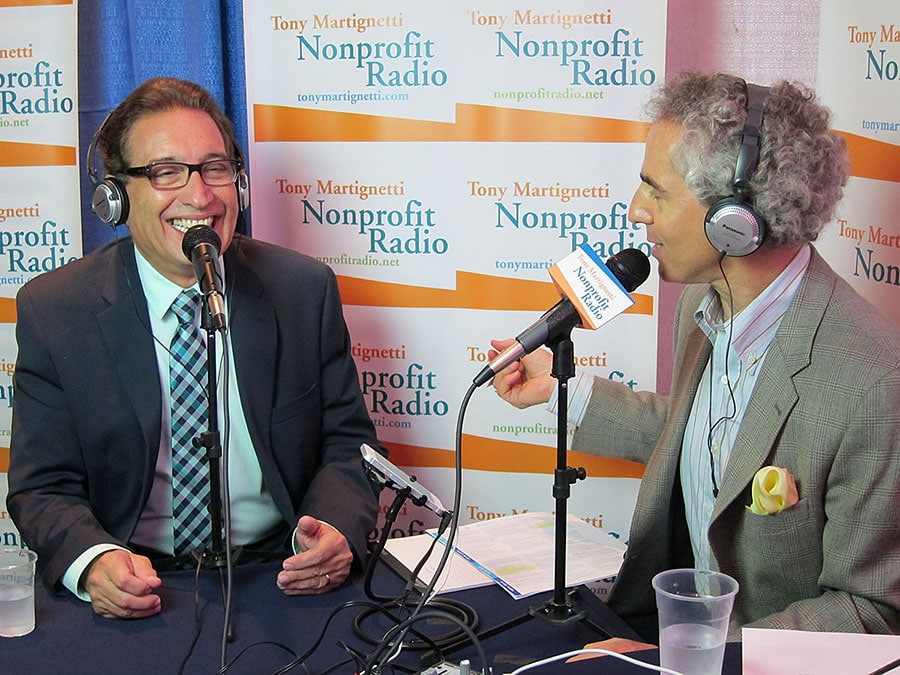
Angel Aloma, executive director of Food For The Poor, shares valuable fundraising strategies for upgrading your donors. He’s got tips for marketing communications; true donor centrism; metrics; and employee evaluations. (Recorded at Fundraising Day 2014.)
Pat Clemency: The Event Pipeline
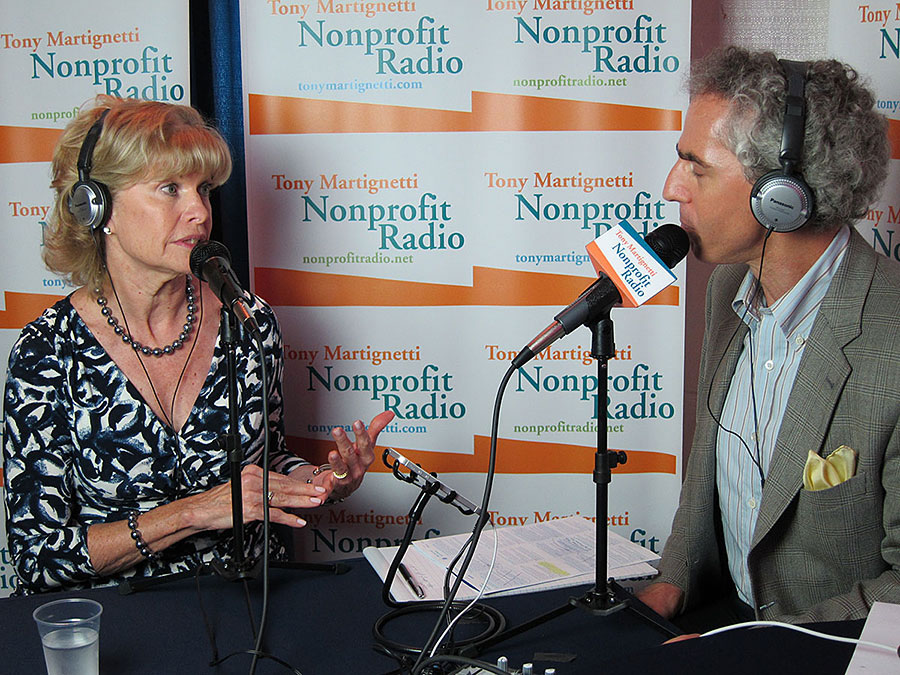
Get committed major donors from your events by making them transformational, not merely transactional. Pat Clemency has before-, during- and after-event ideas. She’s president and CEO of Make-A-Wish Metro New York and Western New York. Learn lessons from Rochester and Buffalo. (Also from Fundraising Day 2014.)
Top Trends. Sound Advice. Lively Conversation.
You’re on the air and on target as I delve into the big issues facing your nonprofit—and your career.
If you have big dreams but an average budget, tune in to Tony Martignetti Nonprofit Radio.
I interview the best in the business on every topic from board relations, fundraising, social media and compliance, to technology, accounting, volunteer management, finance, marketing and beyond. Always with you in mind.
Sponsored by:
Transcript for 214_tony_martignetti_nonprofit_radio_20141024.mp3
Processed on: 2018-11-11T23:13:16.894Z
S3 bucket containing transcription results: transcript.results
Link to bucket: s3.console.aws.amazon.com/s3/buckets/transcript.results
Path to JSON: 2014…10…214_tony_martignetti_nonprofit_radio_20141024.mp3.709820827.json
Path to text: transcripts/2014/10/214_tony_martignetti_nonprofit_radio_20141024.txt
Dahna hello and welcome to tony martignetti non-profit radio big non-profit ideas for the other ninety five percent. I’m your aptly named host welcome opportunity collaboration. If you are joining me from that very special gathering in x top of mexico last week, i welcome you to the show, and i’m glad you’re with me. I’d suffer the effects of rhabdo mile isis if it came within my ken that you missed today’s show it’s a full day of fund-raising day shift happens on hell aloma, executive director of food for the poor, shares valuable fund-raising strategies for upgrading your donors he’s got tips for marketing communications, true donor-centric zm metrics and employee evaluations that was recorded at fund-raising day twenty fourteen and the event to pipeline get committed major donors our of your out of your events who i needed i needed interns, aiken, blame somebody for this copy get committed major donors out of your events by making them transformational, not merely transactional pat clemency has before, during and after event ideas. She’s, president and ceo of make a wish metro new york and western new york learn lessons from rochester and buffalo this also from fund-raising day twenty fourteen antony’s take two i have more to say about opportunity collaboration, this amazing five day conference on poverty alleviation where i was responsive by generosity. Siri’s hosting multi charity five k runs and walks it’s all fund-raising day today here’s my first interview from fund-raising day twenty fourteen welcome to tony martignetti non-profit radio coverage of fund-raising day two thousand fourteen we’re at the marriott marquis hotel in times square, new york city. Beginning the day with unhealed aloma on hill. His seminar topic is shift shift happens how to ensure upgrading your donors is a smooth move on hell. Aloma is executive director of food for the poor on hell. Aloma welcome! Welcome to the show. Thank you. Glad to be here, it’s. My pleasure. I’m glad you’re with me on a very busy day. Thank you for taking time in the beginning. Um, we’re talking about the shift. The upgrade from, i guess. Modest donor toe major. Major donor. Right. Basically, we should be working all the time getting our middle donors to become upper middle and then afterwards, major donors? Some will not, but a lot of them will if they’re treated properly. Okay. And what? Is it that you see non-profits sometimes doing wrong? I guess not not treating properly, i guess generally, well, one of the major things is not being truly donor-centric i think it all non-profits when whenever we have a meeting, we say donorsearch king donorsearch king but it takes, you know, something really quite traumatic to make you internalize that issue. I went all the way to holland to be inspired by an american four years ago. Thoma hearn. And he really had he had pieces from all different charities, and he was reading them. And he said, look at this, everything is about the charity and they have done studies where eighty percent of donors who had left on the charities have claimed to be distanced by the charity. And so when i went back home, i thought to myself, very smugly we don’t do that. And then i started going over our pieces and i realized that everything was about food for the poor food for the poor builds houses food for the poor gets food, food for the poor digs wells. So i went on a rampage for three years with our writers and food for the poor had to become absent. It had to be the donor. And the word help had to be eliminated. Not thank you for helping us build homes is thank you for building homes. Thank you for feeding starving children. Thank you for e-giving clean water to children at risk of not. Thank you for helping us to do all those things. Exactly supporting us and doing all those things. Right. Okay. Well, that’s. Very interesting. So it starts now. You felt you had to go to holland to see tom. You know what? No one in the u s is doing this doing this well short. Thoma herne did at some point. But is he the only one in the world now, see, conference in holland is it’s a beautiful conference. Nine hundred sixty three people were there sixty three different countries represented. I see western in-kind fund-raising congress. Okay. Congress to congress. Not a not a conference to congress. What year was this? That you went. This is i have been every year for the last seven years. But this is four years ago that i went to knock to its every october and in holland. Okay, you, uh you came back and you started with your marketing communications way have our own creative in house, so i went to the creative director. I said, this is what we have to do, and i edit everything. I’m sort of the final editor before things leave the organization, so whenever i saw anything that was organization centric, i took it out, sent it back, and it took actually three years to get the writers to go from organizational centered to donor-centric, but but you’re the executive director. Why did it take three years? Because they were accustomed for twenty nine years before the in doing this, we’re a thirty two year old organization, okay, you’ve accounted for all the years. There you go, and you know what they say, you know, culture, its innovation for lunch. Oh, that’s, very good. I never heard that, but culture eats innovation for lunch. Yeah, that’s. Okay, it’s, very hard to change. What else? What else do we need to be thinking about? Well, anything else, let’s, say, within our marketing with our marketing messages to be truly donor-centric you also have to break down the silos? And frankly, when i went to food for the poor fourteen years ago, everybody had given up on it. It is such a tough fight. And then i was sitting at a conference in here in new york, actually, and i heard a speaker say something that if you don’t dream really big, you will never achieve the impossible, and i stopped listening to him. At that point on, i wrote eight pages of a new fund-raising vision, and i went back and i said, you know what? This is not happening by itself, so i became somewhat of a benign dictator, and i said, this is my vision for this. We’re going to stop having the silos. I know it’ll take some time. I want you to buy-in i want your feedback, but in the final analysis, this will happen. I said, if you’re not on my bus, you have to get off the bus, but i’m not gonna have any energy vampires started. Going around saying, oh, no, this to her, i don’t know, we can’t do this and, you know, it’s amazing. We have beautiful people who are fundraisers, and they’re so nice and so personable, but you take fifteen dollars of their credit and they go totally nuts. So why don’t we? Let’s ah, quaint listeners with what? What? What food for the poor does i’m well, our name has become a misnomer. Where a thirty two year old charity we work in our backyard, where in florida and will help seventeen countries in the caribbean and latin america. And we started out giving food teo missionaries in jamaica. And then we went to haiti. And then now we’re in seventeen countries and we do not only food. We do housing with duke water wells. We do medical. We do education and self sustainable projects. Now subsumed in in the story you just told is this kind of change has to come from leadership. Absolutely. It has to come from the top down because people of fundraisers sort of by nature have that sales mentality that it’s mine, it’s mine, the donor’s mind the sailors mind. And so you have to get rid of that. And actually, i have to say that it for the last year and a half that i started this, it has been working really beautifully because if you’re going to be donor-centric than the donor has to choose what he wants to give to and buy what channel he’ll give it on. If we restrict him from that, then we’re not being donor-centric let’s help the leadership that’s listening. What? This is a three year process it was give us some details about what you had to do, too, create the culture to create the culture change. Well, as i said, it has to be somewhat of a benign dictatorship, but you seem more like a benevolent dictator. Yeah, but probably i’m going about your benevolent, not just benign, okay, you’re right, i believe in servant leadership, but at the same time you have to set the pace. And so i i’ve had a lot of fundrasing meetings, i am in charge of the fund-raising out food for the poor, so i had meeting with the directors. The creative director also answers to me, so i was able to influence that also on the fact that i sent it back if they didn’t do it right, you know, it had to redo it. Eventually it started diminishing and diminishing until now and it’s funny, because at that time we used to send twenty three pieces of mail a year that most people gasp when they hear that on, we used to get a lot of complaints about too much mail, too much mail, then we are now sending twenty eight, and we get seventy percent less complaints because now the donor’s feeling good about himself when he reads it outstanding more slightly more communications a year, andi, seventy percent fewer complaints outstanding. All right, well, we need to dive in deeper. What do we do with the if we have? Maybe you didn’t get food for the poor, but the recalcitrant employees, whether whether fundraiser or or editor there, just not, or even boardmember they’re just not coming along to true donor-centric zm, our board is looking at the larger picture and they get all the financial stuff they get all the audited financial statements, we have an internal auditor that answers to them, but they really don’t interfere in the daily running of the organization. Okay, and as long as we’re doing well, they’re you know, they’re happy and they’re looking over, but they’re looking most with financials and they’re respecting that it’s your absolute your responsibility to culture fundrasing okay, so board was not a was not it was mostly in the lower level of fund-raising that we had the issue because we had tto also change our way of judging the fundraisers, because whereas before they were judged totally by bottom line, we have to find new ways like by the number of donors that they passed on to a higher level rather and by how much? Oh, look at them sex. So let’s, talk more about some of these quantitative measures that you use so that’s one measure is how many donors did you pass on? Right, which is antithetical to the to the culture that had been, which is very comment wolber race to them. Hold on. Excellent. What what other way started for our phone center? For example, we have an internal phone center with sixty one people in it. And we started incentivizing by the number of completed calls rather by how much money they made because there is a very definite connection between number of calls and income, so we stopped looking at income and incentivized them for for the number of calls completed completed colonies it calls exactly with meaning they had they had a conversation so forth, because then the phone center instead of a fundrasing department, they have three campaigns a year, but they’re also a service department. So basically now what they do is i ask every director who was a fundraiser and their monthly reports tohave a line for how much they’re they’re department raised, but also to have a second line showing the donors that they have in their department how much money they have raised for the organisation altogether and it’s amazing because those same donors gave two, three or four other channels now that they’re no longer restricted by the fundraiser as though they’ve brought in there their experience with food for the poor. Absolutely, and we’re doing better than the year before we’re actually above budget this year, andi haven’t been the best, you know, conditions, country wise, economy wise, but we still have done better every year you’re tuned to non-profit radio tony martignetti also hosts a podcast for the chronicle of philanthropy, fund-raising fundamentals is a quick ten minute burst of fund-raising insights, published once a month. Tony’s guests are expert in crowdfunding, mobile giving event fund-raising direct mail and donor cultivation. Really, all the fund-raising issues that make you wonder, am i doing this right? Is there a better way there is? Find the fund-raising fundamentals archive it. Tony martignetti dot com that’s marketmesuite n e t t i remember there’s, a g before the end, thousands of listeners have subscribed on itunes. You can also learn maura, the chronicle website, philanthropy dot com fund-raising fundamentals, the better way. Let’s talk about more quantitative measures and analytics for evaluating the employee performance in creating this culture change what else? Right whillans there? Well, we have a whole line of setup for direct mailing the phone center where way again we what we’re looking for is to move them up and our we have to treat all donors differently. Also, our radio donors that week that we acquire from radio different so we have started looking also at how best to treat them according how they want to be treated toe have more surveys toe have more of like in our news letters we have if you don’t like the way well, the language start nicely what i’m saying now, but if you don’t like the way you’re being treated right now, communications wise, please call this number. Please let us know police send an email to this so they can know that they’re in charge that they’re in control on dh when they give you feedback like that, you know that they love you because they didn’t love you. They would just say, forget it. I’m just gonna write about, you know, we always incredibly valuable he always flag. People who complain because they’re good enough to call us or that has no right. And there they now for our major donors, we have, for example, a whole different line of approach. And once they have reached that level, i they have access to me. They all can get in touch with me. They have access to special events they get. They belong to a special club so special, you know, they get a statue of christ, the beggar where christian organizations so we can go of jesus the beggar. And you know that i have every month i have to coffee breaks with the exec director where each major donor person invites maybe fifteen to twenty of their people to come on a conference call. And i thank them in a very special manner. I give them the updates of how the organization is doing to that point, which most other donors will get. Once a year, they get the annual report. These people are being told all the time. This is what your you know. Your donations are doing this right now and it’s. Amazing when they start speaking in those calls, how they affect the other. Donors on that called me that we end up in tears sometimes, you know, it’s it’s an amazing thing. It sounds like it could be very moving. It is called avery moving it is because i tell them stories of when i travel. You know, i just just two weeks ago, i was in guyana last thiss monday tuesday, wednesday was in haiti, you know, here and now in new york now totally the opposite situation, but, you know, they they love hearing things that they don’t get in their normal appeals. In the normal things i write letters to anyone who gives a gift to five thousand up on my letters are very donor-centric i mean, you know, there’s one letter that just goes on that they’re superheroes and i always start with a statement that kind of makes them feel special like you are super here is and then i talk about how, like, my two miles, you know, used to come and save the day and, you know, then i give them a story on him to save the day. I apologize for the people who have who have a near that recognises true music i’m sorry. I’m sorry. That’s ok does not considered a classic, and i still ruined it. But it’s it’s amazing that, you know, they hear stuff like this and and hear stories from the field that i just experienced. So i become somewhat emotional with them and then they get that and they really feel very special that they’re being called to this small gathering and they feel they’re part of the inner circle and they are because i listened to what they say. I mean, we went through what we call an emotional inquiry study a very expensive issue, but we are very large charity, ok, an emotional enquiries where they they’re they interviewed in depth for our sixty of our best donors in the organization. T let us know, really, what is the truth? And you know, when we asked her donors in a superficial conversation, why are you giving money to food for the poor? Because i want to help the poor. Well, in those studies, they found out that the number one reason is because donors want to feel like decent human beings in a world so full of negativity and evil. So then we know how to communicate because that also, although we started doing the donor-centric before that it’s, kind of like confirms that yes, this is the way they want to feel good about themselves. And if you don’t do that, they’re not going to give and you ended up calling them superheroes. Absolutely. I told him how they put on their cape of compassion and you know, they’re they’re sort of of generosity and you know, all this stuff. I built this whole story, and then what happens is that we get a second large gifts shortly after they get my letter and that’s and that’s, you know, gratitude. Thank you. Thank you thing that’s. Another huge thing where fund-raising is concerned and moving donors. We get more than five percent of our total income cash income for the year from thank you letters we never mentioned and asking the thank you letter. But we sent an envelope and we send a reply. Peace. Now that we were doing so well with thank you that we decided how about adding in rember totally used to send twenty three and now we’re seven. Twenty eight he added three thank you’s, not for a gift just simply thanking the donors with a reply peace in an envelope and guess what? The one in january, which is a tough month for us, after the donors are exhausted from giving in fall, we made over a million net because again the costumer thank us next to nothing is a piece of paper and an envelope, and you put in the reply peace in the end, the end on the envelope inside and that’s, you know, they were so we were thanking them for all they’re giving over the fall over the year, but a very genuine, very heartfelt thank you and men. They really responded to that in january when they would’ve been exhausted, as i said, and that was not a not a thank you for a specific it was not over everything that i don’t do. Three of those a year in the points where we find it the hardest to send an appeal like this summer. You know, people are also not a cz, you know, ready to give up, you know, there often vacations so forth and again, you know, last summer we did one and very successful you’re sending those just to recent donors napor labbate labbate the owners will not collapse no, we are people who have given in the last twelve months. Okay, so from from when you’re sending the mailing twelve months preview, but we’re working on one now for people saying, we want to thank you for your generosity for so many years. And you know what? We haven’t heard from you recently, you know, but we still are so appreciative because you helped us build a crucial time. You know, we’re working on one like that, too, for the more recently lapsed recent lapse. Okay, okay. Um, gosh, all right, we have we have a lot more time together so we can spend more time on some detail. This this became a part of the employee assessment. Sort of annual their annual review. Exactly. How did you donor-centric zm what way? Call it like. Well, it’s basically, ru willing teo teo, to sacrifice your own personal beliefs for the good of the organization, for the good of the unit of the poor. And we’re helping. And it’s it’s part our evaluations, sir, they have a part that are very the part that are very, you know, like specific. But then you are able also to write whatever you like and that’s the part where i usually commended the ones who have and i tried toe be gentle, but firm we’re the ones that we don’t because what happens is basically when on employee refuses to get on the bus. You know, i read a book about the energy bus on energy vampires, and they become energy vampires as as a servant leader, i really tried toe water to fertilize, to give them every opportunity to give them training so they can see the way that we want to head. But if all of that doesn’t work, then you’re actually doing them a favor by having them go to a place where they can be happy. Yeah, the so i guess it’s sort of ah, friction that you had to overcome it was there was a fair amount of resistance, particularly because there were some fundrasing departments that were a mixture of fund-raising and service like the web, for example, where they do service for other departments, but they also do fund-raising and then we used to, for example, have to landing pages for every appeal because the web oftentimes didn’t appeal based on a direct mail appeal, but one landing page for the earl went to direct mail, but the landing page for the general webb went to webb and i said, no, this is sort of direct mail appeal when that most of us who are who are computer savvy, we don’t go to the earl, we just put food for the poor and look for what you want, you know? So and that was, you know, a big part of income. I said, you will be recognized for that don’t worry, you’re not going to be judged if it drops and guess what web did that last year and so did direct mail, you know, so really what it does is it really makes the donor feel better. And when that happens, they give more the i’m really interested in the inn overcoming these these objections let’s, let’s get a sense of still a process, you know is three years old, the copywriters air all great now, but the issue of whose credit and so forth it’s you know, we still up to yesterday we had a director’s meeting and the issue came up like we have an angels of the poor program, which is the monthly giving program, but the web has a separate giving program because they’re they’re average monthly gift us forty one dollars and eighty cents, whereas the monthly gift for the angels of the poor program is twenty one dollars. So you know the director who runs the angels of the poor says, but, hey, i want to, you know, i want teo, you know, get the web, teo, you know, push more the angels of the poor. And we have to say, look what is good for the poor forty one, eighteen or twenty one, you know, if the web is doing better and they’re doing than leave them with it, you know, it’s it’s, okay, you know, if you lose a little branding for this, how many people are in the direct fund-raising hominy direct fundraisers do you have we have a little over three hundred employees at our building in coconut creek? We have eighty five priests and pastors who go to church is every weekend to raise money for the poor on behalf of the poor, and we have a food for the poor. And so basically i would say that of the three hundred at work, about two hundred are involved. Maybe more than two hundred involved in fund-raising. Okay. And you said you’re in charge of fund-raising of all the directors who fund-raising yeah, we have different. We have thirteen fund-raising departments and all the directors answer to me. Okay, so it is the project’s apartment to the creative department, the pr department. I’m also a spokesperson for the organization. What? What other strategies? And we still have some time left together. What other strategies haven’t we talked about for creating? This is culture shift. Well, i think you always when when you have an organization that is asking people for something you always have to give back something in our case is prayer. Every single. And we spend a lot of money on this. For example, with our own staff, we pay for half an hour the beginning of each day, and the staff can choose either to start work at that point or to go to our prayer room for half an hour. Of course, it will be different for every organization and on religious and unchristian organization of this would not work. But for us, our donors are inclined to really like this with every appeal we send with every thank you nona, thank you’s with every appeal on dh with every newsletter, they have a chance to write a prayer request. Now most people might think, ok, we throw those in the garbage or we put them in a big basket and pray over them. We actually call every donor that we have a phone number for and pray with them on the phone. Then we pray for them in the prayer room, so they really feel great about you should see some of our testimonial letters. You know, it was about to commit suicide in the person called me, and i prayed with them way have iphone that because we don’t want to be left behind, we have an iphone app, you press it for prepare food for the poor, and within five minutes a live person calls to pray with you. So every organization has to think what i e-giving our donors over and above the great feeling, because it does, it changes the hearts of our people who give to you. I mean, i feel we have three. Missions our poor, our staff and our dahna owners because we have changed so many lives toe act with generosity. I mean, when people become generals, they’re happier people. I mean, we have businessman tell us now i goto work knowing what is it i’m working for, you know? So we we have that situation, you know? But you have to give them something besides that good feeling, you know, we know the brain produces all sort of chemicals when they give, but i have to give them something else over and above, so every organization should think, what is it that we’re giving our donors that’s making their lives better in our case? It’s prayer in an environmental, you know, who knows the photographs of things that they have finished, you know, whatever calendar you know it yet, but we have to give back something and i’m not talking about, you know, premiums, you know, you don’t have to spend a lot of money talking about, you know, it’s not going to be thoughtful, it could be a thank you call for the entire staff, like, for example, i know that i’m that operation smile does that once or twice a year, their entire staff, the place shuts down for the day and their entire staff calls donors. So we’re actually considering doing that in writing tohave hand written notes, we have five million dollars in our file eight hundred thousand, which are active so we can’t do it for all donors but taken the top level of our file and having all our staff and you hadn’t held great, it’d be for someone to open the letter and have it from the person who cleans the cafeteria and, you know, here is that, right? Yeah, i’m a huge advocate of the hand written note because they’re so infrequent, and especially for older donors, right? They grew up with that and it’s now so uncommon, they’re lucky to get an email or a text, but the hand written note very, very, very powerful and yeah, coming from staff that say, here’s, how your gift helped me do my work or, you know, you’re trying to make it not just helped me here’s how here’s, how you’re doing the work for the organization, i guess through me, whether whether i’m cleaning the cleaning, the floors or absolutely or i’m cfo. And that’s my ministry with the staff to let every single one feel that they’re feeding the poor. Also it’s not just the fundraisers and it’s, not just the ones who handled the big donors. We still have a couple minutes left. I’m going teasing these ideas out of your what? What happened? We talked about yet your session is coming up, you must have a well or in your head. I think we have to put an emphasis if we want to really have donors move up the ladder on monthly donations like that’s. One of the ways we incentivize our phone callers on our direct mail and everybody we see how many monthly they can get. You know how many people that can convert from from a single gift givers to monthly and that’s when i see a single gift givers, i don’t mean to give one single gift for the year, but they give in single times like maybe three times a year, four times a year, and we’ve been having a great success. Whether the monthly donors has tremendous advantage. According to industry averages, they last more than twice the length of a donor that does. Not they renew very easily and they actually upgrade very easily, because when you have a person giving ten dollars, a month that’s one hundred twenty year, they don’t psychologically, they don’t think of it as one hundred twenty, they think of it as ten dollars, so when you call them us, they were having a famine right now in guatemala, they had floods and, you know, we have problems that coffee workers are laid off. Um, would you mind going up to twelve dollars, psychologically again? They’re thinking of two dollars, and i think you have twenty four, so they’re very you know, we have had great success upgrading monthly, so our website is designed to get monthly, gives our default in many of the pages is for monthly, and it created a little a little gang to the young. I mean, i have to admit a lot of people felt that was just deceiving because they didn’t read it properly and things like that. So we know we have in bold letters, does this have a gift that will be taken out every month and so forth? But you know what our monthly gives on the web increased? By three percent monthly with that default because the majority, you know, i really want to do it, you know, and it’s an idea they didn’t tend to have and they wouldn’t normally choose. But once they saw it there, it’s amazing. When people are given the power to change, they have the single gift option underneath. They really usually don’t you know when the same with the mail when we tell them if you don’t like the way you’re being treated by mail, they feel so good about having the power that they leave it, you know, they don’t on hel and subsumed in all this is that it’s so much cheaper to treat a donor properly and upgrade them absent? It is to acquire a new one. You absolutely don’t have time to go in, but that’s axiomatic so much so much better than than acquiring new donors. That’s correct on hell. Aloma is executive director of food for the poor. Based where in florida. Coconut and coconut curry the cat butterfly capital of the world. Thank you very much. It is a pleasure, tony. Thank you. My pleasure. Thank you, aunt ella loma. And thank you. This is tony martignetti non-profit radio coverage of fund-raising day two thousand fourteen my thanks to the folks at fund-raising day and we’ll have another one coming up very shortly. Generosity siri’s they host five k runs and walks multi charity five k runs and walks it’s hard to generate enough runners to host your own event. And then, of course, you have to deal with all the back end stuff like permits and sound system and start and finish line and medals and port a potties generosity siri’s creates communities of non-profits that come together to create big and sustainable five k runs and walks, and they take care of all the back end stuff you can talk to dave lynn he’s, the ceo, about joining one of their five k events coming up in new jersey, miami, new york city and philadelphia. Please tell my voice just cracked like i’m fourteen, please tell dave that you’re from non-profit radio he’s at generosity siri’s dot com or of course, you know, i like to pick up the phone and talk to people. Seven one eight, five o six, nine, triple seven last week i was at opportunity collaboration where three hundred fifty vibrant smart people came from around the world to share their strategies for poverty alleviation. There were people working with refugees doing education, water and sanitation relief for victims of survivors of domestic abuse and other forms of abuse. Um, empowering entrepreneurship in developing communities and countries. There were funders. There it was, it was just ah, it was remarkable week. There were also media there i was a bonem media fellow, which i’m very grateful two marlys and ron bonem for it was really an unconference no plan. Aries all the discussions, all the programs were discussions. You seated in a circle and they were just they were moderated and there was lots and lots of time for something i think is very special to opportunity collaboration, the one on one meetings, plenty of time to schedule those and that’s where real sharing of ideas got done. I had some excellent, excellent meetings around the show, its value. And i got some very good ideas for, i think, expanding the show and perhaps making it little more ah more global really very much got me thinking and a lot of people thinking for the for the whole. Week we’re in this beautiful setting in mexico. You could relax and and share in a riel no stress environment. If you do work around poverty alleviation, you may want to check out opportunity, collaboration, there’s, a video and a link to it at tony martignetti dot com and that is tony’s take two for friday, twenty fourth of october forty second show of the year here’s another recording from fund-raising day twenty fourteen this is pat clemency talking about your event pipeline and getting major donors from your events. Welcome to tony martignetti non-profit radio coverage of fund-raising day two thousand fourteen way are in times square, new york city at the marriott marquis hotel. With me now is pat clemency. Her seminar topic is the event pipeline turning event guests into major donors. Pat is president and ceo of make a wish metro, new york and western new york that clemency welcome to the show. Thanks, tony. Pleasure to have you you have ah, pretty desperate territory, new york city and western new york it’s an interesting territory, but i think it really is empowering in the sense you get a chance to say all sorts of markets. In which you can raise money and it’s really the opportunity to understand how donors react in their markets and and you know what the universe was, they won’t want to make a difference. And how far west does western new york go in your for that we cover the major cities of buffalo and rochester? Seventeen counties it’s just go over to buffalo. It does. Okay, so we don’t have the middle of the state, but we have a new york city in nassau county and then seventeen states counties upstate. What do you see that non-profits are not quite getting right around events and transitioning donors from events. Well, i think, you know, we all start with special events, i mean, there’s, no question about it, i think it is the recognition that there is a discipline that can make those events were quarter and smarter and are part of a major gifts strategy if we see it as an event that we efficiently come into and go out of without seeing its capacity to build a pipeline of donors for other kinds of fund-raising particularly major gifts, i don’t think we make it a lot, it can. Be so today we really talked had a great dialogue around the issue about some of the things that we can do to make a special event three distinct parts. It matters deeply what we do before going into the event talk a lot about planet absolute, but planning in a different way, that really makes us understand who is coming, who are the prospects, but the day of the event, how do we really connected the donor’s? Not just with the event but with the mission really can make a specific difference and how we then engaged him in the journey, not what the event, but with the organization over time, he’s really the third ingredient in it, and so it really is very helpful to think about it as more than simply the event itself. I’m gonna ask you to talk even closer to the mike because we have now we have the background noise because lunch is lunch is over, so stay nice and close. We don’t pick up too much outside background noise. Well, let’s start with the natural place of planning what? What should be redoing as we’re planning the event? Be planning for transitioning. Attendees to teo to our donor, right? I think we’re all too often we start with logistic rather than the strategy. What are we trying to do and who are we trying to attract? And we also need to cast a wider net if you think of the donor pyramid. I mean, we’re looking at our past event guests and hoping people who will be new to the event will also come, but we’re not looking for the clues that people give us on dso we found there was great opportunity looking at direct male donors, we give one hundred dollars more, and when we did some wealth screening, we found out they gave us one hundred dollars, not because that was their capacity. We had a box and they checked it and they gave us one hundred dollars, but we understood it. When we looked at it, they had so much more capacity, but we never got around to asking them. So looking a little bit more broadly and thinking about the strategy of engagement, we basically said, if you look at an event just as a single time, we’re going to invite them again next year. But if we look at the event and over late, a lot of the major gift strategies we have, the ability to change the whole dynamic. Your loyalty will be that the event it could be that the institution and would be a longer term engagement, we get that right in the planning stage. That’s what we want, right? We don’t want this coming up year after year, and does this include people who come? They may only come one time because there connected with the honoree or just a friend of the organization brought them. Wait, convert those kinds of people. Well, you know, it’s very interesting. We learn a lot from our buffalo, not just offices, because they have a very different evergreen strategy. Honorees are looked at differently than we look at them in new york city, and they are on it for body of work. So as a result, most of their strategy is thinking about how do you get the same donors to renew at higher levels each and every year. So now we’re beginning to implement that, saying, regardless of the honoree, how do we get more of our sponsors to renew and then for those one time donors who come because of a gala honoree, we need to do some more screening and think about who else in our boards within the make-a-wish family knows them so that the relationship can transition to the organization, not simply around the honoree. What else can we learn from rochester and buffalo? Well, you know what i think it is? The universal is people want to make a difference, and we just have to make sure that we’re not leading with what we need. But we understand that the first conversation is the donor’s needs, and the donor wants to be able to make a difference how our job is to take them on the journey by showing them how treating them like an investor. And that is a really key difference. Very often we ask for what we need, and we never think from the donor perspective. What about the organization will really resonate with them for the long haul. Do you really feel that, uh, upstate or western new york is better than downstate new york at this? No. No, i mean, they they’re scale is very different than ours. I mean, it’s a smaller scale. But we i think the best thing about fund-raising is if we are open to understand the best practices exist everywhere they learnt from us, we learn from them and i think it’s one, but i think the interesting thing is in every market, if you begin to institute this practice of looking at a bent donors not just as dahna sporting event on an annual basis, but really, truly look at it as a pipeline, we have seen donors go from seventeen hundred dollars to ten million dollars or from our five thousand dollars to five hundred thousand dollars. It isn’t a journey overnight, but the fact of the matter is some of our very gorgeous major gift owners. Their entry point was at an event it was how we dealt with that that made all the difference as to whether or not that became a continued transaction. We sell a ticket, you come to our event or if it really became a transformational relationship with the mission of the organization, are there other specific things that we should be doing in our planning? Aside from the concept of the lifetime donor, the longer term relationship are there things? Specific to a note to the invitation who invites them how they’re invited before the event. What else should we be doing specifically? Well, we began talking about if we were to really make this part of our major gifts strategy, what are the shifts that we need to make? And when you think about it, our invitation is to an event we needed t even change the messaging we’re not just inviting you to invent. We’re inviting you to share and join in this extraordinary mission and that’s very subtle, but it’s a very big difference, and so we even change the fact that when you come to a gala is a perfect example. Think about how we spend the first hour at cocktails just kind of wandering around. Instead, registration is outside, so the minute you enter the doors, you are coming in and part of a community of like minded people who believe that this is some of the most important work we could do for kids, and you are meeting wish families and volunteers and boardmember course, searching you out as the guest that evening and that first hour becomes a really important message about we. Welcome your involvement in this remarkable work. How do we convey that message in our cocktail hour? Well, it’s really about storytelling and changing who tells the story? So if you think about it very often at a gala, whether it is during the cocktail hour it’s during the main speeches of the night, we’re putting up the ceo, they’re putting up the board chair. We’re talking about the past. We’re actually talking about statistics and how much money we raised in our case, somebody wishes granted when we changed the dynamic of who the storyteller wrists really should be the people who experienced the mission first hand and as we tell the story through their eyes, it says to a donor here’s exactly what your donation would do here’s exactly how it makes a difference in that moment for a lifetime that’s a very different relationship from the beginning of the point where that donor enters the gala. If we’re going to focus on storytelling at our events and it might be a very big one memory big gala or it might just be a smaller could be anything smaller, gathering, maybe even a meeting. Absolutely we need thio. Sounds like have a very consistent message that the leadership is conveying that trickles down to all the employees and then also the board is conveying right when we need to have consistency and messaging. Well, you have to be have consistency in a couple of things. I think you have to have consistency and messaging for sure, but you also have to build a culture where the board and the staff are engaged in thinking about who’s there, you know, there’s, not a throwaway seated any event, and when you think that it matters most, there is a greater level of engagement on the part of the board and the staff and pretty work that gets done who’s at those tables, who should we know how we welcome them? What would be important to them? And it allows boards to be successful. You know, something tells me you’re from boardmember i’ve given you every contact i have there’s, nobody else i can approach will dis empowers boards to reach out to other people that the organization knows and be champions that night for the cost, so they’re assigned we’re assigning people, too, to meet specific people during the evening. During the event absolutely and beyond that you’re the eyes and ears. Every single person has a role kind of just surveying the room and learning what what they’re hearing that night and reporting it back. So justus, we schedule an event on a day before that event takes place. We also have the debrief date by which boardmember sze volunteer staff get together. What did you hear? What did we learn? In very often? One piece of information about somebody was in the room is magnified then by another repeat piece of information and out of that then becomes thought okay with the event is over, but it’s on ly really beginning in terms of engaging that dahna long term now on the way for the organization and so part of the debrief is what’s next. What are some of the opportunities? And you’re right, we have to be on the same page. If someone were to say to us post event, i’d love to be involved how we ought to be able to convey what the options are many and there’s not going to be one that works for everybody, but everybody needs to know here’s some of the ways that you could be involved on an ongoing basis so we’ve transitioned from beginning in the planning stage two day of now, we’re at our event. What else? A little bit there. Sorry, that was a little loud. What else should we be thinking about? You are executing the day off too. Create this transition. Well, i think the other thing that you could do very, very well is start with the strategy what’s the message that you’re trying to convey that should be the threat of connection to everything that’s being done that night and for us was really talking about the ripple effect of wishes. And the ripple effect of wishes is a moment in time. Yes, but it also has a lifelong impact. So one of our speakers was a thirty five year old executive with a wall street firm. He was a wish child seventeen years ago, and so the impact for him wass it had a ripple effect through his life. The life of his brother, who they really had a hard time when he was diagnosed with cancer. As the family would tell you, everybody’s diagnosed cancer, you know said everybody has cancer feels like, and so the threat of connection of his wish was in that mama with his brother, but it was also over his life, he became a wish training volunteer, helping others but imagine his role now explaining to people in his way that this investment that you will make tonight in support of this event hasn’t hasn’t impact come on the future generation of kids just like buy-in that’s a that’s an amazing way to tell the story, so the first part is what we’re trying to do. We’re trying to show the ripple effect over time across families in communities, and so all of those voices were part of the program that once that strategy is that you can always worry about the logistics next, but you’ve got to get that piece of it and too often in event planning for the night of we think about the logistics, but we haven’t really thought about the strategy and that that’s, what we lead with and that story telling is is just a one part of it. Next is if you’ve told the story, then you’ve gotta provide a tangible way for people to make a difference. And so we don’t. We do a lot of fund-raising at night, but its not around an auction for things. We had one great item this year, and the rest is all about an auction to allow people to sponsor wishes and that’s the meaning of it. You go from the programme, which told the story from the perspective of families who have experienced it and then give people the opportunity to share in joining the mission by sponsoring future wish. It was incredible to watch the little store ones, and some don’t respond to the wish. A season for wishes, any or twenty five thousand dollars donation in the room, an individual wish right down to a thousand dollars and watching the room right up. Every time somebody was part of the community that was making a difference was really an extraordinary thing. It allowed people to know that this was a really special thing, that in this time and place, we’re all making a difference. Like what you’re hearing a non-profit radio tony’s got more on youtube, you’ll find clips from stand up comedy tv spots and exclusive interviews catch guests like seth gordon, craig newmark, the founder of craigslist marquis of eco enterprises, charles best from donors choose dot org’s aria finger do something that worked, and they are levine from new york universities heimans center on philantech tony tweets to he finds the best content from the most knowledgeable, interesting people in and around non-profits to share on his stream. If you have valuable info, he wants to re tweet you during the show. You can join the conversation on twitter using hashtag non-profit radio twitter is an easy way to reach tony he’s at tony martignetti narasimhan t i g e n e t t i remember there’s a g before the end he hosts a podcast for the chronicle of philanthropy fund-raising fundamentals is a short monthly show devoted to getting over your fund-raising hartals just like non-profit radio, toni talks to leading thinkers, experts and cool people with great ideas. As one fan said, tony picks their brains and i don’t have to leave my office fund-raising fundamentals was recently dubbed the most helpful non-profit podcast you have ever heard, you can also join the conversation on facebook, where you can ask questions before or after the show. The guests are there, too. Get insider show alerts by email, tony tells you who’s on each week and always includes link so that you can contact guests directly. To sign up, visit the facebook page for tony martignetti dot com. I’m going to ask a little just sort of a digression just about the logistics of that that auction for wishes did you have people predetermined that would that would be bidding on on any of the any of those auctions and those wish auctions way we thought about wass how could we make it? And i don’t mean to suggest the whole thing’s rigged? No, no, you have one or two people who you knew would get the ball rolling. They were all legitimate that we wouldn’t do that, but but there’s a couple of things that we were able to do before tony. So three board members came forward and said for new donors who never made a donation before to make a wish, the ability to come and make a difference for a child that’s a pretty important thing, but how much more would they feel? The impact of that initial donation if we came up with a challenge match, so three of our board members got together and one hundred and seventy five thousand dollars was put up in advance. They pledge this, and they would match donations of two hundred seventy five thousand that was a huge thing. We also knew from a couple of donors at the wish auction for somebody who couldn’t be at the gala, they were out of town was still a way to participate, so for people who weren’t there and want to participate that’s part of our culture now you always have this opportunity give even if you can’t be there. So we knew a handful of dahna they do it’s what you do for the ones who couldn’t be there, so they have already pledged it, and they made that commitment right before and so we let people know that we were able to do that. Those two things are done in advance. We know that if if people know that thie donation they make is going to be doubled, there’s a likelihood that they’re going to give a little bit more on dh, then the other one to find a way to let donors who just cannot be there that night. How else could we participate when it’s about wishes anybody can participate? And i think that helped a cz well, so that’s kind of the two things we know going into the night way announced to the audience and then the third part of our trilogy stories after the event, what do we need to be now? Follow-up should be planned during planning, right way. We should be thinking about what our follow-up is gonna be while we’re doing the advance planning it is, but we’re hearing a lot that night, and you’re understanding what the individual journey might be for donorsearch we can talk about on overall strategy were also listening to the donors needs as well, and that we hear that that night so that’s that’s an important thing. But, you know, i think there’s a couple of great examples, our ten million dollars donors started out as a seventeen hundred dollars, went on. He bought tickets to a mets game where they were doing a benefit for make a wish and to see the journey after some of the events it was where he got to the transitional stage was when he was able to make a difference for the individual wish kids so began to grant wishes and then began to think, well, if i could grant a wish, i wonder if i could do more then he began to grant a wish a month for five years. Sixty kids when you think about that and that his attitude wass but i could inspire others by this, and i have to lead by example. So in his office building, he took down some of his paintings and put up something that we have designed which was simply a tree, acknowledging those wishes that have been granted so simple. First name of a child and a wish. When you came up into his lobby, you immediately saw that this was somebody who was champion the cause. So he then, as he got closer after after having been an event donor now he’s making a difference for children. And so when it became time to start thinking about the next generation wish total, you know, in two thousand thirteen we were thirty years old, and we had grand on ten thousand wish. And we had a big bowl dream for the future. We wonder, grant the next ten thousand wishes because we understood now importance and impact want to grant those ten thousand wishes in a decade? Well, how do you sell somebody on a big, bold dream? Will you go to your best? Investors in the cause. And he said, well, like to give you a down payment on the future. And that became the largest individual gift in the history of make-a-wish worldwide from an individual. And think about that for the for the future of this organization. You know, here was somebody who went from seventeen hundred dollars. Two. Ten million. But it was never about ten million dollars for him was about the ability to change ten thousand lives. And so you think we moved from transaction. You know, i give you tickets to this event because you gave me a donation moved to the transitional stage where we could say thank you for making a difference for that child to the transformational stage would thank you for making a difference for the future of the mission that’s where the journey goes. If we take our special event and understand that each of those stages the preplanning the night of and what happens after are all distinct but equally important segments that can help. That dahna journey. Okay, we still have a couple of minutes left. Anything you want, teo. Hopefully you do have something. You want to share that. We haven’t said yes, well, i think, you know, one of the things that i was really struck by wei had our gala on june twelfth this year, and there was a couple who had come forward and they were security. They secured the honore and they were great in helping support the fund-raising around him and as they thought about sending a letter out two people to solicit funds from business colleagues and family and friends, i learn a lot when you see the letters say, right? And this one just simply said we got involved with make a wish because we learned about Micah 6 year old who want to be a ballerina, we stayed involved because over the years, we’ve seen hundreds and thousands of kids whose lives have been forever changed, and what i realized was here was a couple who came to an event was a cultivation event just learn about make-a-wish and they heard that story and that stayed with them, and now we have an event for which they were such an incredible catalyst as a couple raised one point, six million dollars the fund-raising they did was extraordinary, they’ve been doubt a wish in perpetuity, and yet they never lost sight of the fact that it was at an event that was learning about that one child that touch them and made them want to do more. I don’t think i really understood the power of their motivation until that moment, but what i did, i know that’s the discipline that we need to put in place that’s the story telling you a story telling all the way in which we don’t look at this as a transaction it’s so much more an event can be so much more and could be such a powerful part about how we welcome donors into the extraordinary missions that we all support. Don’t leave it there, ok, tony, thank you. My pleasure, pat clemency. She is president and ceo of make a wish metro, new york and western new york and thank you for bringing lessons from rochester and buffalo. Thank you, my pleasure or listening to tony martignetti non-profit radio coverage of fund-raising day two thousand fourteen. Thank you so much for being with us. Thanks again to everybody at fund-raising day and the new york city chapter of the association of fund-raising professionals. A f p next week, the halloween show. Regular contributors. Jean takagi on law and amy sample ward on social media, who have tips, tricks and treats. If you missed any part of today’s show, find it on tony martignetti dot com. Remember generosity siri’s, they sponsored non-profit radio generosity, siri’s, dot com. Our creative producer is claire meyerhoff. Sam lever, which is on the board, as the line producer shows. Social media, is by julia campbell of jake campbell. Social marketing and the remote producer of tony martignetti non-profit radio is john federico of the new rules. Our music is by scott stein. You with me next week for non-profit radio. Big non-profit ideas for the other ninety five percent. Go out and be great. What’s not to love about non-profit radio tony gets the best guests check this out from seth godin this’s the first revolution since tv nineteen fifty and henry ford nineteen twenty it’s the revolution of our lifetime here’s a smart, simple idea from craigslist founder craig newmark yeah insights, orn presentation or anything? People don’t really need the fancy stuff they need something which is simple and fast. When’s the best time to post on facebook facebook’s andrew noise nose at traffic is at an all time hyre on nine a m or eight pm so that’s, when you should be posting your most meaningful post here’s aria finger ceo of do something dot or ge young people are not going to be involved in social change if it’s boring and they don’t see the impact of what they’re doing. So you gotta make it fun and applicable to these young people look so otherwise a fifteen and sixteen year old they have better things to do if they have xbox, they have tv, they have their cell phones me dar is the founder of idealised took two or three years for foundation staff to sort of dane toe add an email address their card it was like it was phone. This email thing is fired-up that’s why should i give it away? Charles best founded donors choose dot or ge somehow they’ve gotten in touch kind of off line as it were and and no two exchanges of brownies and visits and physical gift. Mark echo is the founder and ceo of eco enterprises. You may be wearing his hoodies and shirts. Tony talked to him. Yeah, you know, i just i’m a big believer that’s not what you make in life. It sze, you know, tell you make people feel this is public radio host majora carter. Innovation is in the power of understanding that you don’t just do it. You put money on a situation expected to hell. You put money in a situation and invested and expected to grow and savvy advice for success from eric sabiston. What separates those who achieve from those who do not is in direct proportion to one’s ability to ask others for help. The smartest experts and leading thinkers air on tony martignetti non-profit radio big non-profit ideas for the other ninety five percent.